
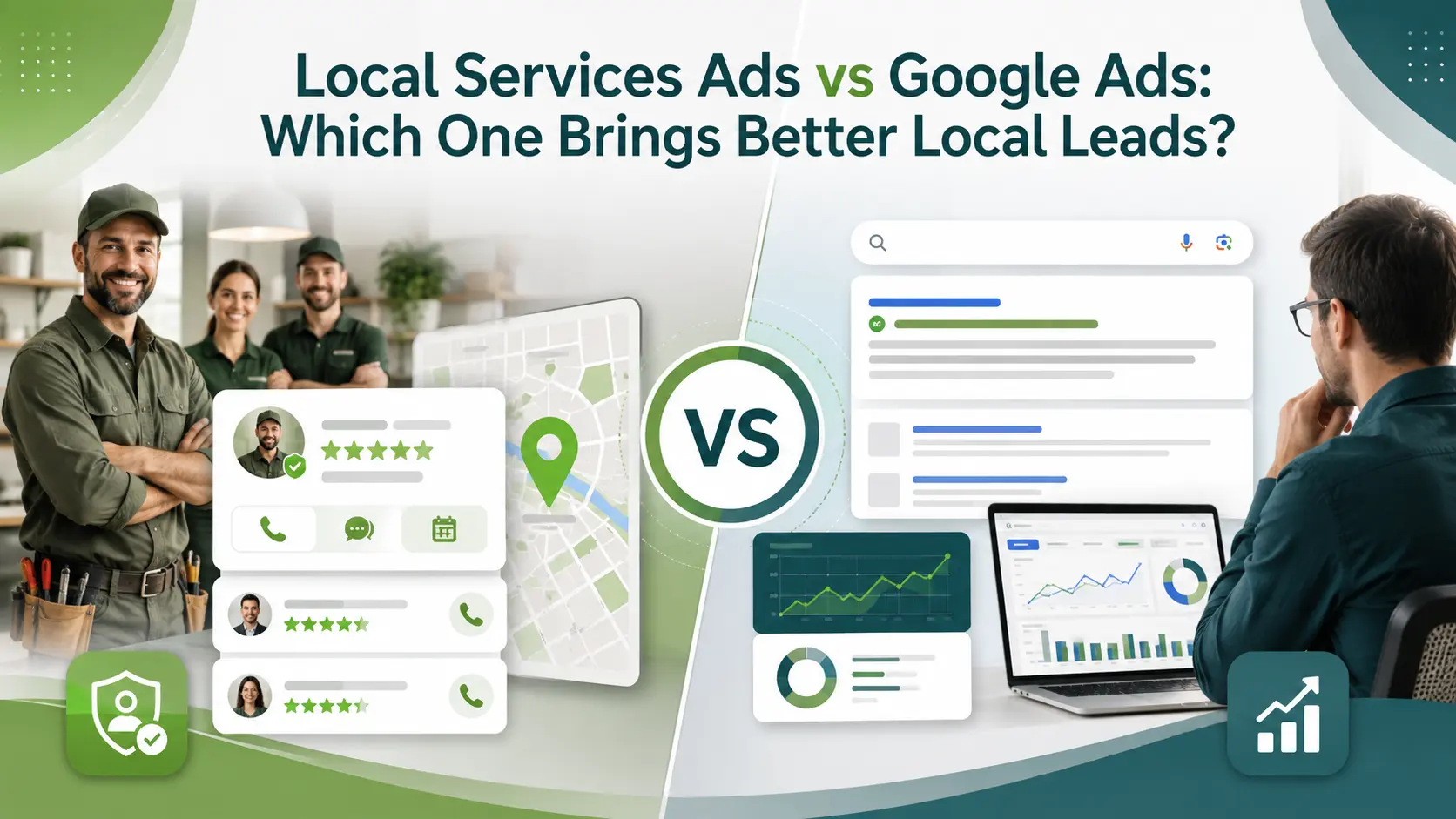
Choosing between Local Services Ads and Google Ads comes down to how you want local customers to find you, contact you, and judge trust before they click. Both can drive strong local leads, but they work differently, report results differently, and reward different types of optimization.
How Local Services Ads Work?
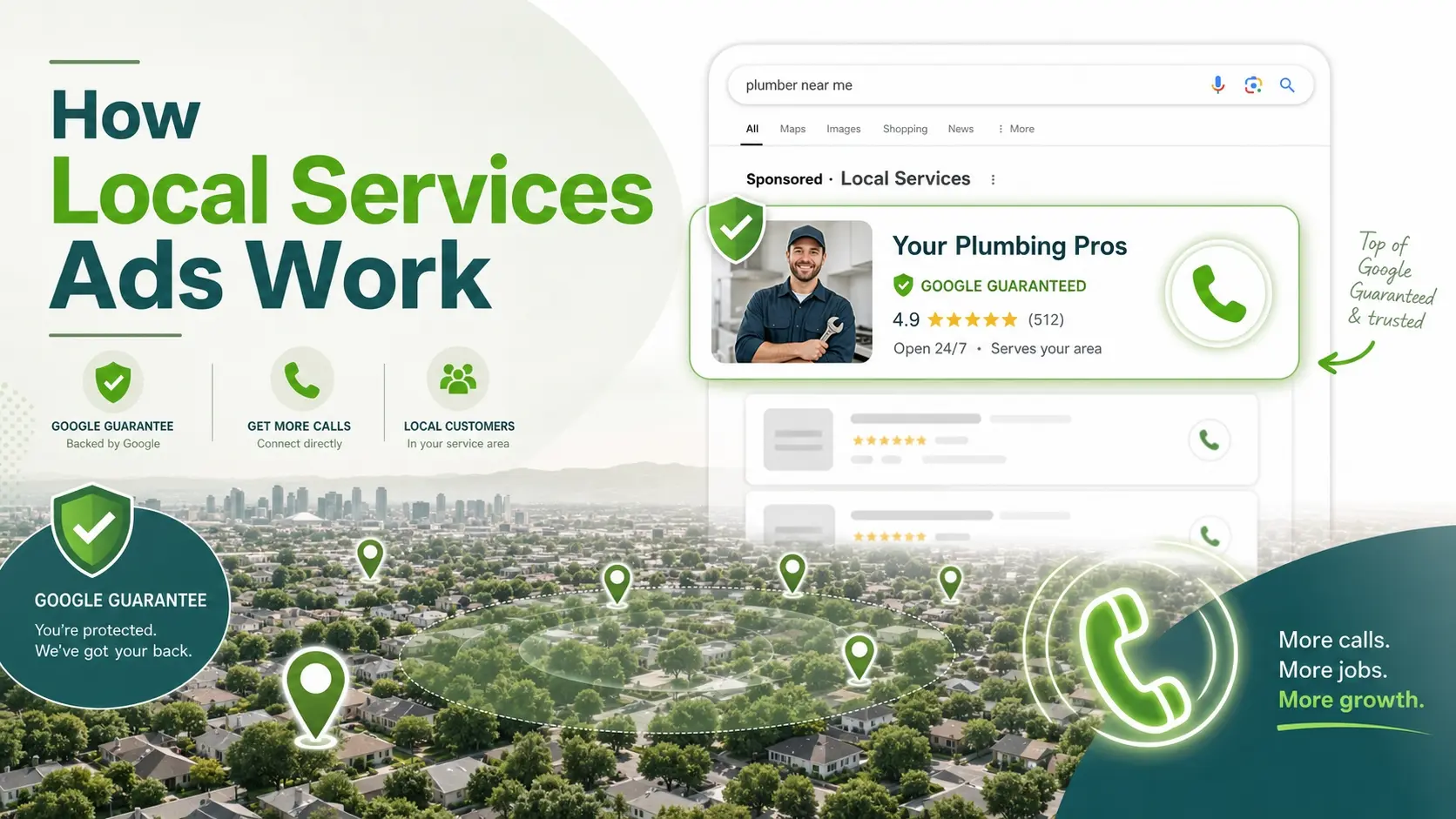
Local Services Ads, often called LSAs, are designed for service-area businesses that want calls and messages from nearby customers. These ads typically appear at the very top of local search results with a dedicated lead form experience.
Instead of sending every visitor to a website first, LSAs encourage direct contact. The lead is usually a phone call, message, or booking request, and the platform emphasizes trust signals such as reviews and verification.
What You Pay For With Local Services Ads?
LSAs are generally pay per lead rather than pay per click. That structure can feel simpler for local operators because the billing aligns with calls and requests, not traffic volume.
Lead pricing varies by category and location. Competition, service type, and demand levels influence the cost per lead and the consistency of lead flow.
Verification And Trust Signals
Many LSA categories require background checks, license verification, and proof of insurance. These steps can improve lead quality because customers often prefer providers that appear vetted.
Reviews and responsiveness also matter. Fast reply times and consistent review generation can increase visibility and improve how often your business is shown.
How Google Ads Works For Local Lead Generation?
Google Ads search campaigns place text ads in search results based on keyword targeting and bidding. You can send traffic to a landing page, a call extension, or a call-only format depending on your goal.
This system offers broad control over what searches you show up for, which locations you target, and which audiences you prioritize. That flexibility can unlock more volume, but it also increases setup complexity.
What You Pay For With Google Ads?
Google Ads is commonly pay per click, and the cost per click can range widely by industry and area. You pay when someone clicks your ad or when they place a call through certain call formats, depending on campaign type and settings.
The big advantage is controllability. You can tune bids by device, time of day, keyword intent, and geographic radius to push budget toward higher-converting traffic.
Landing Pages And Conversion Tracking
Google Ads performance depends heavily on the page users reach after clicking. A focused service page with clear offers, proof, and contact options often converts better than a general homepage.
Accurate conversion tracking is essential. Without it, optimization tends to drift toward clicks instead of leads, which can inflate spend without improving pipeline results.
Key Differences That Affect Local Leads
LSAs are built for immediate contact and rely on eligibility, proximity, and trust indicators. Google Ads can drive calls too, but it also supports longer decision paths through landing pages and remarketing.
Both can be effective, yet each is better for certain local lead profiles. Understanding the differences helps you match the channel to your sales process and staffing capacity.
| Category | Local Services Ads | Google Ads |
|---|---|---|
| Primary Goal | Calls and direct service requests | Traffic, calls, and form leads |
| Billing Model | Pay per lead in most categories | Often pay per click with bid controls |
| Setup Requirements | Verification and eligibility steps | Keywords, ads, landing pages, tracking |
| Optimization Levers | Budget, service areas, responsiveness, reviews | Keywords, match types, bids, audiences, creatives |
Use the differences above to choose based on the leads you need, not only the platform features. The best option is the one that produces booked jobs at an acceptable acquisition cost.
Lead Quality And Intent
LSA leads often come from people who want to hire quickly. The layout encourages comparison by rating, proximity, and availability, which can reduce research time and increase urgency.
Google Ads can capture both urgent and research-driven intent. With tight keyword selection and strong ad copy, you can focus on high-intent searches while filtering out early-stage browsing.
Dispute Handling And Lead Validity
LSAs can offer a path to dispute certain invalid leads depending on category rules. That can be helpful when calls are irrelevant or outside your service scope.
With Google Ads, reducing invalid leads usually relies on better targeting and filtering. Negative keywords, location exclusions, and conversion-based bidding are common levers to improve lead quality over time.
Budget Control And Scaling
LSAs can feel easier to start because you set a budget and focus on operational readiness. Scaling can be limited by eligibility, category demand, and how frequently the platform chooses to show your listing.
Google Ads offers broader scaling options because you can expand keyword coverage, add new campaign types, and build remarketing. That power can increase volume, but it also requires disciplined measurement to avoid waste.
When Each Channel Tends To Scale Better?
LSAs often scale well for businesses with strong reviews, fast response times, and consistent availability. When those signals are weak, visibility can fluctuate and lead flow becomes uneven.
Google Ads tends to scale better when you have a clear list of profitable services, well-structured campaigns, and high-converting landing pages. It also helps when you have staff who can monitor search terms and manage bids weekly.
Setup And Management Complexity
LSAs usually require fewer marketing assets because they rely less on your website. Your profile, categories, service areas, hours, and review health do most of the heavy lifting.
Google Ads requires more moving parts. Keyword research, ad testing, extensions, landing page alignment, and tracking all affect cost per lead and lead quality.
- Local Services Ads Strength: Faster path to direct calls when verification and reviews are strong.
- Google Ads Strength: More control over targeting and messaging across many search intents.
- Common Risk In LSAs: Lead volume can change quickly if responsiveness drops or competition increases.
- Common Risk In Google Ads: Spend can rise without lead growth when tracking or keyword filtering is weak.
Once you know your capacity to manage campaigns, the choice becomes clearer. Channel fit matters as much as budget size.
How To Choose Based On Your Business Type?
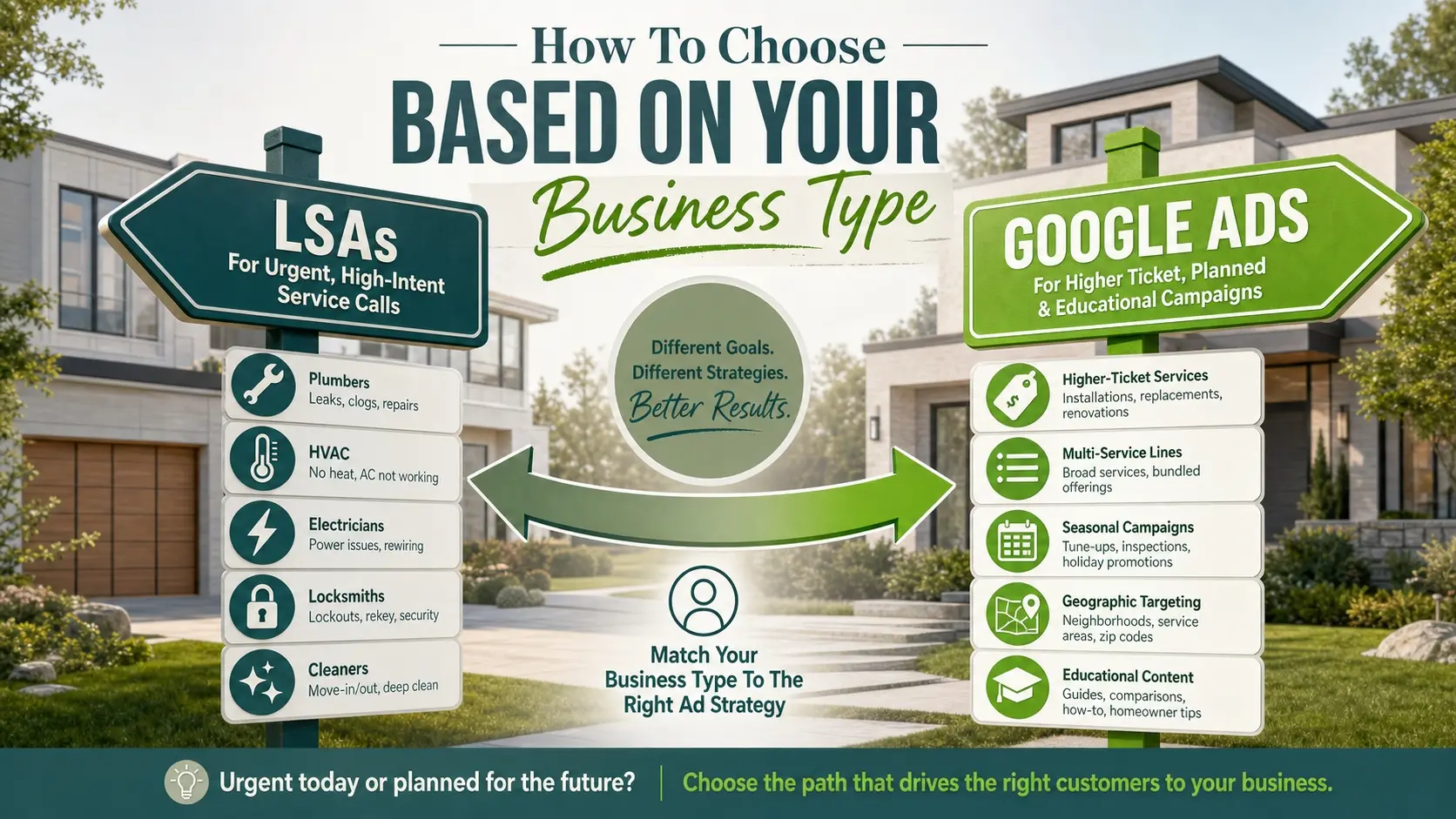
LSAs are often a strong match for plumbers, HVAC contractors, electricians, locksmiths, cleaners, and other urgent local services. Customers in these categories usually want a fast hire, and direct calling suits the buying cycle.
Google Ads can be better when you sell higher-ticket work, offer multiple service lines, or need to educate before a customer contacts you. It is also useful when you want to promote seasonal offers, specialty services, or neighborhood-specific campaigns.
Signals To Use In Your Decision
If you can consistently answer calls quickly and maintain strong reviews, LSAs can deliver efficient leads. If your business relies on tailored messaging, service differentiation, or custom qualification, Google Ads may give you better control.
Many local businesses use both and allocate budget based on performance by service. That approach works best when each channel has its own tracking and clear lead handling rules.
Improving Results In Both Channels
Lead generation improves when marketing and operations work together. Fast response, clear service areas, accurate hours, and consistent follow-up raise conversion rates regardless of platform.
- Define Your Ideal Lead: Set clear rules for service area, job types, minimum ticket, and availability.
- Strengthen Trust Signals: Collect reviews steadily, respond professionally, and keep business details consistent across properties.
- Track Real Outcomes: Record booked jobs, revenue, and cancellation reasons rather than counting only calls and clicks.
- Refine Targeting Weekly: Adjust service categories, locations, negatives, and schedules based on what drives qualified leads.
With consistent tracking and iteration, both platforms can become predictable lead engines. The key is treating leads as a full funnel, not a single click event.
Where Professional Management Helps?
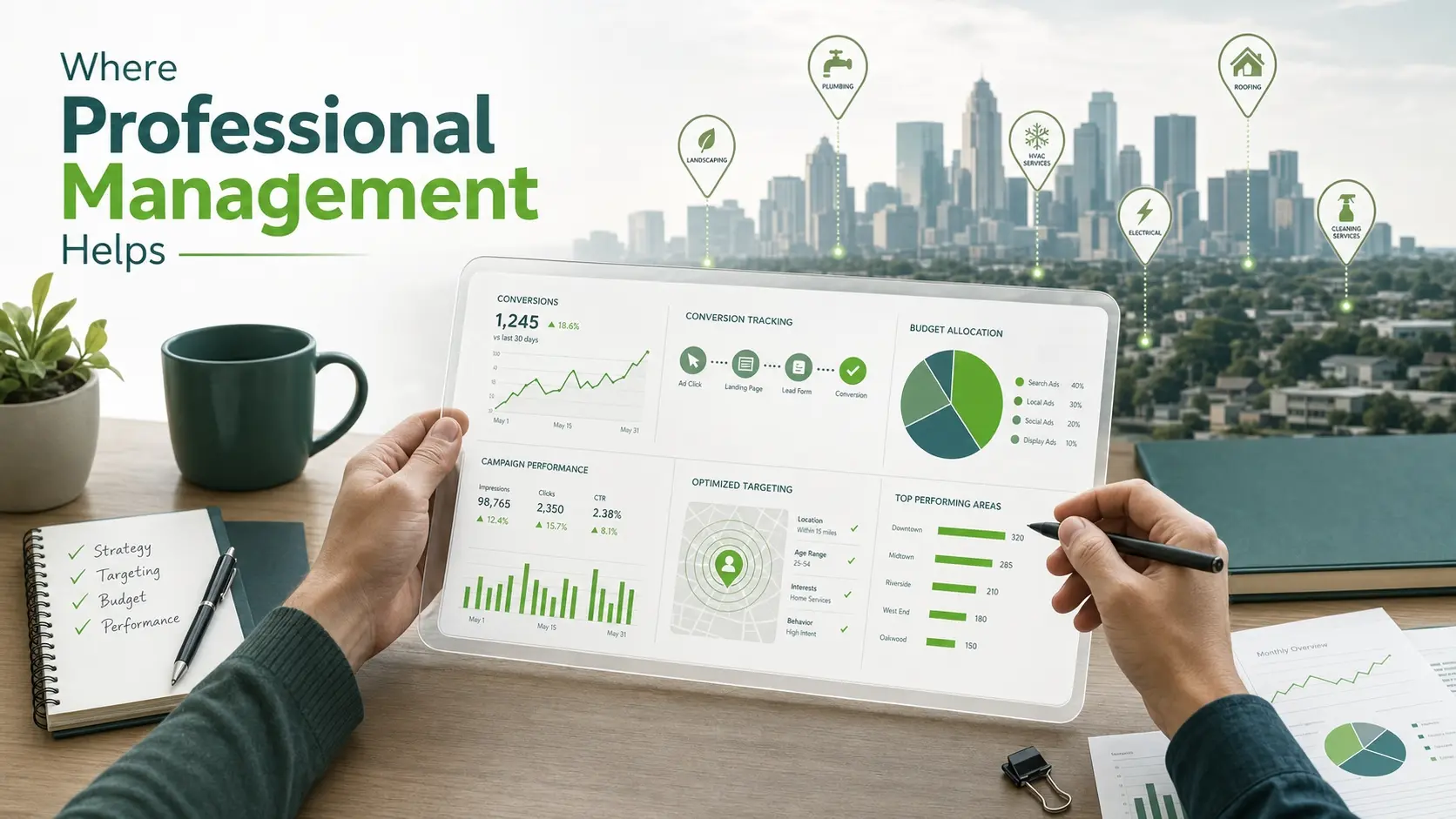
Local advertising platforms reward careful setup and routine optimization. If you want results without constant internal effort, a specialist can tighten targeting, improve conversion tracking, and reduce wasted spend.
IMILI Corp supports local businesses with digital marketing services that align paid acquisition with real sales outcomes. When LSAs and Google Ads are managed together with consistent reporting, it becomes easier to allocate budget toward the campaigns producing booked work.
Conclusion
Local Services Ads can deliver high-intent leads quickly when eligibility, reviews, and responsiveness are strong. Google Ads provides deeper control and broader scaling when campaigns, landing pages, and tracking are built with precision.
If you need immediate calls and your category fits LSAs, start there or run it alongside search ads. If you want maximum control over messaging and targeting, Google Ads often brings more flexibility and long-term growth.
Frequently Asked Questions
Is Local Services Ads Better Than Google Ads For Local Leads?
It depends on your category and how customers prefer to contact you. LSAs can produce faster, higher-intent calls, while Google Ads offers more control over keywords, messaging, and landing pages. The better option is the one that delivers booked jobs at a sustainable cost.
Can I Run Local Services Ads And Google Ads At The Same Time?
Yes, many local businesses run both to capture more search visibility. LSAs can cover direct-call intent at the top of results, while Google Ads targets broader queries and service variations. Clear tracking and consistent lead handling keep the two channels from competing inefficiently.
What Should I Track To Know Which Channel Performs Better?
Track qualified leads, booked jobs, and revenue by channel rather than only clicks or calls. Call recordings, lead tags in your CRM, and conversion tracking on forms help confirm quality. Comparing cost per booked job is usually more meaningful than cost per lead alone.