
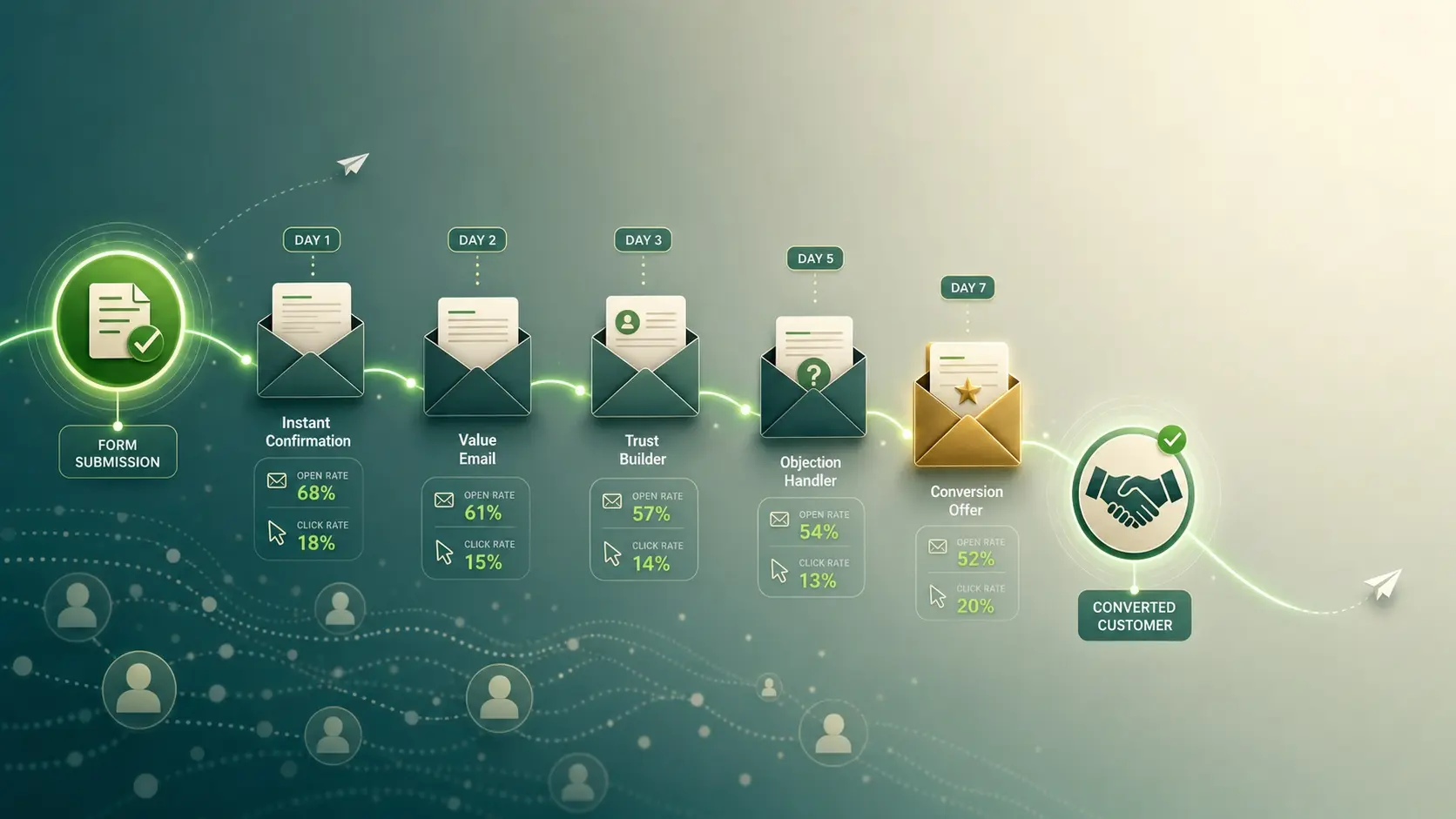
A form submission is a micro-commitment. The seconds and days after it decide whether interest turns into a real conversation, a purchase, or silence.
Why The Moments After A Form Fill Matter?
Most forms capture intent, not readiness. People submit while juggling tabs, comparing options, or checking if you are credible enough to trust.
Your follow-up emails bridge that gap. They confirm the request, reduce anxiety, and guide the next small action without pushing too hard.
The Job Your Follow Up Emails Must Do
A converting sequence is not a stream of reminders. Each email should remove one barrier and add one reason to continue.
Keep the goal simple. Move the lead to one clear next step such as booking a call, confirming requirements, or completing a checkout.
- Clarity: Restate what they requested and what happens next in plain language.
- Speed: Send the first message fast enough to match the moment of intent.
- Relevance: Tailor content to the form field choices, page source, and stated needs.
- Trust: Prove you are real with specific proof points, policies, and expectations.
- Momentum: Make the next action easy with one primary call to action.
Once these fundamentals are consistent, the sequence becomes a reliable conversion asset.
Build The Right Foundation Before You Write Emails
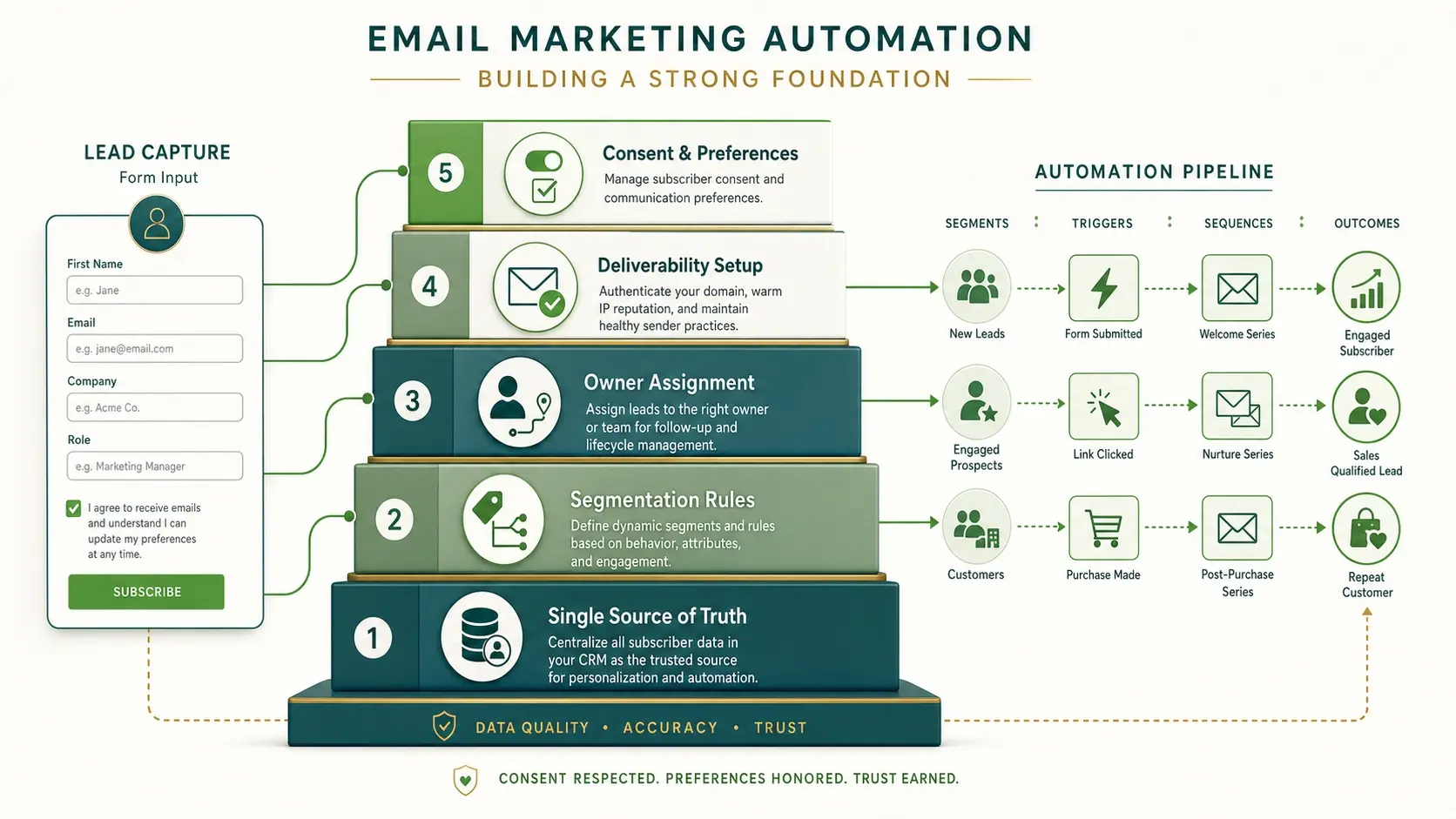 If tracking and routing are weak, even great copy will underperform. Set up the basics so every lead gets the right message at the right time.
This is where a CRM integrated form and marketing automation earn their keep. Solutions from IMILI Corp can help connect your form, email automation, and pipeline so handoffs are clean and measurable.
- Single Source Of Truth: Ensure the form creates or updates one contact record rather than duplicates.
- Segmentation Rules: Map each form option to a segment, lifecycle stage, or lead type.
- Owner Assignment: Route to a person or queue based on region, product line, or urgency.
- Deliverability Setup: Confirm domain authentication and consistent sender identity.
- Consent And Preferences: Store opt-in status and honor frequency choices.
With the foundation in place, the sequence can focus on persuasion rather than damage control.
An Email Follow Up Sequence That Converts
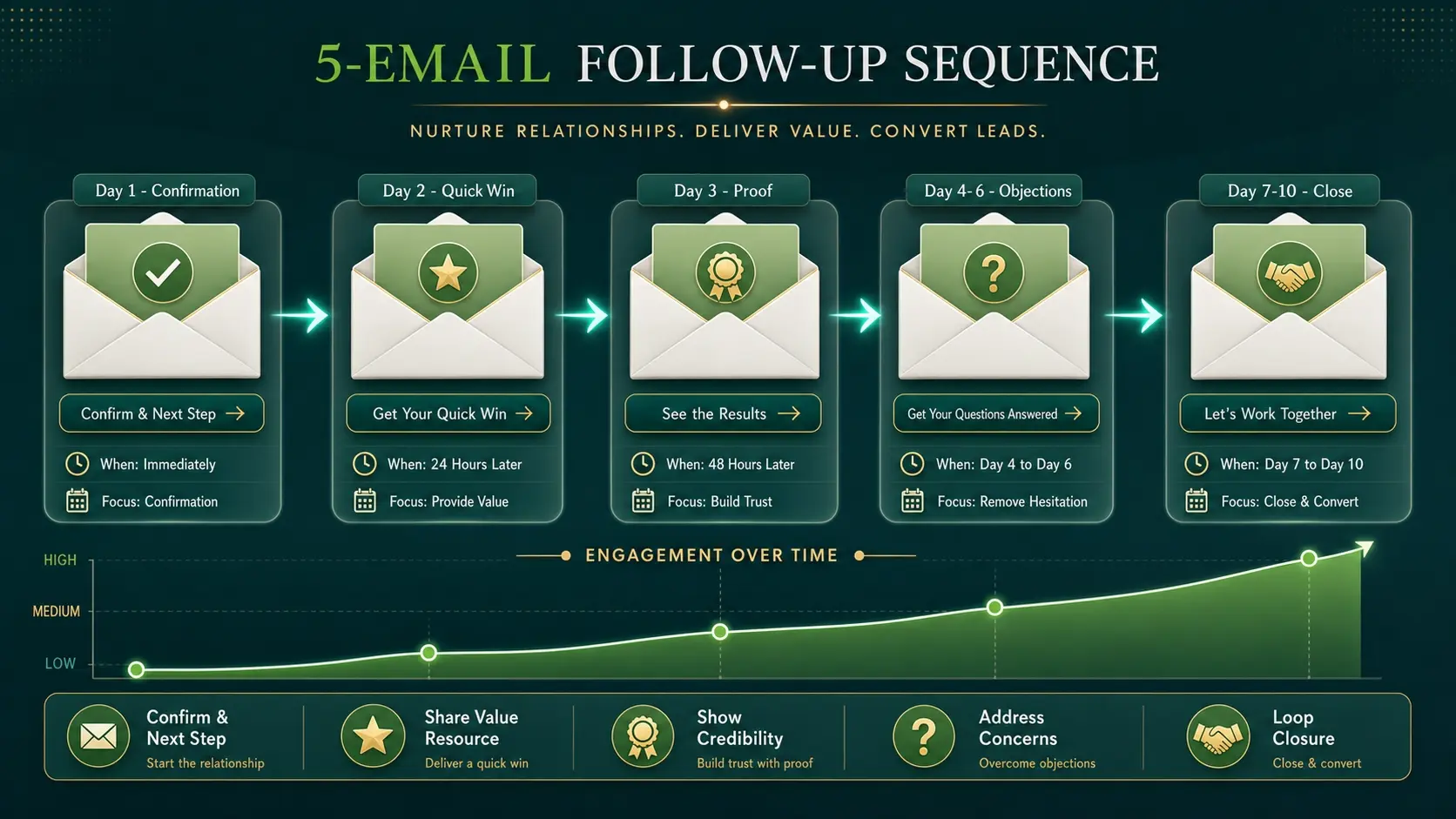 A strong sequence typically runs for seven to ten days, then hands off to longer-term nurturing if there is no response. The exact cadence depends on sales cycle length and lead temperature.
Keep each email short, one theme per message. Use one primary call to action and a secondary option only when it reduces friction.
- Email One Confirmation And Next Step: Send within minutes. Confirm what you received and set a clear expectation for response time.
- Email Two Value And Quick Win: Send within one day. Provide one useful resource that matches the form intent and leads toward your main action.
- Email Three Proof And Credibility: Send within two to three days. Share outcomes, relevant credentials, and what working together looks like.
- Email Four Objections And Options: Send within four to six days. Address common concerns and offer a lower-commitment path such as a short call or a checklist.
- Email Five Close The Loop: Send within seven to ten days. Ask if the request is still active, and give a clear way to continue or pause.
This cadence keeps you present without spamming. It also creates multiple opportunities to convert different decision styles.
What To Write In Each Email Without Sounding Pushy?
Polish matters, but structure matters more. Use a consistent pattern that makes messages easy to skim and respond to.
- Subject Line: Keep it specific and aligned to the form topic. Avoid hype, excessive punctuation, and vague promises.
- Opening Line: Acknowledge the exact action they took and the most important detail they shared.
- One Key Point: Teach one thing, answer one question, or remove one doubt.
- Primary Call To Action: Ask for one action such as booking, replying with details, or confirming priorities.
- Signature And Trust Details: Include name, role, and a simple way to reach you. Add relevant policies when needed.
When a message must include logistics, keep it tight. Short lines improve readability on mobile.
Timing, Cadence, And Send Windows
Speed is strongest right after the form fill. A fast first email reduces the chance they forget why they reached out.
After that, the goal is steady contact that feels helpful. Avoid long gaps early, then stretch the spacing as intent cools.
| Send Time | Main Goal | Best Call To Action |
|---|---|---|
| Within Minutes | Confirm Request And Reduce Anxiety | Reply With One Detail Or Book A Slot |
| Next Day | Deliver Immediate Value | View One Resource Or Answer One Question |
| Day Three | Build Trust And Differentiate | Schedule A Call Or Request A Quote |
| Day Seven To Ten | Confirm Status And Keep The Door Open | Continue Or Pause Follow Up |
Keep timing consistent with your promises. If you claim a fast reply, align internal workflows so it is true.
Personalization That Actually Improves Conversions
Basic personalization goes beyond first name. The best gains come from matching content to context and intent.
Use the form fields to choose the angle, not to cram details into every sentence. Over-personalization can feel invasive.
- Intent Based Content: Match the email to what they requested, not what you want to sell.
- Source Based Messaging: Adjust framing if the lead came from a pricing page, webinar, or support article.
- Role And Industry Fit: Use language that fits their job and compliance needs.
- Stage Based Calls To Action: Offer a quick chat for high intent and educational resources for early research.
If your stack supports it, dynamic blocks can swap sections based on segment. IMILI Corp implementations often focus on this type of practical automation rather than flashy but brittle logic.
Common Mistakes That Kill Your Follow Up
Most underperforming sequences fail for predictable reasons. Fixing these often delivers an immediate lift without writing more emails.
- Waiting Too Long: A delayed first email loses the moment of intent and increases drop-off.
- One Message Fits All: A single generic sequence ignores what the lead asked for.
- Too Many Calls To Action: Multiple links and choices reduce replies and bookings.
- No Plain Reply Option: Some leads prefer to respond by email rather than click a calendar.
- Unclear Next Steps: If the lead cannot predict what happens after replying, they hesitate.
Once these issues are removed, your analytics become more trustworthy and optimization gets easier.
How To Measure And Improve Your Sequence?
Conversion is the main KPI, but you need supporting metrics to diagnose what is breaking. Track behavior from form fill to final outcome.
Use clean attribution and consistent definitions. If your CRM and email system are disconnected, reporting will be noisy.
- Delivery And Spam Signals: Monitor bounces, spam complaints, and inbox placement indicators.
- Open Rate Trends: Use opens as directional feedback, not a single source of truth.
- Reply Rate: Track replies by email number and segment to see where interest peaks.
- Click To Action Rate: Measure clicks on the primary call to action, not total clicks.
- Lead To Qualified Rate: Confirm the sequence is improving lead quality, not just activity.
Make one change at a time. Test subject lines, first email timing, and call-to-action wording before rebuilding the whole flow.
Conclusion
A form fill is only the start. A well-built follow-up sequence confirms intent, adds value, and guides one next action without pressure.
Start with clean routing and tracking, then write a five-email cadence with clear goals. If you want the system to run smoothly across your CRM, automation, and sales pipeline, IMILI Corp can help design and implement the workflow so every lead gets consistent, measurable follow-up.
Frequently Asked Questions
How Many Follow Up Emails Should I Send After A Form Submission?
Five emails over seven to ten days is a strong baseline for many funnels. It gives enough touchpoints to build trust without overwhelming the inbox. If your sales cycle is longer, transition non-responders into a slower nurture track.
Should The First Follow Up Email Be Automated Or Manual?
The first message should almost always be automated so it arrives quickly and consistently. Manual follow-up can then be triggered for high-intent leads or specific segments. This mix keeps speed high while preserving a personal touch where it matters.
What Is The Most Important Metric For A Converting Follow Up Sequence?
Track the final conversion that matches your form goal, such as booked meetings or completed purchases. Then use reply rate and click-to-action rate to understand which emails drive progress. If deliverability dips, fix that first because it affects every other metric.