
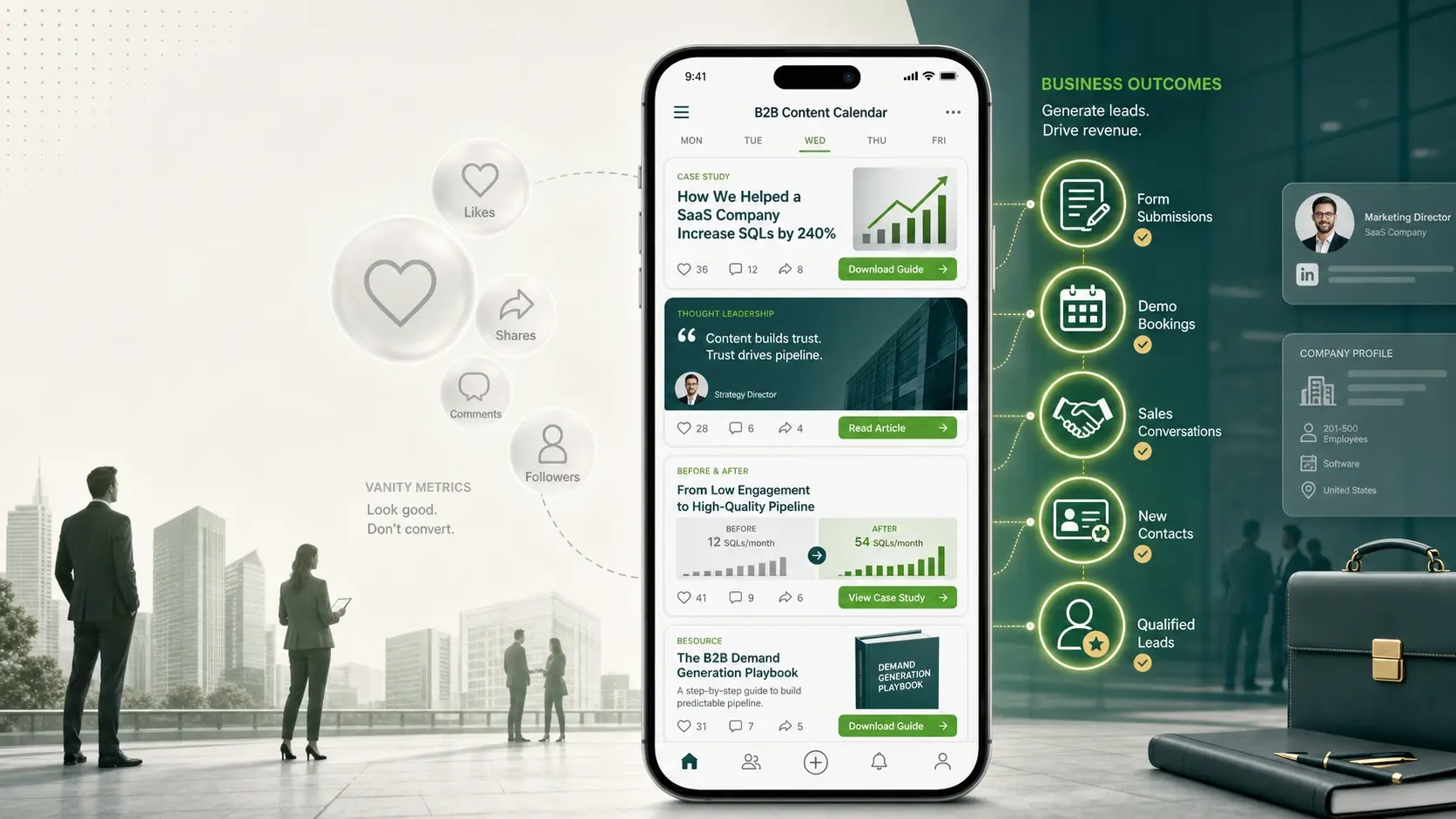
B2B social media works when each post moves a real buyer toward a conversation. The goal is not applause. The goal is clarity, trust, and a reason to take the next step with your team.
Lead Generation Starts With A Clear Buying Path
Before planning content, decide where a lead goes after they engage. If the path is vague, even strong posts will create interest that never turns into pipeline.
Build a simple sequence from attention to action. Align posts to the stages a buyer actually experiences, from problem awareness to vendor selection.
- Define The Conversion Action: Pick one primary action per campaign such as a consultation request, demo request, pricing call, or assessment booking.
- Match Each Post To A Stage: Create content for awareness, consideration, and decision so prospects do not stall after the first touch.
- Reduce Friction: Use one clear link destination and one form that asks only what sales truly needs to qualify.
- Set Follow Up Expectations: Tell prospects what happens next and how quickly you respond to build trust.
Once the path is set, content becomes a steady system instead of a stream of disconnected updates.
What To Post When The Goal Is Leads?
Use a balanced mix of education, authority, and conversion prompts. Keep the message specific to the problems your ideal accounts want solved.
Problem And Cost Clarity
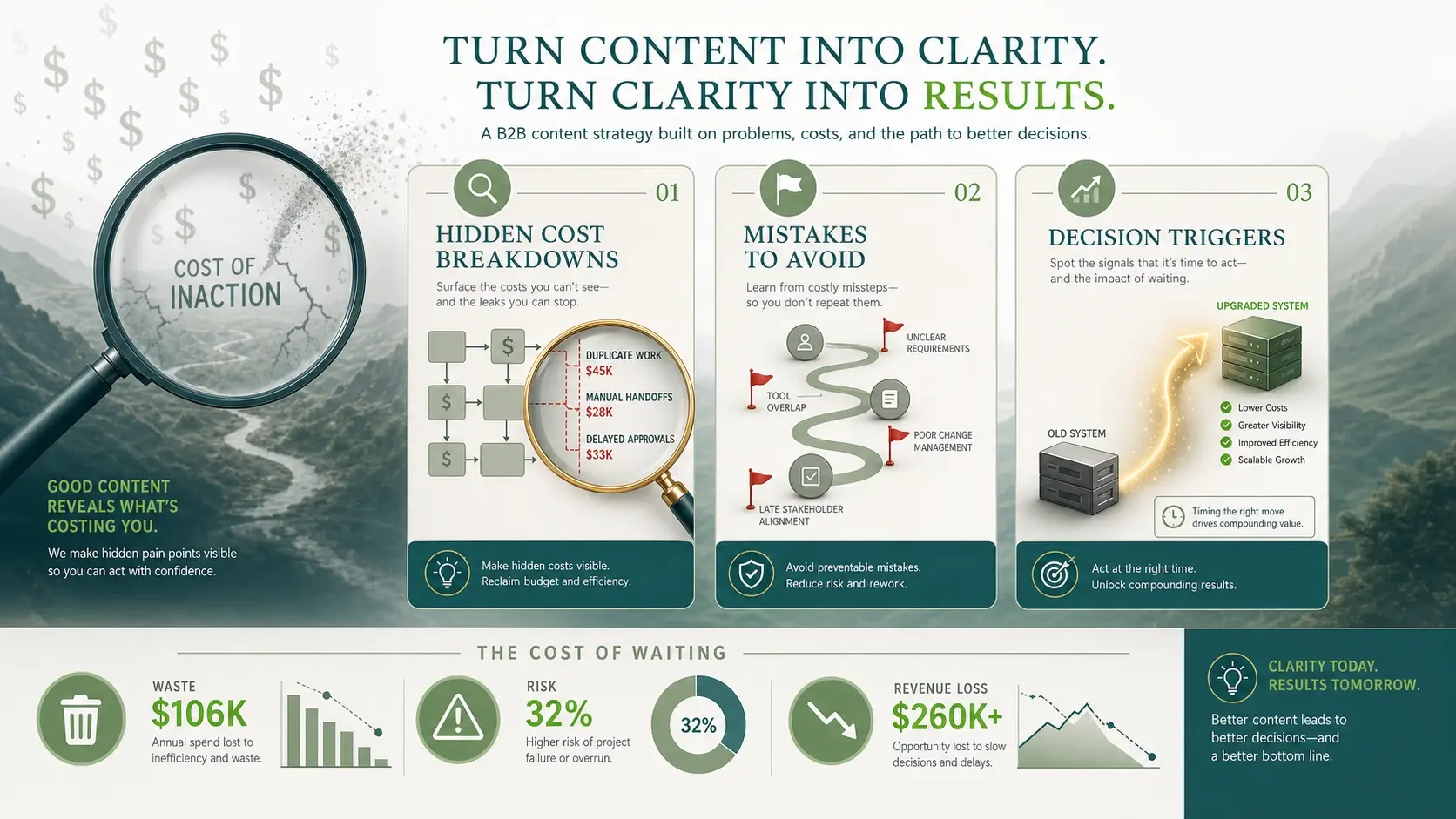 Many B2B buyers delay decisions because the cost of doing nothing feels unclear. Posts that quantify waste, risk, or lost revenue help prospects prioritize action.
- Hidden Cost Breakdowns: Explain where time, rework, or compliance risk builds up in a common workflow.
- Mistakes To Avoid: Share frequent missteps that slow projects, inflate budgets, or create security gaps.
- Decision Triggers: Outline signals that indicate it is time to upgrade a system, partner, or process.
These topics bring in leads who already feel the pain and want a practical next step.
High Intent Offers That Feel Useful
 When every post points to a sales call, engagement drops and trust weakens. Offers should feel like a fair trade, where the buyer gets value before committing.
- Audit Or Assessment: Offer a limited scope review with clear deliverables such as a prioritized findings list.
- Template Or Checklist: Provide a tool that helps buyers evaluate options internally and gather requirements.
- Benchmark Report: Share comparative data buyers can use to justify a project.
If your organization supports digital transformation, managed services, or business consulting, offering an assessment aligns naturally with how B2B buyers prefer to begin.
Proof That Reduces Risk
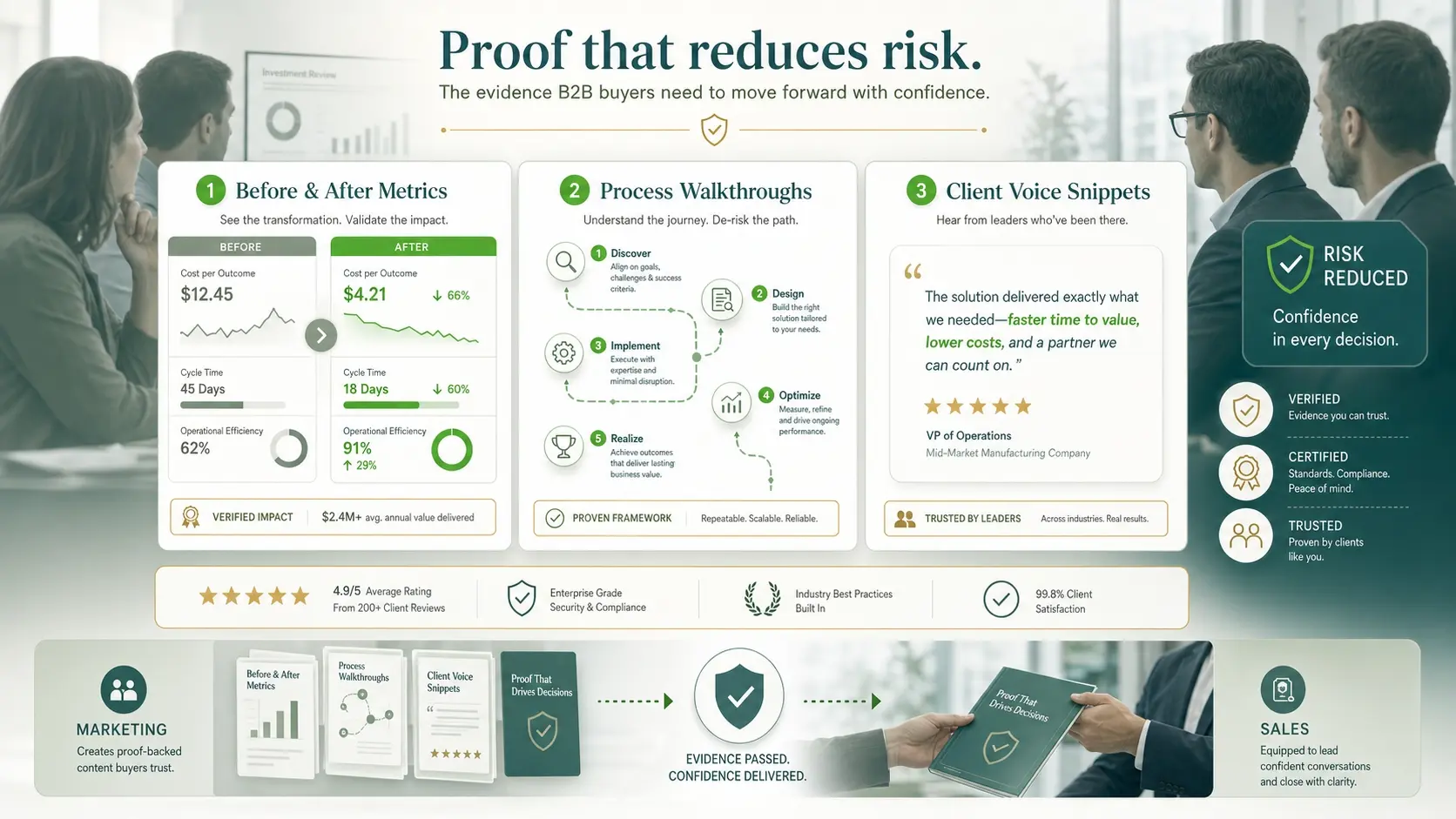 B2B decisions carry career risk, so prospects look for evidence. Instead of generic claims, publish proof in repeatable formats that answer common objections.
- Before And After Metrics: Share one improvement with context such as cycle time reduced, error rate reduced, or cost stabilized.
- Process Walkthroughs: Explain how you deliver outcomes with a simple framework buyers can follow.
- Client Voice Snippets: Use short quotes that focus on business impact and why the decision felt safe.
Strong proof content also supports sales enablement because reps can reuse it in outreach and follow up.
Opinion With Boundaries
Executives follow accounts that help them think clearly. Share opinions that are grounded in experience and framed around buyer outcomes.
Avoid polarizing takes that distract from your core value. Focus on tradeoffs, constraints, and what works in real operating environments.
Content Themes That Convert In B2B Social
Prospects want answers to practical questions. They also want to know if you understand their constraints, such as procurement, security, or internal approvals.
Use recurring themes that your audience recognizes. Consistency improves recall and makes your posting cadence easier to maintain.
- Buyer Questions: Address pricing drivers, timelines, change management, and success criteria.
- Execution Reality: Share what implementation really involves and where teams typically get stuck.
- ROI And Measurement: Explain what to measure, when results should appear, and how to attribute impact.
- Stakeholder Alignment: Provide guidance for getting buy in from finance, IT, operations, and leadership.
- Vendor Evaluation: Help buyers compare approaches, spot red flags, and build a shortlist responsibly.
These themes keep your brand relevant across the full decision cycle, not just at the top of the funnel.
Platform Choices Based On Lead Intent
Not every channel produces the same lead quality. Choose platforms based on where decision makers already consume professional content and how they prefer to engage.
For many B2B categories, LinkedIn is the most direct path to qualified conversations. YouTube and webinars work well for complex offers that need explanation, while X can support visibility among niche technical audiences.
- LinkedIn: Strong for account based reach, executive positioning, and direct response posts with clear offers.
- YouTube: Strong for product education, implementation guidance, and search driven discovery over time.
- X: Strong for fast commentary, community interaction, and sharing technical insights in short bursts.
- Facebook And Instagram: Useful for employer brand, event coverage, and retargeting support in some industries.
Pick one primary platform and one supporting platform first. Expand only after you can post consistently and measure lead quality.
Editorial Planning For Consistent Leads
A lead driven calendar is less about volume and more about balance. You need posts that attract attention, build trust, and ask for the next step in a natural way.
Plan content in weekly cycles so the buyer sees a coherent message. Reuse core ideas across formats so you are not reinventing everything.
| Post Type | Buyer Need | Lead Action |
|---|---|---|
| Insight Post | Understand the problem and urgency | Read a short guide or save the post |
| Proof Post | Reduce risk and validate credibility | Request the full case summary |
| How It Works Post | See the process and what to expect | Book an assessment call |
| Offer Post | Get a clear next step with value | Submit the form for an audit |
Use the table as a template, then tailor each row to your specific service line, target industry, and sales motion.
Calls To Action That Do Not Kill Engagement
B2B buyers respond to clear asks when the post earns it. A good call to action feels like the next logical move, not a sudden pitch.
Keep CTAs specific and low friction. If your offer requires a meeting, explain the deliverable and duration so it feels safe.
- Value First CTA: Offer a checklist, readiness scorecard, or short diagnostic and then invite a conversation after delivery.
- Time Bound CTA: Limit availability by capacity, not pressure, and state how many slots you can realistically support.
- Direct CTA: Ask for a call only when the post addresses a decision stage problem such as vendor selection or implementation planning.
When you combine helpful content with precise CTAs, you get fewer vanity clicks and more qualified inquiries.
How To Qualify Leads From Social Without Losing Them?
Qualification should protect both sides. The prospect should feel respected, and sales should receive enough context to follow up quickly.
Use a short form and a fast response loop. If your team provides enterprise services, add one field for company size or project timeline and keep the rest optional.
- Confirm Fit Signals: Decide the minimum criteria such as industry, budget range, and urgency.
- Route Fast: Send high intent leads directly to a calendar or to a dedicated responder within one business day.
- Deliver The Promised Asset: Provide the audit summary, checklist, or recap immediately so trust builds before any sales call.
- Follow Up With One Question: Ask the single question that best reveals readiness, such as their primary constraint or decision deadline.
This process keeps momentum while preventing your pipeline from filling with unqualified conversations.
Measurement That Matches Leads Not Likes
Engagement can be a useful signal, but it is not the outcome. Track metrics that show movement toward revenue and sales readiness.
Review performance at the post level and at the offer level. Look for patterns in who converts, not just what gets reactions.
- Lead Quality: Track job role match, company fit, and sales accepted rate.
- Conversion Rate: Measure clicks to form completion and form completion to booked meeting.
- Sales Cycle Influence: Track whether social sourced leads progress faster or close at higher value.
- Content Assist: Monitor which posts get saved, shared internally, or referenced in sales calls.
These signals tell you what to repeat and what to cut, so your content system improves over time.
Conclusion
Social media marketing for B2B drives leads when you post with purpose and connect each piece to a clear next step. Focus on buyer questions, proof that reduces risk, and offers that give value before asking for a meeting.
Build a repeatable plan, measure lead quality, and tighten the follow up loop. When your content matches how buyers decide, you create pipeline without chasing likes.
Frequently Asked Questions
How Often Should B2B Companies Post On Social Media For Lead Generation?
Consistency matters more than volume. Many teams see better results posting two to four times per week on one primary platform and improving quality over time. Keep a steady mix of education, proof, and one clear offer post.
What Type Of Content Produces The Highest Quality B2B Leads?
Content tied to a specific business problem and a clear solution pathway tends to attract qualified prospects. Proof based posts, process explainers, and assessment offers often convert better than general brand updates. The key is to match content to the decision stage.
Should B2B Social Media Send Leads To A Landing Page Or Direct Messages?
Both can work, depending on sales motion and buyer preference. Landing pages are better for consistent qualification and tracking, while direct messages can reduce friction for high intent prospects. A practical approach is to offer both and route based on intent and complexity.