
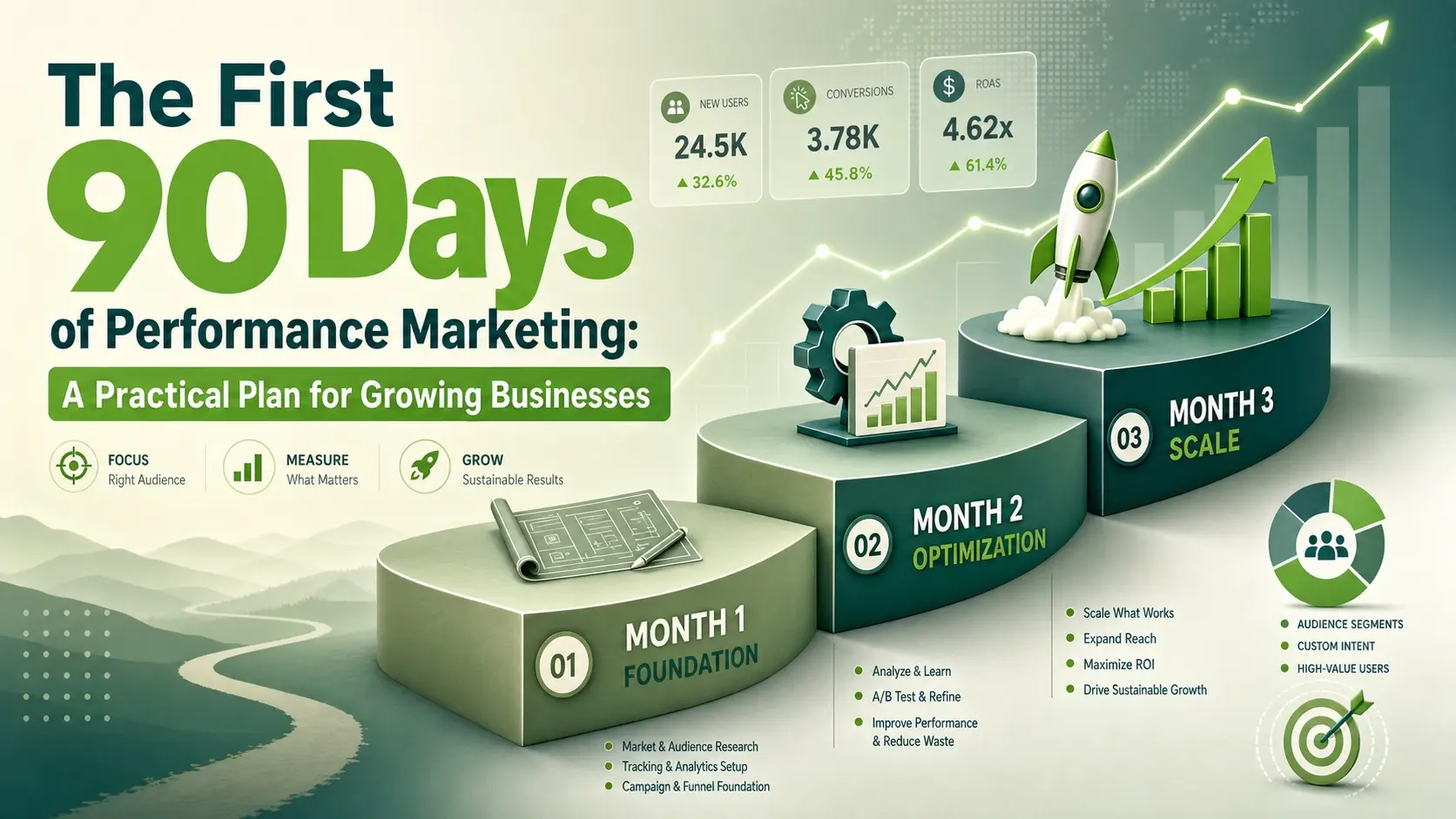
Performance marketing works best when it is treated as a system, not a set of ads. The first 90 days should create clear measurement, disciplined testing, and a repeatable path to profitable growth. This plan keeps scope tight while building the foundations needed to scale without wasting spend.
What Performance Marketing Means For Growing Teams?
Performance marketing is growth work tied to measurable outcomes such as leads, purchases, qualified calls, and retained revenue. It relies on clean tracking, controlled experiments, and budget shifts based on results. The goal is not traffic for its own sake but predictable returns.
For growing businesses, the challenge is usually not effort but focus. Too many channels, too many offers, and unclear reporting make it hard to see what is working. A 90-day plan forces prioritization and turns marketing into an operating cadence.
Define Success Metrics And Guardrails
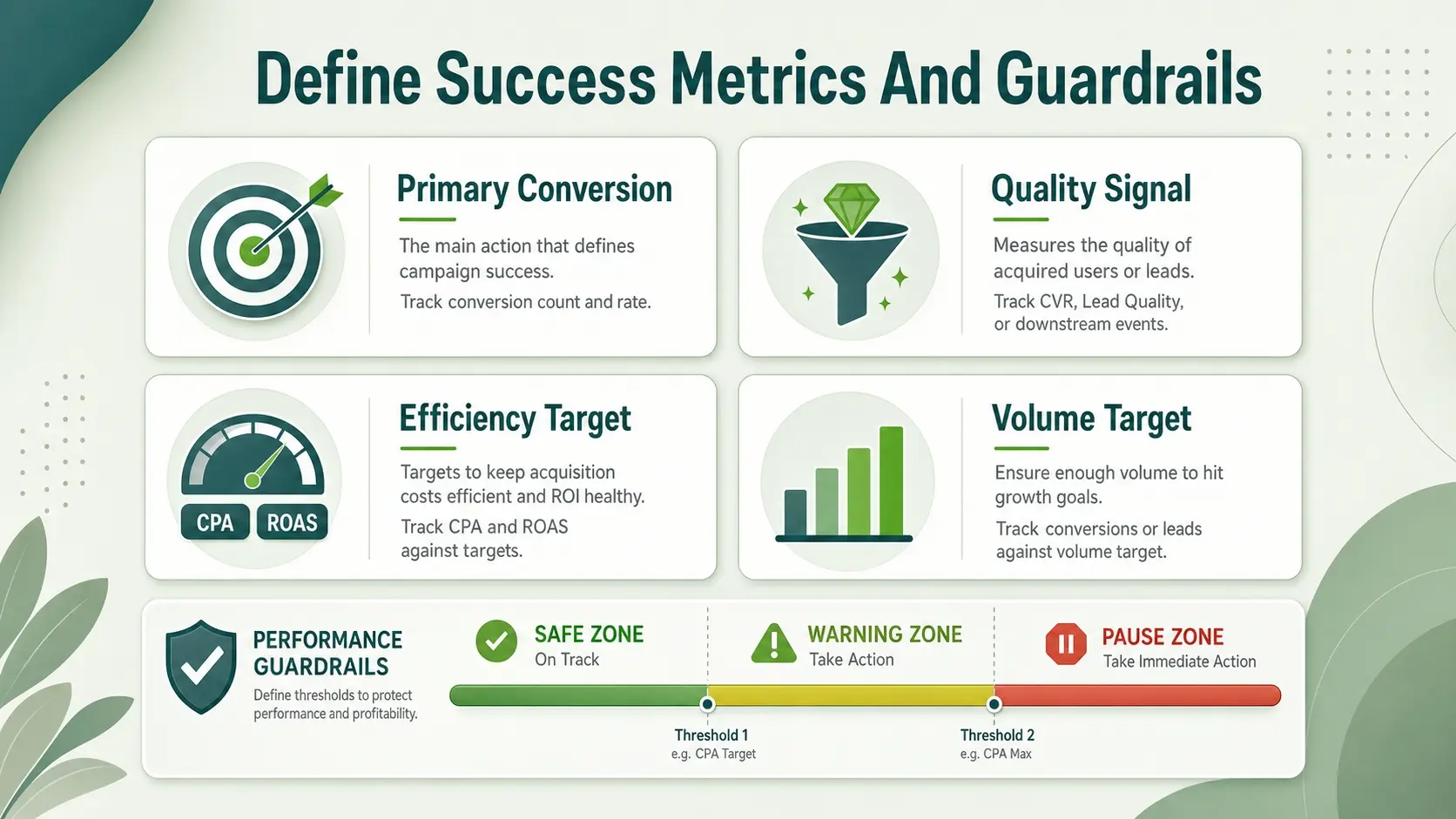 Before launching or changing campaigns, set a small set of metrics that define success. Tie every campaign to one primary conversion and one secondary signal that indicates quality. This prevents optimizing for numbers that look good but do not drive revenue.
Guardrails keep growth profitable. Choose a target cost per acquisition, a minimum conversion rate, and a payback window that fits cash flow. When results break a guardrail, pause and diagnose instead of spending more to compensate.
- Primary Conversion: The action that directly creates revenue or a sales-ready lead.
- Quality Signal: A downstream metric such as qualified rate, first purchase value, or sales acceptance rate.
- Efficiency Target: A threshold for CPA, ROAS, or cost per qualified lead aligned with margins.
- Volume Target: A realistic goal for weekly conversions that supports learning and pipeline needs.
Once these are set, measurement can be designed to match the business outcome.
Set Up Tracking And Attribution The Right Way
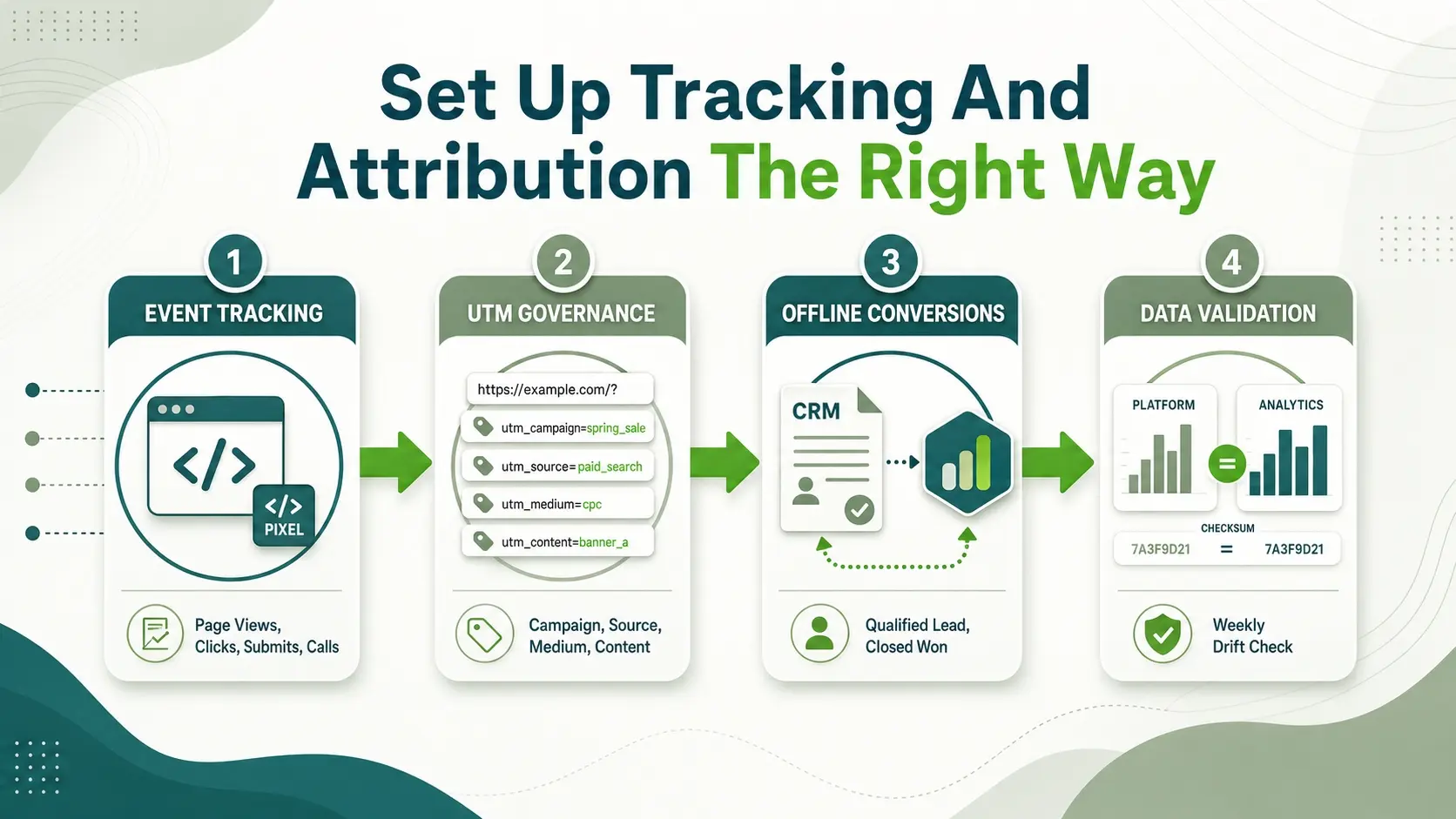 Reliable tracking is the highest leverage work in the first month. Without it, optimization becomes guesswork and reporting becomes debate. Start with consistent event naming, verified conversion firing, and clean UTM standards.
Attribution should be practical, not perfect. Use platform reporting for directional optimization, and a single source of truth in analytics or a data layer for business decisions. Where sales cycles are longer, connect leads to outcomes in the CRM so quality is measurable.
- Event Tracking: Track page views, key clicks, form submits, calls, purchases, and subscription milestones.
- UTM Governance: Standardize campaign, source, medium, and content fields so reporting stays consistent.
- Offline Conversions: Send qualified lead and closed-won data back to ad platforms when possible.
- Data Validation: Compare platform conversions to analytics and CRM counts weekly to catch drift.
With measurement stable, testing becomes faster and more trustworthy.
Build A Landing Page And Offer That Converts
Most performance issues are conversion issues, not channel issues. Tighten the offer, the message, and the page experience before raising budgets. A landing page should match the ad promise, remove distractions, and make the next step obvious.
Focus on clarity over creativity. Use a single primary call to action, concise benefit-led copy, and proof that reduces risk. If the business sells a high-consideration product or service, add qualification questions that improve lead quality even if volume dips.
- Message Match: Use the same phrasing from ads in the hero section to confirm relevance.
- Friction Control: Keep forms short, limit fields to what sales truly needs, and reduce load time.
- Trust Signals: Include reviews, outcomes, policies, and security or compliance notes when relevant.
- Conversion Path: Make phone, form, and booking options clear and track each one separately.
After the page is stable, move into structured channel testing.
Week By Week Plan For The First 90 Days
A 90-day plan works when each week has a clear objective and a decision output. Keep changes controlled so results can be attributed to specific actions. Maintain a simple testing log with hypothesis, change, date, and outcome.
| Phase | Primary Focus | Decision Output |
|---|---|---|
| Days 1 To 14 | Tracking, UTMs, conversion definition, baseline reporting | Measurement confidence and benchmark CPA and CVR |
| Days 15 To 30 | Landing page improvements and initial campaign launches | First signal on channel fit and offer resonance |
| Days 31 To 60 | Structured testing of creatives, audiences, keywords, and bids | Two or three repeatable winners and clear losers to stop |
| Days 61 To 90 | Budget reallocation, scaling rules, retention and nurture alignment | Scale plan with guardrails and a monthly optimization cadence |
Use this table as an operating rhythm, then tailor the weekly tasks to the channels you can manage well.
Channel Prioritization And Testing Discipline
Growing businesses often try to run every platform at once. A better approach is to choose one intent-driven channel and one demand-generation channel, then earn the right to expand. The right mix depends on sales cycle, average order value, and how well the offer is understood.
Testing discipline keeps the learning clean. Change one variable at a time where possible, and hold budgets steady long enough to collect meaningful conversion data. Set stopping rules so underperforming tests do not linger.
- Search Campaigns: Capture high intent demand with tight keyword groupings and strong negative keyword lists.
- Paid Social: Validate positioning and creative angles, then refine targeting based on conversion quality.
- Retargeting: Support consideration with proof and reminders while capping frequency to avoid fatigue.
- Affiliate And Partnerships: Expand reach through performance-based placements only after tracking is solid.
Once early winners appear, scale carefully with a clear set of rules.
Budgeting And Scaling Without Losing Efficiency
Scaling is a controlled increase in spend while protecting unit economics. Increase budgets gradually and watch quality signals, not only platform conversions. If quality drops, diagnose offer match, landing page friction, or audience saturation before raising spend again.
Use a simple scaling framework that can be repeated. Align budgets to the channels that produce the best blend of volume and quality, then invest in creative and landing page work to lift conversion rates. This reduces dependency on higher bids.
- Incremental Increases: Raise budgets in small increments on winning campaigns to avoid resetting learning phases.
- Creative Refresh: Rotate new angles regularly to prevent ad fatigue and maintain click-through rates.
- Bid And Placement Controls: Exclude low-quality placements and adjust bids where conversion value supports it.
- Margin Awareness: Tie scaling limits to gross margin, fulfillment capacity, and support bandwidth.
Scaling also depends on what happens after the click, so lifecycle alignment matters.
Align Marketing With Sales And Retention
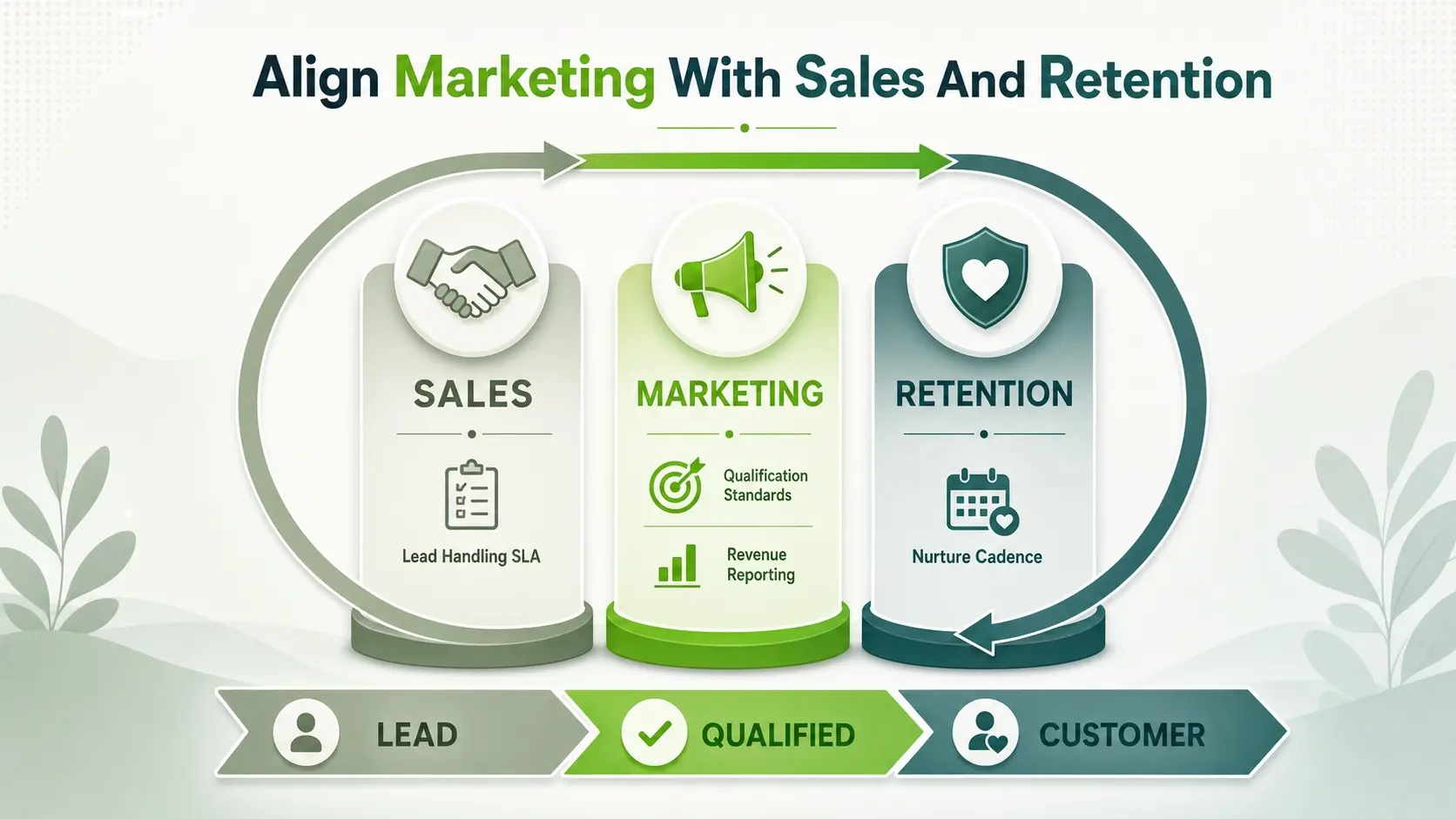 Performance marketing improves when the entire funnel is connected. Sales teams need clarity on lead expectations, speed-to-lead targets, and how qualification is defined. Marketing needs feedback on which leads become revenue and why.
Retention matters even for acquisition-first plans. Email and SMS nurture, onboarding, and customer success can raise lifetime value, which expands what you can afford to pay for acquisition. This creates a stronger feedback loop for channel optimization.
- Lead Handling SLA: Set response time targets and ownership so leads do not go cold.
- Qualification Standards: Define what sales accepts and what is recycled into nurture.
- Nurture Cadence: Build sequences that address objections, outcomes, and next steps without spamming.
- Revenue Reporting: Review pipeline and closed-won performance alongside CPA and ROAS.
When the funnel is aligned, reporting becomes a tool for decisions rather than a debate.
Reporting Cadence And Optimization Habits
Good reporting is brief and actionable. Review performance weekly for tactical adjustments and monthly for strategic shifts. Keep dashboards focused on a few metrics tied to business outcomes, with drill-down views for channel teams.
Optimization should follow a stable rhythm. Use consistent test cycles for creative, landing pages, and targeting. Document changes so the team can learn from wins and avoid repeating mistakes.
- Weekly Review: Check spend pacing, conversion volume, efficiency, and lead quality.
- Test Backlog: Maintain a prioritized list of experiments tied to the biggest constraints.
- Creative Performance: Track fatigue and rotate based on decline in CTR or CVR.
- Quality Audits: Sample leads or orders regularly to confirm the right customers are coming in.
This operating system is what turns the first 90 days into sustainable growth.
Conclusion
The first 90 days of performance marketing should produce clarity, not chaos. Set success metrics, build reliable tracking, strengthen the offer and landing page, and test a small number of channels with discipline. Then scale based on quality and unit economics, supported by a strong reporting cadence.
When these foundations are in place, growth becomes repeatable. The business can invest with confidence because decisions are backed by consistent measurement and structured learning.