
Choosing a digital marketing agency in the USA is a business decision with long-term impact. The right partner improves lead quality, lowers acquisition cost and builds a system your team can measure and manage.
This guide breaks the selection process into clear checkpoints, so you can compare agencies on strategy, execution and accountability. It also helps you avoid common traps that look impressive but do not drive profitable growth.
Clarify Your Goals and Success Metrics
Start by defining what you need the agency to achieve. If the goal is vague, agencies will fill the gap with vanity metrics that do not connect to revenue.
Write down the few outcomes that matter and the numbers used to judge progress. Keep the scope tight enough that the agency can prioritize correctly.
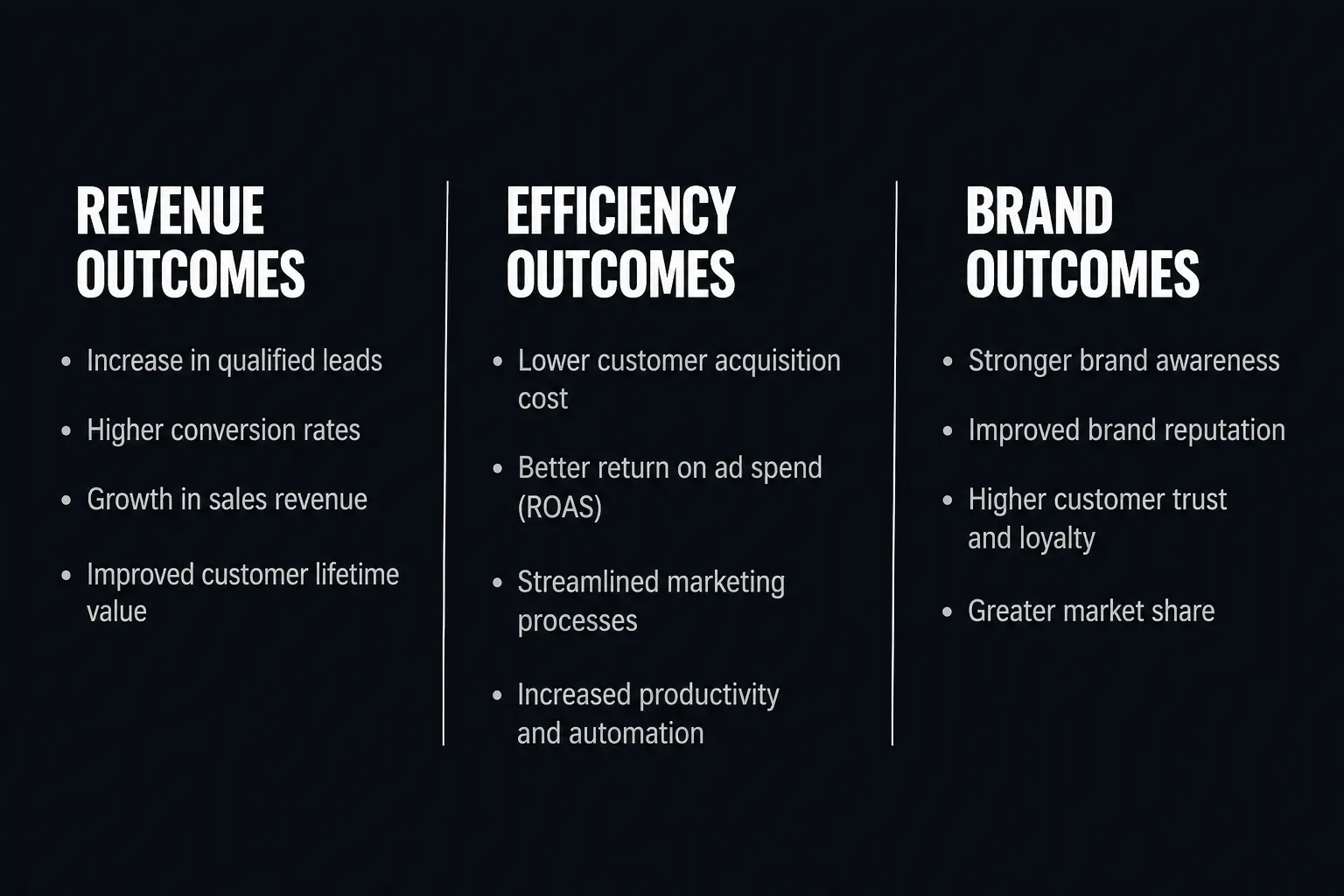
- Revenue outcomes: qualified leads, sales volume, average order value, pipeline value, renewal rate.
- Efficiency outcomes: cost per lead, cost per acquisition, conversion rate, return on ad spend.
- Brand outcomes: direct traffic growth, branded search demand, share of voice, repeat visits.
With clear targets, you can ask every agency to explain how they will move those numbers and how fast they expect change.
Decide What Services You Actually Need
Many agencies claim full service coverage, but quality varies by channel. Pick the services that match your funnel and internal capabilities, then hire for the gaps.
If you have a strong in-house designer but no paid media manager, prioritize performance advertising and analytics. If organic search is the weakest link, prioritize SEO strategy, technical fixes and content production.
- SEO: technical audits, on-page optimization, content planning, link earning, local SEO for multi-location brands.
- PPC And Paid Social: Google Ads, Microsoft Ads, Meta ads, LinkedIn ads, creative testing, landing page optimization.
- Content And Creative: copywriting, video, design systems, conversion focused messaging, brand alignment.
- Email And Lifecycle: segmentation, automation flows, deliverability, retention and upsell programs.
- Analytics And CRO: tracking setup, dashboards, A B testing, funnel analysis, heatmaps and user research.
This clarity prevents you from paying for a bundle that looks big but spreads the team too thin.
Evaluate Industry Fit Without Overweighting It
Industry experience can reduce onboarding time, but it is not a substitute for strong fundamentals. A capable agency should show how it learns your market, maps customer intent and builds a plan based on data.
Ask for proof of similar audience complexity, sales cycle length, compliance needs and geographic reach. That is often more predictive than a matching industry label.
Check Strategy Depth Not Just Channel Tactics
A reliable digital marketing agency in the USA should talk about positioning, audience segments and conversion paths before platform settings. When an agency starts with ad formats or posting frequency, strategy may be thin.
Look for a plan that ties together acquisition, landing pages, nurturing and measurement. Strong agencies also explain tradeoffs, such as when to prioritize quick wins versus durable compounding growth.
Review Their Proof of Performance The Right Way
Case studies matter, but the details matter more than the headline result. Focus on what changed, what the baseline was and how the agency handled constraints like budget, seasonality, or limited creative assets.
Ask whether results were driven by one-time optimizations or a repeatable process. A dependable partner can explain what they would replicate and what was unique to that account.
Ask About Measurement and Data Ownership
Measurement is where many engagements fail, especially when tracking is incomplete or attribution is unclear. Require clarity on what data will be collected, where it will live and who owns it if you change partners.
Confirm access to ad accounts, analytics and tag managers is held by your business, not locked inside the agency. Also confirm how they handle privacy requirements, consent settings and data retention.
Use This Comparison Table to Shortlist Agencies
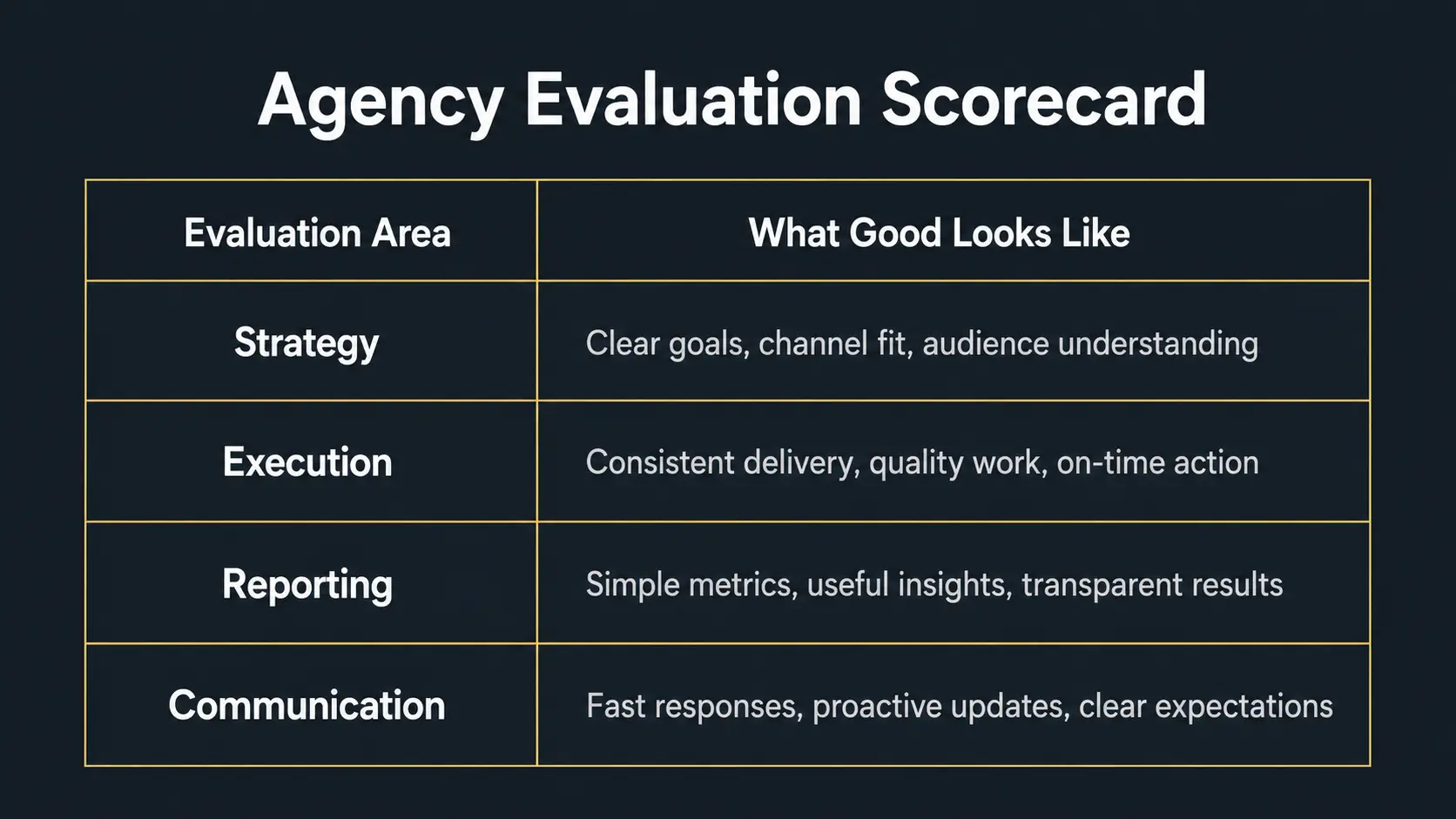
A structured comparison makes conversations more objective. Use the table below to score agencies on the elements that most often drive outcomes.
| Evaluation Area | What Good Looks Like | What To Watch For |
|---|---|---|
| Strategy | Clear plan tied to metrics, funnel and audience segments | Generic promises and unclear prioritization |
| Execution | Experienced specialists, documented processes, quality control | Over reliance on juniors and inconsistent deliverables |
| Reporting | Business metrics, transparent assumptions, actionable insights | Dashboards with vanity metrics and no next steps |
| Communication | Regular cadence, fast response times, proactive issue flags | Hard to reach team and unclear ownership |
After you score each agency, keep only those that meet your minimum standard in strategy, tracking and communication.
Understand Agency Pricing and Contract Terms
Pricing should align with the workload, the expertise level and the expected pace of testing. The cheapest option often costs more when performance stalls or tracking has to be rebuilt later.
Ask what is included in the monthly fee, what counts as out of scope and how fees change if you add channels. Review contract length, cancellation terms and whether there are setup fees.
- Retainer: best for ongoing strategy and execution with predictable workloads.
- Project: best for audits, launches, migrations and one-time rebuilds.
- Performance based: can work with clean tracking and aligned incentives, but requires careful definitions.
Choose the model that matches your internal planning and tolerance for variability.
The Team You Will Actually Work With
The pitch team is not always the delivery team. Ask who will be accountable day to day and what each role will handle.
Confirm the balance of senior oversight and hands-on specialists. A strong agency assigns clear ownership for paid media, SEO, creative and analytics rather than letting work drift between generalists.
Pay Attention to Communication and Workflow
Good marketing is iterative, so workflow quality matters. Ask about meeting cadence, turnaround times and how tasks are tracked from request to completion.
Also ask how they handle approvals, creative feedback and emergencies like disapproved ads or tracking breaks. A reliable partner has a clear escalation path and documentation.
Ask Direct Questions In The Sales Process
Use consistent questions so you can compare answers across agencies. Pay attention to how specific they are and whether they set realistic expectations.
- What would you do in the first 30 days. Look for an audit plan, tracking validation and a prioritized roadmap.
- How do you decide what to test first. Strong answers reference impact, effort and risk.
- How do you report performance. Expect business metrics, context and clear next actions.
- What do you need from us to succeed. Good agencies ask for access, timely feedback and product knowledge.
- How do you handle underperformance. Look for diagnostics, resets and transparent communication.
These answers reveal whether the agency has a repeatable operating system or relies on improvisation.
Watch For Red Flags That Signal Poor Fit
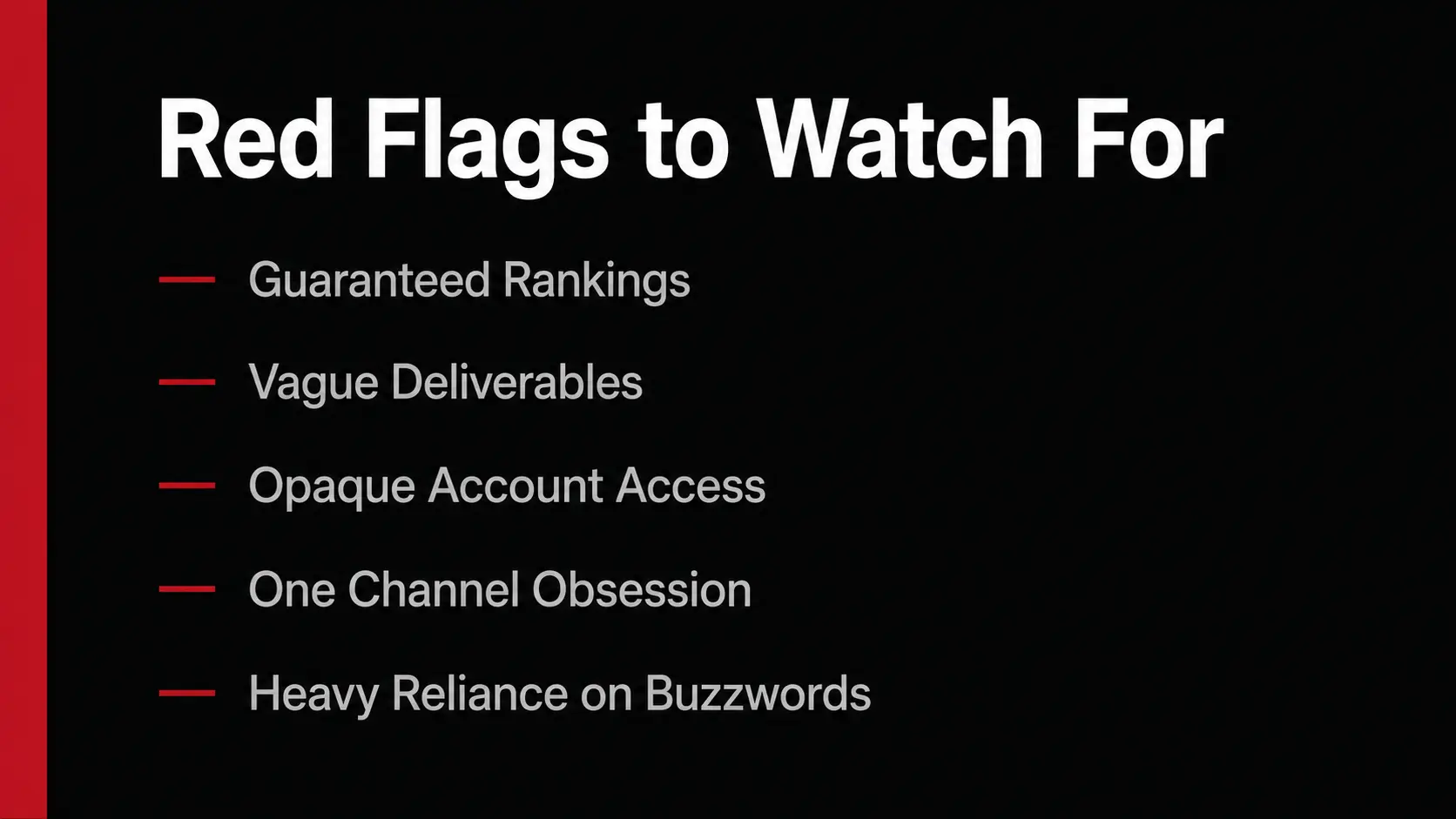
Some warning signs show up before a contract is signed. Treat them as risk indicators and ask follow-up questions immediately.
- Guaranteed rankings or results: credible agencies discuss probabilities and constraints.
- Vague deliverables: you should know what you receive each month and why it matters.
- Opaque account access: your business should own ad accounts and core data.
- One channel obsession: strong partners connect channels to the full customer journey.
- Heavy reliance on buzzwords: clarity beats jargon when budgets are on the line.
If more than one red flag appears, slow down the decision and expand your shortlist.
Plan a Smart Onboarding and First Quarter
The first weeks determine whether the partnership gains momentum. Set expectations on goals, reporting, responsibilities and response times before execution begins.
Ask for a written 90 day plan with milestones for tracking, creative, landing pages and testing. This protects both sides and reduces confusion when priorities shift.
Conclusion
To choose the right digital marketing agency in the USA, start with measurable goals, a clear service scope and strict standards for tracking and transparency. Compare strategy depth, team structure and communication workflow as carefully as you compare pricing.
A strong agency earns trust through clarity, ownership and consistent reporting tied to business outcomes. When you select a partner that matches your needs and operating style, marketing becomes a system you can scale.
FAQ’s
1. What does a digital marketing agency in the USA do?
A digital marketing agency in the USA helps businesses grow online through services like SEO, paid ads, social media, web design, content and analytics. The main goal is to bring the right traffic, leads and sales from online channels. A good agency also studies your audience, competitors and website performance before creating a clear strategy.
2. Should I hire a full-service digital marketing agency?
A full-service digital marketing agency is a good choice if you want one team to manage SEO, paid ads, social media, content, web design and reporting together. This can make your marketing more organized because every channel follows the same goal. It is especially useful for businesses that do not want to manage multiple vendors.
3. How long does it take to see digital marketing results?
Digital marketing results depend on the channels you use. PPC and paid social can bring faster traffic and leads, while SEO and content usually take several months to show strong growth. Most businesses should expect early learning in the first few weeks, then better results as tracking, targeting, landing pages and campaigns improve.