

Choosing between an SEO consultant and an SEO agency affects budget, speed, and results. The best fit depends on how complex your search goals are, how fast you need execution, and how much internal support you already have.
What An SEO Consultant Does?
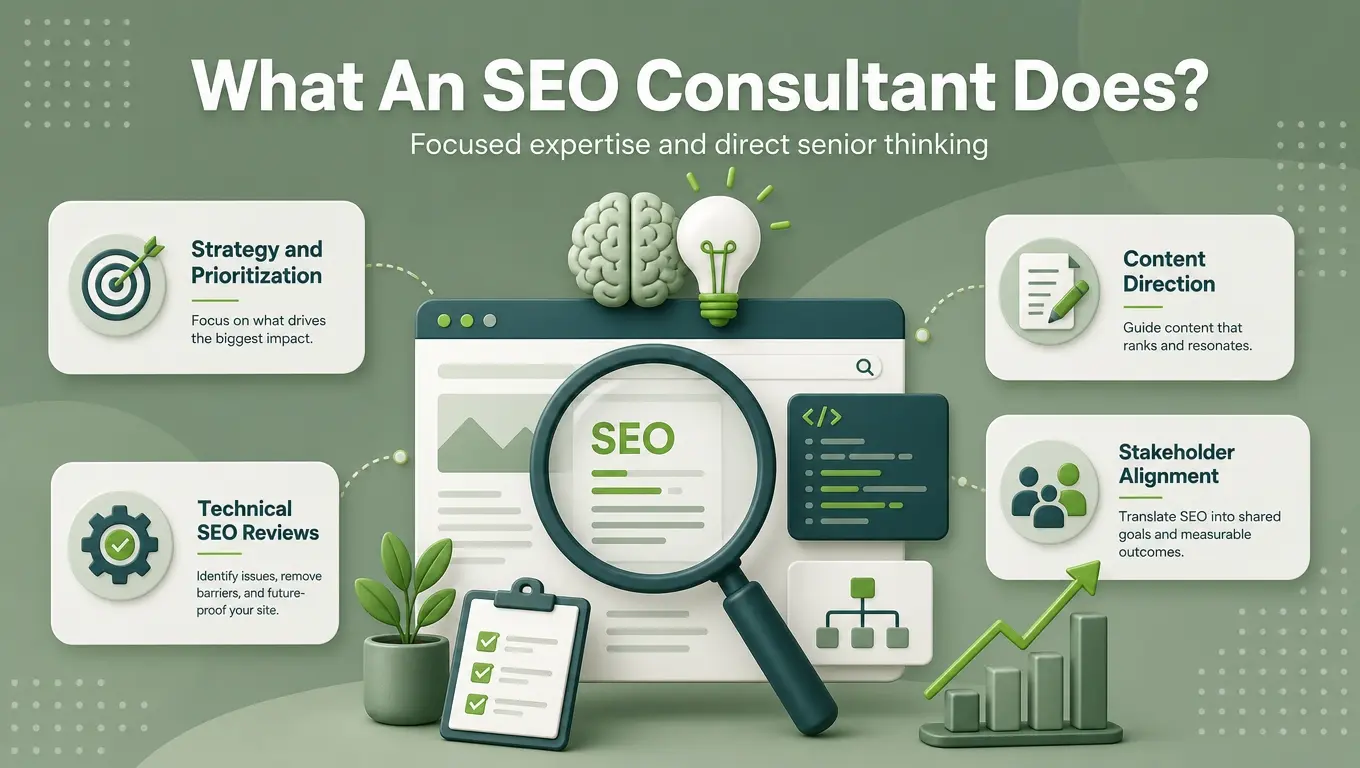 An SEO consultant is a specialist who advises, audits, and guides strategy. Many consultants also do hands-on work, but the core value is focused expertise and direct access to the person doing the thinking.
A consultant often works best when you need clarity, prioritization, and a plan your team can execute. This can include technical SEO audits, content roadmaps, keyword strategy, and performance reviews.
- Strategy And Prioritization: Turns a long list of SEO issues into a realistic plan based on impact and effort.
- Technical SEO Reviews: Diagnoses crawl, indexation, site speed, and architecture issues that block rankings.
- Content Direction: Defines what to publish, how to structure pages, and what to update to match search intent.
- Stakeholder Alignment: Helps leadership understand tradeoffs, timelines, and what success looks like.
This structure suits businesses that want a senior viewpoint without paying for a full team.
What An SEO Agency Does?
An SEO agency provides a team and a process. Instead of one specialist, you gain multiple skill sets such as technical SEO, content, on-page optimization, digital PR, and analytics.
Agencies usually excel when you need ongoing production and consistent execution. That includes publishing at scale, managing outreach, and coordinating with developers and designers.
- Team-Based Delivery: Multiple roles cover technical fixes, content creation, on-page work, and reporting.
- Project Management: Timelines, task ownership, and cross-functional coordination are built into the engagement.
- Operational Capacity: Agencies can take on bigger roadmaps without relying on your internal bandwidth.
- Tooling And Systems: Many agencies already have processes for audits, dashboards, and QA.
This model fits companies that prefer to outsource execution instead of building an in-house SEO workflow.
Key Differences That Matter Most
The right choice rarely comes down to preference. It comes down to accountability, velocity, and the kind of support your business actually needs.
| Decision Factor | SEO Consultant | SEO Agency |
|---|---|---|
| Best For | Focused guidance and specialized problem solving | Ongoing execution across multiple SEO disciplines |
| Communication | Direct access to the expert doing the work | Often routed through an account manager and team |
| Speed Of Execution | Fast for audits and strategy, slower for large-scale production | Faster when multiple deliverables must move in parallel |
| Cost Structure | Lower overhead, usually hourly or monthly retainer | Higher monthly fees tied to team time and deliverables |
Use the table to separate the need for senior direction from the need for volume and operational throughput.
When A Consultant Is The Better Fit?
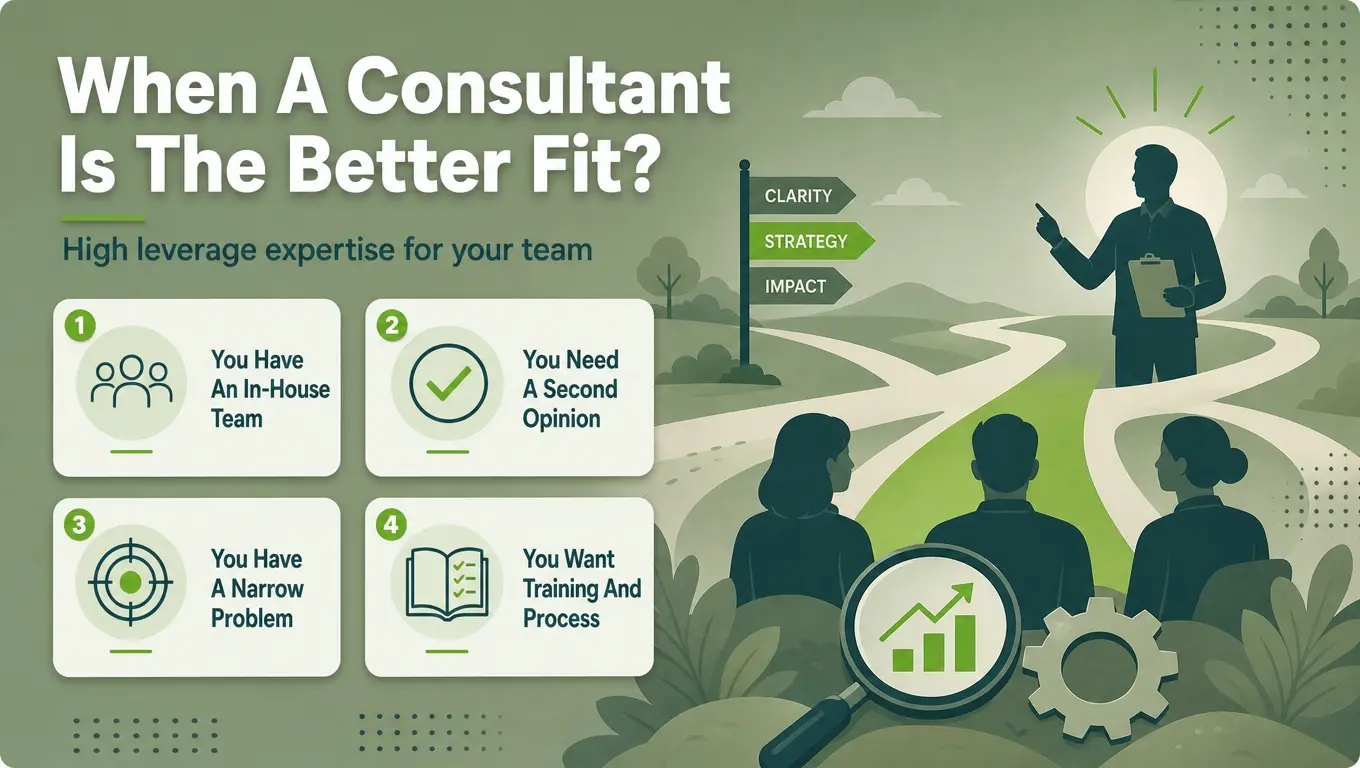 A consultant is often the best option when the main bottleneck is decision-making. If your team can execute but needs expert prioritization, a consultant can quickly raise the quality of your SEO actions.
This route also works when you have a short-term issue that needs a specialist, not a full service provider. It can be a site migration, indexing instability, analytics confusion, or a sudden traffic drop.
- You Have An In-House Team: A consultant can guide writers, developers, and marketers without taking over daily production.
- You Need A Second Opinion: Independent audits and strategy reviews help validate or correct an existing SEO plan.
- You Have A Narrow Problem: Technical fixes, information architecture, and on-page optimization can be solved with targeted expertise.
- You Want Training And Process: Consultants can build internal SOPs, templates, and QA checklists for long-term consistency.
The common thread is high leverage. A consultant brings senior thinking that improves everything your team touches.
When An Agency Is The Better Fit?
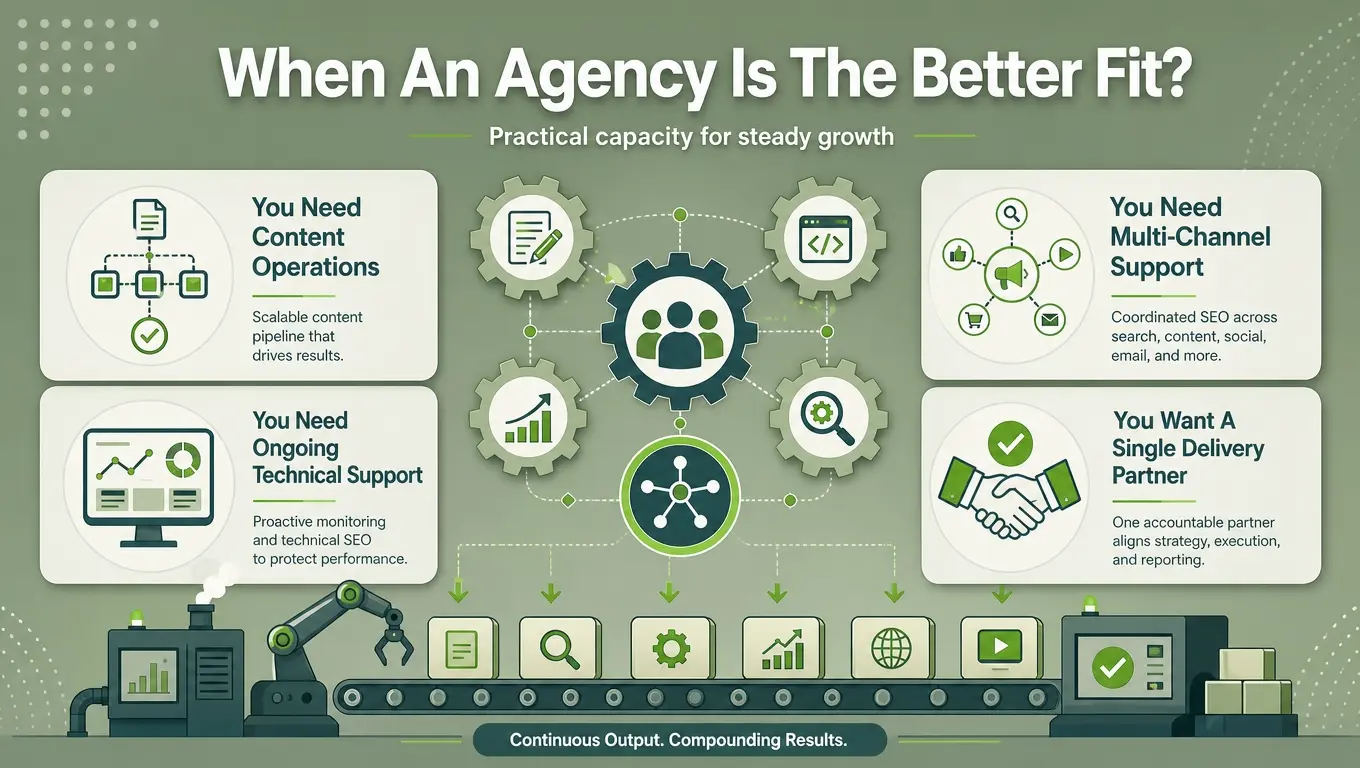 An agency is usually the better fit when execution is the constraint. If content needs to be produced, pages need to be optimized regularly, and links or mentions need sustained effort, an agency provides the capacity.
This model is also useful when SEO must connect with design, development, and brand. A coordinated team reduces delays that happen when tasks are split across multiple vendors.
- You Need Content Operations: Keyword research, briefs, writing, editing, and updating older pages require a repeatable pipeline.
- You Need Ongoing Technical Support: Larger sites often need continuous monitoring of crawl health, templates, and releases.
- You Need Multi-Channel Support: Agencies may coordinate SEO with paid search, conversion rate optimization, and analytics.
- You Want A Single Delivery Partner: Outsourcing reduces coordination overhead across freelancers and internal teams.
If your growth plan relies on steady output and a team to run it, an agency can be the practical choice.
Budget And ROI Considerations
Cost is not just the monthly fee. It includes the time your team spends managing work, revising deliverables, and implementing recommendations.
A consultant can be more cost-efficient when you mainly need expert direction and your team can ship changes. An agency can be more cost-efficient when you would otherwise hire multiple specialists or keep projects stalled due to limited bandwidth.
- Implementation Cost: Consultant-led SEO still requires developer and content time to execute the plan.
- Management Overhead: Agencies reduce vendor coordination, but may require more structured check-ins and approvals.
- Opportunity Cost: Delayed fixes and slow publishing can cost more than the service fee when competition is strong.
Measure ROI using business metrics such as qualified organic leads, revenue from organic traffic, and cost per acquisition relative to other channels.
Control, Transparency, And Accountability
Consultants tend to offer high transparency because you speak to the person making decisions. The risk is dependency on one individual, especially if documentation and handoffs are weak.
Agencies tend to offer stronger redundancy and coverage. The risk is reduced clarity if work is fragmented across multiple hands without clear ownership.
- Reporting Clarity: Look for ranking, traffic, and conversion reporting that ties work to outcomes, not vanity metrics.
- Work Visibility: Ask how tasks are tracked, how QA is done, and how changes are documented.
- Decision Rights: Define who approves technical changes, content updates, and on-page recommendations.
Whichever option you choose, insist on measurable deliverables and a clear feedback loop.
Questions To Ask Before You Hire
Many hiring mistakes happen because the scope is unclear. These questions help you pick a partner that matches your constraints and expectations.
- What Will You Do In The First 30 Days: Strong answers include auditing, prioritization, quick wins, and a roadmap tied to KPIs.
- How Do You Handle Technical SEO: Look for comfort with crawling, indexation, structured data, internal linking, and release processes.
- How Do You Approach Content Quality: The best approach focuses on search intent, topical coverage, and updates, not just publishing volume.
- How Will You Prove Impact: Expect measurement tied to conversions, assisted revenue, lead quality, and segmentation by page type.
Clear answers signal maturity and reduce the risk of paying for activity instead of outcomes.
A Practical Middle Path For Many Businesses
Some businesses benefit from using both models in a structured way. A consultant can set strategy, governance, and technical standards, while an agency handles production and ongoing execution.
This hybrid approach reduces mistakes and keeps output consistent. It also prevents a common problem where content is produced at scale without technical foundations or clear prioritization.
- Consultant As Lead Strategist: Owns audits, prioritization, and performance reviews with your stakeholders.
- Agency As Delivery Team: Executes content, on-page improvements, digital PR, and reporting on a predictable cadence.
- Internal Team As Approvers: Provides brand, product, and compliance inputs so work stays accurate and on-message.
When roles are defined, the hybrid model can reduce rework and keep SEO aligned with business goals.
How Imili Corp Can Support Either Choice
Imili Corp works with businesses that want SEO outcomes tied to growth, not just rankings. If you need a clear roadmap, technical direction, and measurable priorities, a strategic engagement can clarify what to fix and what to ignore.
If you need ongoing execution, a team-based delivery approach can cover technical SEO, content optimization, and performance reporting in one coordinated workflow. This is especially helpful when internal teams are busy and SEO work needs consistent momentum.
Conclusion
An SEO consultant is best when you need focused expertise, direct communication, and a plan your team can execute. An SEO agency is best when you need ongoing production, a broader skill set, and faster parallel delivery.
Decide based on your constraints, not assumptions. When strategy and execution are both needed, a hybrid setup can deliver clarity and speed without losing accountability.
Frequently Asked Questions
Is An SEO Consultant Cheaper Than An SEO Agency?
Often, yes, because a consultant has lower overhead and pricing is commonly hourly or retainer-based. Total cost can rise if you still need to hire writers, developers, or additional specialists to execute the plan.
Can An SEO Agency Provide The Same Expertise As A Consultant?
An agency can provide deep expertise, especially when it has senior specialists for technical SEO, content strategy, and analytics. The key difference is that expertise may be distributed across a team, so you should confirm who is responsible for decisions and reviews.
How Long Should You Commit Before Judging Results?
Most SEO work needs enough time for implementation, crawling, and ranking changes to show up in data. You can still evaluate early progress through completed deliverables, technical health improvements, and leading indicators such as better indexation and stronger page-level engagement.