
Paid search works best when speed, intent and measurement matter more than waiting for long-term visibility to compound. A PPC agency helps turn that advantage into predictable acquisition by building campaigns that match demand, control spend and prove impact. The key is knowing when paid search is the right growth channel and when it will only amplify weak fundamentals.
What Paid Search Really Does For Growth?
Paid search captures existing demand by showing ads when people actively look for a solution. That makes it different from channels that create demand over time, such as organic content or brand marketing. When done well, it turns search intent into qualified traffic with a clear cost per visit and cost per lead.
A strong program also creates fast feedback loops. Search queries, ad tests and landing page results reveal what customers value and what they ignore. Those insights can improve messaging across email, sales and on-site conversion paths.
Signals That Paid Search Is The Right Growth Channel
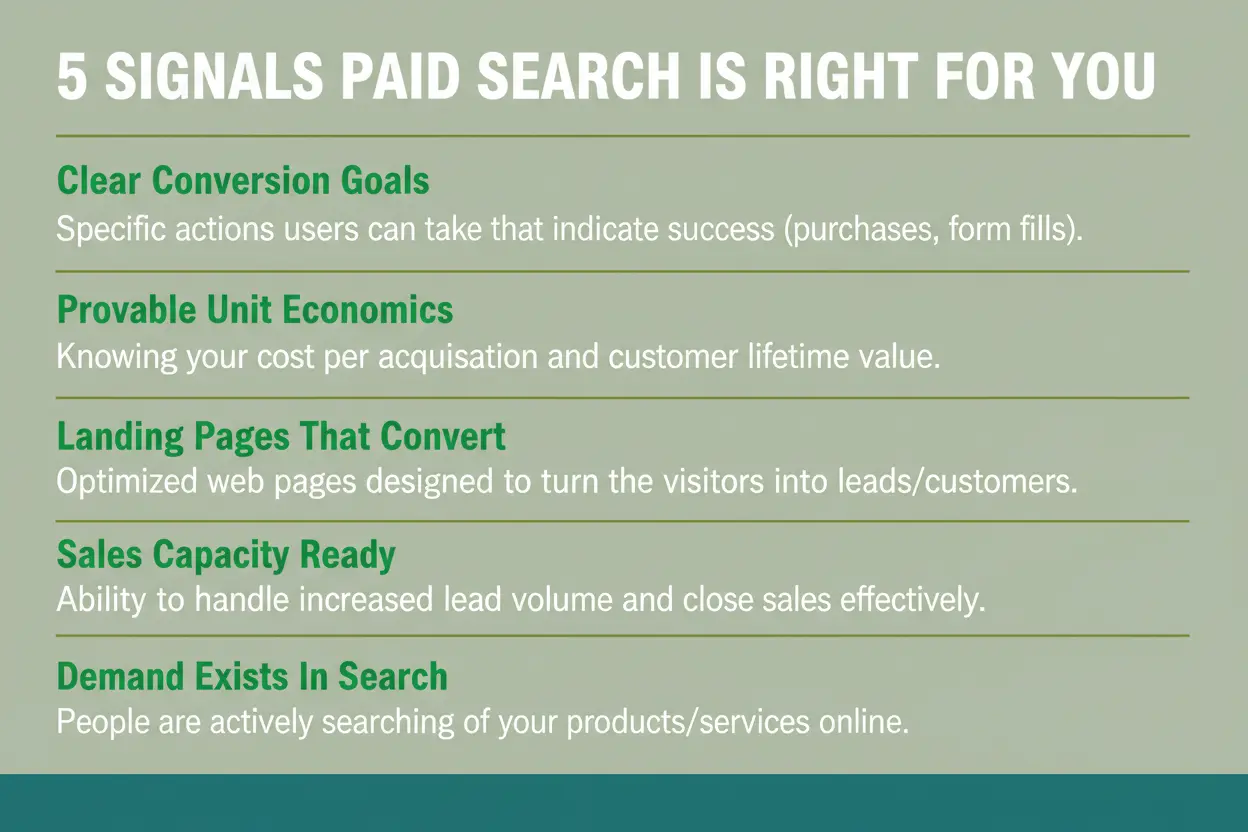
Paid search tends to win when a business has clear offers, known conversion actions and the ability to follow up quickly. It also performs well when purchase intent is visible in keywords and when tracking can connect clicks to outcomes. Without those pieces, ads can drive activity without progress.
- Clear conversion goals: Leads, bookings, purchases, or qualified calls can be measured consistently.
- Provable unit economics: You know gross margin, lifetime value range and acceptable acquisition cost.
- Landing pages that convert: Pages load quickly, match the ad promise and remove friction.
- Sales or fulfillment capacity: You can handle increased demand without response delays.
- Demand exists in search: People already search for the category, the pain, or the solution.
If several of these signals are present, paid search can scale efficiently while other channels mature.
When a PPC Agency Adds The Most Value?
Paid search management looks simple on the surface, but profitable performance depends on structure, data quality and ongoing optimization. A PPC agency adds value when complexity rises and mistakes become expensive. That includes multi-location campaigns, lead quality issues, or aggressive growth targets with fixed budget ceilings.
An experienced team brings repeatable processes for keyword research, match type strategy, conversion tracking, bidding and creative testing. They also handle platform changes, policy issues and automation pitfalls that can quietly degrade results. This helps keep focus on outcomes rather than constant firefighting.
How To Decide Between PPC and Other Channels?
The smartest channel choice is based on time-to-impact, controllability and how well the channel matches the buyer journey. Paid search is controllable because you can adjust budgets, pause segments, or shift targeting quickly. It is also measurable when tracking is set up correctly, which supports clearer decision-making.
Some goals are better served by other channels. If you must build trust before anyone searches for you, organic content and partnerships may be a better first move. If the product needs demand creation, paid social or creator programs may be more suitable than search-only acquisition.
| Growth Situation | Why Paid Search Helps | What Must Be True |
|---|---|---|
| Need predictable lead volume | Captures high-intent queries with controllable spend | Tracking ties leads to pipeline quality |
| Launching a new offer | Validates messaging fast through ad and page tests | Landing pages match intent and load quickly |
| Seasonal demand swings | Budgets and bids can rise or fall with the calendar | Historical data or forecasting guides pacing |
| Competing in crowded markets | Targets long-tail intent and differentiators efficiently | Strong value proposition and tight keyword controls |
Keyword Strategy That Matches Intent
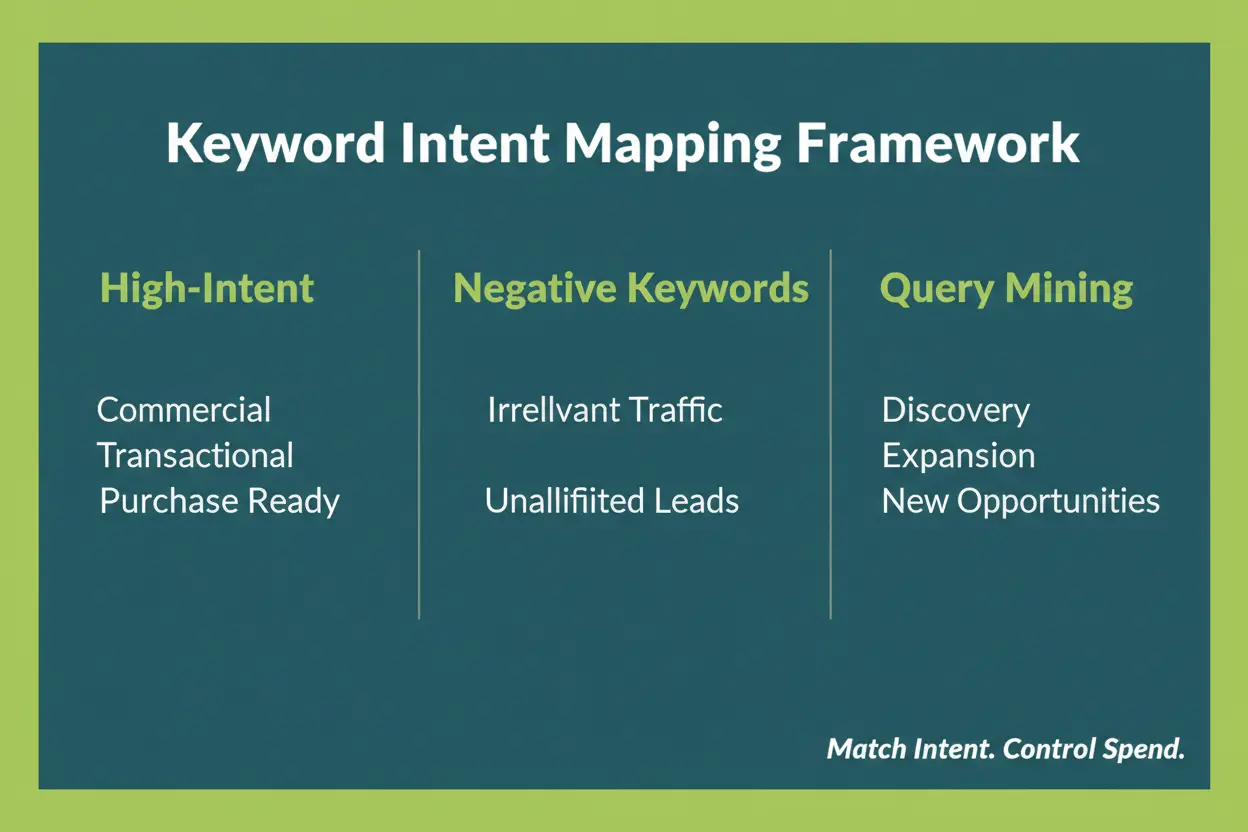
Profitable search campaigns start with intent mapping, not big keyword lists. Commercial intent terms usually convert better, while informational terms can support upper-funnel goals if the site can nurture leads. A PPC agency typically groups keywords by intent, offer and funnel stage to keep relevance high.
Match type selection also shapes performance. Broad reach can increase volume but may dilute lead quality without strong negatives and clear conversion signals. Tighter matching can improve efficiency but may limit scale in smaller markets.
- High-intent keywords: Focus on buying signals, service modifiers and location terms when relevant.
- Negative keywords: Block research-only queries, job seekers and irrelevant product variants.
- Query mining: Use search term reports to expand winners and cut waste.
This approach keeps spend aligned with the searches most likely to produce revenue, not just clicks.
Landing Pages and Conversion Rate Optimization
Paid search can only be as strong as the page users land on. Relevance between ad copy, keyword intent and page content improves Quality Score signals and user experience. It also reduces bounce rate and increases conversion rate, which lowers effective acquisition cost.
Conversion rate optimization does not require endless redesigns. Small improvements often compound, such as clearer headings, stronger proof points, simplified forms and faster page speed. A PPC agency may run controlled tests to avoid changes that look good but reduce results.
- Message match: Repeat the promise from the ad and align it with the search intent.
- Friction removal: Reduce form fields, improve mobile usability and clarify next steps.
- Trust signals: Add certifications, guarantees, reviews and clear contact paths where appropriate.
Better pages increase efficiency across every keyword, not only the top performers.
Budgeting, Bidding and Pacing
Budget decisions should start with goals and unit economics, then work backward to required volume. A PPC agency helps connect expected click-through rate, conversion rate and cost per click to a realistic forecast. That prevents underfunded campaigns that cannot gather enough data to optimize.
Bidding strategy must match maturity. Early phases often benefit from manual controls and tighter targeting to learn quickly. More automated bidding can perform well once conversion tracking is clean and there is consistent conversion volume.
- Define efficiency targets. Set acceptable acquisition cost or return targets based on margin and lifetime value.
- Estimate volume requirements. Translate targets into lead, sale, or booking counts needed per week.
- Plan for learning. Allocate budget for testing and data collection without risking core revenue.
- Monitor pacing weekly. Adjust bids and budgets to avoid end-of-month spikes or early burnout.
Good pacing keeps performance stable and avoids reactive changes that create volatility.
Measurement and Attribution You Can Trust
Paid search decisions depend on accurate conversion tracking. If conversions are inflated, duplicated, or missing, bidding and reporting will push spend in the wrong direction. A PPC agency typically audits tags, consent settings and offline conversion imports to connect ad clicks to real outcomes.
Attribution should be fit for purpose. Last-click views can undervalue assist behavior, while overly complex models can hide problems. The goal is consistent measurement that helps decide what to scale, what to pause and what to test next.
- Primary conversions: Tie to revenue or qualified pipeline, not vanity events.
- Lead quality feedback: Pass outcomes back to the ad platform when possible.
- Incrementality checks: Watch brand versus non-brand splits and overlap with other channels.
Reliable data is what turns paid search from spending into investing.
Common Mistakes That Waste Spend
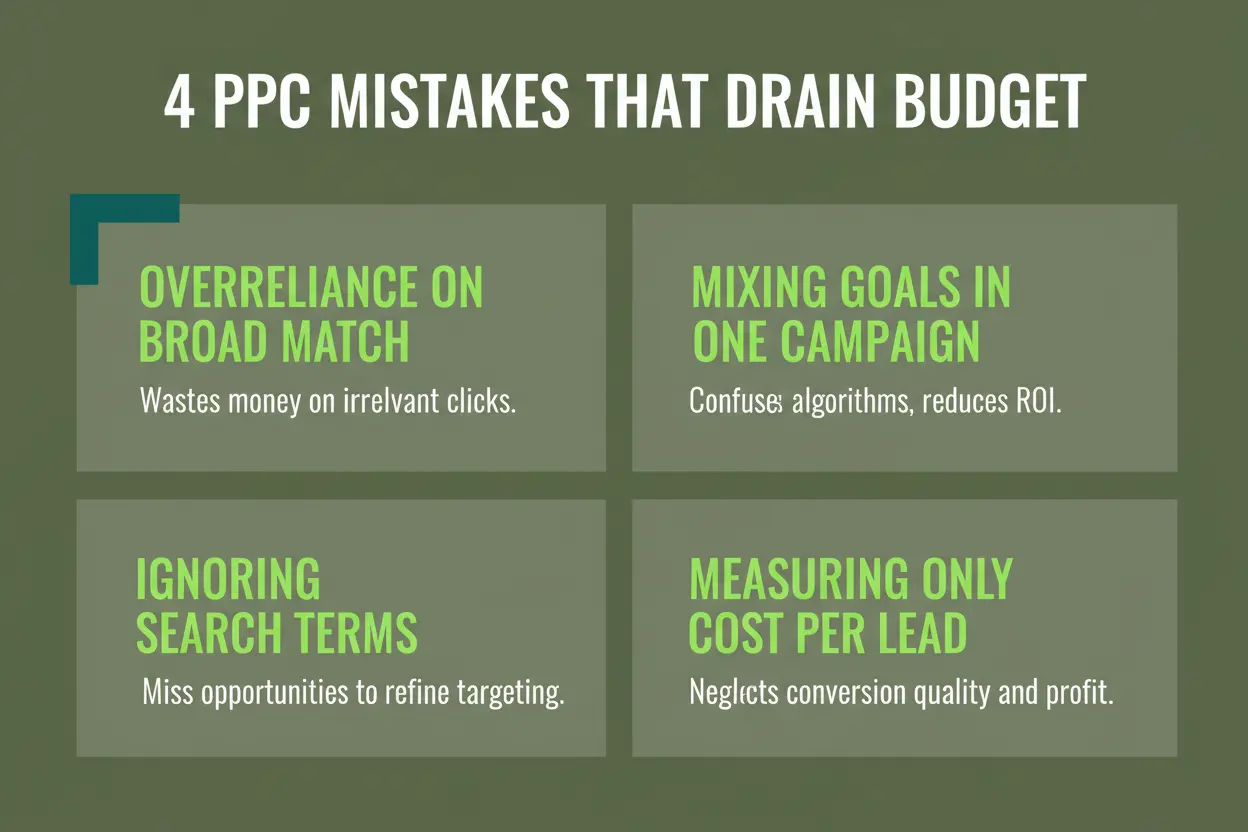
Most waste comes from mismatched intent and weak controls. Broad targeting without negatives can pull in irrelevant clicks and generic landing pages can turn qualified traffic into drop-offs. Poor tracking then hides the real issue and encourages more of the same.
Another common problem is chasing platform automation without readiness. Automated bidding needs stable conversion signals and enough volume to learn. When those inputs are missing, results often swing unpredictably.
- Overreliance on broad match: Expands reach faster than relevance.
- Mixing goals in one campaign: Blurs optimization signals and reporting clarity.
- Ignoring search terms: Misses the easiest opportunities to cut waste and find new winners.
- Measuring only cost per lead: Can reward low-quality leads that never close.
Fixing these issues typically improves efficiency before increasing budget.
What To Expect From a Strong PPC Agency Partnership?
A high-quality PPC agency runs a disciplined program with clear priorities and transparent reporting. You should see a structured account, consistent testing and a focus on business outcomes. Communication should include what changed, why it changed and what will happen next if results hold.
Look for documentation and operational rigor. That includes naming conventions, shared dashboards, change logs and a roadmap for scaling. The relationship works best when both sides align on targets, sales feedback and lead qualification standards.
- Strategy and structure: Intent-based campaigns with clear segmentation and tight relevance.
- Ongoing optimization: Regular query reviews, ad testing and landing page collaboration.
- Reporting that drives action: Focus on pipeline, revenue and efficiency trends.
- Governance and safety: Brand controls, policy compliance and budget guardrails.
With the right partnership, paid search becomes a dependable growth lever rather than a monthly mystery.
Conclusion
Paid search is the right growth channel when you need speed, you can measure outcomes and there is clear intent in the market. A PPC agency helps turn that intent into scalable acquisition by tightening targeting, improving conversion paths and using trustworthy data. The best results come from aligning unit economics, landing page experience and a disciplined optimization cadence.
If the fundamentals are in place, paid search can provide consistent volume while other channels build longer-term resilience. If the fundamentals are missing, fix tracking, offer clarity and conversion friction first. That sequence protects budget and makes growth sustainable.
FAQ’s
1. Is paid search better than SEO for growing a business?
Paid search and SEO serve different purposes. Paid search delivers immediate visibility and leads by targeting people actively searching for your products or services, while SEO builds long-term organic traffic. Many businesses achieve the best results by using PPC for short-term growth and SEO for sustainable long-term visibility.
2. How do I know if my business is ready for PPC advertising?
Your business is ready for PPC when you have clear conversion goals, a high-converting landing page, reliable conversion tracking and the ability to handle incoming leads or sales. These fundamentals help ensure your advertising budget generates measurable business results instead of wasted clicks.
3. What should I expect when hiring a PPC agency?
A professional PPC agency should provide strategic campaign planning, keyword research, conversion tracking, ongoing optimization, transparent reporting and regular performance improvements. The focus should be on increasing qualified leads or sales while improving return on ad spend (ROAS), not just generating more clicks.