

Lead generation budgets fail most often when the first platform is chosen by habit, not by buyer intent, offer strength, and speed to learning. Google Ads and Meta Ads can both produce high-quality leads, but they do it through very different mechanics. The best starting point is the channel that matches how urgently people are searching and how efficiently you can qualify them.
How Lead Generation Works On Each Platform?
Google Ads captures demand that already exists. People type a problem, service, or product into Search, and your ad competes for that attention at the moment of intent. This usually shortens the path from click to form fill, especially for urgent needs and high-consideration services.
Meta Ads creates and shapes demand while people scroll. Targeting relies on interests, behaviors, and broad algorithmic learning, then your creative earns the click. The funnel is often longer, but the volume and cost per click can be attractive when the offer is strong and the follow-up is tight.
Buyer Intent And Lead Quality
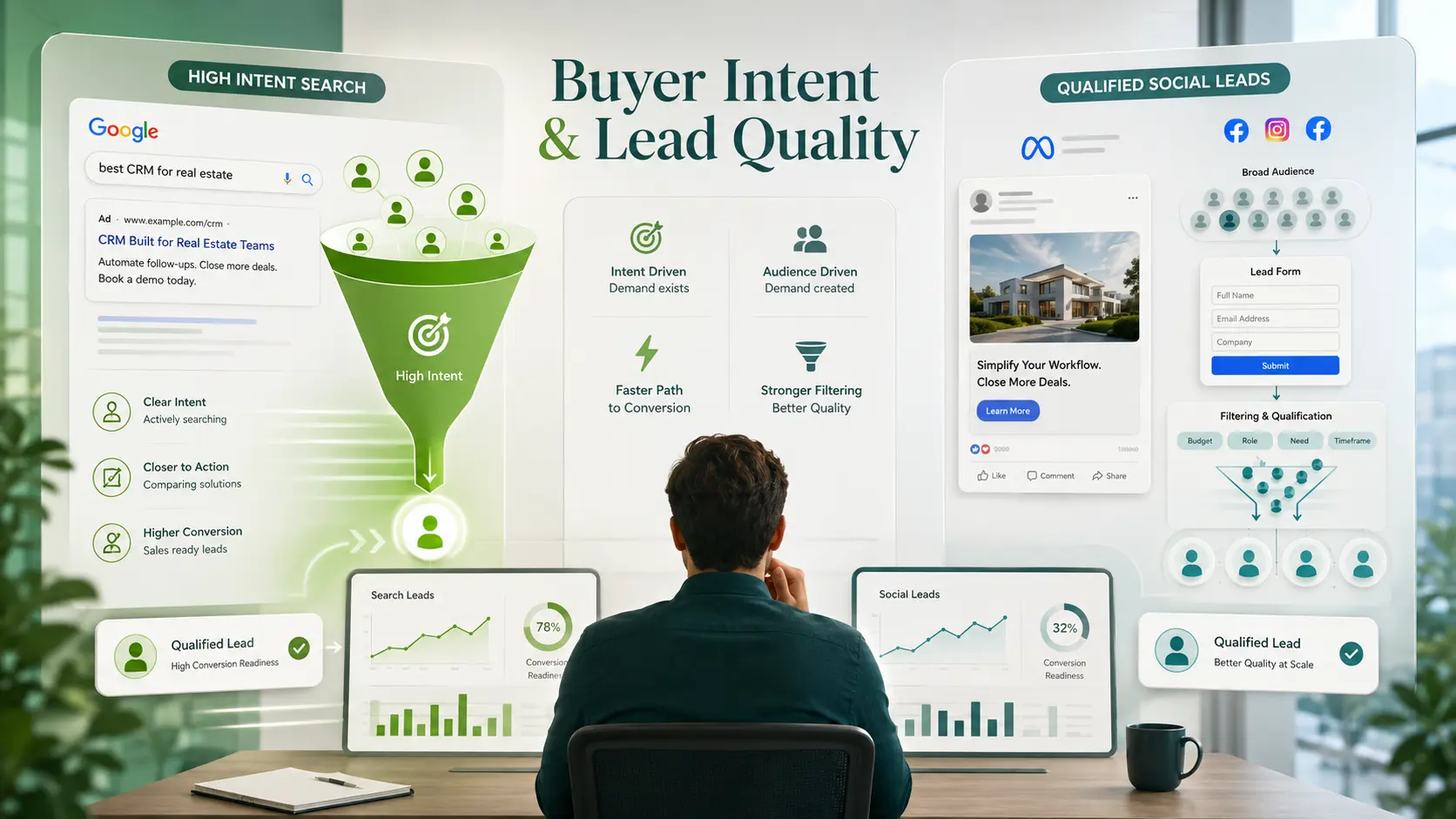 Intent is the main reason Google Ads often wins first for lead generation. Search traffic is self-selected by the keyword, so the lead tends to be closer to action. That said, poor keyword choices and weak qualification can still produce low-quality inquiries.
Meta leads can be excellent, but they require stronger filtering. Users are not actively searching, so the form and messaging must screen for fit. When qualification is built into the flow, Meta can deliver scalable leads that convert well over time.
Cost Structure And Budget Efficiency
Google Ads typically has higher cost per click in competitive categories. You are paying for precision and urgency, and auctions can be unforgiving when many advertisers chase the same high-intent terms. Efficiency improves when you focus on profitable segments, tight match types, and strong landing pages.
Meta often provides cheaper clicks and broader reach, but cost per qualified lead depends on creative quality and follow-up speed. If your team cannot respond quickly, the apparent savings can disappear. Budget efficiency improves when you use clear qualifying questions and optimize to downstream conversion signals.
| Decision Factor | Google Ads | Meta Ads |
|---|---|---|
| Primary Strength | High intent capture through search queries | Demand creation through targeting and creative |
| Typical Speed To First Leads | Fast once keywords and landing pages are aligned | Moderate since learning depends on creative and signals |
| Common Cost Pattern | Higher CPC with strong lead intent | Lower CPC with variable lead intent |
| Best Fit For | Urgent services and bottom-funnel offers | Mid-funnel offers and scalable audiences |
Targeting And Reach Differences
Google targeting begins with keywords, then refines with location, device, schedules, audiences, and exclusions. The limitation is the size of search demand in your market. If only a small number of people search each month, scaling can be difficult without expanding into broader terms or additional campaign types.
Meta targeting begins with audiences and then improves through conversion data. Reach is often much larger, which helps scale, but you must work harder to stay relevant. Strong creative and a clear offer keep the algorithm focused on the right people.
Creative And Messaging Requirements
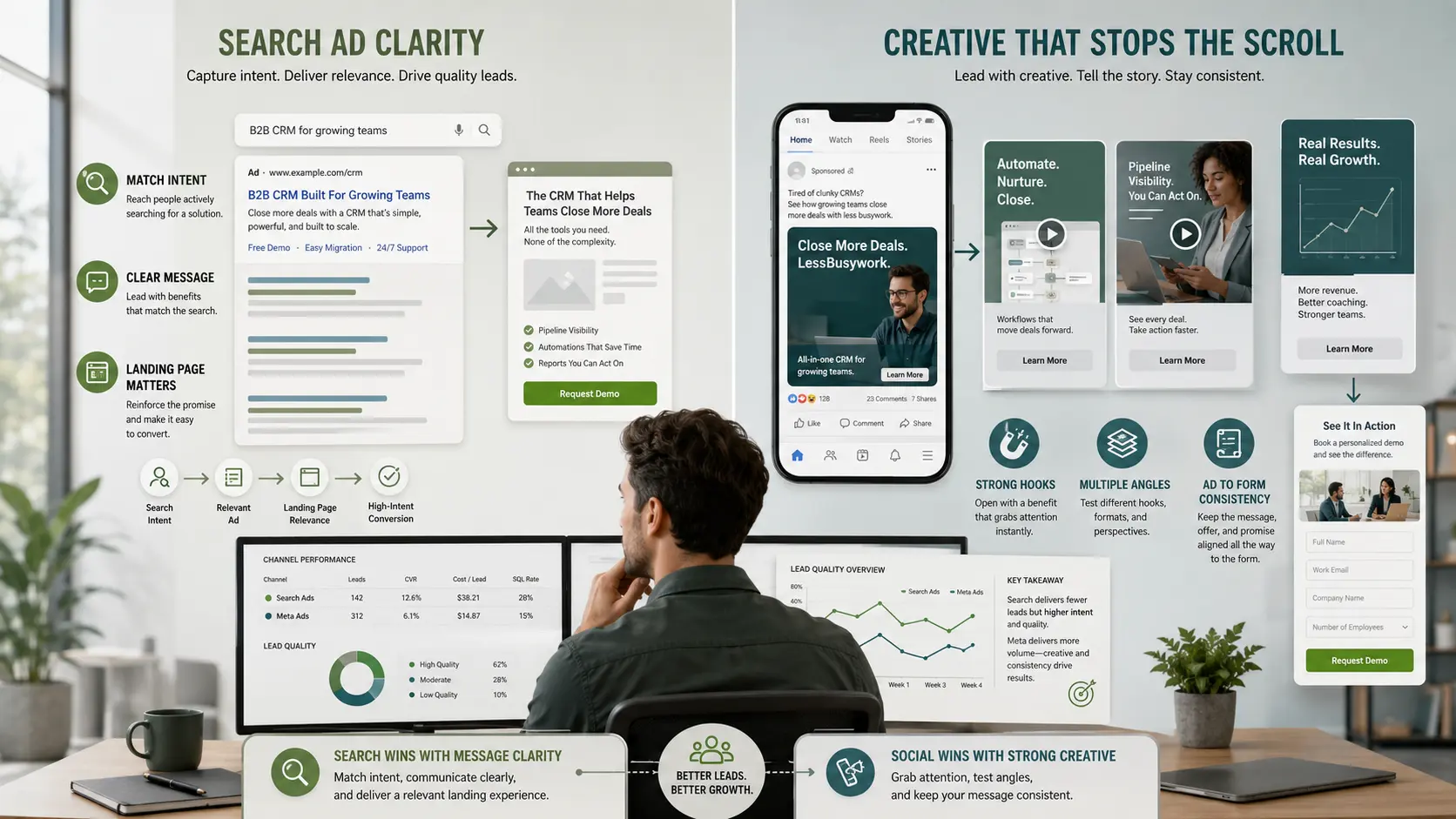
Google Search creative is constrained, so clarity beats cleverness. The ad must match the keyword intent, set expectations, and remove friction. Landing pages do heavy lifting, so a slow or confusing page can erase the advantage of high intent.
Meta is creative-led, and performance depends on stopping the scroll. You need multiple angles, strong hooks without hype, and visuals that communicate the value quickly. Consistency between ad and form or landing page reduces drop-off and improves lead quality.
Lead Forms Versus Landing Pages
Google Ads generally performs best with dedicated landing pages built for the specific service and keyword group. This improves Quality Score, conversion rate, and lead relevance. It also supports better tracking and easier sales handoff when each page maps to a defined offer.
Meta can use on-platform lead forms or send traffic to a landing page. On-platform forms reduce friction and can increase volume, but they can also increase low-intent submissions if you ask too little. Landing pages often produce fewer leads but can raise qualification and give you more control over messaging and tracking.
Tracking And Optimization Signals
Google optimization is most effective when you feed it clean conversion actions that reflect qualified outcomes. If you optimize only for form fills, you may train the system to find users who submit but do not close. Offline conversion imports and better lead scoring improve learning quality when they are available.
Meta also benefits from strong signals, but it can be more sensitive to limited data in small accounts. Clear event setup and consistent conversion definitions are essential. The more accurately you can send quality signals back, the faster performance stabilizes.
When To Start With Google Ads?
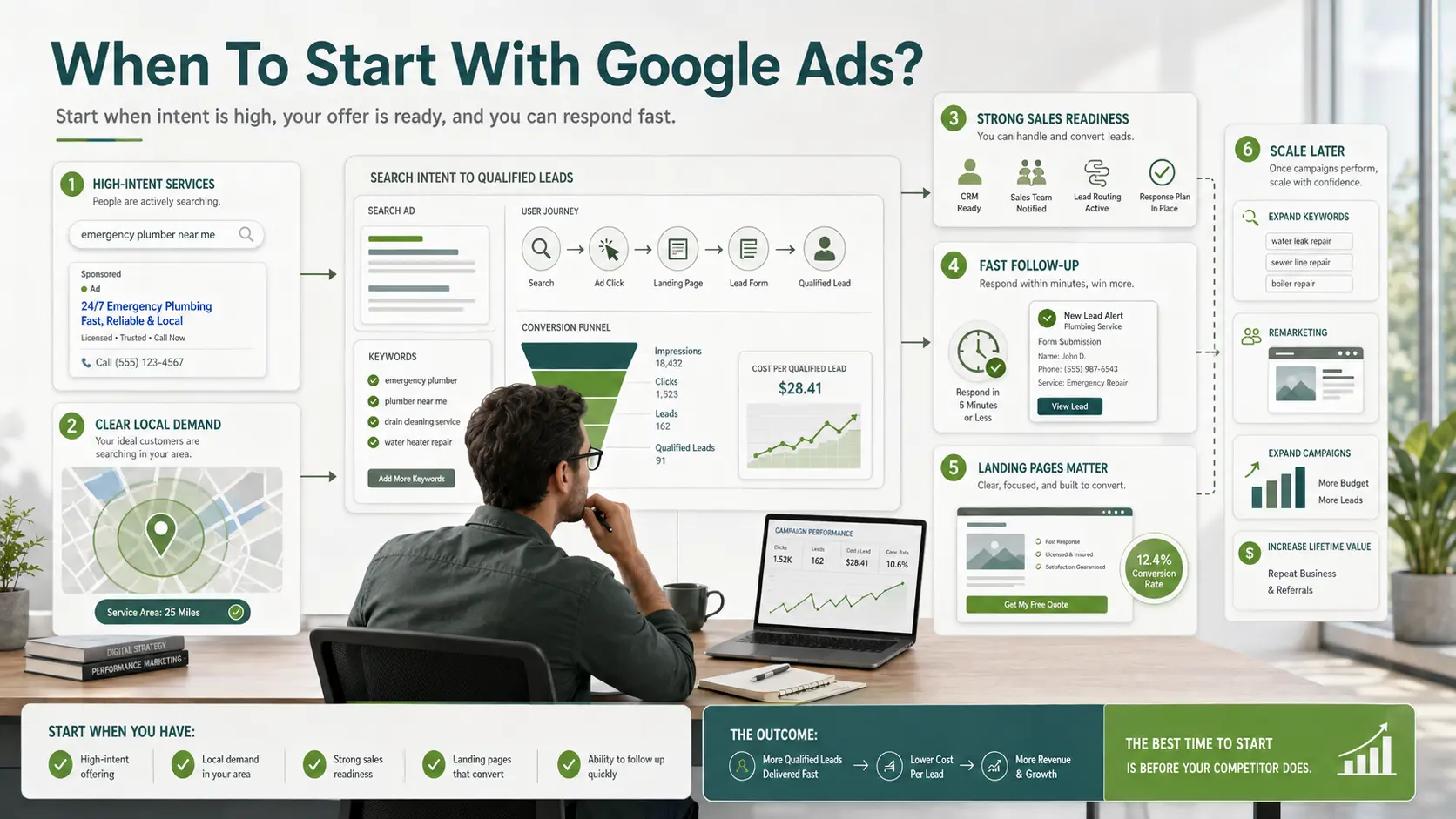
Start with Google Ads when the business relies on immediate intent and the offer solves a clear problem. It is also a strong first choice when you need predictable lead flow for sales teams. This approach works best when you can build specific landing pages and handle lead follow-up quickly.
- High-Intent Services: Buyers search with urgency, and speed matters in winning the lead.
- Clear Local Demand: Geographic targeting keeps spend focused on reachable customers.
- Strong Sales Readiness: Fast response and clear qualification improve close rate and lower wasted spend.
Once the initial campaigns are stable, you can expand into additional keywords, remarketing, and complementary campaign types to increase total volume.
When To Start With Meta Ads?
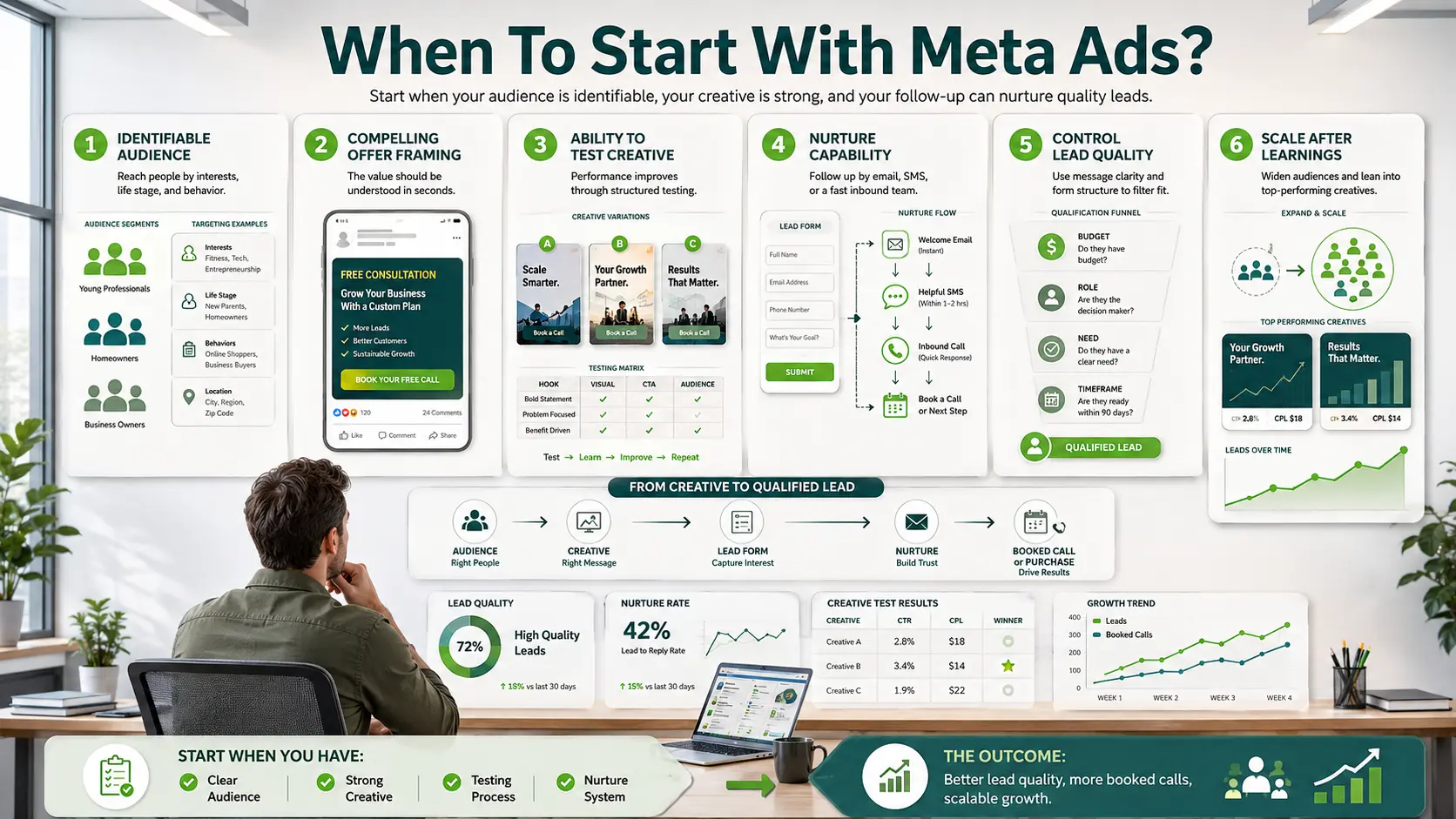 Start with Meta when your audience is identifiable by interests, life stage, or behaviors, and you have strong creative assets. Meta is also a good first choice when you can nurture leads through email, SMS, or a fast inbound team. The key is controlling lead quality through messaging and form structure.
- Compelling Offer Framing: The value is easy to understand within a few seconds of attention.
- Ability To Test Creative: Iteration is frequent, and performance improves through structured testing.
- Nurture Capability: Follow-up is consistent, and leads are moved toward a booked call or purchase.
After early learnings, scaling becomes easier by widening audiences and leaning into the creatives that produce the best qualified outcomes.
A Practical Way To Split The First Budget
If you must choose one platform first, use intent as the tie-breaker. If people actively search for what you sell, begin with Google Ads and build a tight keyword-to-landing-page map. If search demand is limited or the buyer needs education, begin with Meta and invest in creative and qualification.
If you can split the budget, keep the structure simple. Use Google to capture bottom-funnel demand and Meta to build awareness and retarget visitors who did not convert. This gives you both immediate leads and a way to lower blended acquisition cost over time.
- Google First Allocation: Prioritize core service keywords, add negatives early, and focus on one conversion action that reflects qualified leads.
- Meta Support Layer: Run retargeting to site visitors and engaged users, then add broad prospecting once results are consistent.
- Shared Quality Controls: Use clear offer terms, qualifying fields, and fast response workflows to prevent lead waste.
From there, optimization becomes a matter of improving qualification, landing page conversion rate, and sales follow-up discipline, not just bidding or creative.
Common Mistakes That Waste Lead Generation Spend
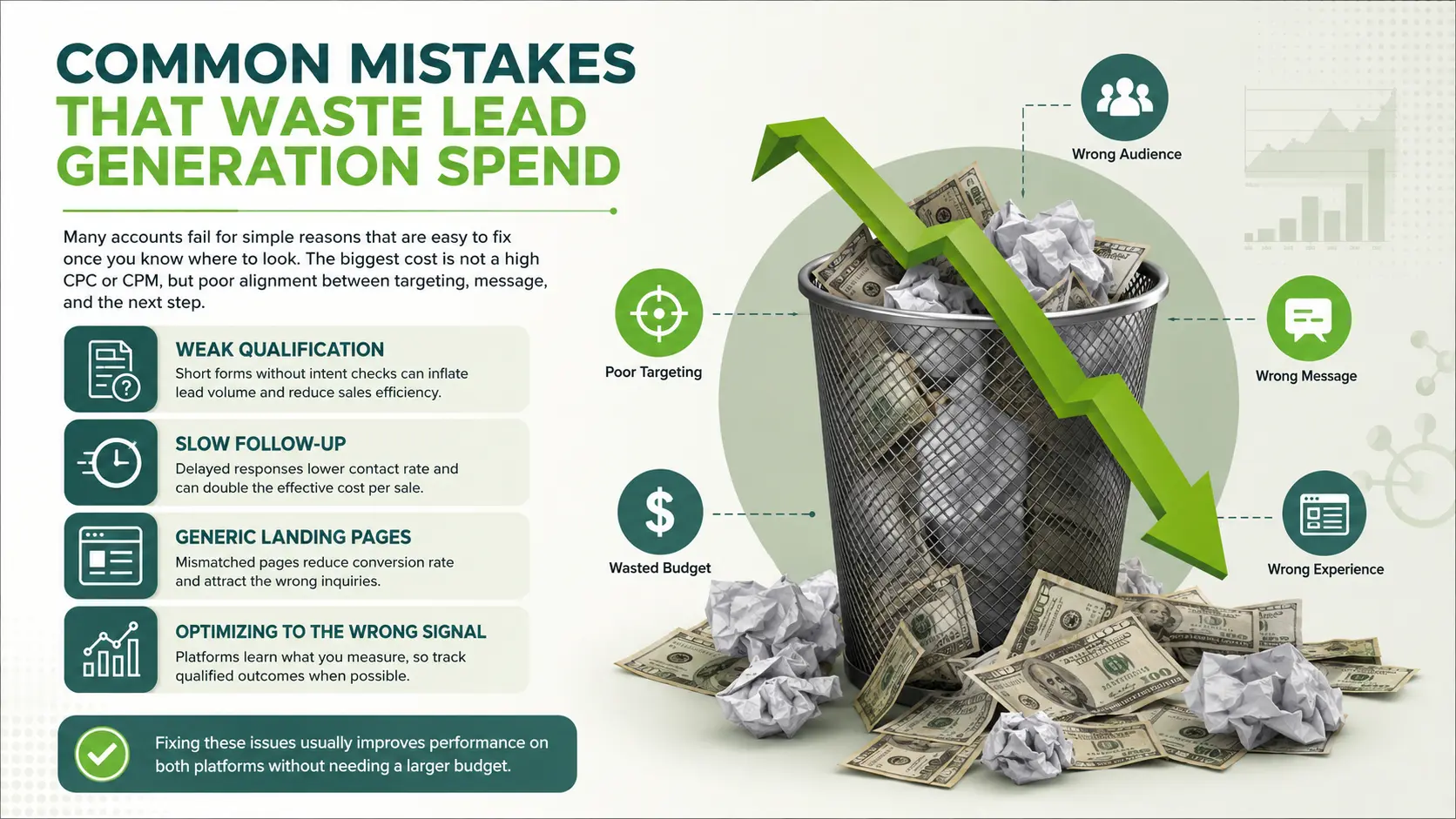 Many accounts fail for simple reasons that are easy to fix once you know where to look. The biggest cost is not a high CPC or CPM, but poor alignment between targeting, message, and the next step.
- Weak Qualification: Short forms without intent checks can inflate lead volume and reduce sales efficiency.
- Slow Follow-Up: Delayed responses lower contact rate and can double the effective cost per sale.
- Generic Landing Pages: Mismatched pages reduce conversion rate and attract the wrong inquiries.
- Optimizing To The Wrong Signal: Platforms learn what you measure, so track qualified outcomes when possible.
Fixing these issues usually improves performance on both platforms without needing a larger budget.
Conclusion
Google Ads is usually the best first budget when search intent is strong and you need leads that are ready to act. Meta Ads is often the best first budget when you can win attention with creative, qualify properly, and nurture leads efficiently. The smartest approach is the one that matches how your buyers decide, then reinforces it with strong tracking and fast follow-up.
When your team has the capacity, using both platforms together often produces the most stable pipeline. Google captures immediate demand while Meta expands reach and supports retargeting, improving overall lead flow and cost control.
Frequently Asked Questions
Which Platform Produces Higher Quality Leads For Lead Generation?
Google Ads often produces higher-intent leads because users are actively searching for a solution. Meta can match that quality when qualification is built into the ad and form, and when follow-up is fast. The better platform depends on intent, offer clarity, and your sales process.
Should I Use Meta Lead Forms Or A Landing Page?
Meta lead forms can increase volume because they reduce friction, but they can also increase low-intent submissions. Landing pages typically improve qualification and message control, especially for higher-ticket offers. Choose based on whether your priority is speed of lead capture or lead quality.
How Much Budget Do I Need Before Results Are Reliable?
Reliability comes from enough conversion data to guide optimization, not a fixed dollar amount. A helpful benchmark is funding enough clicks or impressions to generate consistent weekly conversions and allow testing. If volume is too low, narrow the offer and geography until results stabilize.