

Watching organic rankings climb while lead volume stays flat is frustrating, and it usually points to a gap between visibility and conversion. Rankings measure how often you appear, but leads depend on who clicks, what they land on, and whether the next step feels easy and trustworthy.
Rankings Do Not Equal Buying Intent
A page can rank well while attracting visitors who are not ready to talk to sales. Many keywords sit at the research stage, where people want definitions, comparisons, or quick tips rather than a quote or consultation.
If your top pages answer broad questions but do not connect to a clear next action, the traffic can look healthy while lead quality stays low. The fix is not to chase more volume, but to align what you rank for with what your business actually sells.
- Intent mismatch: Informational queries bring curious readers who bounce once they get the answer.
- Wrong decision stage: You rank for early research terms, while your offer requires urgency or a clear problem.
- Local and service fit issues: Visitors may be outside your service area or need a different scope than you provide.
Once intent is clearer, the rest of the funnel becomes easier to diagnose.
Clicks And CTR Can Be The Real Bottleneck
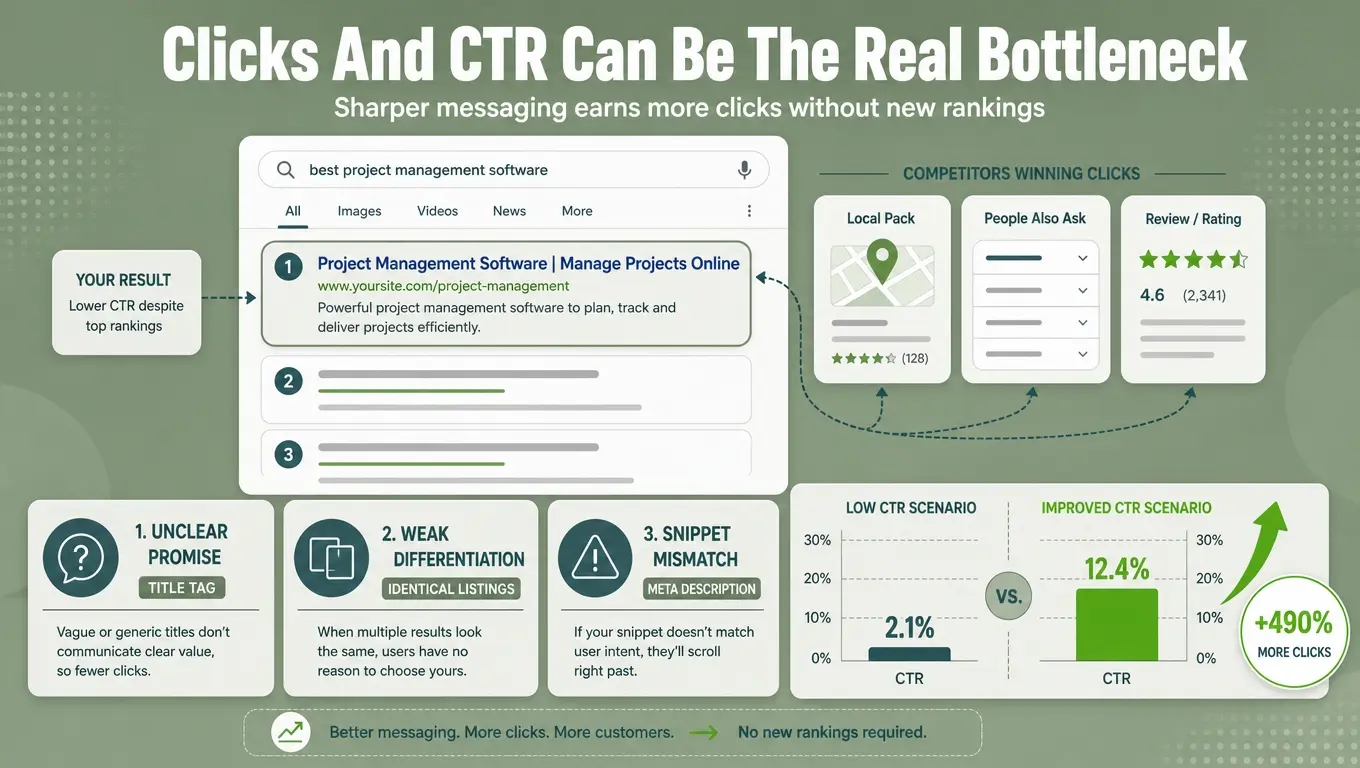 Rank position is only part of the story. If your title and snippet do not speak to the searcher, you can rank on page one and still lose the click to competitors with sharper messaging.
Low click through rate also happens when Google shows rich results, map packs, or answer boxes that satisfy the query without a click. In those cases, you need to earn the click with stronger relevance and a clearer benefit.
- Unclear promise: Titles that describe the topic but not the outcome often underperform.
- Weak differentiation: Similar wording across multiple results makes your listing blend in.
- Snippet mismatch: Meta descriptions that do not match on page content can create distrust and reduce clicks.
Improving CTR increases qualified sessions without needing new rankings.
Your Traffic Might Be Right But The Landing Page Is Wrong
Many sites rank with blog content, but route visitors to pages that are not designed to convert. A lead focused experience typically needs a clear offer, social proof, pricing guidance or starting ranges, and an obvious next action.
When visitors land on a page that reads like an article with no clear path forward, they may leave even if they are qualified. Each primary keyword cluster should map to a page type that matches the expected outcome.
- Missing primary CTA: Buttons and forms are buried, unclear, or inconsistent across devices.
- Thin service framing: The page does not explain who you help, what you deliver, and how engagement starts.
- Trust gaps: No testimonials, case proof, certifications, or team details where decisions are made.
Small structural changes often move conversion rates more than major ranking gains.
Conversion Friction Hides In Small Details
People who want to contact you will still abandon if the process feels hard. Long forms, slow pages, confusing navigation, and unclear pricing can stop leads even when intent is high.
Reduce friction by making the first step low effort and clearly valuable. A short inquiry form, a call scheduling option, and quick response expectations can lift leads without changing traffic.
- Form overload: Too many required fields lowers completion rates, especially on mobile.
- Speed problems: Heavy scripts and large images hurt both user experience and rankings.
- Mobile usability: Tap targets, sticky headers, and popups can block the conversion path.
Friction control is a direct path to more leads, because it improves results for the same visitors.
Lead Tracking Is Often Incomplete
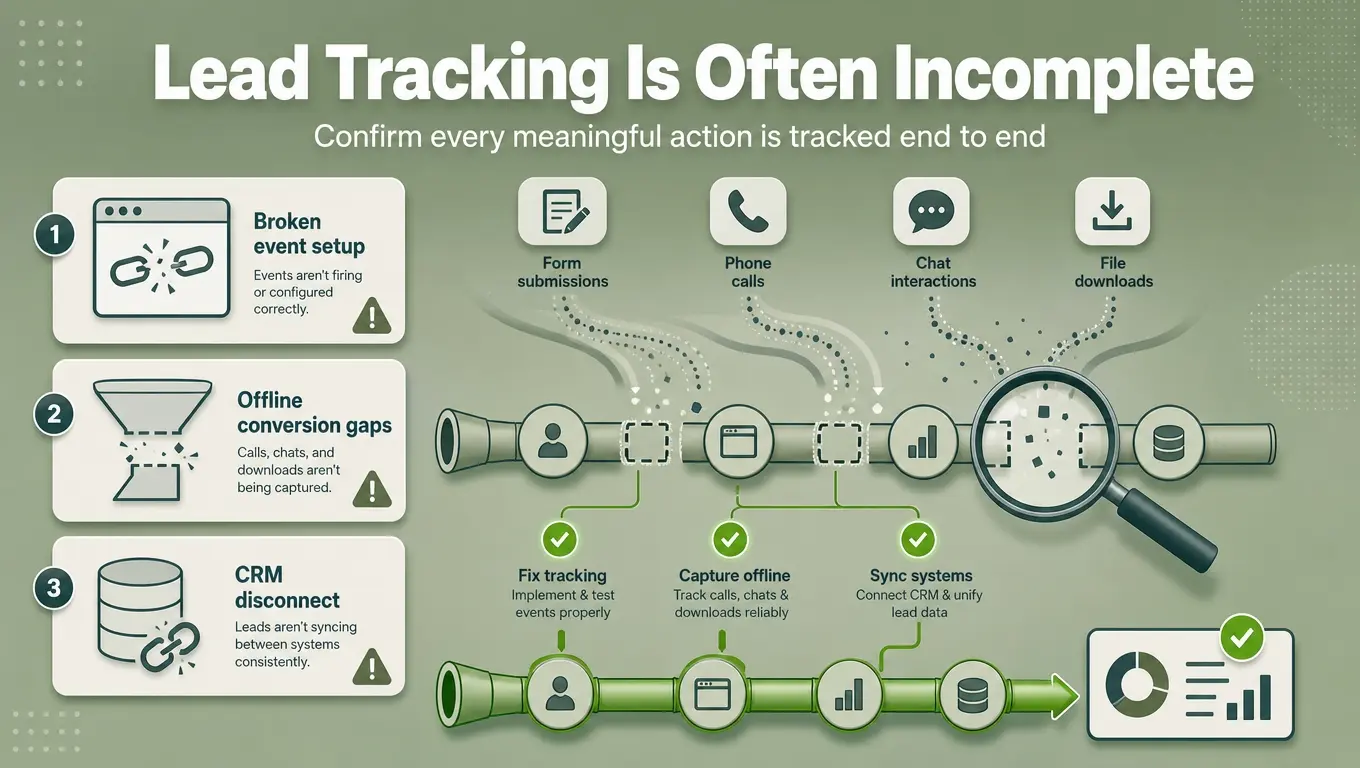 Sometimes leads are happening but not being recorded correctly. Calls may be going to a tracked number inconsistently, forms might not fire events, or attribution could be misassigned to direct traffic.
To fix this, confirm that every meaningful action is tracked end to end. That includes form submissions, phone calls, chat interactions, appointment bookings, and file downloads where relevant.
- Broken event setup: Thank you pages, events, or tags fail on certain browsers or devices.
- Offline conversion gaps: Sales outcomes are not tied back to the original keyword or page.
- CRM disconnect: Leads are captured but not labeled by source, landing page, and intent.
Accurate tracking prevents you from optimizing based on incomplete signals.
Content Quality And EEAT Signals Affect Lead Quality
Ranking is increasingly tied to usefulness, but lead generation depends on trust. Visitors assess expertise quickly through clarity, transparency, and proof that you can deliver.
Strengthen EEAT signals in ways that support conversion. Add author or team details, show relevant experience, explain processes clearly, and keep claims grounded in verifiable outcomes.
- Stronger credibility blocks: Certifications, partnerships, industries served, and compliance notes reduce hesitation.
- Clear scope and outcomes: Define deliverables, timelines, and what success looks like in plain language.
- Freshness maintenance: Update key pages when offers, pricing, or processes change so visitors do not sense staleness.
When trust rises, qualified visitors convert at higher rates even if traffic stays constant.
Keyword Cannibalization And Mixed Messages
If multiple pages target the same topic, Google may rotate them, dilute signals, and send users to the least conversion friendly page. This can create unstable rankings and confusing user journeys.
Consolidating overlapping pages and clarifying internal links can improve both performance and lead flow. Each page should have a distinct job in the funnel and a clear primary query set.
- Overlapping pages: Several posts and service pages compete for the same term.
- Unclear internal linking: Users do not get guided from learning content to the next commercial step.
- Inconsistent positioning: Different pages describe different audiences or outcomes, which reduces confidence.
A cleaner site architecture makes it easier for both search engines and users to choose the right path.
A Practical Diagnostic Checklist
The fastest way to solve the rankings to leads gap is to isolate where the drop happens. Think of it as a funnel with measurable stages from impressions to clicks to actions.
This table helps you pinpoint the most likely failure point and the best next move.
| Signal | What It Usually Means | Best Fix |
|---|---|---|
| Higher rankings but flat clicks | Low CTR or SERP features stealing attention | Rewrite titles and descriptions, improve topical match, target queries with clearer click value |
| More sessions but short time on page | Intent mismatch or weak above the fold clarity | Align keywords to intent, sharpen page opening, add clear next action |
| Good engagement but few inquiries | Conversion friction or weak offer presentation | Simplify forms, improve page speed, add proof and stronger CTAs |
| Inquiries reported by sales but not in analytics | Tracking and attribution gaps | Audit tags and events, connect CRM, track calls and bookings consistently |
Use these signals to prioritize work that impacts revenue, not just visibility.
How To Turn SEO Visibility Into Leads?
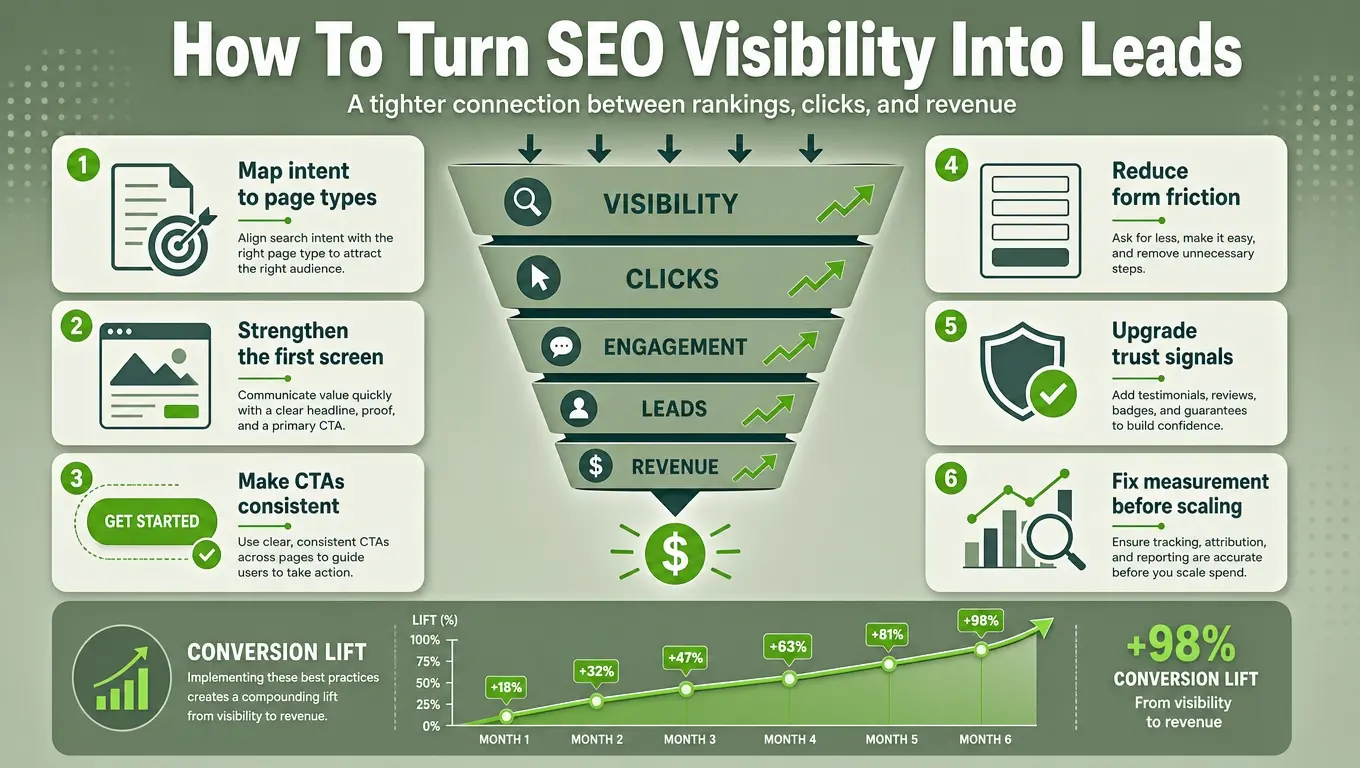 Once you identify the bottleneck, focus on improvements that move visitors toward contact. Conversion lift usually comes from messaging clarity, trust elements, and fewer obstacles rather than more content volume.
- Map intent to page types: Keep informational content for discovery and build dedicated service and landing pages for high intent searches.
- Strengthen the first screen: State who you help, the outcome you deliver, and the next action without forcing users to scroll.
- Make CTAs consistent: Use one primary action per page and repeat it naturally after key sections.
- Reduce form and scheduling friction: Ask for only what you need to start, then collect details later in the process.
- Upgrade trust signals: Add proof near CTAs, including testimonials, results, process steps, and team credibility.
- Fix measurement before scaling: Confirm that every lead source is captured, attributed, and visible to decision makers.
These changes build a tighter connection between rankings, clicks, and revenue outcomes.
Where IMILI Corp Fits When You Need Leads Not Just Rankings?
When rankings rise but leads lag, the work is often a blend of SEO, landing page optimization, and measurement. IMILI Corp typically supports this by aligning keyword strategy with conversion focused pages and tightening analytics so the business can see which pages and queries create real inquiries.
If your site is already gaining visibility, a focused audit and optimization cycle can be more efficient than publishing more content. That approach prioritizes intent alignment, clearer offers, and a smoother conversion path from organic traffic.
Conclusion
Rankings are an important signal, but they are only the start of the lead journey. Leads come from matching intent, earning the click, guiding visitors to the right page, reducing friction, and tracking every conversion accurately.
When you treat SEO as a full funnel system, you stop chasing vanity metrics and start building predictable inbound demand from organic search.
Frequently Asked Questions
Why do I rank higher but get fewer inquiries?
Higher positions can bring more visibility without more leads if the keywords are informational or if the page does not present a clear offer. CTR, landing page relevance, and conversion friction often explain the gap. Auditing each stage of the funnel is the fastest way to find the constraint.
Should I focus on new content or optimizing existing pages?
If you already have rankings, optimization usually delivers faster lead gains than publishing more posts. Improving above the fold messaging, CTAs, trust elements, and internal linking can lift conversions without needing more traffic. New content matters most when you lack coverage for high intent topics.
How can I tell if tracking is the real problem?
Compare sales reported leads to analytics recorded conversions and check for mismatches by channel and landing page. Test forms, calls, and booking flows across devices to ensure events fire reliably. Connecting your CRM to analytics attribution helps confirm which keywords and pages generate revenue.