

Choosing between Performance Max and Search campaigns is a budget decision that affects lead quality, reporting clarity, and how quickly you can optimize. Both can work well, but they serve different needs in Google Ads and they require different inputs to perform. The smartest plan starts with your goal, your tracking readiness, and how much control you need.
What Performance Max Campaigns Are Built To Do?
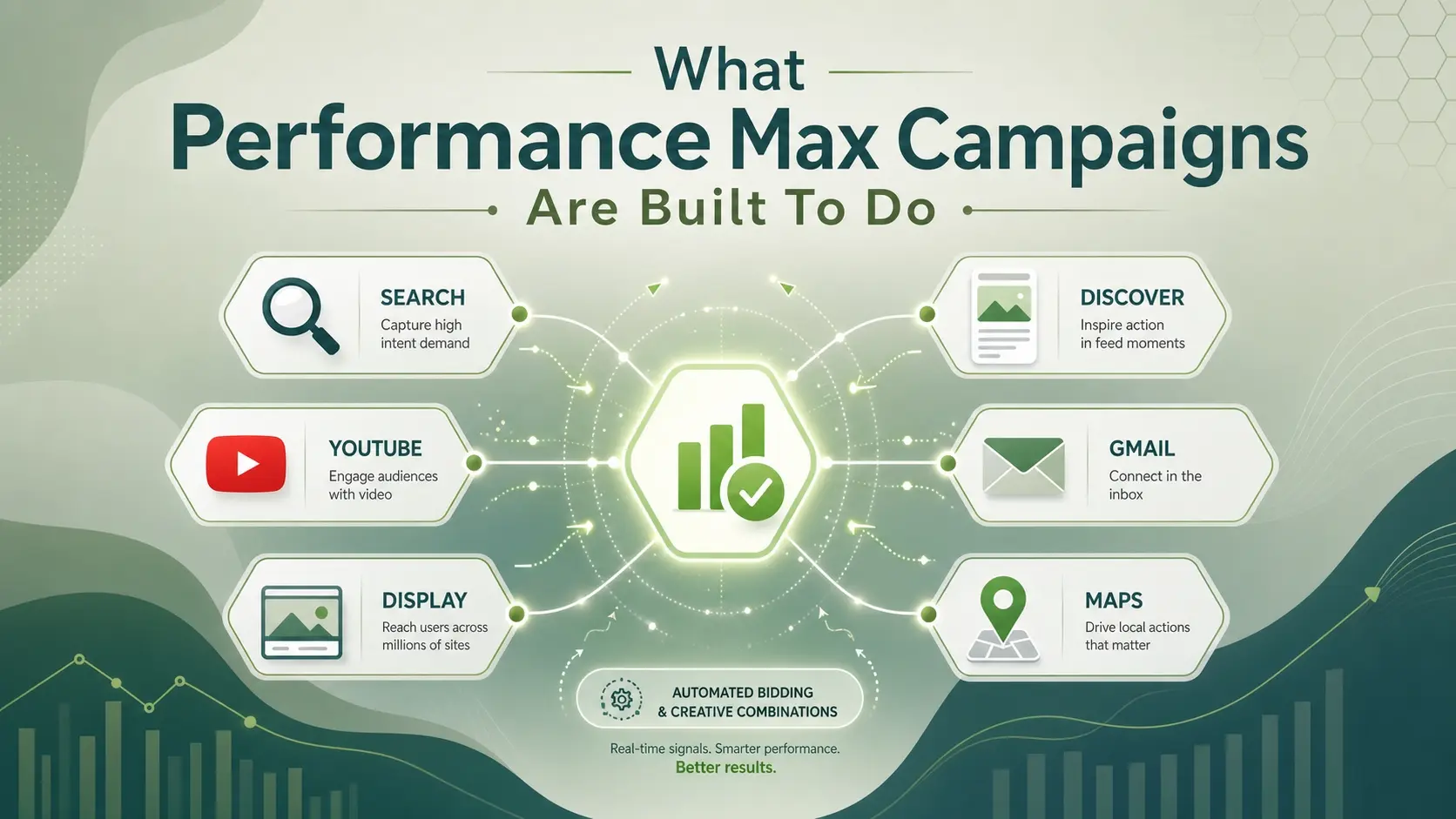
Performance Max is a goal-based campaign type that can show ads across Search, YouTube, Display, Discover, Gmail, and Maps. It uses automated bidding and creative combinations to find conversions where Google predicts the best outcomes. Your job becomes feeding it strong signals and clean data, then reviewing outcomes and refining assets and audience signals.
This format is designed to expand reach beyond keyword intent alone. It tends to work best when you have reliable conversion tracking, enough volume to learn, and strong creative assets. If those pieces are missing, it can still spend, but results can be inconsistent or hard to diagnose.
What Search Campaigns Do Best?
Search campaigns are keyword-driven and intent-led. They capture demand from people actively looking for a product or service and they give you more direct control over queries, ads, landing pages, bids, and negatives. That control can be crucial when every click is expensive or when compliance and messaging precision matter.
Search also gives clearer performance signals early. You can see which queries convert, which ads pull qualified traffic, and where cost is creeping up. When budget is tight, this transparency often makes Search the safer first allocation.
Key Differences That Affect Budget Priority
Budget priority should be based on how each campaign type behaves under your constraints. Performance Max can scale and automate, but it depends heavily on inputs and it can blur channel-level visibility. Search can be slower to scale, but it is easier to audit and refine with disciplined query management.
| Decision Factor | Performance Max | Search Campaigns |
|---|---|---|
| Primary Strength | Cross-channel reach and automation | High-intent capture and control |
| Best Fit For | Accounts with solid tracking and creative | Accounts needing precision and transparency |
| Optimization Control | Lower control, relies on signals and assets | Higher control with keywords and negatives |
| Reporting Clarity | More aggregated across inventory | Clearer query and ad level insights |
Use these differences as a filter before you decide where the first dollars should go. A better initial fit usually wins, even if the other campaign type looks more modern or more scalable on paper.
When Performance Max Should Get Budget First?
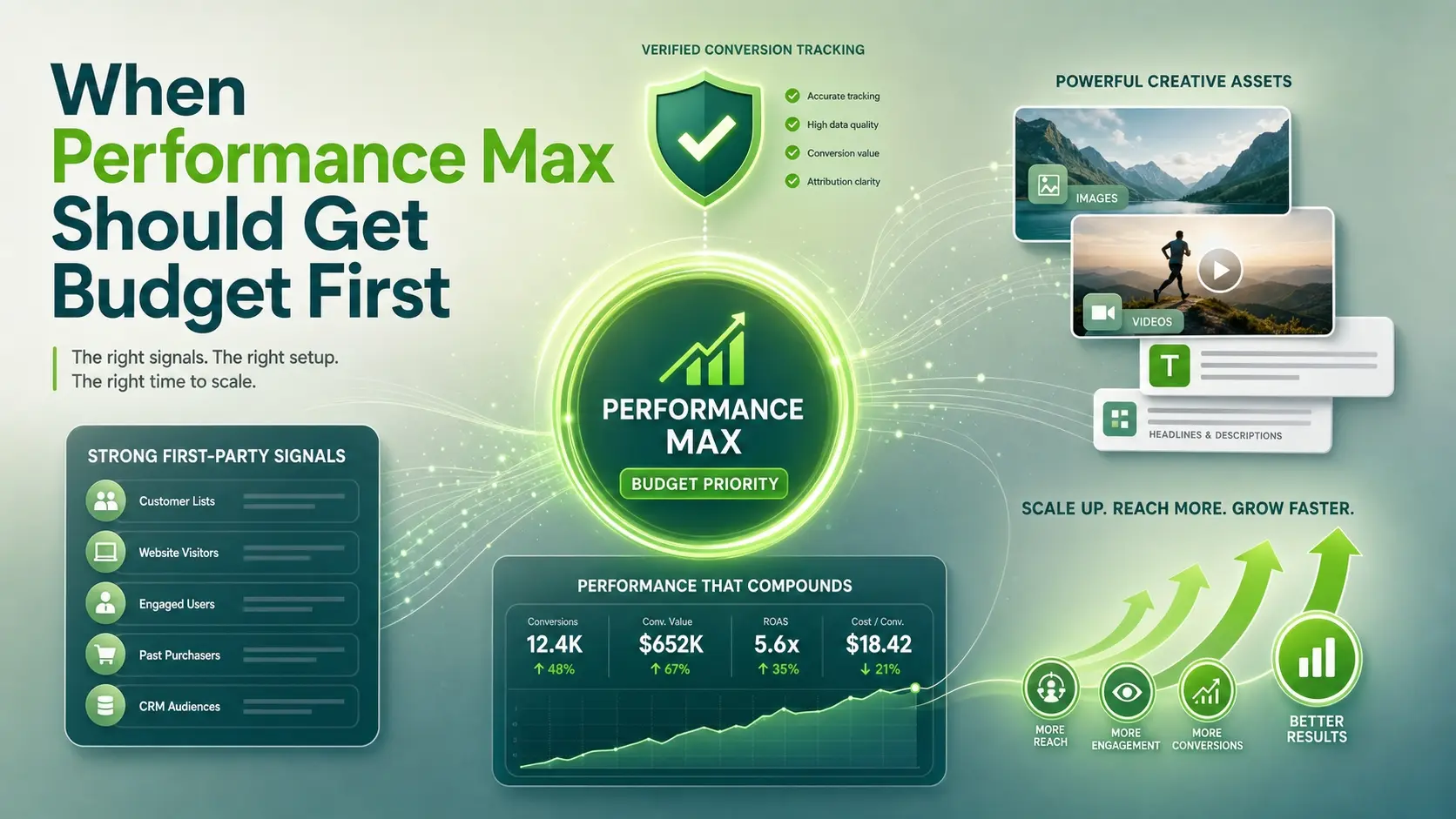
Performance Max is often a strong first choice when you already have dependable conversion tracking and enough conversion volume for automation to learn. It also helps when you want incremental demand, not just capturing existing intent. With the right assets, it can find pockets of efficient conversions across Google surfaces.
It is also useful when your product catalog is broad or when your audience is not well defined by a narrow set of keywords. If Search keyword coverage would be large and time-consuming, Performance Max can reduce manual build effort and uncover new opportunities.
- Conversion Tracking Is Verified: Primary actions are measured accurately and you can separate leads from noise.
- You Have Strong Creative Assets: Images, logos, and short and long text are ready and aligned with landing pages.
- You Need Faster Scale: You want to reach more qualified users beyond exact keyword demand.
- First-Party Signals Are Available: Customer lists, remarketing, or on-site engagement signals can guide learning.
When these conditions are true, Performance Max can earn budget early and keep improving with consistent inputs. The closer your measurement is to real revenue or qualified leads, the more confident you can be in scaling.
When Search Campaigns Should Get Budget First?
Search should take priority when you need predictable intent and immediate visibility into what is working. It is also the better first step when tracking is still being fixed, because you can optimize to leading indicators like qualified calls, form starts, or high-quality landing page engagement while you validate full conversion tracking.
Search also fits businesses with strict service areas, narrow offer sets, or regulated messaging. Keyword and query control helps you avoid wasted spend and keeps your ads aligned with what you actually sell.
- You Need Query Level Control: Negative keywords, match types, and search terms analysis are core to efficiency.
- Budget Is Limited: You want to concentrate spend on the highest intent searches first.
- Lead Quality Varies A Lot: You must protect the sales team from low-quality inquiries.
- Tracking Needs Cleanup: You want a controllable environment while conversion setup is finalized.
Once Search is stable and producing consistent results, Performance Max becomes easier to test without risking your baseline pipeline.
A Practical Budget Split Framework
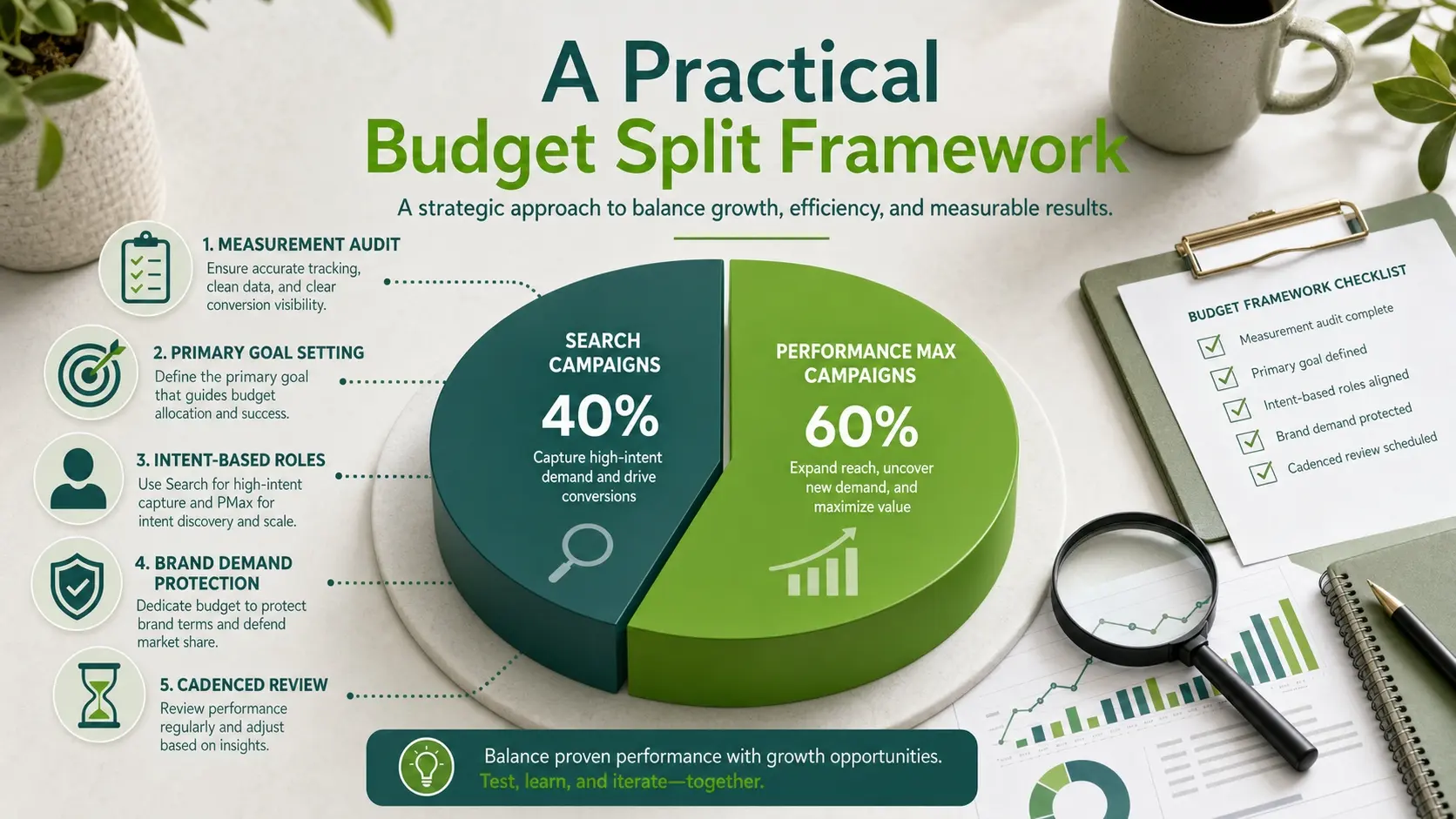
Most accounts do not need an all-or-nothing decision. A split can protect performance while you test the other campaign type with a defined role. The right split depends on how mature your tracking is and how much existing demand you can capture through keywords.
- Audit Measurement: Confirm which conversions matter, how they are counted, and whether offline outcomes are tied back to ads.
- Set One Primary Goal: Choose one main conversion goal per phase so learning is not diluted by mixed signals.
- Assign Roles By Intent: Use Search for high-intent queries and Performance Max for incremental reach and remarketing support.
- Protect Brand Demand: Decide how brand queries will be handled so you can evaluate true incrementality.
- Review On A Fixed Cadence: Use consistent time windows and compare against the same conversion definition each time.
After you define roles, budget changes become easier because you are not asking two campaign types to do the same job. This also makes performance discussions clearer for stakeholders.
Common Mistakes That Waste Budget In Both
Most underperformance comes from mismatched inputs rather than the campaign type itself. Poor tracking, weak landing pages, and inconsistent conversion definitions can make either approach look bad. Fixing fundamentals usually improves results faster than switching campaign types.
- Counting Low-Value Actions As Primary: Inflated conversion counts push automation toward cheap but unqualified outcomes.
- Sending All Traffic To Generic Pages: Relevance drops, quality scores suffer, and conversion rates fall.
- Ignoring Search Terms In Search: Without negatives, spend drifts into irrelevant queries over time.
- Underfeeding Creative In Performance Max: Limited assets reduce testing and can trap performance in a narrow lane.
- Changing Too Many Variables At Once: Rapid edits make it hard to tell what actually improved results.
A disciplined setup and a steady optimization rhythm usually beat constant campaign churn. That is especially true when automation is involved.
How To Evaluate Results Without Getting Misled?
Search is easier to evaluate because you can map queries to intent and compare ad groups and landing pages. Performance Max can be trickier since it blends placements and relies on model decisions. For both, you need a consistent definition of success and a way to validate lead quality.
Use quality signals that reflect business outcomes. That can include qualified lead rate, booked appointments, revenue per lead, return on ad spend, or cost per acquisition tied to downstream value. If you are running lead generation, connect CRM stages so you can see which campaigns create sales-ready opportunities.
Where IMILI Corp Fits In If You Want A Clear Plan?
If you want Performance Max and Search to work together without wasted spend, the foundation is measurement, account structure, and landing page alignment. IMILI Corp supports businesses that need performance-focused digital marketing with a practical approach to campaign strategy, tracking clarity, and ongoing optimization. When roles are defined and reporting is clean, budget decisions become straightforward and defensible.
This is also where many teams benefit from an external audit. A structured review can identify tracking gaps, conversion quality issues, and opportunities to reorganize campaigns so each type has a clear purpose.
Conclusion
Performance Max deserves budget first when tracking is solid, creative assets are strong, and you need incremental reach beyond keywords. Search deserves budget first when you need control, clarity, and a predictable path to qualified leads. In many cases, the best approach is a role-based split that protects core demand capture while testing automation for scalable growth.
Make the decision based on measurement readiness, lead quality, and the level of control your business requires. When those fundamentals are in place, both campaign types can contribute profitably without competing for the same results.
Frequently Asked Questions
Can Performance Max replace Search campaigns completely?
It can cover some of the same demand, but it is not a direct replacement for the control and query visibility of Search. Most accounts benefit from keeping Search for high-intent keywords and using Performance Max for incremental reach and additional inventory.
How long should you wait before shifting budget between Performance Max and Search?
Wait until conversion tracking is stable and you have enough data to judge trends, not day-to-day noise. Evaluate on consistent time windows and avoid making changes during short-term volatility unless spend is clearly wasteful.
What is the biggest setup requirement for Performance Max to work well?
Clean conversion tracking tied to meaningful business outcomes is the biggest requirement. Strong creative assets and relevant landing pages also matter because they influence ad quality and the system’s ability to find the right users.