
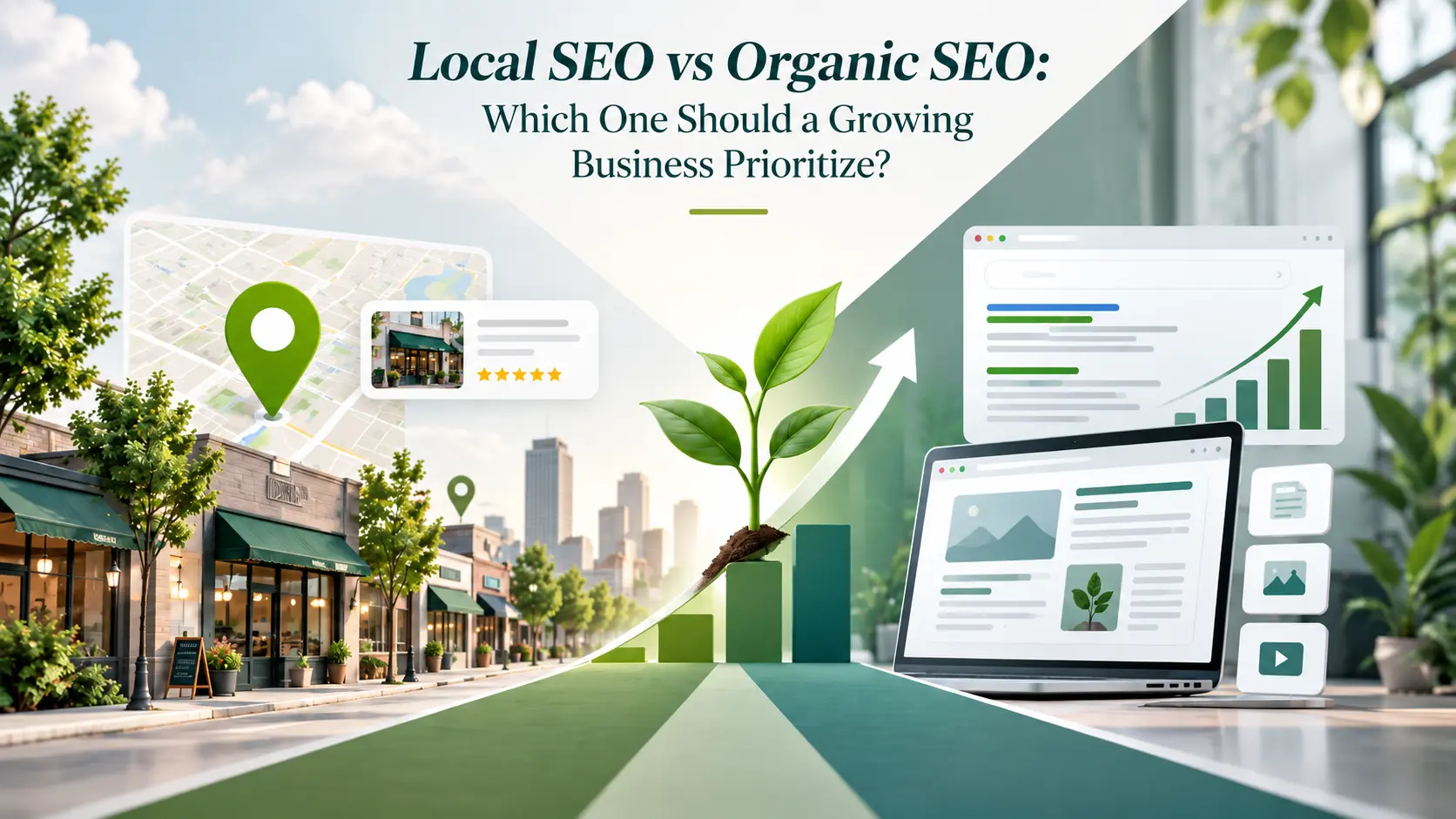
Growing businesses usually face a practical question before they face a technical one – where should time and budget go first to drive predictable revenue. Local SEO and organic SEO both improve visibility in search, but they work in different parts of the results and reward different signals. The best priority depends on how customers buy, where you serve, and how quickly you need results.
What Local SEO Means For Growth?
Local SEO focuses on ranking for searches tied to a geographic area, including map results and location-based listings. It helps people find you when they are ready to visit, call, or book nearby. For many service businesses, local visibility is the shortest path from search to sale.
Local SEO is not only for brick-and-mortar stores. It also applies to service-area businesses that travel to customers, as long as the business is eligible to appear for the locations it serves. The work centers on trust signals that prove the business is real, consistent, and active in a community.
What Organic SEO Means For Growth?
Organic SEO targets the standard search results below ads and around map listings. It is driven by content relevance, site quality, crawlability, and authority signals that show expertise. Organic rankings often take longer, but they can scale across many topics and buyer intents.
Organic SEO is where businesses build compounding visibility beyond one neighborhood or city. It supports research queries, comparison queries, and deeper informational searches that lead to future demand. Over time, organic SEO can lower dependence on paid campaigns by turning content into an always-on acquisition channel.
How Search Results Differ Between Local And Organic?
Local results are usually triggered when Google detects local intent, such as a city name, a nearby modifier, or a service that is commonly purchased locally. Organic results appear for both local and non-local queries, including broader educational searches. Many searches show both areas on the same page, which means the channels can support each other.
Local SEO tends to reward proximity, category relevance, and business profile strength. Organic SEO tends to reward topical depth, site architecture, and link authority. Understanding where your prospects click helps you decide which investments will produce the biggest lift first.
Benefits Of Local SEO
Local SEO is built for high-intent actions. People searching nearby often want to call, get directions, check hours, or schedule quickly. That translates into stronger lead quality for businesses that serve specific areas.
- Faster Lead Intent: Local searches usually come from people ready to book or buy.
- Better Conversion Signals: Reviews, photos, and business details reduce hesitation.
- Defensible Visibility: Strong profile optimization can be difficult for competitors to copy overnight.
- Mobile Advantage: Map results capture a large share of mobile clicks and calls.
These strengths make local optimization especially useful when you need revenue impact while broader SEO work matures.
Benefits Of Organic SEO
Organic SEO supports discovery across the full funnel, including early research. It also scales across multiple services, industries, and problem statements. When organic pages rank, they can generate leads without ongoing media spend.
- Scalable Topic Coverage: One site can rank for hundreds of relevant queries over time.
- Brand Authority: Helpful content builds trust before a prospect speaks to sales.
- Lower Long-Term Acquisition Cost: Strong rankings reduce reliance on pay-per-click budgets.
- Support For Complex Sales: Detailed pages help with longer buying cycles and higher-ticket decisions.
Organic SEO usually wins when the market is not limited to one city and when customers compare options carefully.
Local SEO Vs Organic SEO Which One Should You Prioritize?
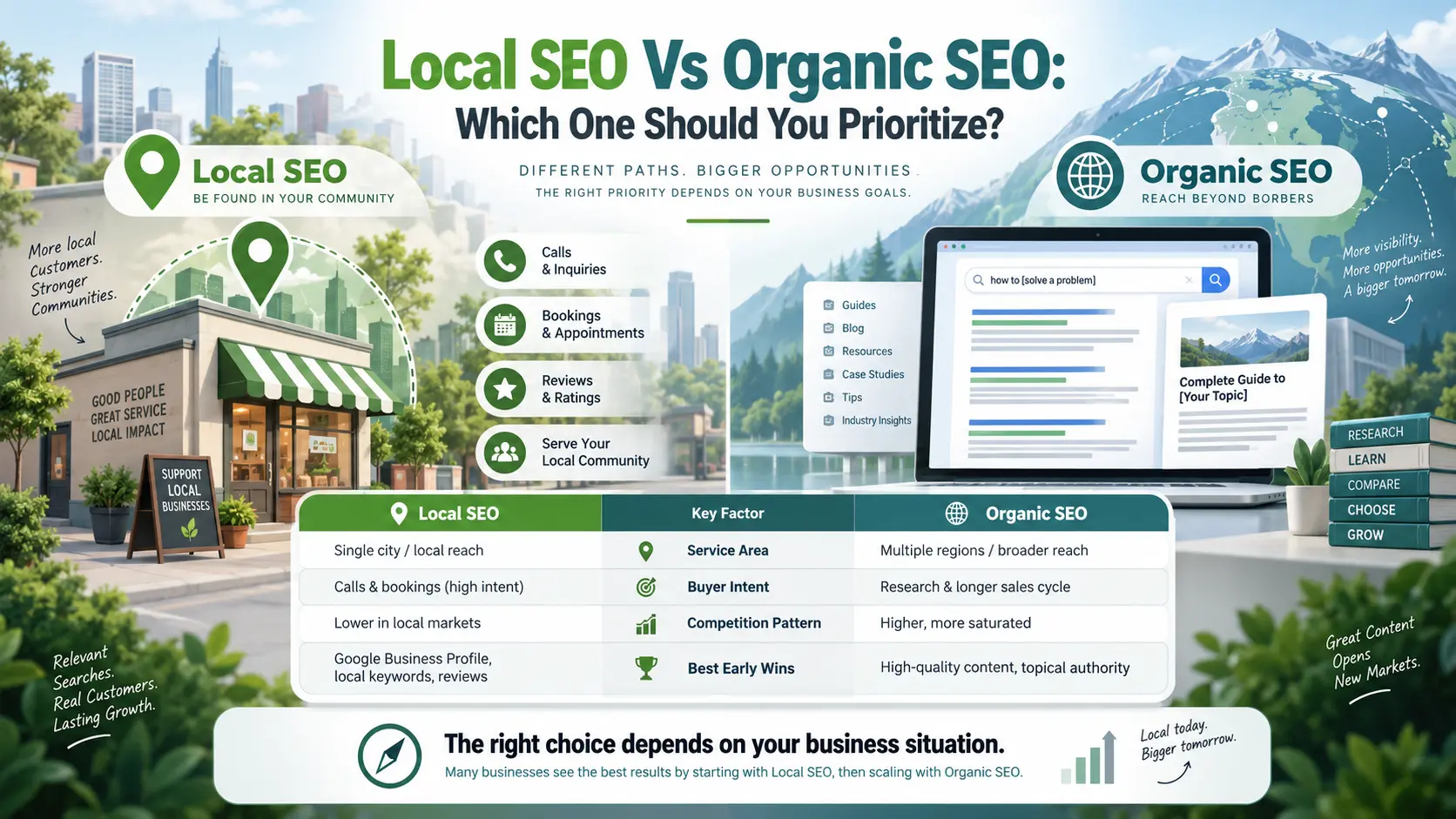
Prioritization is easier when you evaluate four business realities – where you serve, how customers convert, what the competition looks like, and what assets you already have. Most growing businesses do not need to choose only one, but they do need to sequence work so the next 90 days produce measurable movement.
| Decision Factor | Local SEO Priority Fits Best | Organic SEO Priority Fits Best |
|---|---|---|
| Service Area | Single city, metro, or defined radius | Multiple regions, national, or global reach |
| Buyer Intent | Calls, bookings, walk-ins, urgent needs | Research-heavy, comparisons, long sales cycles |
| Competition Pattern | Many nearby providers with uneven profiles | Content-rich competitors with strong domains |
| Best Early Wins | Profile optimization, reviews, local pages | Information architecture, core pages, content hubs |
Once you map your situation to the table, you can set a priority without guessing. The next step is turning the priority into a clear plan.
When Local SEO Should Come First?
Local SEO should lead when most revenue comes from a defined market. It is also the better first move when your business has strong offline reputation but weak online signals. In those cases, aligning your business information and reviews can unlock demand that already exists.
Local-first is often right for home services, clinics, legal services, and specialty retail. It is also the right approach when calls and appointment requests are the main conversion actions. If speed matters, local work can produce visible improvements sooner than large-scale content production.
When Organic SEO Should Come First?
Organic SEO should lead when customers need education, comparisons, or detailed specifications before they convert. It is also the right first investment when you sell across regions or do not rely on proximity. In these cases, map visibility is helpful but not the main growth lever.
Organic-first works well for SaaS, B2B services, ecommerce, and multi-location brands that want consistent messaging. It is also ideal when you have subject matter expertise that can be turned into helpful pages. A strong organic foundation also improves performance of other channels because the site becomes clearer, faster, and more trustworthy.
Key Local SEO Tasks That Move The Needle
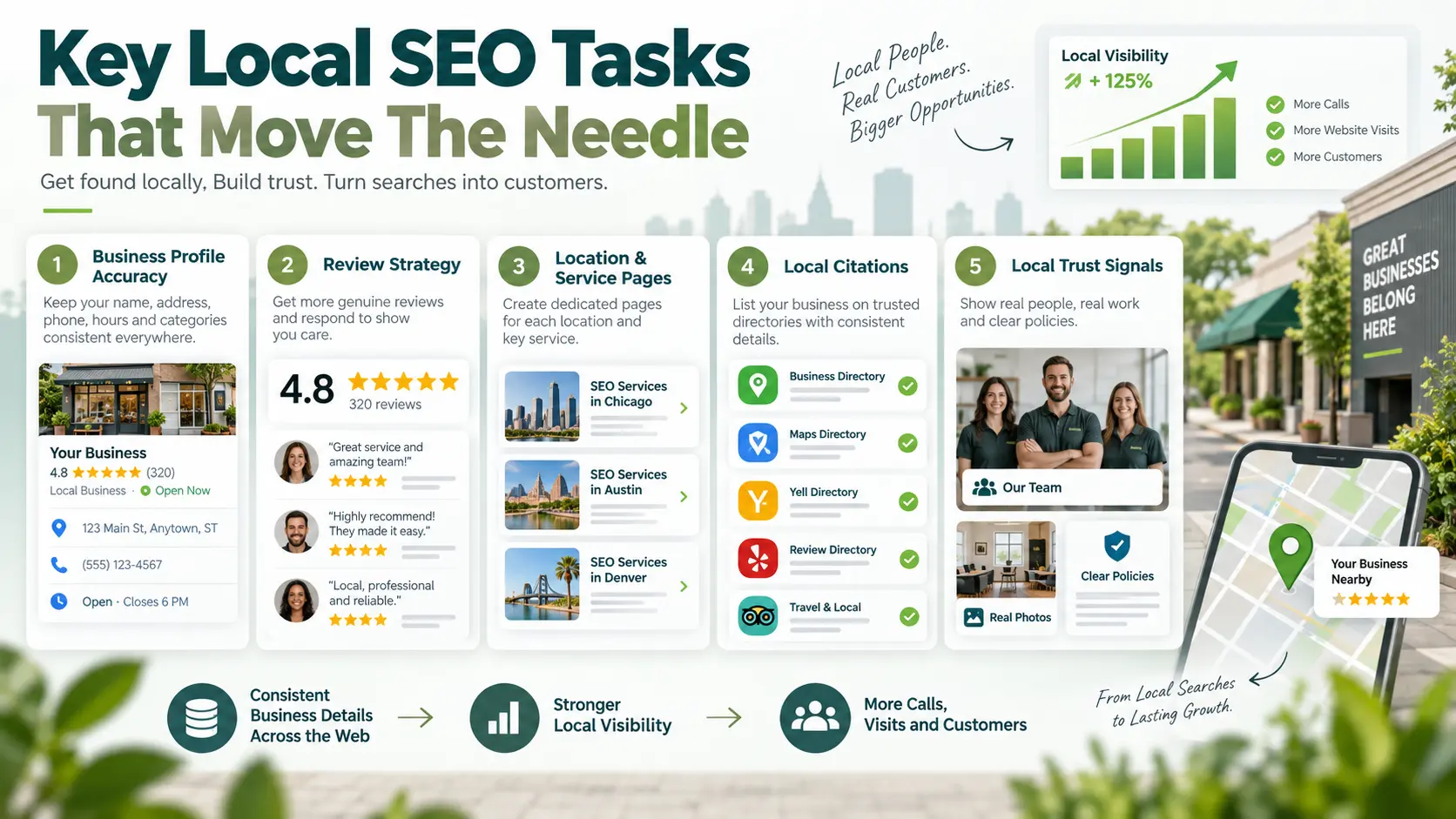
Local SEO success depends on consistent business signals and proof of customer satisfaction. Small gaps like mismatched phone numbers or missing categories can suppress visibility. A focused checklist helps you fix what matters most.
- Business Profile Accuracy: Ensure name, address, phone, hours, and categories match across the web.
- Review Strategy: Encourage steady review volume and respond with clear, helpful replies.
- Location And Service Pages: Build pages that reflect real offerings and service areas with unique content.
- Local Citations: Clean up duplicates and strengthen listings on trusted directories.
- Local Trust Signals: Add photos, service details, policies, and staff information that reduce friction.
These actions create a baseline that makes every other marketing activity convert better.
Key Organic SEO Tasks That Build Long-Term Rankings
Organic growth comes from a site that is easy to crawl, easy to understand, and genuinely useful. That starts with technical health and a content structure that mirrors how buyers search. Over time, depth and clarity outperform volume.
- Technical Foundation: Improve indexability, page speed, mobile experience, and internal linking.
- Search Intent Mapping: Align core pages to transactional queries and supporting pages to informational queries.
- Topical Authority: Create clusters around primary services and related problems customers search for.
- On-Page Optimization: Tighten titles, headings, and copy so each page is unambiguous in purpose.
- Trust And Expertise Signals: Add clear authorship, credentials, policies, and proof points across key pages.
These improvements help rankings while also lifting conversion rate from any traffic source.
How To Combine Both Without Splitting Your Budget?
A balanced approach works when you set one primary objective and one supporting objective. Local SEO can drive near-term leads while organic SEO builds durable reach. The key is making sure both strategies share the same messaging, offers, and conversion paths.
- Start With Measurement: Track calls, forms, bookings, and direction requests so you can prove impact.
- Fix The Basics First: Resolve tracking, site speed, and core page issues before scaling content.
- Build A Core Page Set: Create strong service pages that support both local and organic visibility.
- Scale What Works: Expand into more locations or more topics only after you see consistent movement.
This sequencing prevents scattered effort and makes your progress easier to attribute.
Common Mistakes That Slow Results
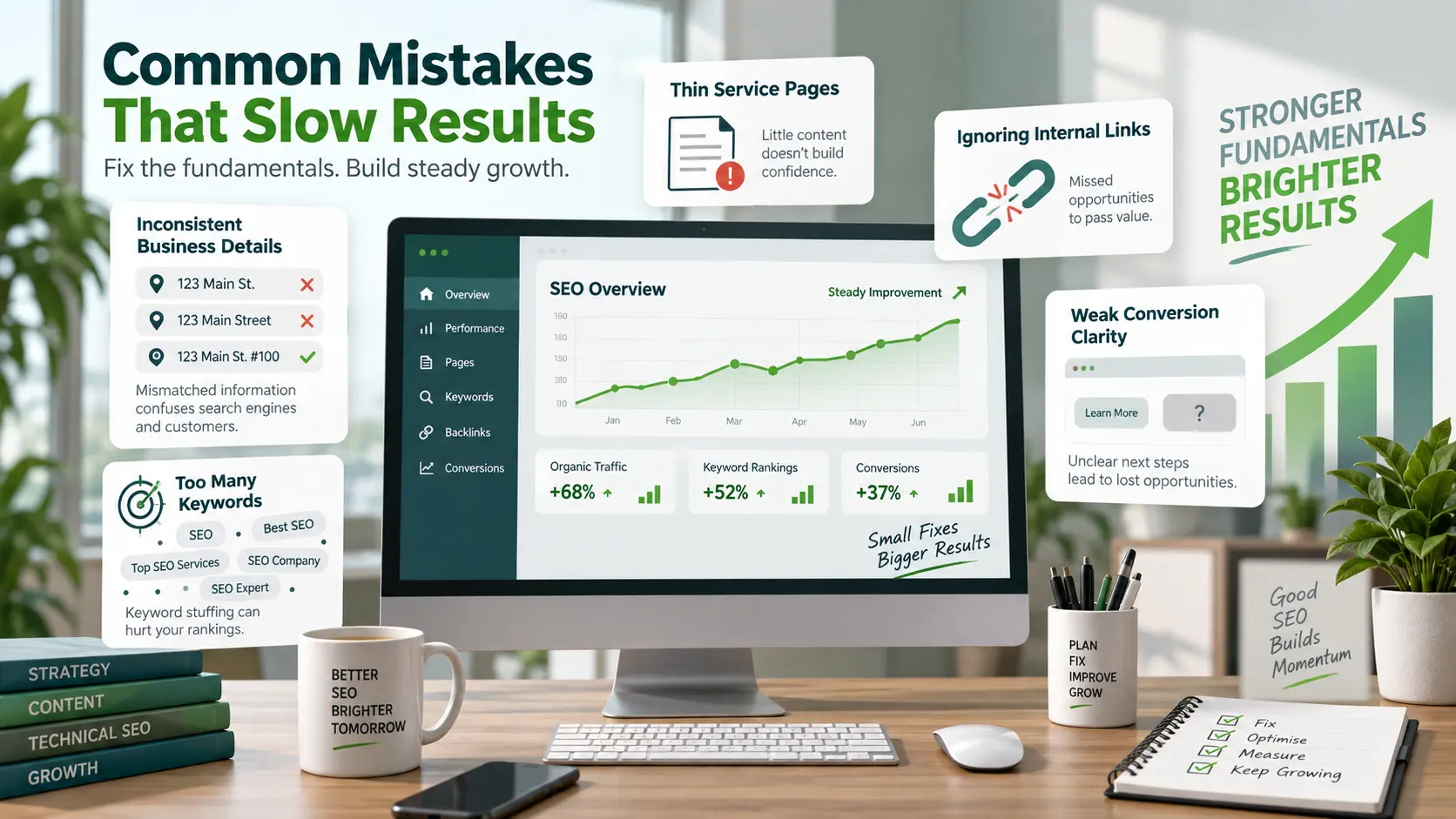
Many businesses invest in SEO but miss fundamentals that search engines and users rely on. Fixing these issues often produces faster gains than adding more content. It also protects you from ranking volatility caused by inconsistent signals.
- Inconsistent Business Details: Variations in address or phone can weaken local confidence.
- Thin Service Pages: Pages that do not explain scope, process, and outcomes struggle to rank and convert.
- Ignoring Internal Links: Poor navigation keeps important pages from receiving authority and relevance.
- Chasing Too Many Keywords: Broad targeting dilutes topical focus and slows authority building.
- Neglecting Conversion Clarity: Rankings are wasted when pages do not guide visitors to the next action.
Cleaning these issues sets you up for steady improvement rather than short spikes.
Where Imili Corp Can Support Your SEO Growth?
Execution matters as much as strategy, especially when you need consistent lead flow while building long-term visibility. ImiliCorp supports growing businesses with practical SEO services that align technical fixes, content planning, and measurable conversion goals. That approach helps avoid fragmented efforts where local listings and website SEO work against each other.
If you want local lead generation, the priority is usually profile optimization, citation cleanup, review systems, and location page improvements. If you want broader organic growth, the priority is typically site structure, content strategy, and on-page optimization that strengthens topical authority. A focused audit and roadmap can clarify which path should lead based on your market and resources.
Conclusion
Local SEO is the priority when revenue depends on a defined service area and high-intent actions like calls and bookings. Organic SEO is the priority when growth depends on broader reach, education, and scalable topic coverage. Many growing businesses win by starting with the channel that matches how customers buy, then layering the other to compound results.
Choose one primary focus for the next quarter, measure outcomes tightly, and keep the strategy consistent across your listings and your site. That discipline is what turns SEO from a vague investment into a predictable growth engine.
Frequently Asked Questions
Is Local SEO Still Worth It If My Website Already Ranks?
Yes, local visibility can increase calls and direction requests even when your site performs well in organic results. A strong business profile and review presence often captures clicks that never reach traditional listings. It also improves trust signals that support conversions.
Can I Do Local SEO Without A Physical Storefront?
Many service-area businesses can benefit from local optimization if they serve customers at their locations. The key is setting the service area correctly and keeping business information consistent. You should also build service pages that clearly reflect where you operate.
How Long Does Organic SEO Take Compared To Local SEO?
Local improvements can show faster movement when major issues are fixed, especially around profile completeness and reviews. Organic SEO often takes longer because it depends on site authority, content depth, and competitive strength. Both timelines improve when technical issues and tracking are handled early.