
Most SEO plans fail because the first pages built do not match what searchers are ready to do. Service pages and blog posts both matter, but they serve different intent, convert differently, and earn authority in different ways. The best starting point depends on how soon you need leads, how clear your offer is, and how competitive your space looks in the search results.
How Service Pages And Blog Posts Work Differently?
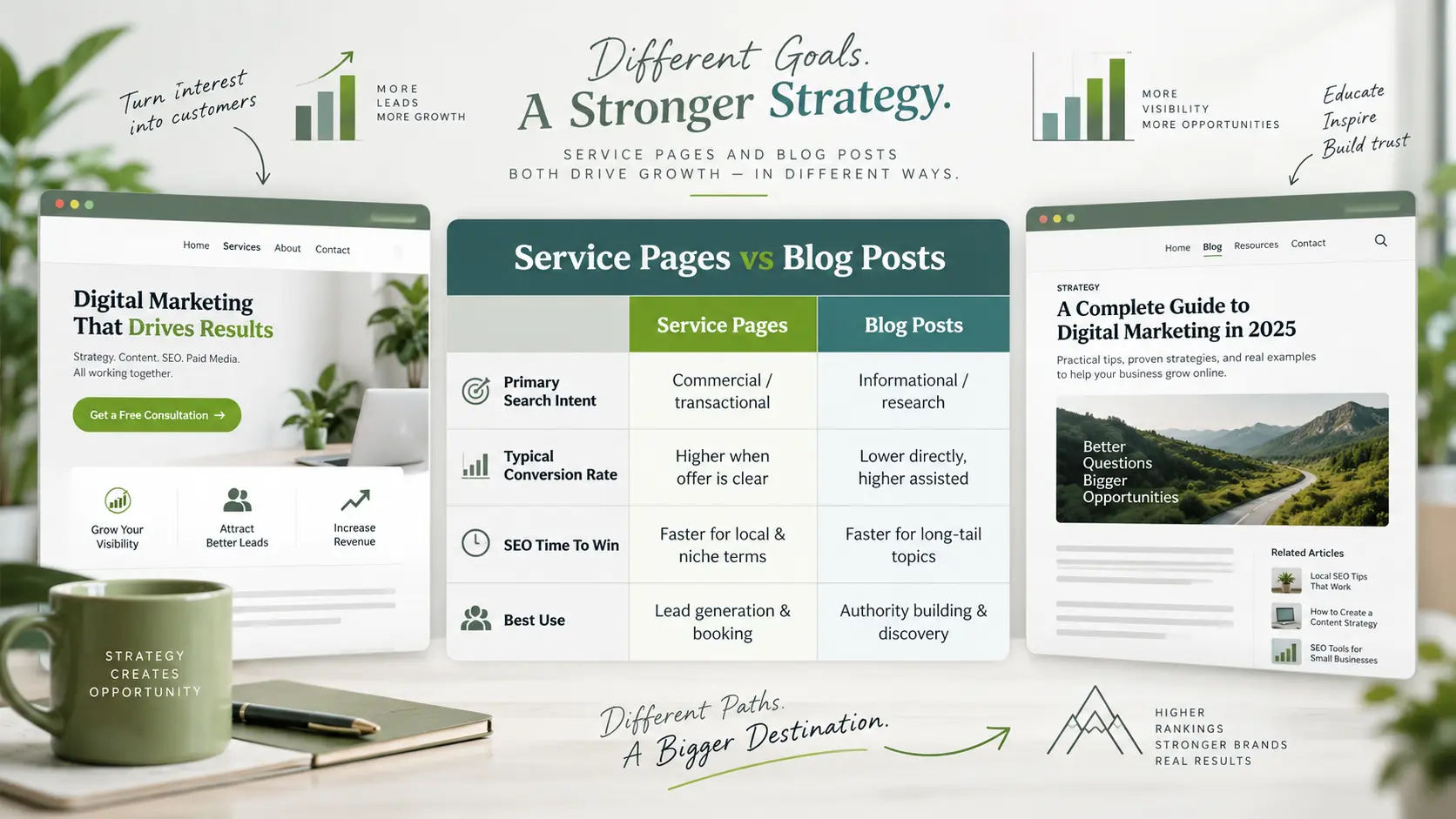
Service pages target people who are already looking to hire, book, or request a quote. They align with commercial intent and are usually the strongest drivers of inquiries, calls, and form submissions. They also help search engines understand what you offer, where you offer it, and why your business is relevant.
Blog posts target people who are researching, comparing options, or trying to solve a problem. They often capture informational intent and can rank for a wider range of queries. When planned well, they build topical authority and feed internal links that strengthen your service pages.
Search Intent Should Decide Your Starting Point
If you need revenue quickly, prioritize pages that match buying intent. If your niche requires trust building, education, or longer sales cycles, supporting content becomes more important early. Your first build should reflect the dominant intent you can realistically win.
Review the search results for your priority queries and note what Google is rewarding. If the top results are service pages with clear offers, starting with service pages is usually the fastest path. If the top results are guides and comparisons, you will need strong blog content to compete.
When Service Pages Should Come First?
Service pages should be your first investment when your services are defined and you can convert visitors right away. They also come first when local intent is strong, since map results and localized pages often drive direct leads. A well structured service section gives you a stable base to expand.
- Clear Offer: Your service name matches what people search and you can describe outcomes, scope, and deliverables without confusion.
- High Intent Queries: People search using terms like near me, company, provider, cost, quote, or hire.
- Local Or Regional Demand: Location based searches matter and service areas can be mapped to dedicated pages.
- Limited Time For Content: You can publish fewer pages with higher conversion potential and iterate on performance.
After these pages are live, you can use blog posts to capture earlier stage searches and link them back to your service pages. That pairing reduces wasted traffic and improves lead quality over time.
When Blog Posts Should Come First?
Blog posts should come first when your service keywords are too competitive to rank quickly, or when buyers need education before contacting you. They are also a practical starting point if your exact offer will evolve and you need to learn which problems and terms resonate most.
- Complex Decisions: Prospects need guidance on process, risks, timelines, and what success looks like before they commit.
- New Or Emerging Offer: Search demand exists around the problem, but service category terms are unclear or not widely used.
- Authority Gap: Competitors have stronger backlinks and history, so informational content is a safer entry point.
- Multiple Audience Segments: Different roles search differently, and blog content helps you meet each segment where they are.
Once you see which topics gain traction, you can refine service page messaging and build dedicated landing pages around the highest converting themes.
The Best Answer For Most Sites Is A Phased Build
Most businesses get the strongest SEO results by launching a minimum set of service pages first, then publishing blog content on a consistent cadence. Service pages establish relevance and conversion paths. Blog posts then expand reach and reinforce the service pages through internal links.
A practical starting set often includes a main service hub, individual service pages, and a contact page that makes it easy to act. After that, publish blog posts that answer pre purchase questions and support each service with a cluster of related topics.
Core Elements Your Service Pages Must Include
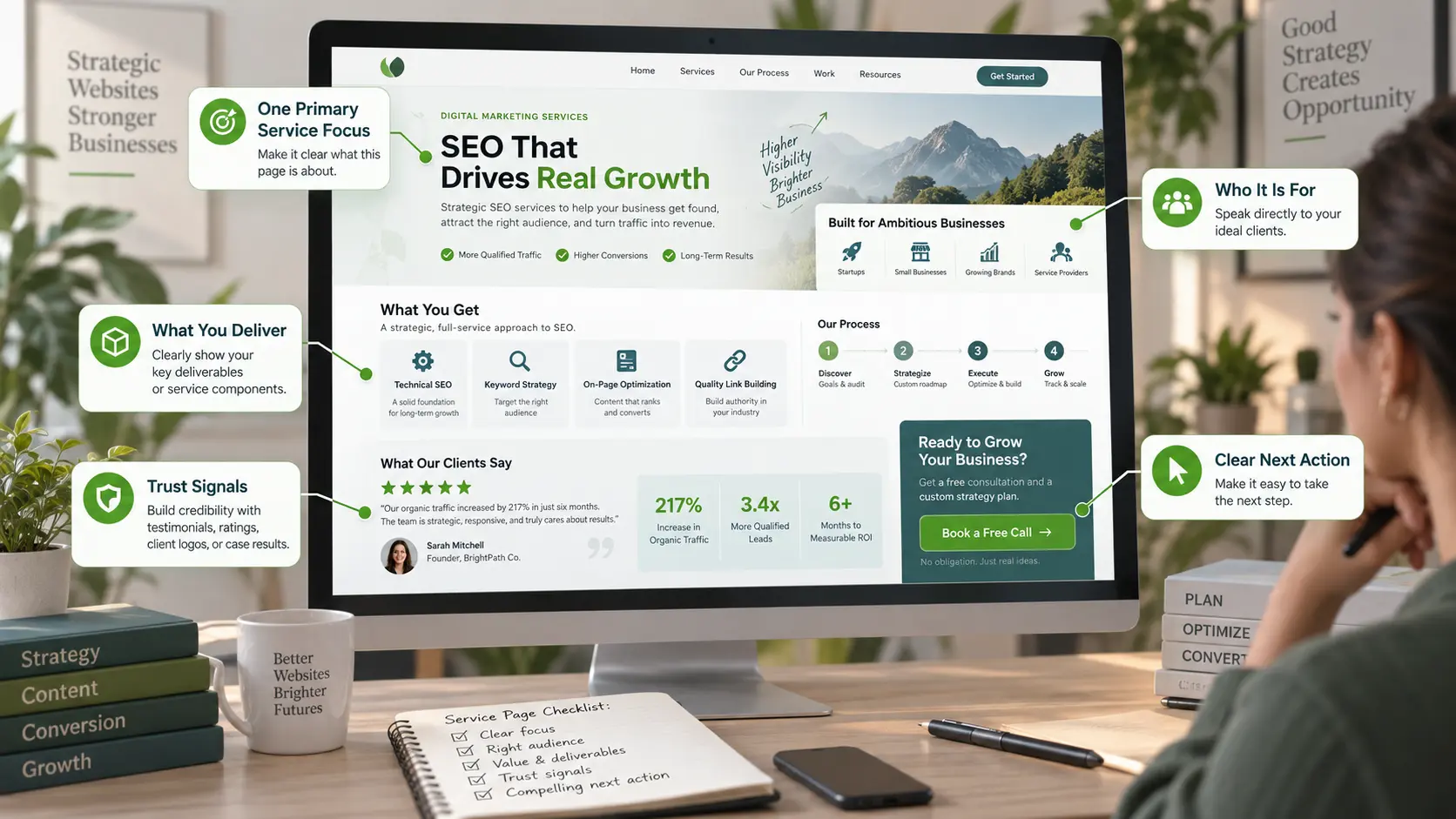
Strong service pages are not just summaries. They should reduce uncertainty, show proof, and help both users and search engines understand what makes your service a fit. Clarity and structure usually outperform clever wording.
- One Primary Service Focus: Keep each page tightly aligned to a single service and avoid blending unrelated offerings.
- Who It Is For: Define the ideal client and the problem you solve in plain language.
- What You Deliver: Explain deliverables, timeline ranges, and what clients can expect at each stage.
- Trust Signals: Add credentials, certifications, testimonials, and measurable outcomes where appropriate.
- Clear Next Action: Use a strong contact path with forms, phone, and scheduling options if relevant.
If you work with an agency or internal team, standardizing this structure across services helps with consistency and scale. It also makes later optimization easier when you review analytics and conversions.
Core Elements Your Blog Posts Must Include
High performing blog posts are built around a clear question and an equally clear answer. They should cover what people need to know to move forward, not just definitions. Each post should also guide readers to the next step with relevant internal links.
- Specific Query Target: Write for one primary topic and cover close variants naturally within the copy.
- Direct Early Answer: Provide the takeaway quickly, then support it with details and practical guidance.
- Scannable Structure: Use short paragraphs, helpful subheadings, and limited bullets to improve readability.
- Internal Linking: Link to the most relevant service page and related posts to keep users moving.
- Updated Accuracy: Review and refresh content periodically to maintain trust and relevance.
Blog content is also a strong place to address objections and set expectations. That makes your service pages easier to convert because the reader arrives better informed.
Service Pages Vs Blog Posts Comparison Table
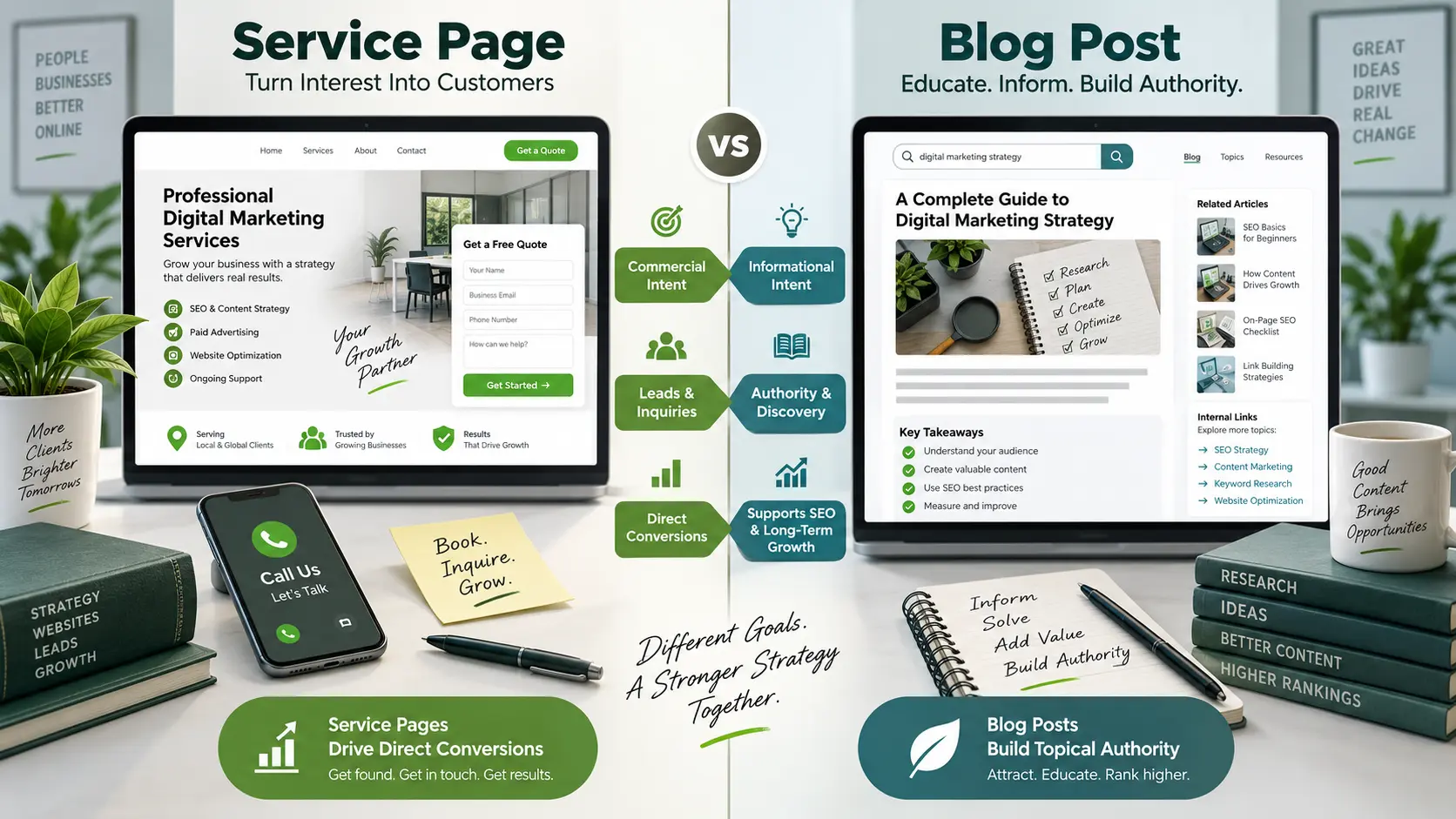
This table highlights how each content type contributes to SEO and conversions. Use it to decide what to publish first based on your immediate goals.
| Factor | Service Pages | Blog Posts |
|---|---|---|
| Primary Search Intent | Commercial and transactional | Informational and research |
| Typical Conversion Rate | Higher when the offer is clear | Lower directly, higher assisted |
| SEO Time To Win | Faster for local and niche terms | Faster for long tail topics |
| Best Use | Lead generation and booking | Authority building and discovery |
With this view, you can prioritize what you need first and still build toward a balanced content system.
A Simple Build Order That Works For Most Businesses
If you are uncertain, start with a small set of service pages and add blog content immediately after. This approach avoids publishing content that cannot convert and prevents a site that only sells without educating. It also creates a clear internal linking map from informational topics to money pages.
- Publish A Service Hub: Create a central page that summarizes your primary services and links to each detail page.
- Create Individual Service Pages: Build one page per core service and include proof, process, and clear calls to action.
- Add Location Targeting Where Relevant: If local SEO matters, create dedicated pages for key areas and keep content unique and useful.
- Launch Supporting Blog Clusters: Publish posts that answer the top questions related to each service and link back naturally.
- Optimize Based On Data: Track rankings, clicks, and conversions, then expand what is working instead of guessing.
This sequence keeps your SEO grounded in business outcomes while still building authority and reach.
Common Mistakes That Slow SEO Growth
Many sites publish a lot of content but fail to connect it to a conversion path. Others build service pages that are thin, duplicated, or unclear, which limits ranking potential. Avoiding a few common traps often unlocks quick gains.
- Writing Blog Posts Without Internal Links: Readers leave after getting an answer, and your service pages do not benefit from the authority.
- Stuffing Multiple Services On One Page: The page becomes unfocused and struggles to rank for specific queries.
- Duplicating Location Pages: Swapping city names without adding unique value can create thin content signals.
- Ignoring Conversion Elements: Even if you rank, unclear calls to action and weak trust signals reduce lead volume.
Fixing these issues usually improves both SEO performance and user experience. It also makes later content production more predictable.
How IMILI Can Help You Choose And Execute The Right Mix?
If you need a clear plan, IMILI can help map your services to search intent, build high quality service pages, and create a blog strategy that supports ranking and conversion. The advantage of a structured approach is that every new post strengthens a specific service page rather than living in isolation. That alignment makes SEO easier to measure and easier to scale.
When service pages and blog posts are designed as one system, your site becomes clearer to search engines and more persuasive to users. That is usually where durable growth comes from.
Conclusion
Build service pages first when you need leads quickly and your offer is clear. Build blog posts first when education is required, competition is heavy, or you need to earn authority through helpful coverage. For most businesses, a phased approach works best with a strong service foundation followed by consistent blog clusters that support each service.
Choose the order that matches search intent and your sales cycle, then measure results and expand what is working. That is how SEO becomes a compounding asset rather than a constant restart.
Frequently Asked Questions
How Many Service Pages Should I Start With For SEO?
Start with one page per core service that you actively sell and can deliver consistently. If your services overlap heavily, use a hub page plus focused subpages to keep intent clean. Add more pages only when they represent a distinct search need and conversion path.
Do Blog Posts Help Service Pages Rank Better?
Yes, when blog posts target related questions and link to the relevant service page using natural anchor text. This builds topical relevance and distributes internal link equity to the pages that convert. The impact is strongest when posts are organized into clusters around each service.
Can I Rank With Only Service Pages And No Blog?
It is possible in low competition niches or strong local markets, especially when your service pages are robust and well optimized. Over time, a blog usually becomes necessary to expand keyword coverage and defend rankings as competitors publish more. Even a small set of high intent posts can make a measurable difference.