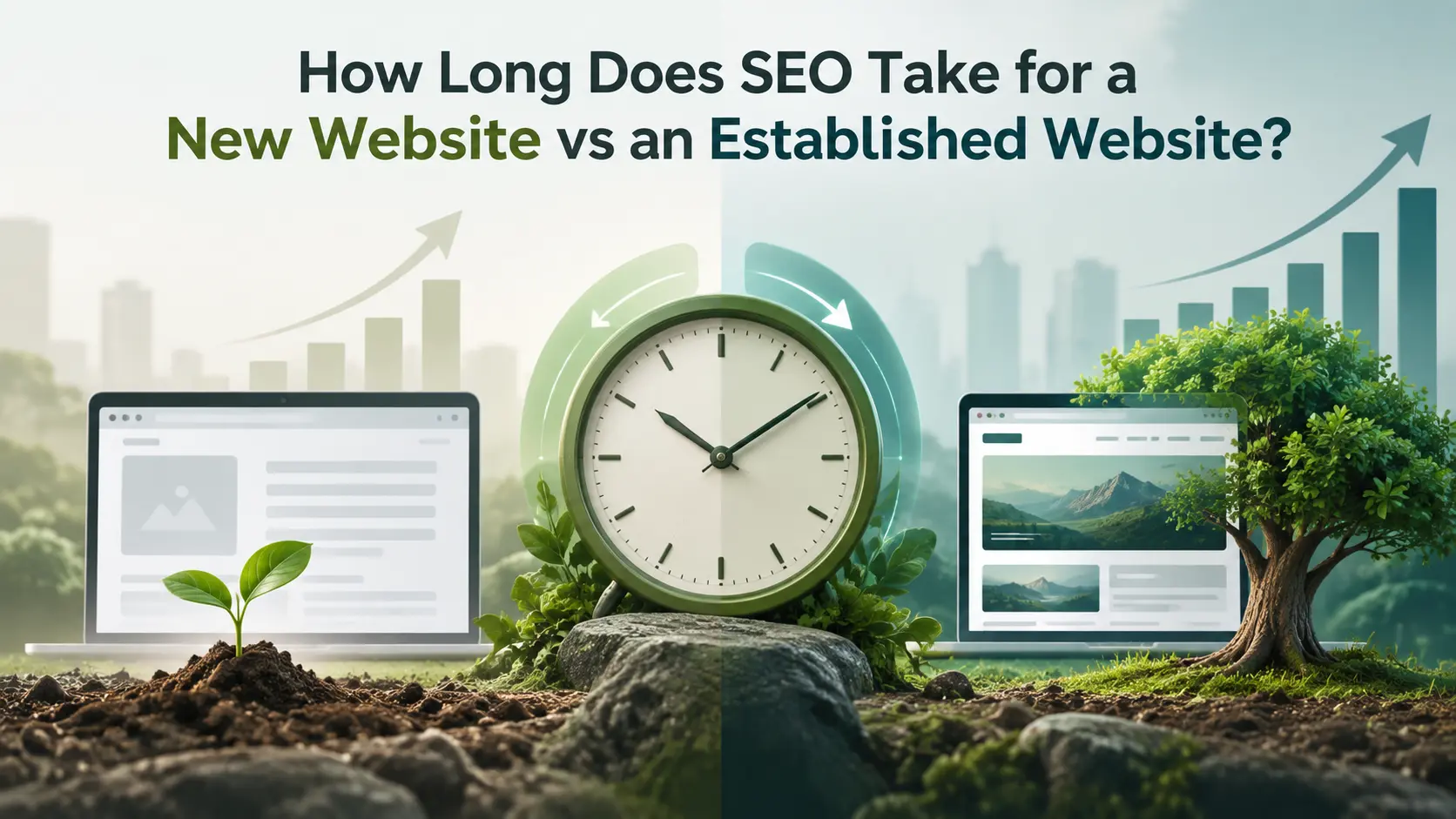
SEO rarely moves at the same speed for two websites. A new domain typically needs time to earn trust signals, while an established site often builds on existing authority, history, and indexed content. The real question is not only how long it takes, but what must happen in each stage to produce consistent rankings and qualified traffic.
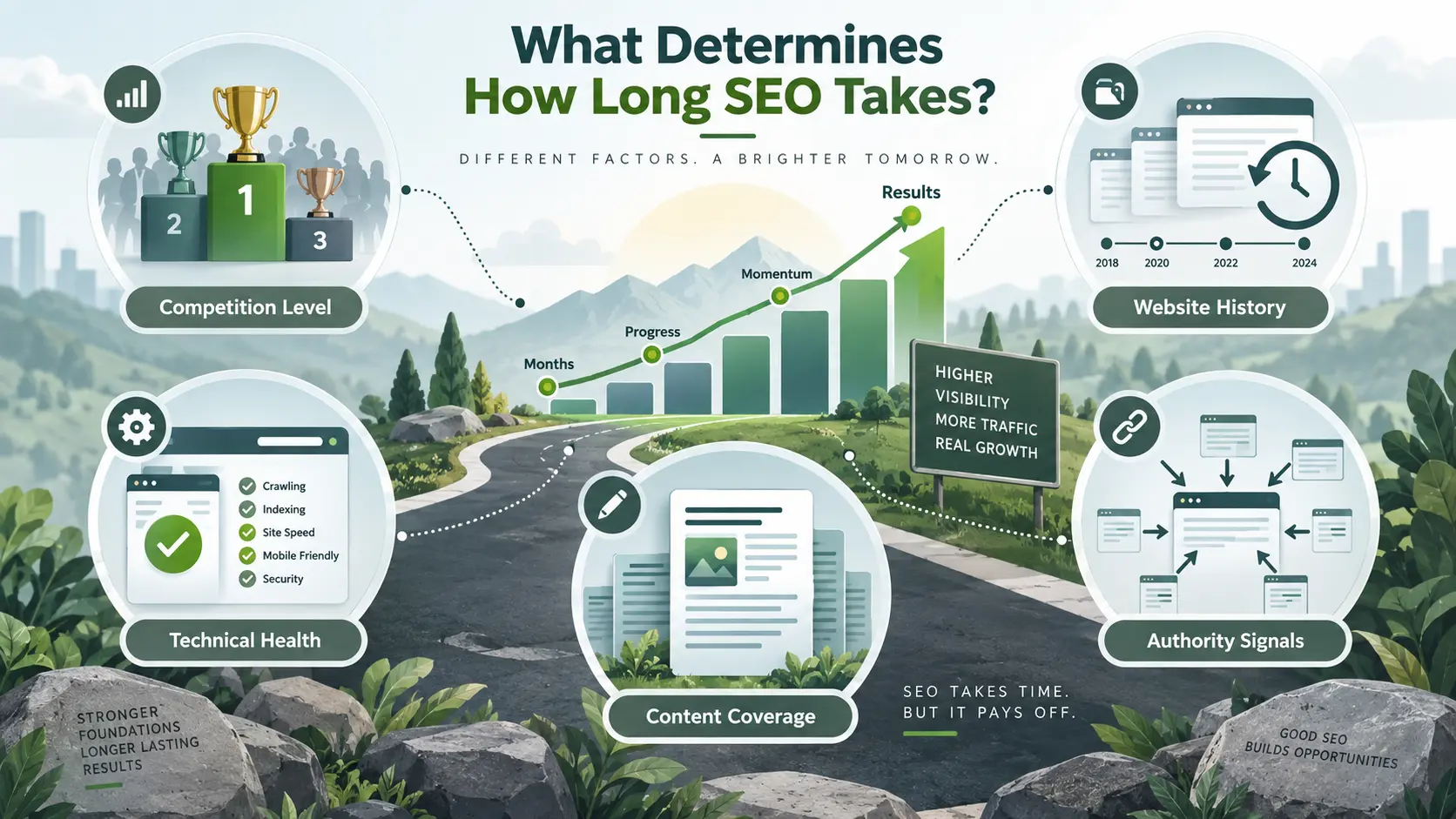
What Determines How Long SEO Takes?
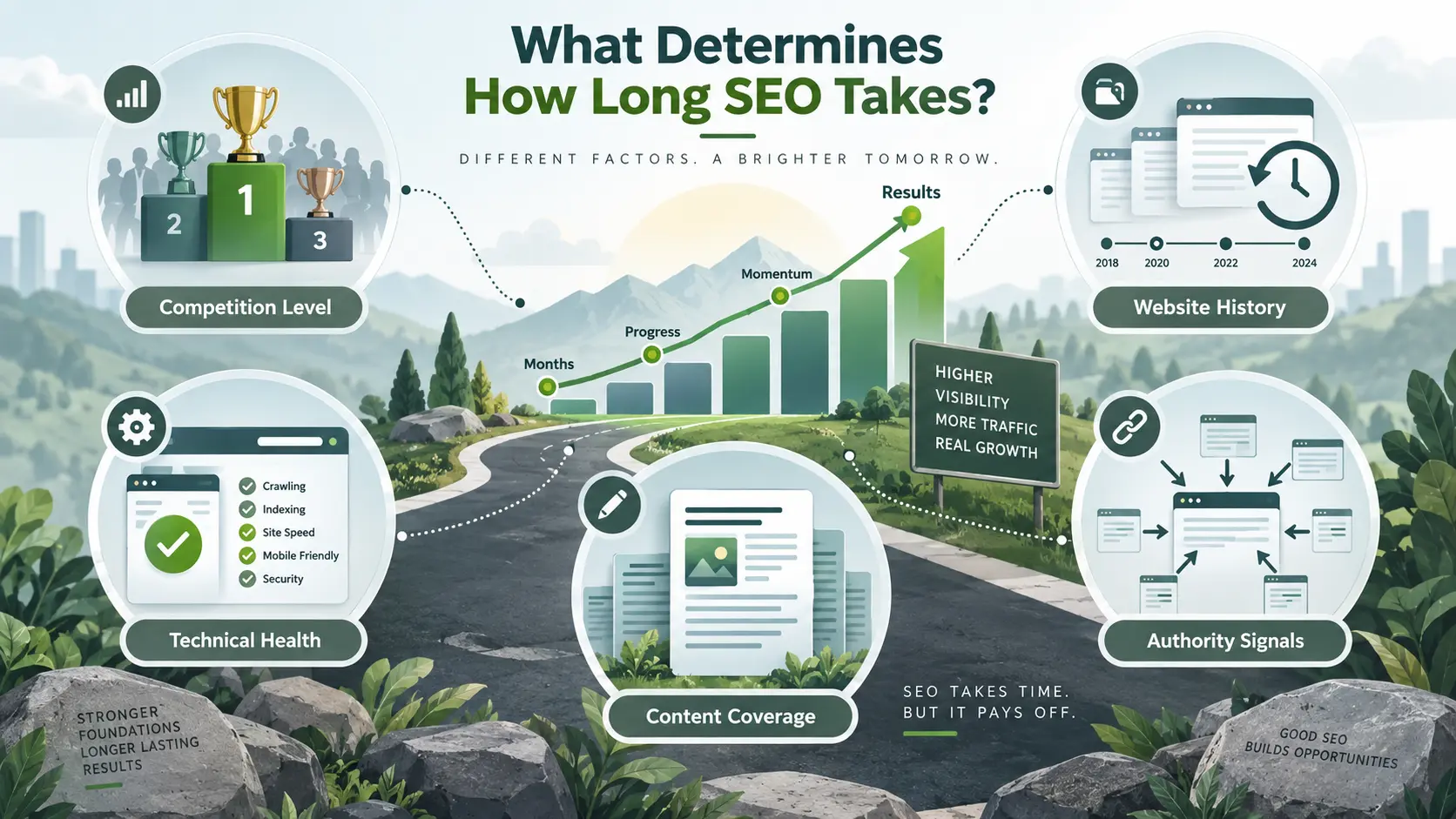
Search engines reward relevance, quality, and credibility. Those signals come from technical foundations, content depth, and a natural link profile, plus user behavior data that confirms the page is helping people.
Timeline expectations also depend on the market. A local service site can move faster than a national ecommerce category because the competitive set is smaller and the intent is clearer.
- Competition Level: Tougher keywords require more content, stronger links, and better on-page performance to win.
- Website History: Older sites often have more indexed pages, backlinks, and established topical relevance.
- Technical Health: Crawlability, speed, mobile UX, and clean architecture prevent wasted crawl budget and indexing delays.
- Content Coverage: Sites that answer a topic thoroughly tend to build rankings faster across more related queries.
- Authority Signals: Quality mentions and backlinks from relevant sources increase trust and improve ranking potential.
These drivers apply to both new and established sites, but the starting line is different.
How Long SEO Takes For A New Website?
New websites often need a ramp-up phase before they show predictable growth. Early progress usually appears as indexing, impressions, and a small set of long-tail rankings rather than immediate top positions.
In many markets, meaningful traction often takes several months because the site must first prove it is technically sound, consistently helpful, and worth ranking.
Early Stage Progress Signals
The first wins for a new site are usually behind the scenes. You should expect crawl and index stability, improved coverage in Search Console, and ranking movement for less competitive queries.
- Indexation Stability: Key pages get indexed reliably, and duplicate or thin pages are controlled with clear signals.
- Long Tail Visibility: The site begins ranking for specific queries with clearer intent and lower competition.
- Stronger Internal Relevance: Topic clusters and internal links help search engines understand what the site is about.
Once those signals are consistent, content and authority building typically produce faster compounding gains.
Why New Sites Often Move Slower?
A new domain has limited historical trust and usually fewer editorial mentions. Even strong content can take time to earn engagement signals and external references.
New sites also tend to change frequently, which can cause re-crawling and re-evaluation. Stability in structure, messaging, and content quality helps reduce that friction.
How Long SEO Takes For An Established Website?
Established sites often see faster initial movement because they already have indexed pages, backlinks, and known patterns of user engagement. Improvements like better internal linking or page refreshes can be recognized quickly.
That said, established sites can also be slower to improve if they carry technical debt, outdated content, or bloated architecture from years of changes.
Where Established Sites Gain Speed
The quickest wins usually come from optimizing what already exists. Updating high-impression pages, consolidating duplicates, and improving page experience can lift rankings without waiting for entirely new authority.
- Content Refreshes: Updating accuracy, structure, and intent alignment can improve rankings on pages that already have visibility.
- Internal Linking Improvements: Better pathways help distribute authority to priority pages and clarify topical relationships.
- Technical Cleanup: Fixing crawl traps, redirect chains, and canonicals can unlock stronger indexation quickly.
After those optimizations, established sites can scale by expanding topic coverage and improving conversion relevance.
Common Roadblocks For Older Sites
Legacy issues can limit growth. Thin legacy pages, keyword cannibalization, and inconsistent intent mapping can cause search engines to rank the wrong page or none at all.
Another frequent issue is slow publishing and approval cycles. SEO needs a steady cadence to test, learn, and expand coverage over time.
New Vs Established Website SEO Timeline Comparison
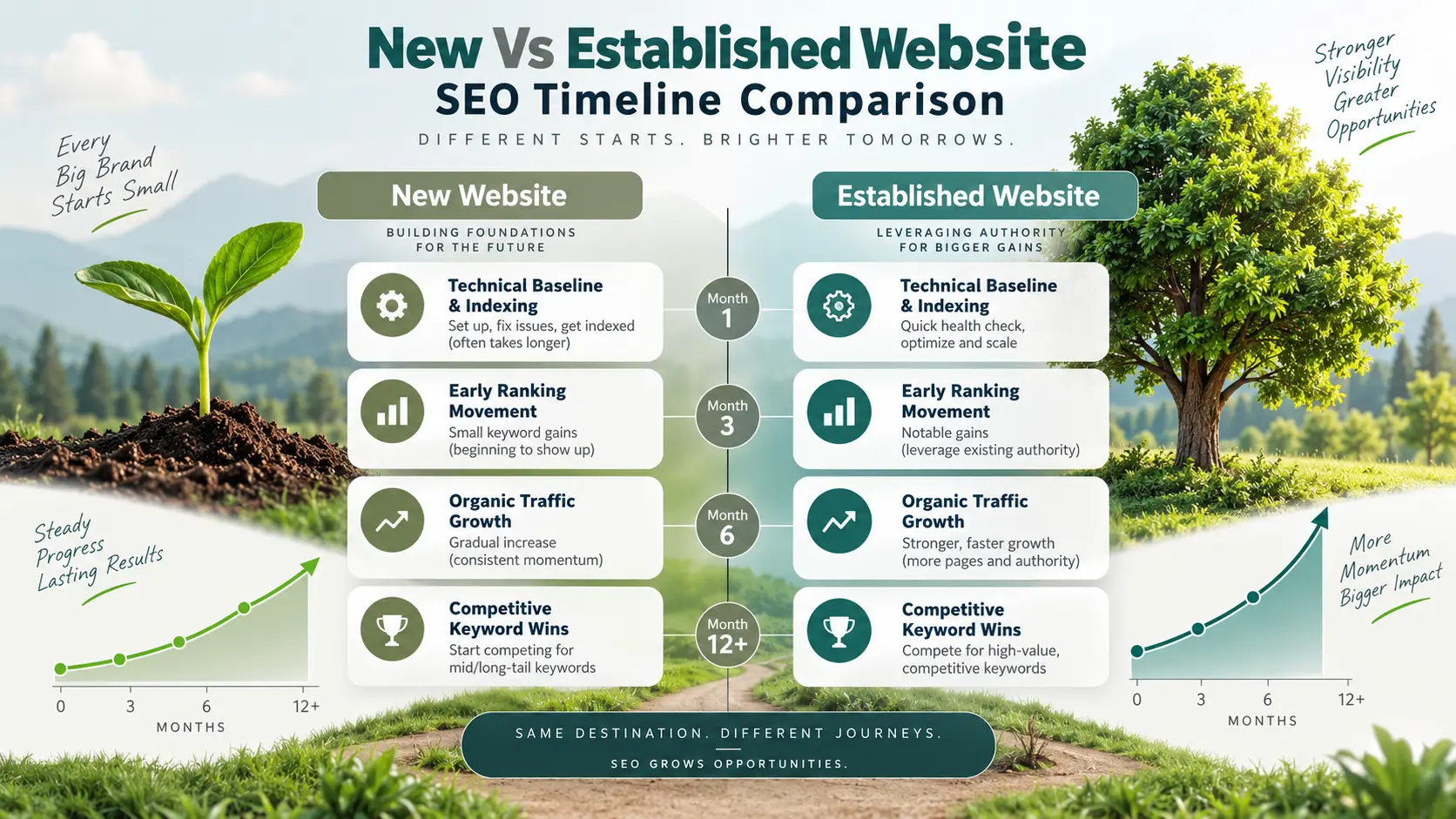
The biggest difference is the amount of proof a site already has. New sites must earn trust and relevance from scratch, while established sites often need refinement and consolidation to unlock quicker gains.
| Milestone | New Website Typical Pace | Established Website Typical Pace |
|---|---|---|
| Technical Baseline And Indexing | Weeks to stabilize indexing for core pages | Days to weeks if issues are limited |
| Early Ranking Movement | Often first appears on long tail queries | Often appears on existing pages after updates |
| Consistent Organic Traffic Growth | Usually needs multiple content cycles | Can improve faster if authority is strong |
| Competitive Keyword Wins | Typically requires authority building and depth | More realistic after pruning and strengthening clusters |
These timelines vary by niche, but the pattern stays consistent across most industries.
Key Factors That Speed Up Results For Both
SEO tends to move faster when execution is focused and measurable. The goal is to remove friction from crawling and indexing, then publish content that satisfies intent better than what already ranks.
Strong SEO also aligns with business priorities. Targeting the right pages and the right queries reduces wasted work and improves the quality of traffic.
- Clear Keyword And Intent Mapping: Each page has a primary purpose, and overlapping pages are merged or differentiated.
- Topical Cluster Strategy: Supporting articles strengthen a core service or category page through internal links and semantic relevance.
- High Quality On Page SEO: Titles, headings, schema, and content structure make it easy for search engines to interpret the page.
- Performance And UX Improvements: Faster pages and clearer navigation improve engagement signals and conversion rates.
- Earned Authority: Digital PR, partnerships, and citations create natural mentions that build trust over time.
When these elements are handled together, results tend to be steadier and easier to scale.
What To Do First On A New Website?
A new site needs a clean technical foundation and a content plan that builds topical authority. Publishing random pages without a structure often delays growth because relevance signals stay scattered.
If you want an efficient path, start with the pages that directly support your revenue goals, then expand with supporting content that answers related questions.
- Build A Crawlable Site Structure: Keep navigation simple, use logical categories, and avoid orphan pages.
- Publish Core Pages First: Create strong service, category, or solution pages before writing supporting articles.
- Create Supporting Content Clusters: Add guides that address subtopics and link back to the core page naturally.
- Set Up Measurement Early: Track conversions, Search Console coverage, and keyword segments to spot what is working.
After the foundation is stable, consistent publishing and authority building become the main growth levers.
What To Do First On An Established Website?
Established sites often get faster returns from cleanup and optimization. Before creating a large volume of new content, fix the issues that dilute authority or confuse search engines.
Start by improving what already has impressions and potential. That approach tends to produce quicker lifts while you build a longer-term content expansion plan.
- Run A Content And Technical Audit: Identify thin pages, duplicates, broken internal links, and indexing inconsistencies.
- Consolidate Cannibalized Pages: Merge overlapping topics so one strong page can rank instead of many weak ones.
- Refresh High Value Pages: Update structure, add missing sections, improve E-E-A-T signals, and align to intent.
- Strengthen Internal Linking: Point authority to priority pages and build clear topic pathways for crawlers and users.
Once those priorities are handled, expansion content performs better because the site foundation is already trusted.
How Imili Corp Can Help You Get Faster Clarity And Better Execution?
SEO timelines improve when work is prioritized correctly and executed consistently. If you need a clear roadmap, Imili Corp supports businesses with SEO strategy, technical improvements, and content development that aligns with measurable growth goals.
This kind of structured approach is especially useful when a new website needs an authority plan or when an established website requires an audit, cleanup, and targeted optimization to unlock existing potential.
Conclusion
New websites usually take longer because they must build trust, indexation stability, and topical relevance from the ground up. Established websites can often move faster, but only when technical debt and content overlap are removed.
The most reliable way to shorten the timeline is to focus on fundamentals, publish with intent, and measure progress by milestones, not guesses. When those pieces are in place, SEO becomes a compounding asset instead of a waiting game.
Frequently Asked Questions
How Can I Tell If SEO Is Working Before Traffic Grows?
Look for consistent indexing, rising impressions, and more keywords entering the top 20 positions. Improved click-through rate on pages with impressions is another strong sign. These indicators often show progress before traffic becomes noticeable.
Does Publishing More Content Always Make SEO Faster?
More content helps only when it is well-structured, intent-aligned, and internally linked to core pages. Publishing thin or overlapping articles can slow progress by creating cannibalization and weaker overall quality signals. A smaller set of strong pages often performs better than a large set of weak ones.
Should A New Website Run Ads While Waiting For SEO?
Paid traffic can support early lead flow and provide conversion data that informs SEO priorities. It does not directly improve rankings, but it can help you learn which messages and landing pages perform best. Many teams use both to balance short-term results with long-term organic growth.