

Monthly organic SEO work should feel steady, measurable, and tied to business goals rather than vague promises. A strong SEO company runs recurring checks, publishes and improves content, earns authority, and reports progress with clear next actions. When any of those pieces disappears, results usually stall or volatility increases.
Below is what a competent organic SEO partner should do each month, what deliverables you should expect, and how to evaluate whether the work is moving rankings and revenue in the right direction.
Start With Strategy And Priorities
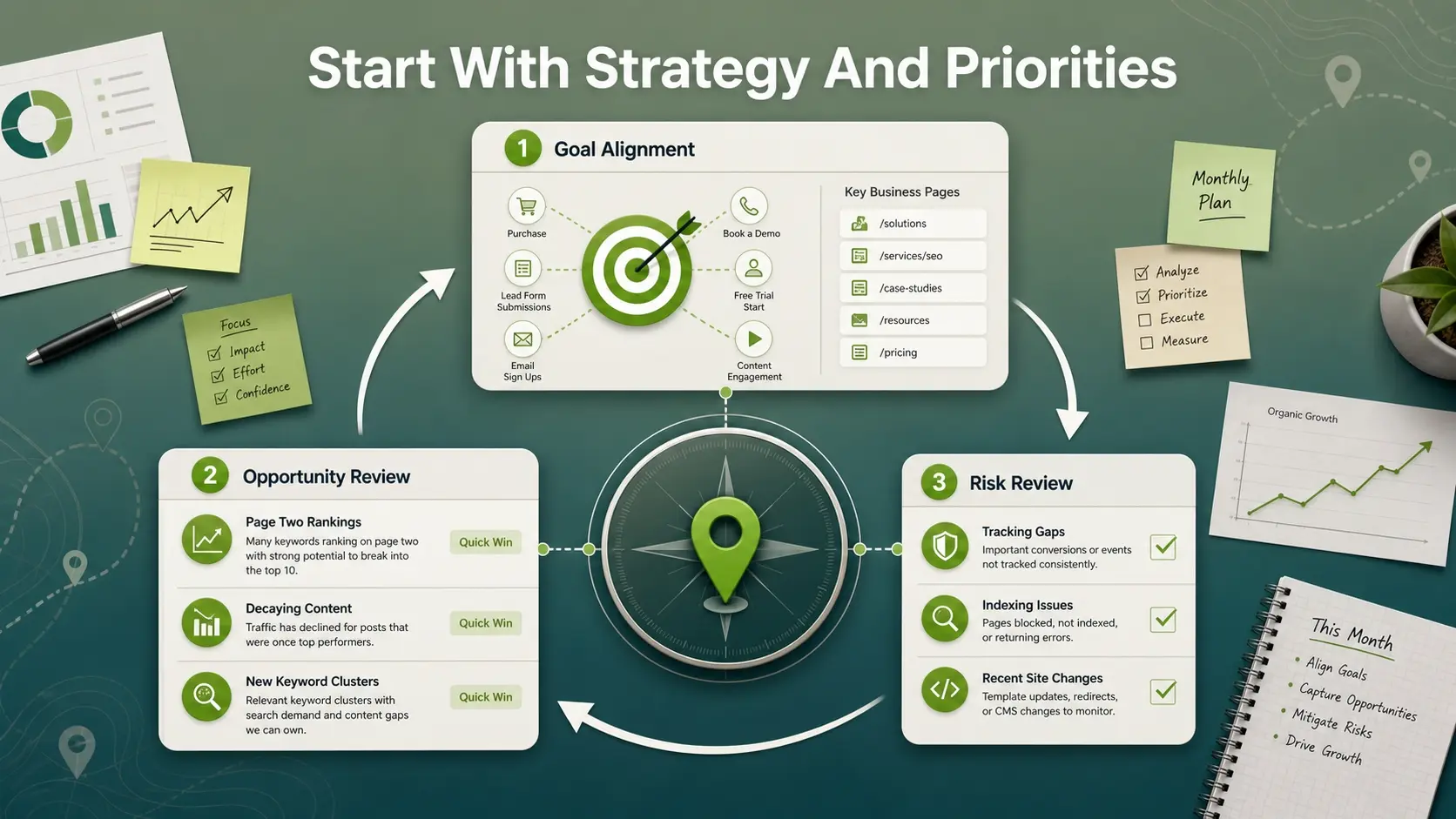 Every month should begin with a short planning cycle that connects SEO tasks to outcomes such as qualified leads, demos booked, calls, or ecommerce revenue. This is where an SEO company chooses the highest impact activities based on current data, capacity, and seasonality.
The priorities should be documented and easy to understand. If the plan changes mid-month, you should be told what changed, why it changed, and what is being deprioritized.
- Goal alignment: Confirm the primary conversion actions and the pages that influence them.
- Opportunity review: Identify quick wins such as pages ranking on page two, decaying content, or new keyword clusters.
- Risk review: Watch for tracking gaps, indexing issues, or recent site changes that can affect visibility.
With priorities set, execution becomes easier to track and defend.
Technical SEO Maintenance That Prevents Lost Traffic
 Technical SEO is not a one-time checklist. Sites change constantly through new pages, templates, plugins, product updates, redirects, and content uploads, so monthly monitoring is essential.
An organic SEO company should run recurring audits and then focus on a small number of fixes that remove real constraints. More tools are not the point, cleaner crawling, indexing, and performance are.
- Indexing and crawl health: Validate that important pages are indexable and that low value URLs are controlled.
- Core Web Vitals and speed: Monitor performance trends and coordinate fixes with developers when metrics slip.
- Redirects and errors: Resolve 404s, redirect chains, canonical mistakes, and broken internal links.
- Structured data checks: Maintain schema integrity so search engines understand key entities and page types.
- Site changes governance: Review releases that affect templates, navigation, or content blocks before and after launch.
Once the foundation is stable, content and authority work delivers stronger compounding returns.
Keyword And Search Intent Work That Guides Content
Good SEO companies treat keyword research as a living system, not a spreadsheet that gets built once and forgotten. Monthly work should validate which queries are growing, which ones are slipping, and where intent is shifting.
This includes mapping search intent to the right content type, such as service pages, product pages, guides, comparisons, or FAQs, so the page matches what searchers want.
- Query trend tracking: Identify rising topics, declining demand, and new long-tail variations.
- Keyword to page mapping: Prevent cannibalization by assigning one primary page per core topic.
- Intent alignment checks: Validate that the page structure answers the dominant intent and reduces pogo-sticking.
This research should directly feed the content calendar and on-page updates for the month.
On-Page SEO Improvements On Existing Pages
Most sites already have pages that can rank higher with targeted improvements. Monthly on-page work should focus on pages that are close to winning, pages that drive conversions, and pages that have slipped due to competitors or freshness factors.
Edits should be intentional and tracked. Randomly rewriting pages without a reason increases risk and makes results hard to attribute.
- Title and snippet optimization: Improve clarity and click appeal while staying accurate to on-page content.
- Content depth and completeness: Add missing subtopics, tighten sections, and remove thin or redundant content.
- Internal links: Build topical clusters using contextual links that help users and distribute authority.
- Media and accessibility: Improve alt text, headings structure, and readability for broader usability.
These updates often deliver faster gains than publishing new pages, especially on established domains.
Content Production That Builds Topic Authority
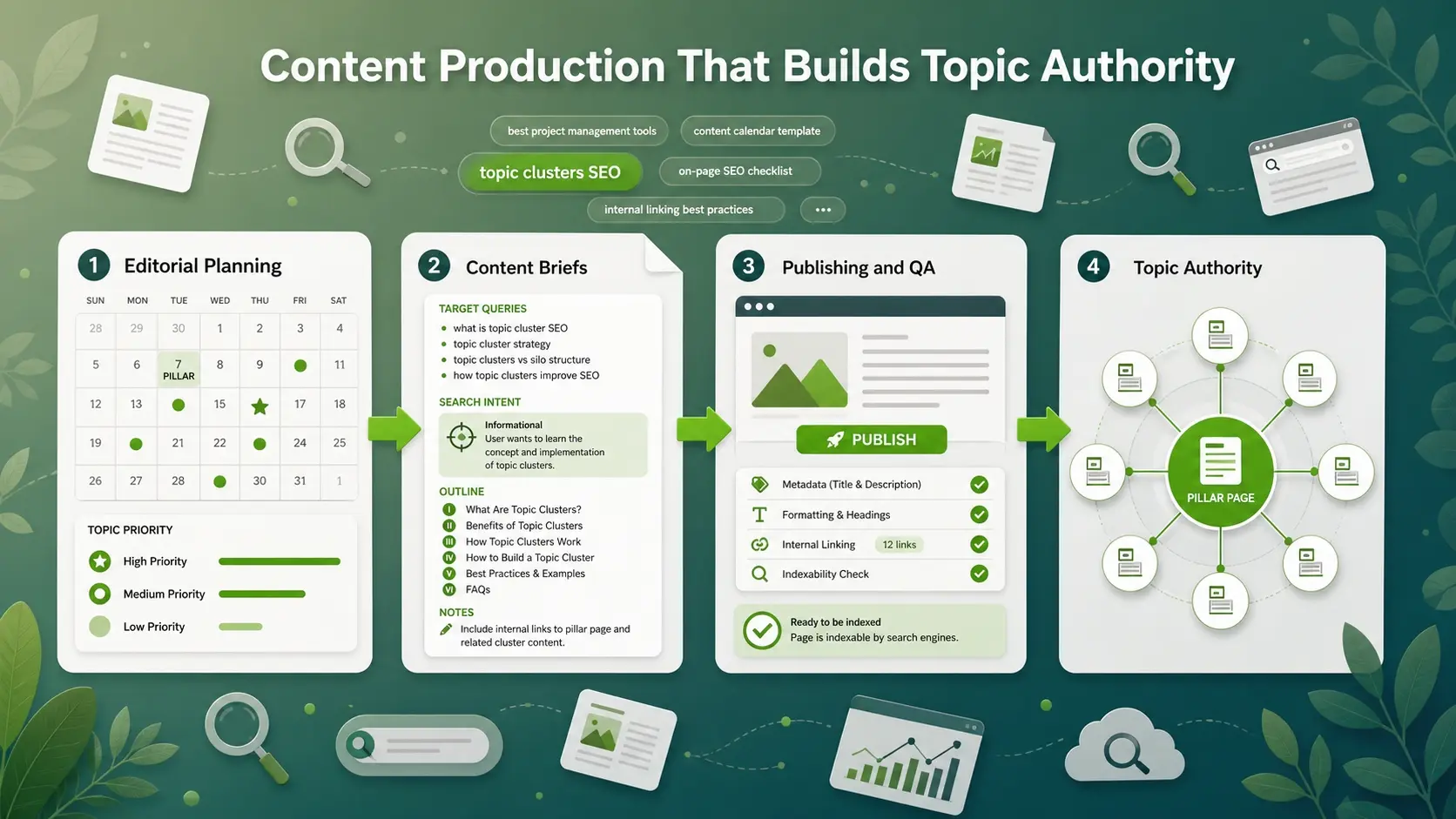 Publishing should be consistent, but it should also be focused. A competent organic SEO company creates content that supports your core services and products, answers customer questions, and reinforces expertise.
Each new piece should have a clear role in the site architecture. That role could be capturing new demand, supporting a money page through internal links, or filling a gap in a topical cluster.
- Editorial planning: Maintain a realistic calendar based on capacity and business priorities.
- Content briefs: Provide outlines, target queries, intent notes, and required sections for quality control.
- Publishing and QA: Ensure formatting, metadata, links, and indexability are correct at launch.
If you need full-service execution, IMILI Corp’s SEO services typically pair content strategy with technical and on-page delivery so each month produces tangible assets, not only recommendations.
Link Earning And Off-Page Authority Building
Authority still matters, but the monthly approach should be selective and brand-safe. The goal is to earn links and mentions that make sense for your industry, not to chase quantity.
A good SEO company will show where links come from, how they were earned, and which pages they support. They also avoid risky tactics that can create long-term cleanup costs.
- Digital PR and outreach: Build relationships and secure relevant placements that fit your niche.
- Asset creation: Develop linkable resources such as guides, tools, or research-driven pages.
- Local citations when relevant: Maintain consistent listings for local SEO and reduce NAP inconsistencies.
Off-page work is slow by nature, so the monthly view should focus on process quality and relevance.
Local SEO Work When You Serve Specific Areas
If you rely on local intent searches, monthly SEO should include business profile management and location relevance. This work can drive high-intent calls and visits, especially for service businesses.
Monthly tasks typically include category checks, review workflows, and location page improvements that align with what people search in your service areas.
- Business profile optimization: Keep categories, services, photos, and attributes accurate and competitive.
- Review acquisition support: Improve review volume and quality with compliant, repeatable processes.
- Location relevance: Strengthen location pages and internal links without duplicating thin content.
When local SEO is part of the plan, reporting should separate local visibility metrics from national or informational performance.
Conversion Rate Optimization And UX Checks
Rankings are not the end goal. Monthly SEO should also improve how well organic visitors convert by reducing friction, clarifying value, and strengthening trust signals.
This does not require a full redesign. Small changes to layout, copy, calls to action, and page speed can lift conversions without increasing traffic.
- Conversion path review: Confirm forms, phone tracking, checkout, and key events work correctly.
- Trust and clarity updates: Add proof points, tighten messaging, and remove distractions that reduce engagement.
- UX fixes that support SEO: Improve navigation, reduce intrusive elements, and make content easier to scan.
This is where SEO and business outcomes connect most clearly, especially for lead generation sites.
Monthly Reporting You Can Act On
Reports should show what changed, what was done, and what happens next. Raw dashboards alone are not enough, because they do not explain causality, priorities, or risks.
Look for a narrative that ties KPIs to actions. A solid SEO company also calls out what is uncertain, such as algorithm volatility or tracking limitations.
| Monthly Activity | Key Deliverable | What You Should Learn |
|---|---|---|
| Technical Monitoring | Issue list with fixes and status | What is blocking crawling, indexing, or speed |
| Content And On Page Updates | Optimized pages and published assets | Which topics are being built and why |
| Authority Building | Link and mention summary | How credibility is improving over time |
| Performance Reporting | KPI trends and next month priorities | What worked, what did not, and what changes next |
A useful report reduces confusion and keeps the relationship focused on outcomes.
What To Expect In Communication And Workflow?
Monthly SEO succeeds when work is coordinated across marketing, content, and development. A capable SEO company builds a workflow that fits your team and keeps tasks from getting stuck.
Expect clear ownership, timelines, and approval rules. If you never know who is doing what, progress becomes inconsistent.
- Monthly planning call: Confirm priorities, deliverables, and any dependency on internal teams.
- Mid month check in: Catch blockers early and adjust priorities based on new data.
- Documentation: Keep a shared log of changes so results can be traced to actions.
If you prefer a single accountable partner, IMILI Corp typically structures SEO engagements with a defined monthly cadence, transparent deliverables, and coordination support across stakeholders.
Conclusion
An organic SEO company should deliver a repeatable monthly system that blends technical health, search intent research, on-page improvements, content production, and authority building. You should see tangible outputs each month, along with reporting that explains performance and guides the next set of priorities.
If your current provider cannot show what was done, why it matters, and what happens next, the problem is usually process and accountability, not a lack of time. Choose a partner that treats SEO as ongoing operations and ties every monthly action to measurable business outcomes.
Frequently Asked Questions
How Many Hours Of SEO Work Should Happen Each Month?
Hours vary by site size, competition, and how much content and development work is required. A better benchmark is the volume and quality of deliverables, such as fixes shipped, pages improved, and content published. Ask for a monthly plan that shows capacity allocation across technical, content, and authority tasks.
What Metrics Should A Monthly SEO Report Include?
A useful report includes organic traffic quality, rankings for meaningful topics, conversions from organic, and technical health indicators. It should also show what changed on the site and what work was completed. Clear next actions matter as much as the charts.
How Soon Should Monthly SEO Work Show Results?
Some improvements such as technical fixes and on-page updates can impact performance within weeks, but stronger gains often take several months. Timelines depend on crawl frequency, competition, and how much authority your site already has. Consistent monthly execution reduces volatility and improves compounding growth.