
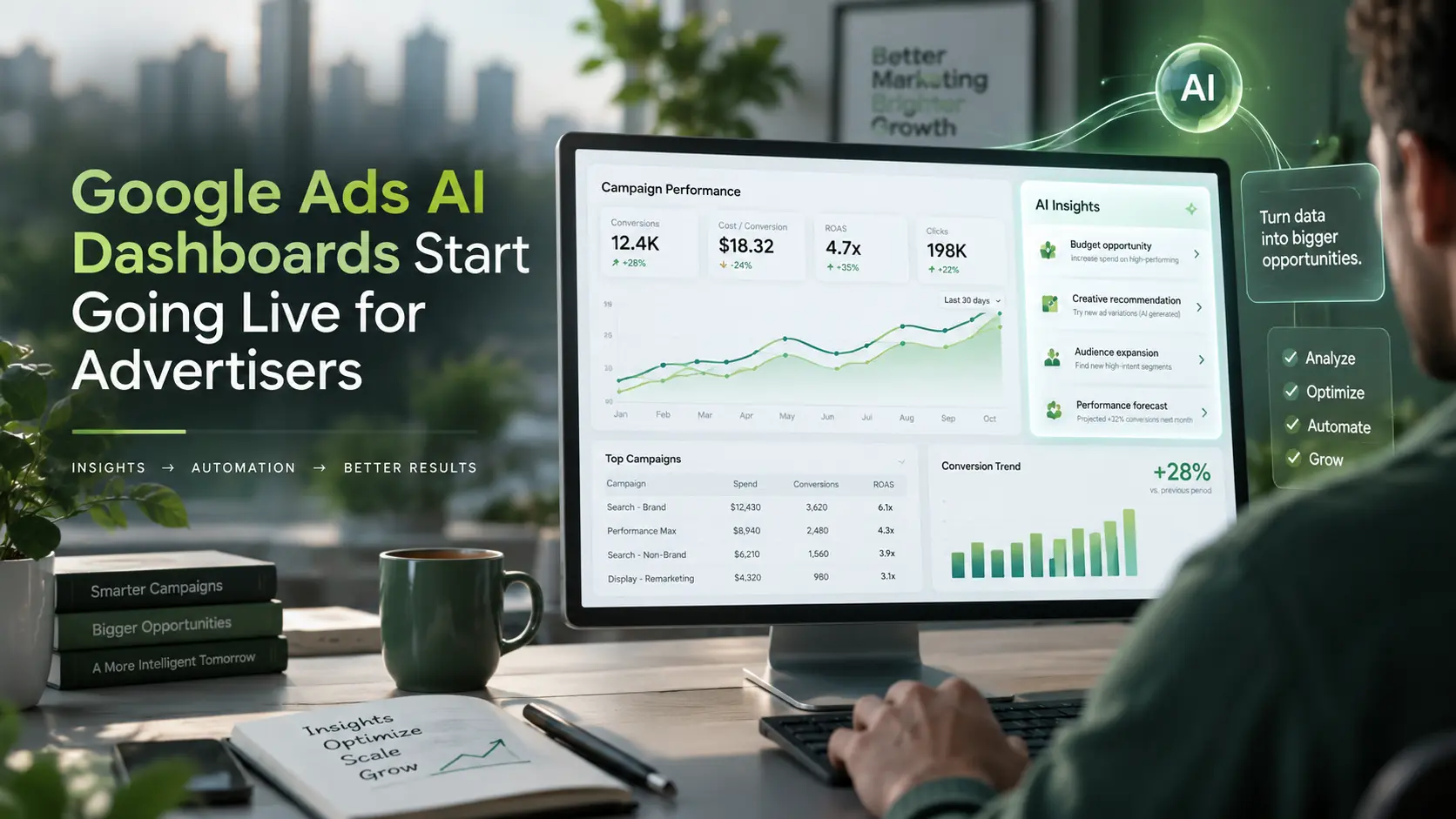
Google Ads is starting to roll out new AI-powered dashboards that can help advertisers understand campaign performance without spending as much time building reports manually.
The new dashboards use Google’s Gemini AI technology to turn advertising data into charts, graphs, tables and summaries. Instead of creating every report step by step, advertisers can type a simple question or request and let the system build a visual report around it.
For example, a marketer could ask to see how campaign performance changed over the past month, which campaigns generated the most conversions, or where advertising costs increased. The dashboard can then create relevant visualizations and provide a short explanation of what may be happening in the data.
This could make Google Ads reporting easier for marketers who manage several campaigns or accounts at the same time. Traditional reporting often requires selecting metrics, applying filters and moving between different sections of the platform. AI-generated dashboards are designed to reduce some of that manual work.
The dashboards can also create real-time summaries that explain important changes in campaign performance. This means advertisers may be able to spot rising costs, falling conversions or stronger-performing campaigns more quickly.
Google is also adding AI-powered insight tools across its advertising and analytics products. Advertisers can use prompts to investigate specific questions about their performance rather than relying only on standard reports.
The update could be especially useful for agencies, small marketing teams and business owners who need quick answers from large amounts of advertising data. Instead of spending time building several reports, they can ask direct questions and get a visual overview of the information they need.
However, AI-generated explanations should still be reviewed carefully. Advertising performance can be affected by many factors, including seasonality, competition, tracking changes, website performance, budget adjustments and customer behavior. An AI summary may identify an important pattern, but marketers still need to understand the wider business context before making major campaign decisions.
For performance marketing teams, the bigger benefit may be faster movement from data to action. If advertisers can identify changes earlier, they may be able to adjust budgets, creative, targeting or bidding strategies sooner.
The development also shows how Google is moving AI deeper into everyday advertising workflows. AI is no longer being used only to create ads or automate bidding. It is increasingly becoming part of campaign analysis, reporting and decision-making as well.
For businesses focused on measurable digital growth, the new dashboards could make campaign data easier to understand. But strong measurement practices will remain important. Accurate conversion tracking, clean analytics data and clear business goals are still necessary if advertisers want useful insights from AI-powered reporting.
As access expands, advertisers can expect Google Ads reporting to become more conversational. Instead of searching through multiple reports, marketers may increasingly be able to ask the platform a question and receive an immediate visual answer.