
Choosing a marketing analytics agency is often the turning point between guessing and growing. When measurement is clean and decisions are tied to outcomes, budgets move with confidence and waste shrinks.
This guide explains how data improves SEO, paid search, and social by connecting conversion tracking to the marketing performance metrics that leadership actually uses. It focuses on practical systems, not flashy dashboards.
Marketing Analytics Agency
A marketing analytics agency builds the measurement layer that sits under every channel. That includes tracking design, data governance, reporting, and the analysis that turns numbers into clear next actions.
The work is part technical and part strategic. It translates business goals into definitions, events, and KPIs so teams can evaluate performance without debates over what counts.
A strong partner also creates accountability. When each metric has an owner, a source, and a decision tied to it, the organization stops optimizing vanity metrics and starts optimizing profit drivers.
Data Driven Marketing
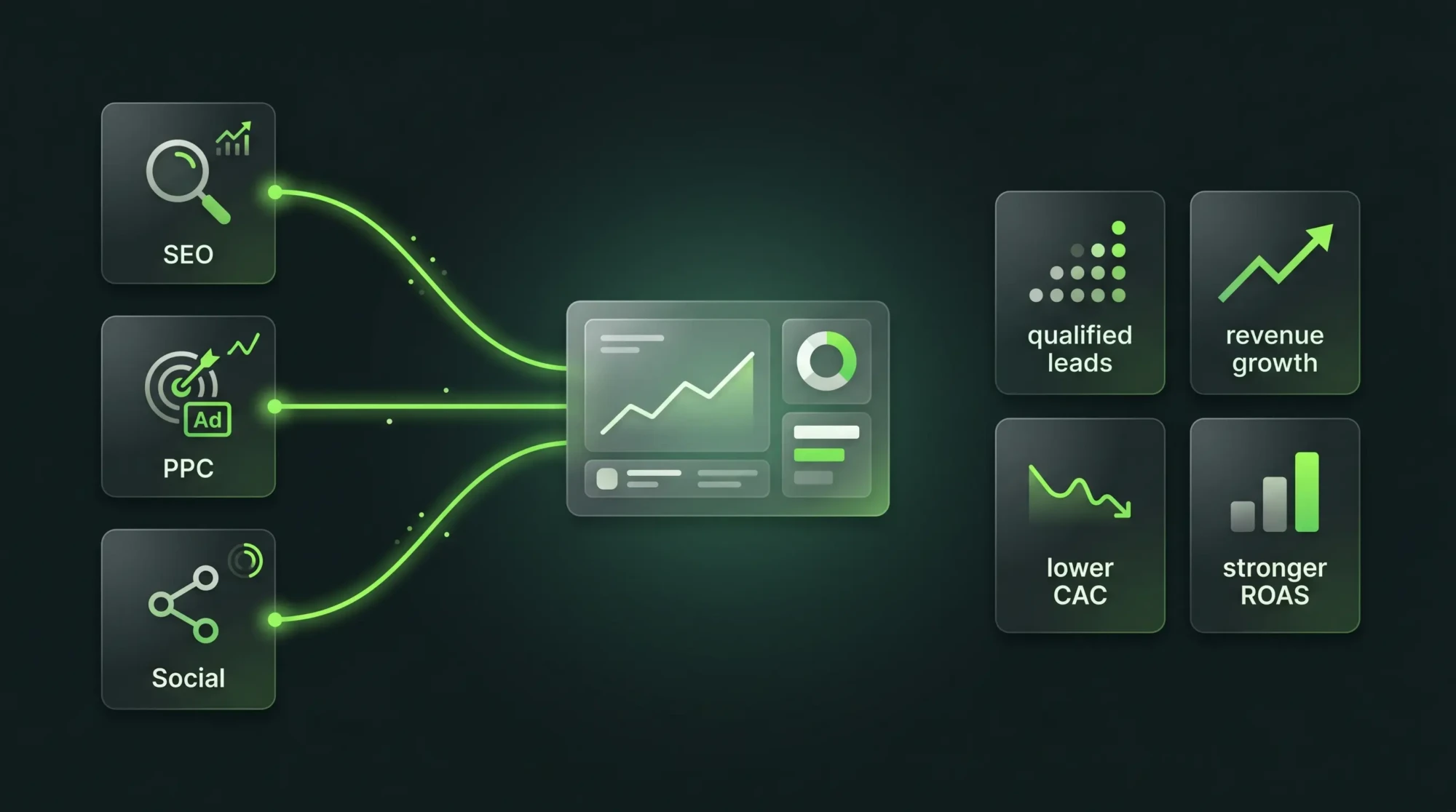
Data-driven marketing means each campaign starts with a hypothesis and ends with learning that improves the next cycle. The goal is not more data, but fewer blind spots and faster feedback loops.
It relies on a shared measurement plan that covers acquisition, engagement, and revenue. That plan should define audiences, channel roles, attribution approach, and the time window for evaluating impact.
Data quality is the hidden foundation. If naming conventions, UTM rules, and event definitions are inconsistent, teams will optimize in different directions and results will drift.
- Clear KPI hierarchy. Tie channel KPIs to a single business outcome such as qualified leads, revenue, or retention.
- Consistent taxonomy. Standardize campaign names, content labels, and audience segments across platforms.
- Decision thresholds. Set targets and guardrails so teams know when to scale, pause, or rebuild.
With these basics in place, analysis becomes repeatable and disagreements drop because the definitions are already settled.
SEO Analytics
SEO analytics connects search visibility to outcomes that matter beyond traffic. A marketing analytics agency focuses on what each page and query contributes to lead quality, revenue, or subscriptions.
The first priority is mapping intent to the site structure. Keyword groups should align to pages, and pages should align to a funnel stage so measurement reflects the user journey.
Technical Measurement That Supports Rankings
Search performance is influenced by crawlability, indexation, and site speed. Analytics should surface these issues alongside engagement signals, not in separate silos.
Clean landing page reporting matters. When URLs fragment due to parameters, redirects, or duplicate paths, the story of SEO becomes noisy and misleads planning.
Content Performance Beyond Sessions
Good SEO reporting highlights which topics drive qualified behavior, not just pageviews. That means connecting queries and landing pages to conversion tracking and downstream CRM stages when available.
It also measures content decay and freshness. A simple pattern is tracking changes in impressions, click-through rate, and assisted conversions by page group over time.
- Search intent coverage. Track how well each topic cluster serves informational, commercial, and transactional needs.
- Landing page value. Measure conversion rate, assisted conversions, and lead quality by entry page.
- Technical health signals. Monitor index coverage, Core Web Vitals trends, and internal linking depth.
When SEO analytics is aligned to business value, teams prioritize the pages that move pipeline rather than the pages that only look busy.
PPC Campaign Optimization
PPC campaign optimization improves efficiency by tightening the link between intent, creative, and landing experience. Analytics ensures optimization is guided by incremental outcomes, not platform-reported claims alone.
The agency role often starts with tracking validation. If conversion events double-fire, fail to dedupe, or miss key steps, bidding strategies can amplify error at scale.
Conversion Modeling With Real Constraints
Paid search performance depends on definitions such as what counts as a lead and what counts as qualified. A marketing analytics agency helps set primary and secondary conversions so automated bidding does not chase low-value actions.
When offline outcomes exist, closing the loop is essential. Importing qualified stages or revenue improves value-based bidding and helps separate high-intent queries from volume-only queries.
Query And Audience Insights That Reduce Waste
Effective optimization uses search term data, audience overlaps, and time-to-convert patterns. That reduces spend on ambiguous queries and shifts budget to terms that produce stronger downstream behavior.
Creative testing also needs measurement discipline. Ad copy and extensions should be evaluated using controlled windows and consistent attribution settings so results are comparable.
- Bid strategy alignment. Match bidding to the right primary conversion and value rules.
- Budget pacing controls. Track daily spend variance and conversion lag to avoid overreacting to noise.
- Landing page diagnostics. Measure form friction, page speed, and field abandonment tied to PPC traffic.
With cleaner signals, optimizations become less reactive and more profitable across time, devices, and match types.
Social Media Analytics
Social media analytics should answer two questions. Which audiences and messages create demand, and which interactions lead to measurable business actions.
Platform metrics can be useful, but they are not the end goal. The agency builds a view that connects reach and engagement to site behavior, lead creation, and repeat visits.
Audience And Creative Measurement
Strong measurement separates awareness from consideration. That means tracking view-through patterns, post-click behavior, and repeat engagement rather than relying only on likes or impressions.
Creative analysis works best when assets are tagged consistently. When formats, hooks, offers, and themes are labeled, teams can learn what drives efficient engagement and what drives conversions.
Cross Channel Effects
Social often influences branded search, direct traffic, and email signups. A marketing analytics agency monitors lift signals such as branded query trends and returning visitor conversions without over-claiming credit.
This balanced approach supports smarter channel roles. Social can be measured as a demand driver and retargeting engine while SEO and PPC capture intent at the right moment.
Conversion Tracking
Conversion tracking is the control system for every optimization decision. It ensures that the numbers used to judge performance are consistent across platforms, analytics, and CRM.
Good tracking starts with a measurement blueprint. It defines events, parameters, consent rules, deduplication logic, and the source of truth for each KPI.
What A Clean Tracking Framework Includes
- Event definitions. Clear names and triggers for form submit, call, checkout, trial start, and key micro conversions.
- Attribution settings. Documented lookback windows, channel grouping rules, and model assumptions.
- Data governance. Version control, change logs, and QA checks after site releases.
When tracking is stable, experiments become meaningful and teams can trust that improvements are real.
Marketing Performance Metrics
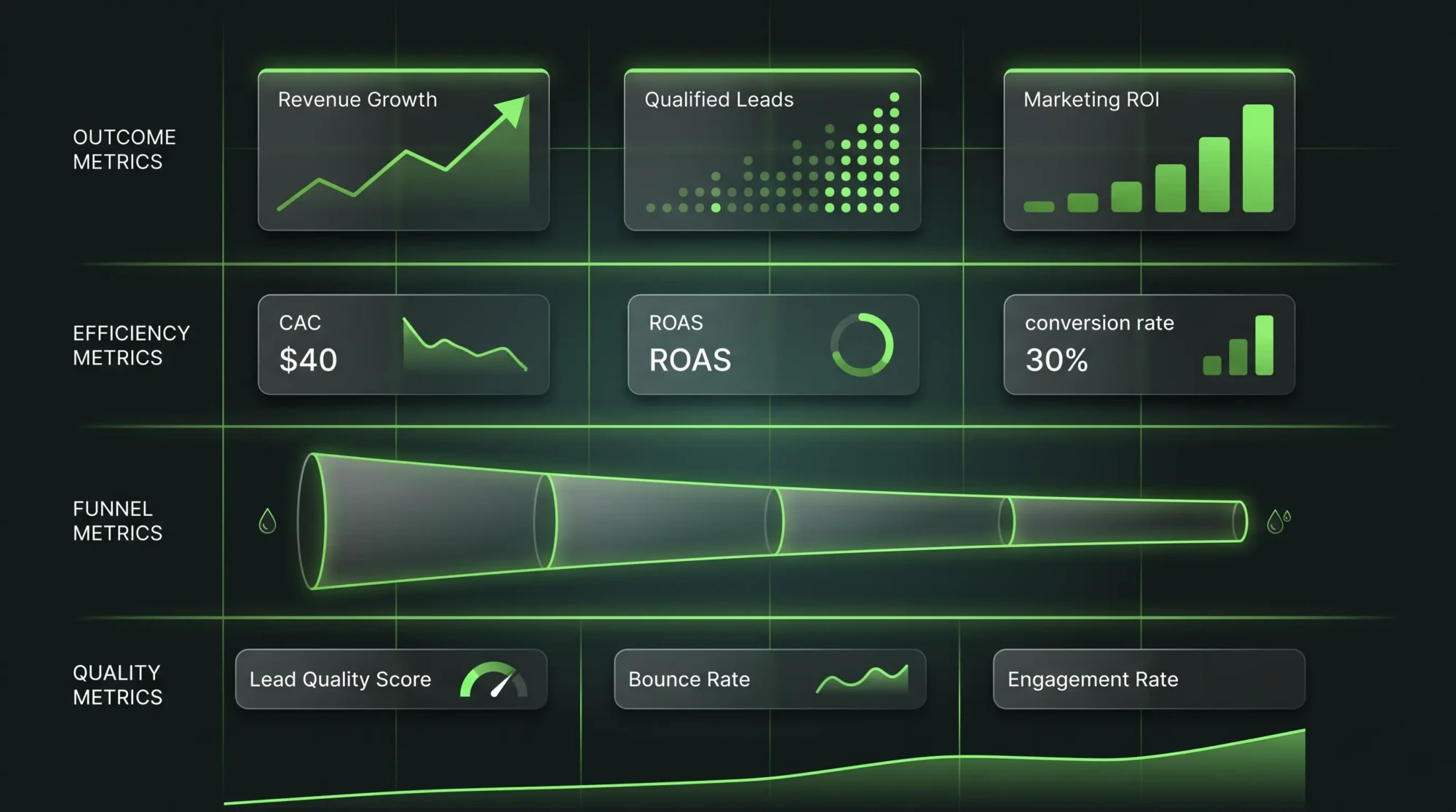
Marketing performance metrics should be selected based on decisions they support. A marketing analytics agency typically builds a KPI stack that moves from business outcomes down to channel drivers.
That structure reduces reporting clutter. It also prevents teams from optimizing against conflicting goals such as high click volume and low lead quality.
| Metric Group | What It Measures | How It Guides Action |
|---|---|---|
| Outcome Metrics | Revenue, qualified leads, retention, lifetime value | Sets targets, allocates budget, defines what success means |
| Efficiency Metrics | CAC, ROAS, cost per qualified lead, margin by channel | Finds waste, improves bidding, informs pricing and offer strategy |
| Funnel Metrics | Conversion rate, step drop-off, time to convert | Prioritizes UX fixes, landing page tests, and nurture improvements |
| Quality Metrics | Lead score, sales acceptance rate, refund rate, churn rate | Prevents scaling low-quality volume and improves targeting rules |
This framework keeps reporting focused and helps stakeholders agree on what to improve first.
How To Choose The Right Agency Partner
The best marketing analytics agency is the one that can operate inside your real constraints. That includes your tech stack, privacy requirements, team capacity, and decision cadence.
Look for a partner that documents definitions, runs QA, and communicates tradeoffs. Trust grows when an agency can explain what is known, what is uncertain, and how that affects recommendations.
- Measurement strategy. A written plan that ties goals to KPIs, events, and ownership.
- Technical depth. Ability to troubleshoot tagging, integrations, and data pipelines without guesswork.
- Analysis quality. Insights that lead to clear actions, not only charts and commentary.
- Operational discipline. Change management, naming conventions, and consistent reporting cadence.
These signals indicate the agency can improve performance sustainably, not just produce a one-time audit.
Conclusion
A marketing analytics agency improves SEO, PPC, and social results by building a reliable measurement system and turning data into decisions. When data-driven marketing is supported by SEO analytics, PPC campaign optimization, social media analytics, and conversion tracking, teams spend less time debating numbers and more time improving outcomes.
Focus on clean definitions, stable tracking, and marketing performance metrics that connect to revenue and quality. With that foundation, every test teaches you something, and every channel has a clear role.
FAQ’s
1. What metrics should my agency report every month?
Your agency should report metrics like website traffic, leads, conversions, cost per lead, conversion rate, rankings, ad spend, revenue, return on ad spend and channel performance. The exact report should match your goals. A good monthly report should also include insights, actions taken, problems found and next steps.
2. How does analytics improve paid ads?
Analytics improves paid ads by showing which keywords, audiences, ads, locations, devices and landing pages create the best results. It helps agencies cut wasted spend and move budget toward higher-performing campaigns. Without proper tracking, paid ads may look busy but not profitable. Analytics makes optimization based on evidence instead of guesses.
3. Can analytics help improve SEO performance?
Yes, analytics can improve SEO performance by showing which pages get traffic, which keywords drive visits, where users drop off and which content converts. This helps guide content updates, internal linking, technical fixes and new keyword opportunities. SEO becomes stronger when decisions are based on real search, traffic and conversion data.