

App store keyword research is the practical work of identifying the exact terms people type into the App Store and Google Play when they want an app like yours. When those terms match your metadata and your store listing signals, you earn more qualified impressions and more downloads without relying solely on paid acquisition. Strong research also keeps your messaging consistent across your title, subtitle, description, and creative, so users understand value fast.
What App Store Keyword Research Really Means?
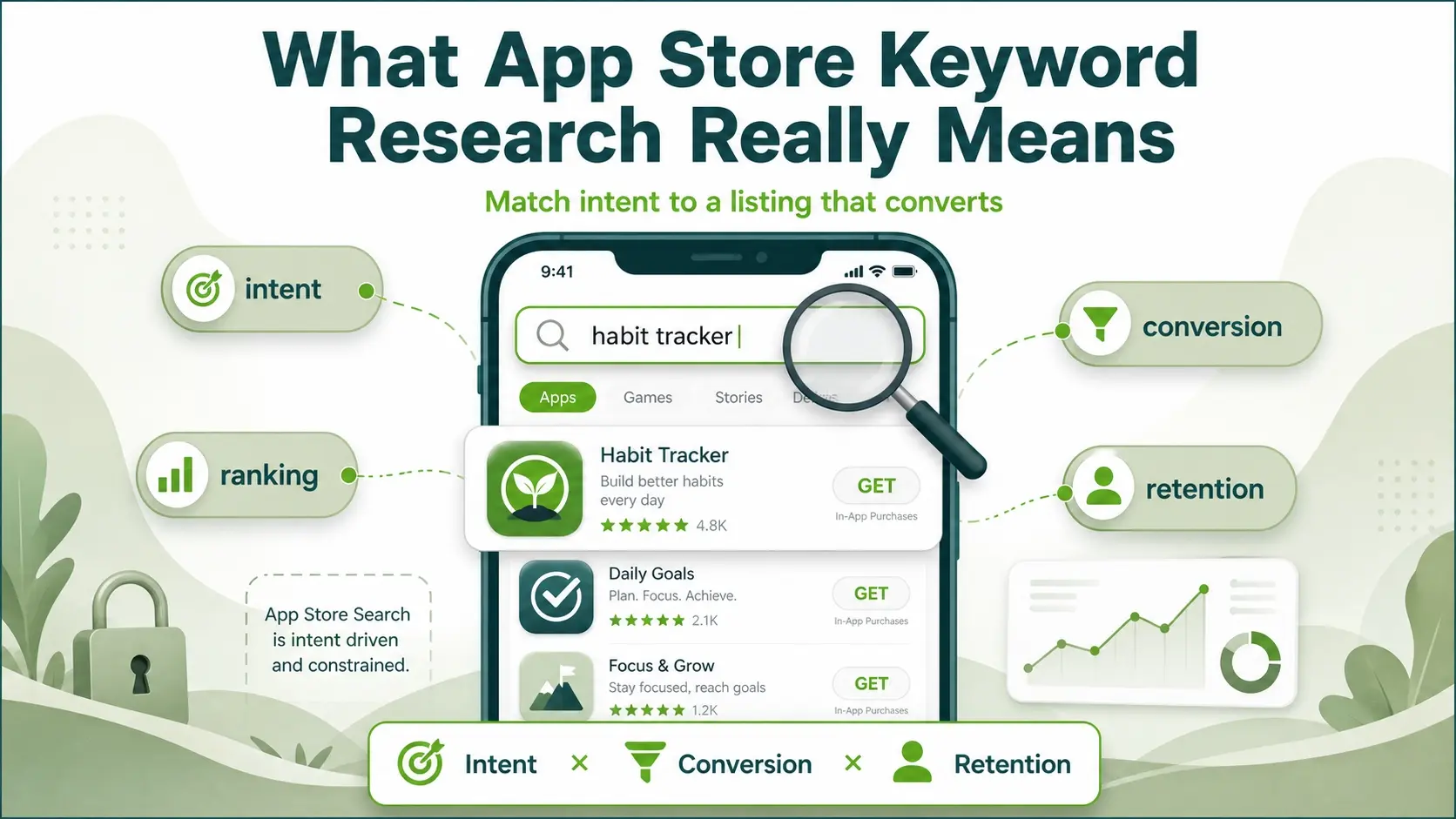
App store search is intent driven and constrained by limited metadata fields and strict platform rules. Unlike web SEO, rankings can shift quickly based on conversion rate, retention, and how well your listing satisfies the query. Keyword research is not only about finding popular words, it is about matching user intent to a store listing that converts.
To keep decisions grounded, treat keywords as a product signal. Each term implies a job to be done, an audience segment, and an expectation about features, pricing, and onboarding. If the app experience does not deliver what the term promises, rankings and reviews usually suffer.
How App Store Search Behavior Shapes Keyword Choices?
Most users type short queries, scan a few results, and decide quickly based on icon, screenshots, ratings, and the first lines of text. That means a keyword is only valuable if it attracts the right audience and your listing convinces them to install. High volume terms that bring mismatched traffic often reduce conversion rate and weaken performance over time.
Search terms also vary by platform. iOS has distinct field weightings and indexing behavior compared to Google Play, and localization influences demand and phrasing. Research should account for these differences before you commit to a final set of terms.
Seed Keywords And Topic Mapping
Start with a clear map of what the app does and who it serves. Group features into user outcomes, then translate those outcomes into plain language queries. This creates a stable seed set that you can expand with data.
Useful seed sources include your onboarding copy, support tickets, review language, competitor listings, and internal search logs if you have them. Keep each seed tied to a real feature or benefit to avoid vague terms that attract unqualified installs.
- Core Use Case Terms: Words that describe the primary job the app helps users complete.
- Feature Terms: Specific capabilities that differentiate the app within its category.
- Audience Terms: Role based or lifestyle based phrases that signal who the app is for.
- Pain Point Terms: Phrases that reflect the problem users want solved.
- Competitor And Alternative Terms: Non trademarked category language users apply when comparing options.
With seeds organized, you can expand into a larger list and then filter it down with consistent criteria.
Finding Keywords With Data Driven Methods
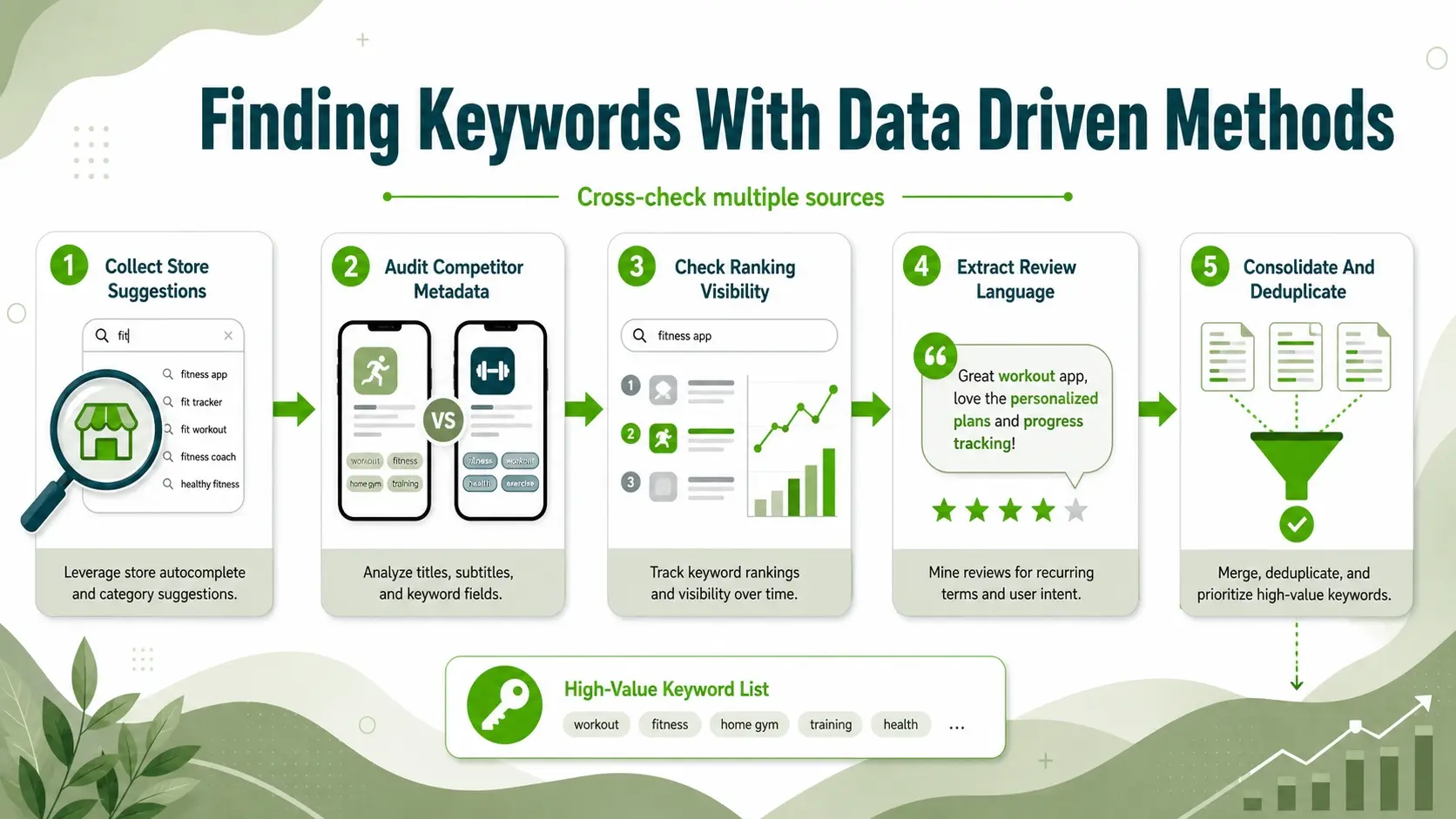
Expansion works best when you combine store native signals with third party estimates and your own performance data. Store suggestions, related searches, and autocomplete patterns reveal real phrasing. Competitor metadata and ranking footprints reveal what the market is actively targeting.
Tools can speed up collection, but the most reliable insights come from cross checking multiple sources. If a term appears in store suggestions, competitor rankings, and review language, it usually has both demand and relevance.
- Collect Store Suggestions: Capture autocomplete and related search phrases for each seed across both platforms.
- Audit Competitor Metadata: Record repeated terms in titles, subtitles, short descriptions, and long descriptions.
- Check Ranking And Visibility Signals: Note which terms competitors rank for and where your app already appears.
- Extract Review And Support Language: Pull recurring phrases users use to describe outcomes, frustrations, and wins.
- Consolidate And Deduplicate: Merge lists, remove near duplicates, and standardize singular plural variants.
Once you have a master list, the next step is prioritization based on what can realistically rank and convert.
Keyword Metrics That Matter For Downloads
Keyword volume is useful, but it is not sufficient. The goal is more downloads from the right users, which depends on ranking feasibility and conversion likelihood. Use a balanced view of demand, competition, relevance, and intent.
Also consider lifecycle fit. Some terms attract first time users while others attract power users who churn quickly if they do not see advanced features. Align the term with your onboarding depth and monetization model to protect retention.
| Signal | What To Measure | Why It Matters |
|---|---|---|
| Demand | Search volume and suggestion frequency | Higher demand increases impression potential when you rank |
| Competition | Top results strength, ratings, and brand dominance | Lower competition improves ranking feasibility |
| Relevance | Feature match and user expectation alignment | Higher relevance improves conversion rate and review sentiment |
| Intent | Problem solving phrasing versus browsing phrasing | Stronger intent terms often convert better even at lower volume |
Use these signals to score keywords and build a shortlist that you can test without diluting messaging.
Prioritizing Keywords With A Practical Scoring Model
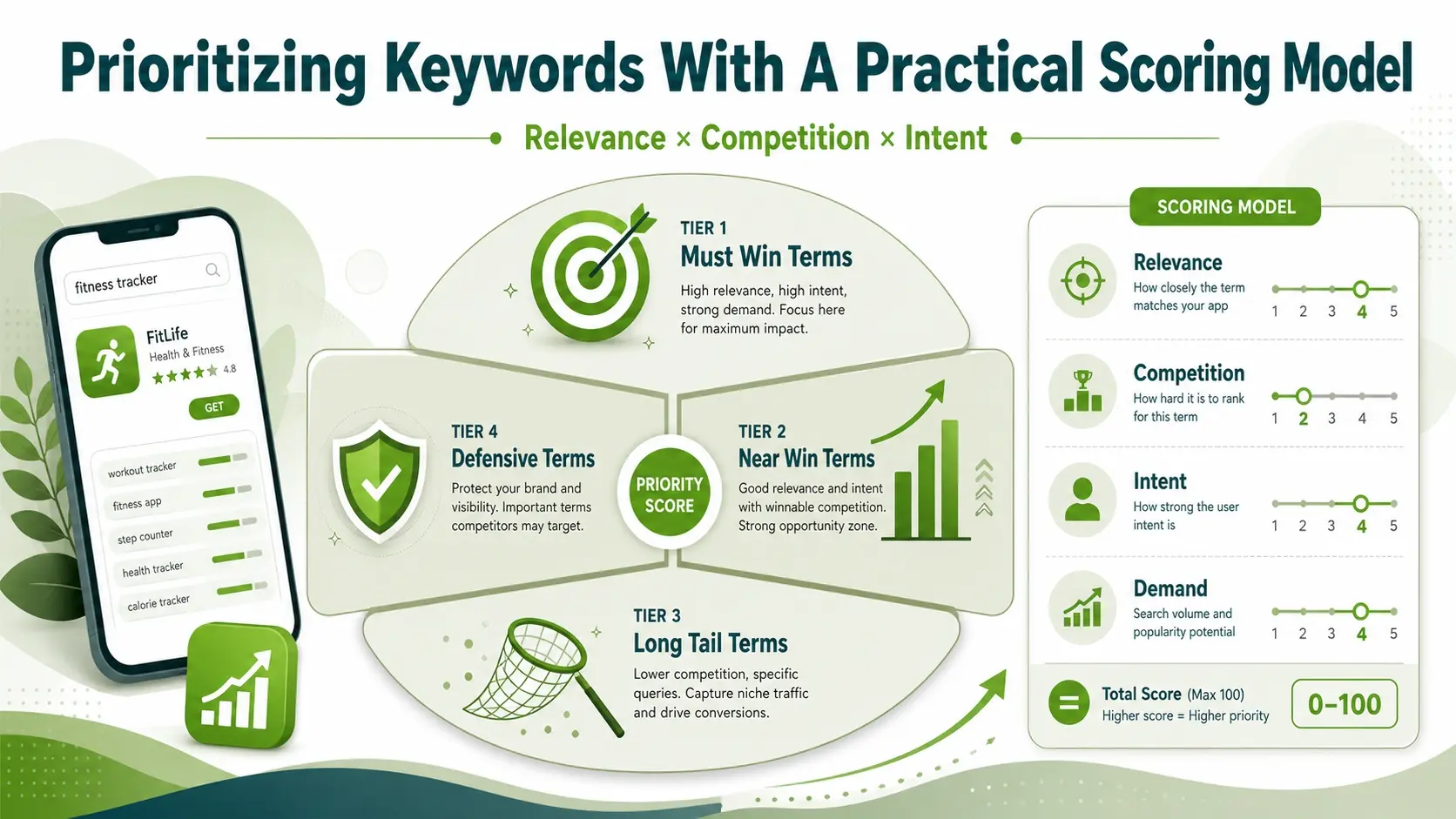
A simple scoring model keeps teams aligned and prevents endless debates. Assign each keyword a score for relevance, competition, and intent, then use demand as a tie breaker. Keep scoring consistent across both platforms to make comparisons easier.
When scoring, be strict about relevance. If a term is popular but only loosely connected to your app, it tends to bring low quality installs that hurt conversion rate. Those listing level signals often make ranking harder over time.
- Must Win Terms: Highly relevant terms with realistic competition that match the core use case.
- Near Win Terms: Relevant terms where small conversion gains could unlock ranking growth.
- Long Tail Terms: Specific multi word phrases with strong intent and lower competition.
- Defensive Terms: Category terms needed to avoid losing visibility to close substitutes.
After you build tiers, you can map each tier to the right metadata fields and iteration cadence.
Where To Place Keywords In App Store Metadata?
Keyword placement is constrained, so every character must earn its spot. Focus on readable, user friendly phrasing in user facing fields and efficient coverage in backend fields where applicable. Misplaced keywords can reduce clarity and lower conversion rate even if ranking improves.
On iOS, prioritize a clear title and subtitle that reflect the main value proposition and primary terms. Use the keyword field to cover additional variants without repeating words. On Google Play, the title, short description, and long description matter, along with engagement and conversion signals.
- Title And Subtitle: Use your highest priority terms only when they keep the phrase clear and compelling.
- Short Description: Reinforce the primary value and include a high intent term that matches the first screenshot story.
- Long Description: Use natural language sections that reflect user goals, features, and outcomes without stuffing.
- Keyword Field Where Available: Cover variants, synonyms, and long tail phrases efficiently.
- In App Events And Updates: Align release notes and event names with timely intent signals when relevant.
Metadata should read like product communication first. Ranking gains that reduce clarity often cost more downloads than they add.
Localization And Regional Keyword Differences
Direct translation often fails because people search differently by region. Local slang, competitor landscapes, and category norms change what terms perform. Research should be done per locale with native phrasing, not only translated copies.
Prioritize locales where you already see organic traction or where paid acquisition is costly. A focused localization plan usually beats broad, low quality translation across many regions.
Testing And Iteration Without Guesswork
Keyword research becomes valuable when you test changes in a controlled way. Make one cohesive update at a time so you can attribute outcomes to specific metadata edits. Track rankings, impressions, conversion rate, and retention quality, not only installs.
Build an iteration rhythm that matches store review cycles and release cadence. If you change too many elements at once, it becomes hard to learn what worked and you risk confusing returning users.
- Set A Baseline: Record current rankings, impressions, conversion rate, and top acquisition terms.
- Update One Keyword Cluster: Modify a single cluster across the most relevant fields while keeping messaging coherent.
- Monitor Leading Indicators: Watch impression share and page view to install rate before judging success.
- Validate User Quality: Compare retention and review trends to ensure new traffic matches the product.
- Document Learnings: Keep a changelog that links each metadata update to outcomes and next actions.
Consistent testing turns keyword work into a repeatable growth system rather than a one time project.
Common Mistakes That Reduce Rankings And Installs
Many apps fail at keyword research because they treat it as a copywriting exercise or chase only volume. The biggest losses usually come from relevance gaps, repeated words, and weak alignment between keywords and creative. Poor alignment increases bounce and lowers conversion rate.
- Chasing Only High Volume Terms: Competitive generic terms can dilute messaging and attract low intent traffic.
- Repeating The Same Words Across Fields: Redundancy wastes limited space and reduces coverage of variants.
- Using Jargon Over User Language: Internal feature names rarely match how people search.
- Ignoring Conversion Signals: Ranking improvements rarely stick if the listing does not convert.
- Skipping Ongoing Maintenance: Competitors and search behavior change, so keyword sets need periodic refresh.
Fixing these issues often unlocks quick gains even before you discover new terms.
Working With An ASO Partner
If you need faster iteration and more reliable measurement, an ASO partner can help connect keyword strategy with creative testing and analytics. This is especially useful when you operate across multiple locales, manage several apps, or coordinate releases across teams. A strong partner builds a system that protects brand voice while improving search visibility.
Imili Corp supports mobile growth teams with performance focused app store optimization and keyword research workflows that tie terms to measurable outcomes. This can reduce internal workload and help you prioritize changes that drive downloads and user quality.
Conclusion
App store keyword research works when it is rooted in user intent, validated by data, and connected to a listing that converts. Start with solid seeds, expand with store signals and competitor insights, then prioritize terms using demand, competition, relevance, and intent. Place keywords where they fit naturally, localize with native phrasing, and test updates methodically.
When you treat keywords as part of your product communication, you earn sustainable visibility and more downloads from the right users. Keep learning from results, refresh your list periodically, and protect clarity in every field.
Frequently Asked Questions
How Often Should App Store Keyword Research Be Updated?
Refresh your keyword set when you ship meaningful feature changes, enter a new market, or see ranking volatility and conversion declines. Many teams review core terms monthly and do deeper audits quarterly. The right cadence depends on category competitiveness and release frequency.
Do Keywords Matter If My App Has Strong Paid Acquisition?
Yes, because paid installs can improve visibility, but organic search still captures high intent users who are ready to install. Keyword alignment also improves listing clarity, which can lift conversion rate for both paid and organic traffic. A balanced approach reduces long term acquisition costs.
Can I Use The Same Keyword Strategy For iOS And Google Play?
Use the same intent clusters, but adapt placement and phrasing to each platform. Field weightings, indexing behavior, and user language can differ, especially across locales. Platform specific testing is the safest way to confirm what drives downloads.