
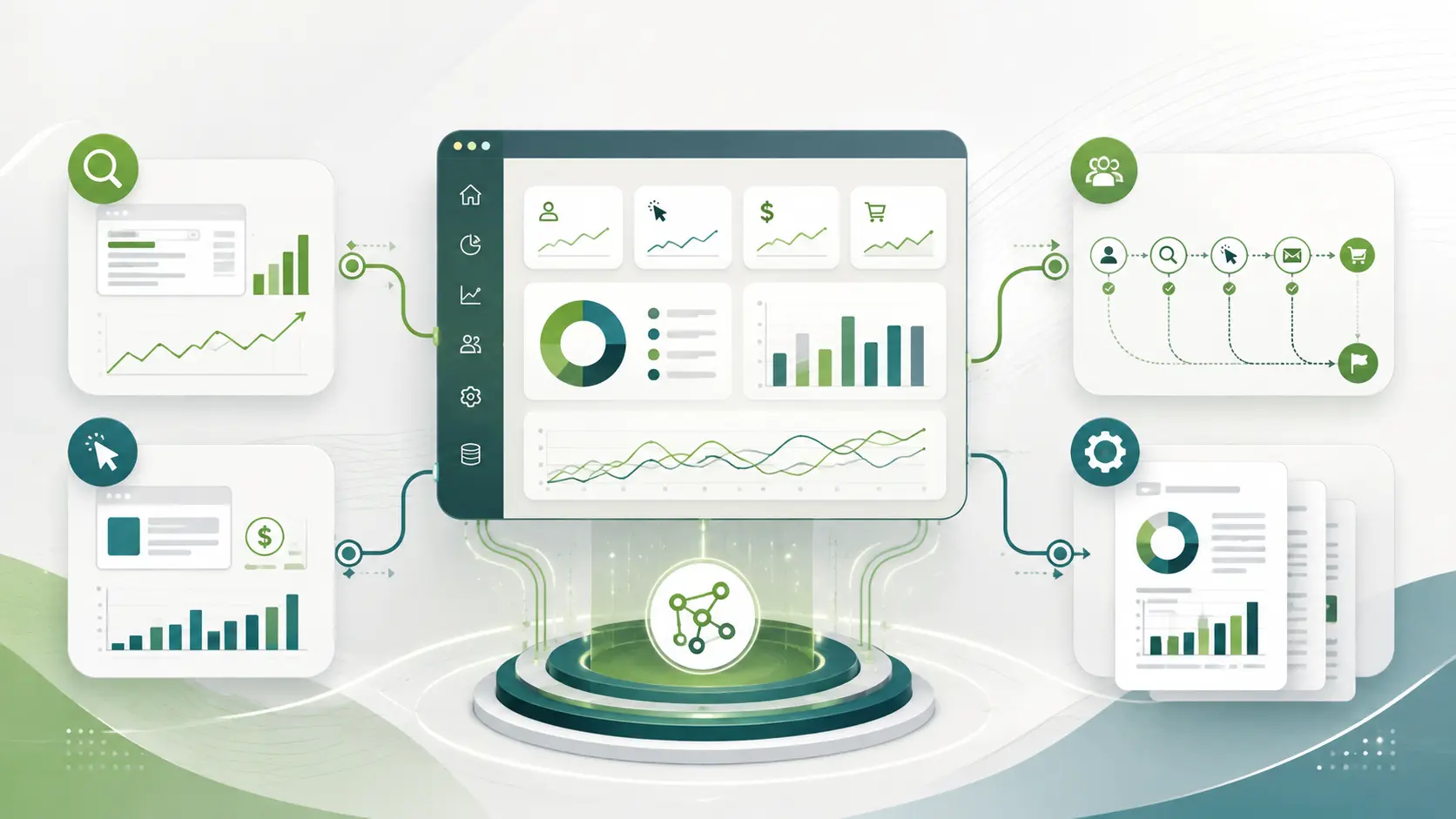
Connecting SEO, PPC, attribution, and automated reporting in one system removes conflicting numbers, speeds up decision making, and helps teams act on the same source of truth. A unified setup also reduces manual spreadsheet work and makes budget shifts easier to justify with consistent measurement.
Why A Single System Matters?
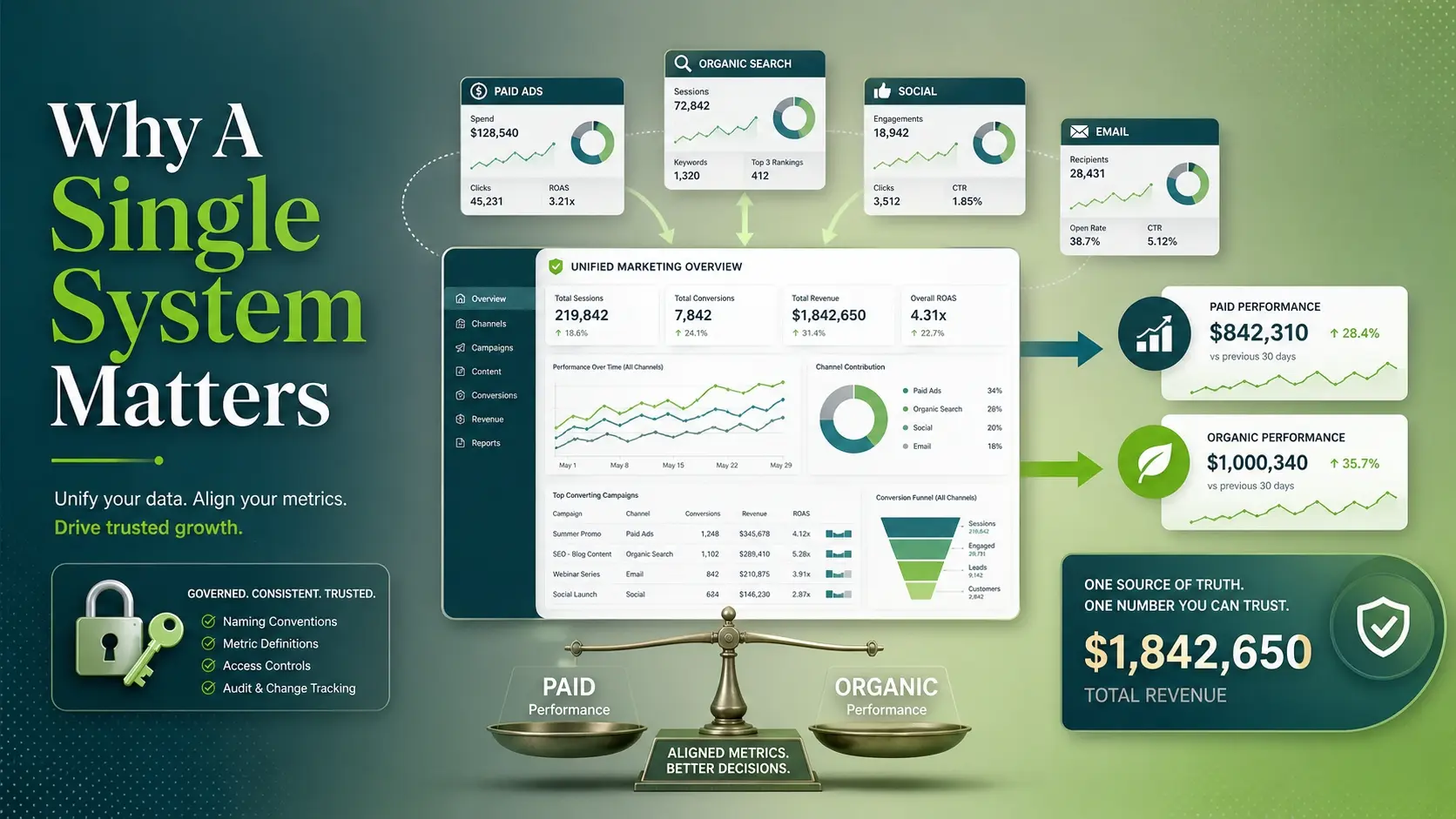
When each channel reports in its own dashboard, performance discussions turn into debates about definitions. Revenue, leads, and conversions often get counted differently across platforms, which weakens trust and slows action.
One system aligns channel metrics with business outcomes and makes it easier to compare paid and organic performance on equal terms. It also supports better governance by controlling who can change tracking, naming, and reporting logic.
Key Problems A Unified Stack Solves
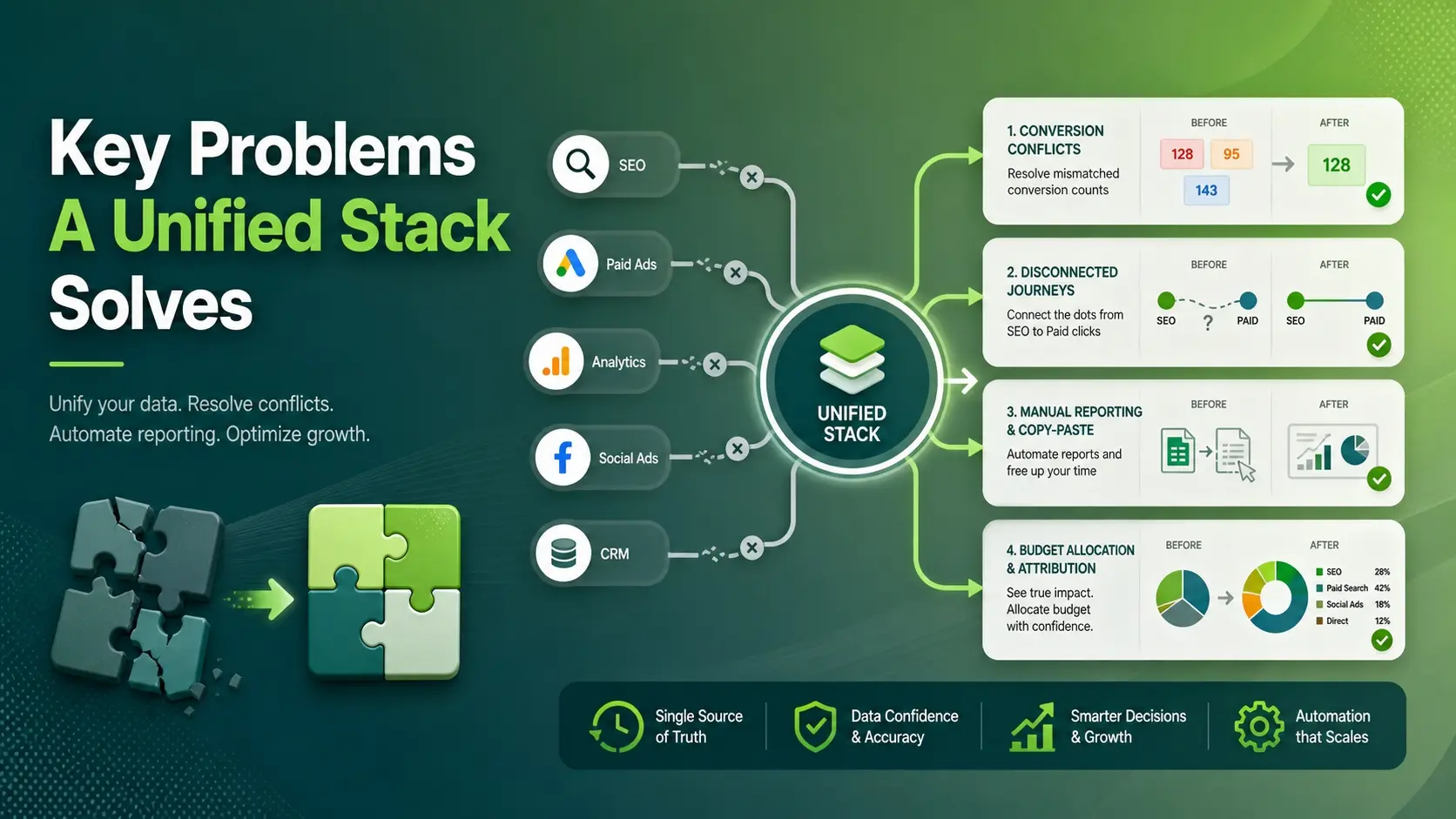
Disconnected measurement usually shows up as duplicated conversions, missing campaign data, and unclear ROI. Reporting becomes a recurring fire drill, especially when stakeholders want answers quickly.
A connected stack reduces these issues by enforcing consistent tracking and mapping across platforms. It also makes it easier to scale reporting without scaling headcount.
- Conflicting conversion counts: Aligns what counts as a lead, sale, or qualified action across tools.
- Hidden customer journeys: Connects first touch discovery from SEO with later paid clicks and returning visits.
- Manual reporting workload: Replaces copy paste workflows with automated refreshes and controlled templates.
- Budget decisions without context: Shows how channels assist each other rather than competing for credit.
With the core issues clear, the next step is designing the system around consistent data foundations.
Tracking Foundation And Data Governance
A unified system starts with a tracking plan that defines events, conversions, and ownership. Without governance, automation only speeds up bad data.
Use consistent naming for campaigns, ad groups, landing pages, and content categories. Standardized UTMs and clear rules for when to use auto tagging prevent gaps that break attribution and reporting.
- Event and conversion dictionary: Documents each tracked action, trigger conditions, and where it is stored.
- Channel and campaign naming rules: Keeps SEO content groups and PPC structures comparable in reports.
- UTM and auto tagging standards: Ensures paid and non paid traffic remains attributable across devices and sessions.
- Access and change control: Reduces tracking drift by limiting who can edit tags and key platform settings.
Once governance is in place, the system can be built on a clean data layer.
Data Sources You Need To Connect
The exact mix varies by business, but the essentials remain the same. The goal is to connect user behavior, cost data, conversion outcomes, and revenue signals into one model.
Most teams start with analytics and ad platforms, then add CRM and ecommerce data for deeper attribution. Server side tracking can further improve durability when browser restrictions reduce cookie reliability.
- Analytics platform: Captures sessions, events, landing pages, and channel groupings.
- Search advertising platform: Provides spend, impressions, clicks, and keyword level performance.
- Organic search data source: Adds queries, pages, and visibility signals tied to SEO outcomes.
- CRM or sales system: Connects leads to pipeline stages, close rates, and actual revenue.
- Ecommerce or billing system: Validates purchases, refunds, and lifetime value metrics.
After sources are identified, choose how the data will move and where it will live.
Choosing The System Architecture
A single system does not always mean a single tool. It usually means one shared data model that powers reporting and attribution consistently.
Common architectures include direct dashboard connections, a data warehouse approach, or a hybrid model. The right choice depends on data volume, governance needs, and how quickly reporting must scale.
| Architecture | Best For | Tradeoffs |
|---|---|---|
| Dashboard With Native Connectors | Fast setup for basic KPI reporting | Limited control over data blending and historical fixes |
| Data Warehouse With ELT | Scalable reporting and deeper attribution modeling | Higher setup effort and ongoing data engineering needs |
| Customer Data Platform Layer | Identity resolution and event governance across products | Cost and complexity can be high for smaller teams |
| Hybrid Warehouse Plus BI | Balance of control and usability for marketing teams | Requires clear ownership of models and definitions |
With the structure decided, focus on how attribution will be handled so channel performance is comparable.
Attribution That Works Across SEO And PPC
Attribution should answer two questions. It should show which channels create demand and which channels capture demand, without forcing a single touchpoint to take all credit.
Use a primary attribution view for executive reporting and a secondary diagnostic view for optimization. This reduces confusion while still giving specialists enough detail to improve keywords, landing pages, and content.
- Define primary conversions: Prioritize outcomes tied to revenue or qualified pipeline, not every micro action.
- Set a consistent lookback window: Align windows across platforms so comparisons remain fair.
- Use multi touch views: Keep first touch and assisted reporting available for SEO and upper funnel analysis.
- Validate with CRM outcomes: Connect channel credit to downstream quality and close rates.
Once attribution rules are clear, automated reporting can be built with fewer surprises.
Automated Reporting Without Losing Trust
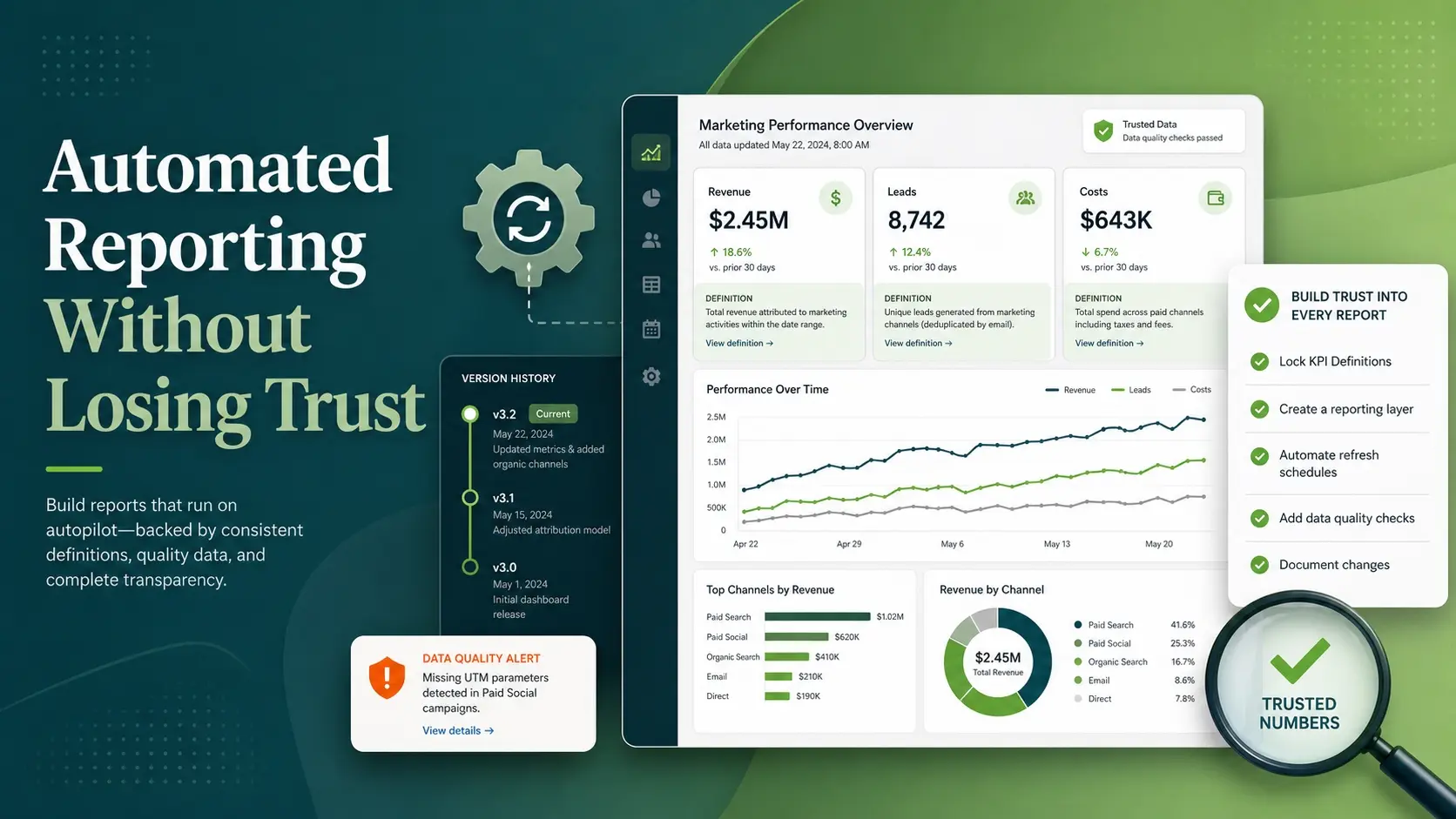
Automation should reduce manual effort while increasing confidence in the numbers. That requires clear metric definitions, version control for dashboards, and alerting when data quality changes.
Build reports around decisions, not around every available metric. A smaller set of consistently defined KPIs is easier to maintain and more likely to be used.
- Lock KPI definitions: Standardize how revenue, leads, and costs are calculated across all reports.
- Create a reporting layer: Use modeled tables or curated views so dashboards do not reinvent calculations.
- Automate refresh schedules: Align refresh cadence with how often teams can realistically act.
- Add data quality checks: Monitor missing UTMs, tracking drops, and spend anomalies before stakeholders notice.
- Document changes: Keep a simple change log for tracking updates and reporting logic revisions.
After automation is in place, the system can support more confident optimization across channels.
Making SEO And PPC Work From The Same Insights
The biggest gains come from shared learnings. PPC reveals high intent queries and fast feedback on messaging, while SEO builds durable visibility and lowers blended acquisition cost over time.
When both channels share landing page performance, conversion rates, and audience segments, optimization becomes coordinated. That coordination also reduces internal competition for credit.
- Unified keyword and query view: Compare paid search terms with organic queries to find gaps and overlaps.
- Landing page performance model: Tie page speed, engagement, and conversion rate to both paid and organic traffic.
- Audience and geo insights: Use consistent segments for targeting, content localization, and bid adjustments.
- Incrementality checks: Watch how PPC affects branded organic traffic and how SEO changes impact paid efficiency.
To keep everything running, operational ownership and a practical workflow are essential.
Implementation Workflow That Teams Can Maintain
A working system is one that survives turnover, platform updates, and new campaign launches. Maintenance needs to be lightweight and clearly assigned.
Define owners for tracking, data pipelines, attribution logic, and dashboard governance. Schedule routine audits so problems are caught early and fixes are consistent.
- Audit current tracking: Identify gaps in UTMs, events, conversions, and cross domain behavior.
- Standardize taxonomy: Apply naming rules across campaigns, content, and landing pages.
- Connect core sources: Start with analytics, paid platforms, and CRM, then expand to revenue systems.
- Build modeled datasets: Create curated tables that power both attribution views and dashboards.
- Launch decision dashboards: Publish role based reports for executives, channel owners, and operators.
- Set monitoring routines: Review tracking health, data freshness, and KPI drift on a fixed cadence.
This workflow keeps the system stable while still allowing improvements over time.
How Imili Corp Supports A Unified Measurement System?
Connecting SEO, PPC, attribution, and automated reporting often fails due to unclear definitions and brittle integrations. Imili Corp helps teams design a practical measurement foundation, then operationalize it so marketing and leadership can rely on consistent reporting.
Support typically includes tracking strategy, analytics setup, campaign taxonomy, and reporting frameworks that align with business goals. This approach is especially helpful when teams need a repeatable process that scales across multiple campaigns, markets, or business units.
Conclusion
A single system works when it is built on consistent tracking, governed definitions, and a shared data model. Attribution becomes more useful when it reflects real customer journeys and ties back to CRM or revenue outcomes.
Automated reporting should clarify decisions, not multiply dashboards. With the right foundations, SEO and PPC teams can collaborate on insights, improve efficiency, and defend budget decisions with trusted data.
Frequently Asked Questions
What Is The First Thing To Standardize When Unifying SEO And PPC Reporting?
Start with conversion definitions and campaign taxonomy. When naming rules, UTMs, and primary conversion events are consistent, attribution and reporting become far easier to reconcile. This also prevents duplicated or missing conversions in executive dashboards.
Do You Need A Data Warehouse To Connect Attribution And Automated Reporting?
A warehouse is helpful for scale, historical corrections, and advanced modeling, but it is not mandatory for every team. Some organizations succeed with a simpler BI setup if definitions are strict and data blending needs are limited. The key is maintaining one set of calculations that every dashboard uses.
How Do You Keep Automated Reports From Becoming Noisy Or Misleading?
Limit KPIs to decision critical metrics and add data quality monitoring for tracking breaks and spend anomalies. Use curated datasets rather than building calculations inside every chart. Keep a lightweight change log so stakeholders understand why numbers shift after improvements.