
An ad click is rarely the end of the journey. It is often the first visible touchpoint in a path that includes returning visits, referrals, email follow ups, sales conversations, and repeat purchases. If those later interactions are not connected back to paid search, performance gets underreported, budgets get misallocated, and optimization becomes guesswork.
Why Post-Click Visibility Breaks So Often
Most teams track the click and the immediate session, then stop. The gaps start when a user leaves, returns through a different channel, or converts offline after multiple touches. Attribution reports can only be as accurate as the identifiers and rules behind them.
Another common failure is measurement inconsistency across platforms. Ad platforms, analytics suites, CRMs, and call tracking tools often define sessions, sources, and conversions differently. Without a clear measurement design, reports disagree and confidence drops.
What Downstream Traffic Really Includes
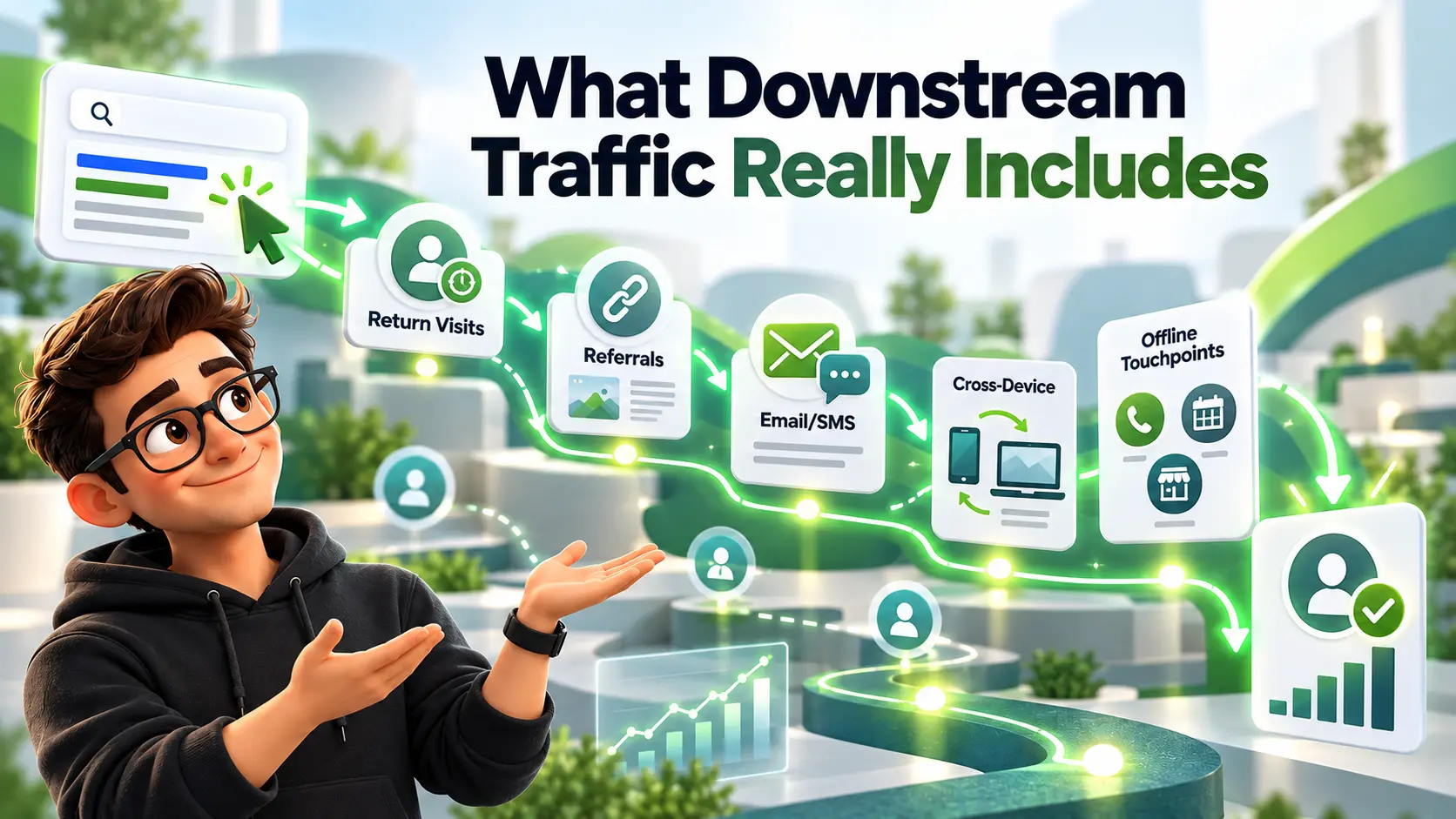
Downstream traffic refers to the interactions that happen after the initial paid search visit. These interactions can still be influenced by the original click even when the channel label changes. Treating downstream behavior as separate from the initial campaign hides the true value of paid search.
- Return Visits: Users who come back later through direct, organic, or bookmarked entry and continue the same buying process.Use Persistent Campaign Identifier.
- Referral Visits: Users who click a shared link from a partner site, a review platform, a marketplace listing, or a community post.
- Email and SMS Re-Engagement: Users who opt in and later return through lifecycle email or SMS to complete a form, schedule a call, make a purchase, or continue another meaningful conversion step.
- Cross-Device Continuation: Users who begin on one device and later continue or convert on another. Where authenticated first-party identifiers are available and permitted, measurement systems may connect those sessions more reliably. For a deeper look at identity and measurement across devices, our guide to cross-device attribution explains how mobile research can be connected with a later desktop conversion and where privacy limitations affect that process.
- Offline Touchpoints: Calls, store visits, demos, and sales assisted conversions that occur after the web visit.
Once you define downstream touchpoints, you can build tracking that preserves intent across sessions and channels.
Connecting Paid Search With Referrals Without Losing Attribution
Referral traffic is frequently misinterpreted. Some referrals are truly incremental, while others are simply the next step after paid search created the initial interest. To connect these dots, the goal is not to override source labels but to store additional context that survives beyond a single session.
Start by separating acquisition source from journey context. Acquisition is what brought the user in at first contact. Journey context is what happens later, including referrals, revisits, and assisted touches. When both are captured, reporting becomes far more actionable.
Use Persistent Campaign Identifiers
UTM parameters identify campaign context when a tagged URL is visited, but later sessions can have different traffic-source values. In GA4, use the appropriate first-user, session, and event-scoped traffic-source dimensions for reporting. If your business also needs a durable custom acquisition identifier, store it only through an approved first-party approach that matches your consent, privacy, and retention requirements.
ImiliCorp supports measurement architectures that prioritize durable identifiers, cleaner data collection, and consent aware persistence. This is especially useful for paid search teams that need consistent performance signals across multiple return paths.
Control Self Referrals and Payment Gateway Noise
Checkout domains, booking tools, payment providers, and related domains can distort referral reporting when measurement is not configured correctly. For domains that are part of the same user journey, configure cross-domain measurement where appropriate. For third-party domains that should not receive referral credit, review GA4’s unwanted-referral settings. Test the complete journey afterward, because excluding a referral source does not by itself create cross-domain identity or repair every session issue.
How to Build a Clean Measurement Framework
Connecting the ad click to downstream activity requires a measurement framework that is simple enough to maintain and strict enough to trust. The framework should define naming, data capture, identity rules, and conversion logic across tools. It should also specify what success looks like beyond a single conversion event.
- Define Conversions Precisely: Align on what counts as a lead, a qualified lead, a sale, and a retained customer. Document event triggers and validation rules.
- Standardize Campaign Naming: Use consistent UTMs and ad account naming conventions so analytics, dashboards, and CRM fields reconcile cleanly.
- Capture First Touch And Returning Context: Store the first paid search touch, the most recent touch, and key milestones such as form starts or content downloads.
- Unify Identity Where Permitted and Necessary: Use authenticated User-ID or other approved first-party identifiers only where they are appropriate, lawful, and consistent with the user’s consent choices. Avoid treating anonymous device or session signals as confirmed person-level identity.
- Close the Loop with CRM Outcomes: Connect measurable downstream stages such as qualified lead, sales-accepted lead, opportunity, and closed-won revenue back to your reporting and ad platforms where supported. For Google Ads lead-generation campaigns, consider enhanced conversions and supported offline-data workflows so bidding can learn from outcomes beyond the initial form submission.
For Google Ads lead generation, enhanced conversions for leads can connect first-party lead information with later offline outcomes to improve measurement.
Once the framework is in place, teams can stop debating whose report is correct and start improving performance with confidence.
Core Data Points to Track After the Click
Post-click measurement should capture both progress and friction. Progress signals show whether visitors are moving toward a meaningful business outcome, while friction signals show where users abandon, delay, or require additional touches before converting.
- Landing Page Engagement: Scroll depth, key section views, interaction with calculators, and meaningful time on page.
- Micro Conversions: Form starts, chat opens, click to call, pricing views, and booking widget opens.
- Assisted Touchpoints: Email signups, returning visits within a defined window, and referral entries that occur after the first touch.
- Sales Progression: Qualification status, meeting set rate, close rate, and time to close mapped back to the acquisition campaign.
These data points give you a fuller picture of how paid search contributes even when the final session is not labeled as paid.
Reporting That Shows Paid Search Influence and Not Just Last Click
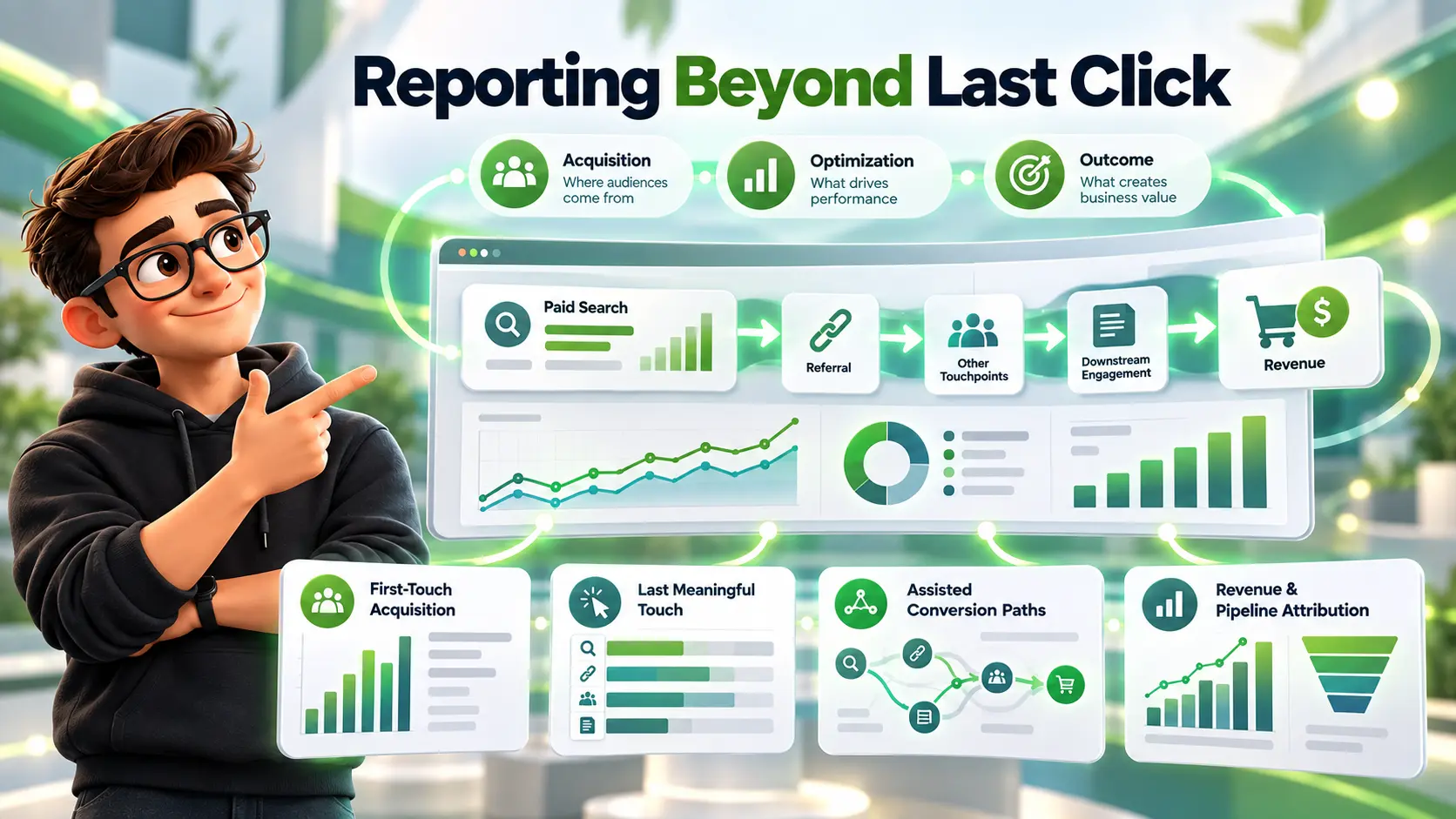
Last-click reporting can be useful for certain operational questions, but it should not be treated as the only view of paid-search contribution. In GA4, user- and session-scoped traffic-source dimensions follow different attribution rules from event-scoped key-event reporting, so teams should clearly label which scope and attribution view each dashboard uses.
Consider maintaining three complementary lenses. Acquisition focuses on first touch. Optimization focuses on last meaningful touch excluding direct. Outcome connects both to revenue and retention so you can scale what truly works.
The reporting scope also depends on how your team operates. Our comparison of a performance marketing agency vs growth marketing agency explains why paid-acquisition teams often optimize shorter feedback loops while growth teams rely more heavily on full-funnel, retention, and revenue measurement.
| Report View | What It Answers | Best Use |
|---|---|---|
| First-Touch Acquisition | Which campaigns started high-quality journeys | Budget planning and channel strategy |
| Last Meaningful Touch | Which touchpoint drove the final action | Creative, landing page, and bid optimization |
| Assisted Conversion Paths | How referral and return traffic support conversions | Content, email, and partner investment decisions |
| Revenue and Pipeline Attribution | Which campaigns produced qualified pipeline and realized revenue | Forecasting, ROI, and stakeholder reporting |
This structure reduces reporting conflict and makes it easier to see where referral and downstream visits fit into the paid search story.
Common Technical Gaps That Distort Downstream Performance
Even strong campaigns look weak when tracking is broken. Many issues are subtle and only show up as unexplained swings in direct traffic, referral spikes, or sudden conversion drops. Fixing these issues often improves performance visibility without changing ad spend.
If these symptoms are already appearing in your reports, a structured marketing attribution audit can help verify conversion definitions, UTM governance, cross-domain flows, deduplication, and CRM reconciliation before you change campaign budgets.
- Broken Cross Domain Tracking: Sessions split when users move between domains for checkout, scheduling, or portals.
- Inconsistent Consent Handling: Incorrect default states, delayed updates, or inconsistent CMP/tag behavior can create measurement gaps or unexpected differences across platforms. Document consent logic, test granted and denied states, and confirm that tags behave according to the user’s choices. Google’s Consent Mode documentation explains how supported tags adjust collection behavior according to granted or denied consent states.
- Misconfigured Channel Grouping: Email, affiliates, and referrals get mislabeled, hiding the real journey.
- Duplicate Or Missing Events: Conversions fire twice or not at all due to tag manager logic errors.
- CRM And Analytics Mismatch: Leads in analytics do not match leads in CRM due to missing IDs or field mapping issues.
ImiliCorp typically addresses these gaps through analytics implementation, tag governance, and data integration that aligns marketing and sales reporting.
How to Use Downstream Signals to Improve Paid Search
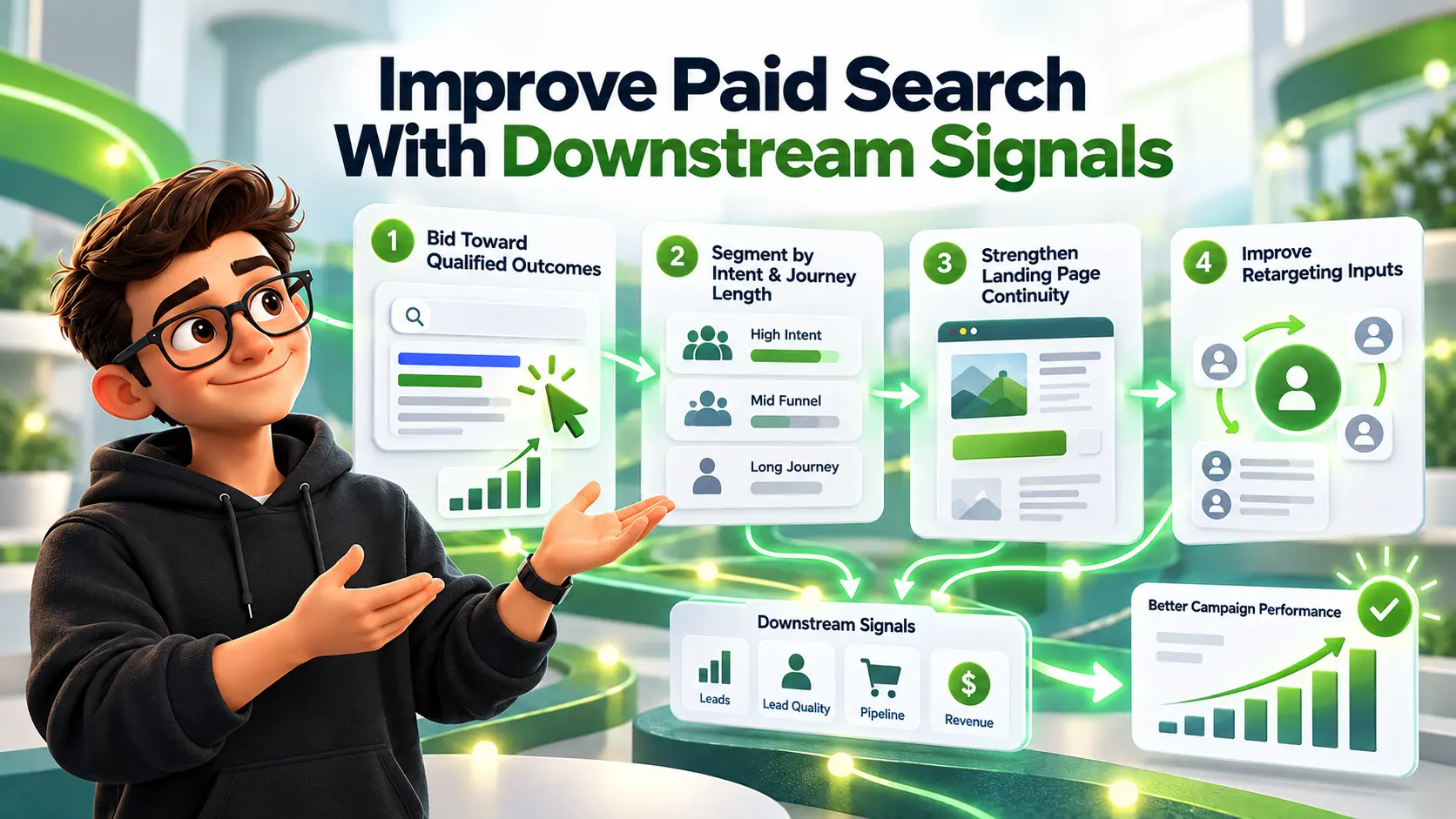
Once downstream traffic is connected, you can optimize paid search beyond the immediate conversion rate. You can prioritize campaigns that generate higher quality journeys, even if they take longer to close. This reduces wasted spend on short term clicks that do not convert into meaningful outcomes.
Downstream insights also help you tighten alignment between keyword intent and landing page experience. If referrals and return traffic are doing the heavy lifting, your landing page may be missing clarity or trust elements. That is a fixable problem that improves both paid and organic performance.
- Bid Toward Qualified Outcomes: Use CRM based signals such as qualified lead rate and revenue per lead to guide bidding and budget shifts.
- Segment By Intent And Journey Length: Separate high intent queries from research queries and judge them on appropriate downstream metrics. For lead-generation accounts, our guide on how to qualify B2B leads in Google Ads explains how campaign intent, landing pages, forms, and CRM feedback can work together before bidding is optimized around downstream quality.
- Strengthen Landing Page Continuity: Align ad copy, page messaging, and follow up flows so users do not need extra visits to understand the offer.
- Improve Retargeting Inputs: Build audiences based on micro conversions and engagement depth rather than simple page views.
These actions help paid search drive better downstream performance while making attribution clearer over time.
Conclusion
After the ad click, the journey often continues through referrals, return visits, and sales assisted steps that traditional reporting fails to connect. When you capture persistent campaign context, fix tracking gaps, and report with multiple attribution lenses, paid search value becomes easier to measure and improve.
If your team needs a practical way to stitch together paid search, referral traffic, and CRM outcomes, ImiliCorp can help design and implement a measurement setup that stays reliable as channels and privacy requirements evolve.
Frequently Asked Questions
How Do I Connect Paid Search Clicks to Later Referral Visits?
Store a first touch paid search identifier and keep it available across sessions using first party persistence and consent aware tracking. Then report on referral sessions with an added field that references the stored acquisition campaign. This keeps referral attribution intact while still showing paid search influence.
What Is The Best Attribution Model for Downstream Traffic?
There is no single attribution view that answers every business question. Use first-user or acquisition reporting to understand where journeys begin, session-level reporting to understand return traffic, event-scoped attribution to analyze key-event credit, and CRM or revenue reporting to validate business outcomes. Treat custom “last meaningful touch” or assisted-journey views as management frameworks rather than assuming they are standard GA4 attribution models.
Why Does Direct Traffic Increase After I Launch Paid Search?
Some users return by typing the URL, using bookmarks, or clicking untagged links, which can be labeled as direct. Tracking gaps such as cross domain issues can also inflate direct sessions. Auditing attribution settings and persistence rules usually clarifies what is truly happening.