
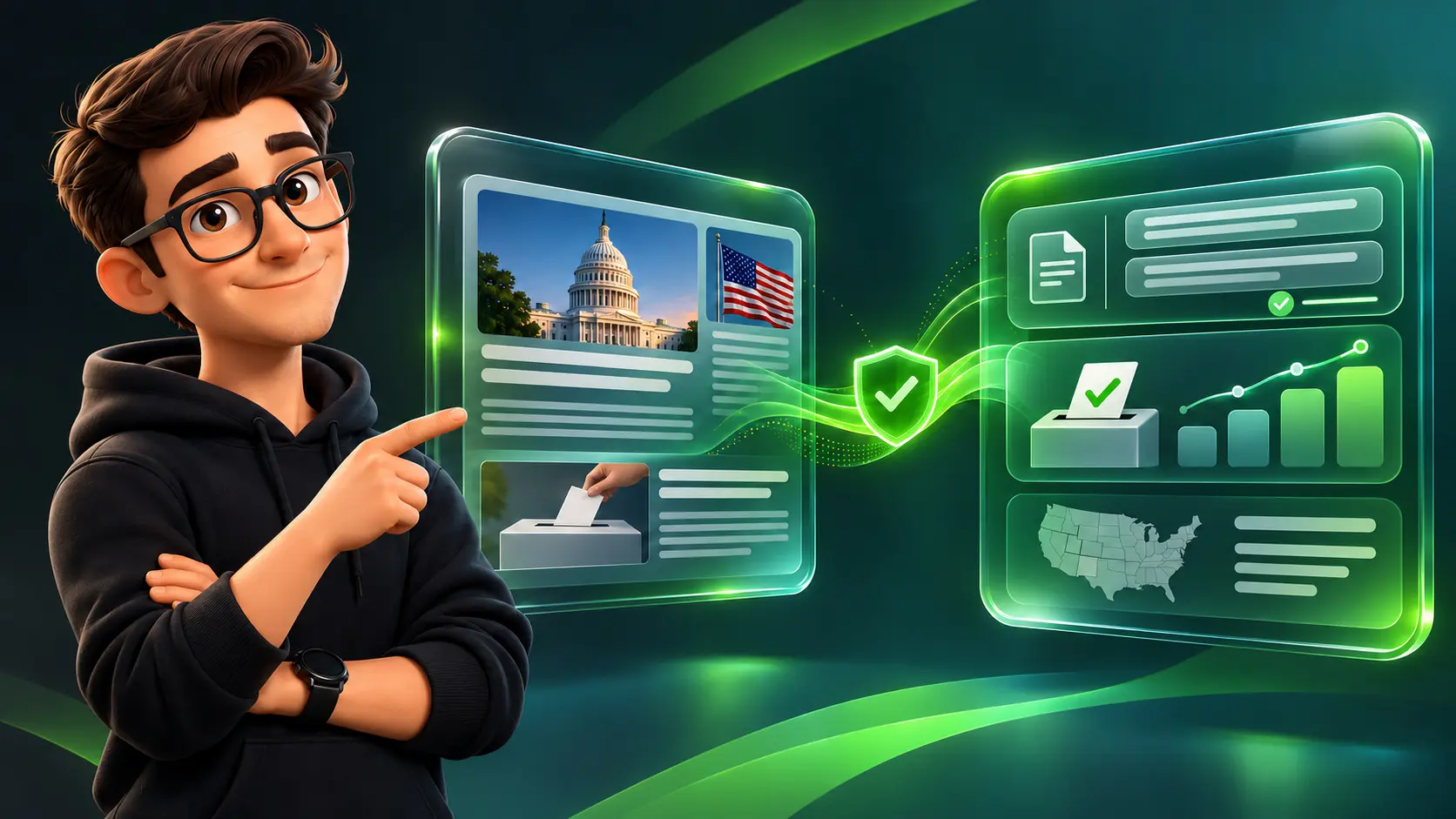
According to a report published on November 4, 2026, Anthropic, the company behind Claude AI, reached a news content and data licensing agreement with the Associated Press (AP) shortly before the U.S. midterm elections. The reported deal gave Claude access to AP-attributed election results and would mark Anthropic’s first paid news-content licensing arrangement with a digital publisher.
During the November 3 election, Claude displayed up-to-date results credited to AP when users asked about vote counts. Anthropic had separately explained how Claude would use election information from Democracy Works for questions about voting locations, registration, and identification requirements. Those voting resources should not be confused with the reported AP agreement.
The news report cited two people familiar with the deal. Anthropic did not respond to the reporter’s request for comment, and AP did not comment on the record. Neither company publicly disclosed the financial terms, duration, or complete scope of the arrangement.
Claude is an AI assistant that helps people answer questions, research topics, write content, and understand complex information. However, like other AI tools, it needs access to updated information when users ask about breaking news or events happening in real time.
The reported licensing deal appears to have enabled Claude to show current AP election figures with source attribution during election night. That makes the origin of the data easier to identify, but attribution alone does not guarantee a chatbot answer is accurate or complete. Readers should still check official election authorities or AP for important or changing results.
The Associated Press is an established news organization that supplies reporting, photographs, and other information to media companies worldwide. Through AP’s content licensing services, organizations can license news text, video, images, and data for different uses.
The deal would be a notable change for Anthropic, which had not previously signed a publisher content licensing agreement of this kind, according to the report. By contrast, AP has previous AI content licensing ties, including its 2023 agreement with OpenAI. That distinction matters: the milestone concerns Anthropic’s licensing strategy, not AP’s first partnership with an AI company.
The development is particularly important as AI assistants become another way for people to discover information online. Instead of visiting several websites, users can ask an AI assistant a question and receive a summary within the conversation. This shift is creating new opportunities and challenges for publishers, businesses, and digital marketers. A similar change is taking place in commerce, where AI-powered business agents could move purchases away from websites.
For digital marketers, the key issue is whether customers receive a clear and accurate picture of a business when they use AI tools. Brands should publish specific service information, keep important facts updated, and identify who is responsible for their content. These habits improve the usefulness and credibility of a website, although they cannot guarantee that Claude or any other AI assistant will recommend it.
For marketers, the story also brings attention to Answer Engine Optimization (AEO) and Generative Engine Optimization (GEO). These approaches aim to make a brand’s information easier for search and AI-powered systems to find, understand, and reference, as explained in our guide to SEO, AEO, and GEO. However, a licensing agreement between an AI company and a news publisher does not automatically boost another website’s Google rankings or guarantee that its content will appear in AI-generated answers.
For companies investing in search engine optimization, content marketing, and digital brand development, the broader lesson is that online discovery is changing. A strong starting point remains organic SEO that connects useful content with qualified leads. Traditional search engines remain important, but AI assistants are creating additional ways for audiences to find and interact with information.
News publishers now face a practical decision: licensing may bring payment and attribution, but AI-generated answers can also reduce the need for users to visit publisher websites. The effects of such arrangements on referral traffic, audience relationships, and future licensing deals are not yet known.
For brands, the immediate task is straightforward: keep important pages accurate, show who created the information, update outdated claims, and check whether AI tools cite or describe the brand correctly. These steps support trust across traditional search and AI-assisted discovery, although they cannot guarantee placement in any AI-generated answer.