
Every ad click, email open and social visit ends at your website. If that experience feels slow, confusing, or untrustworthy, marketing spend turns into bounce rate instead of revenue.
A strong web design and digital marketing agency treats the site as the core campaign asset, not a separate project. When design, content, analytics and performance work together, each channel becomes easier to scale and measure.
Why Your Website Is The Center Of Every Campaign?
Digital marketing creates demand, but the website captures it. Your landing pages, navigation and forms are where interest becomes a lead, a sale, or a booked call.
When the site is built without campaign goals in mind, every channel has to work harder. That raises cost per lead, lowers conversion rate and creates reporting gaps that hide what is really happening.
Alignment starts with shared outcomes across teams. A single roadmap connects ads, SEO, email and content marketing to clear site actions such as purchases, signups and qualified inquiries.
User Experience and Conversion Rate Optimization
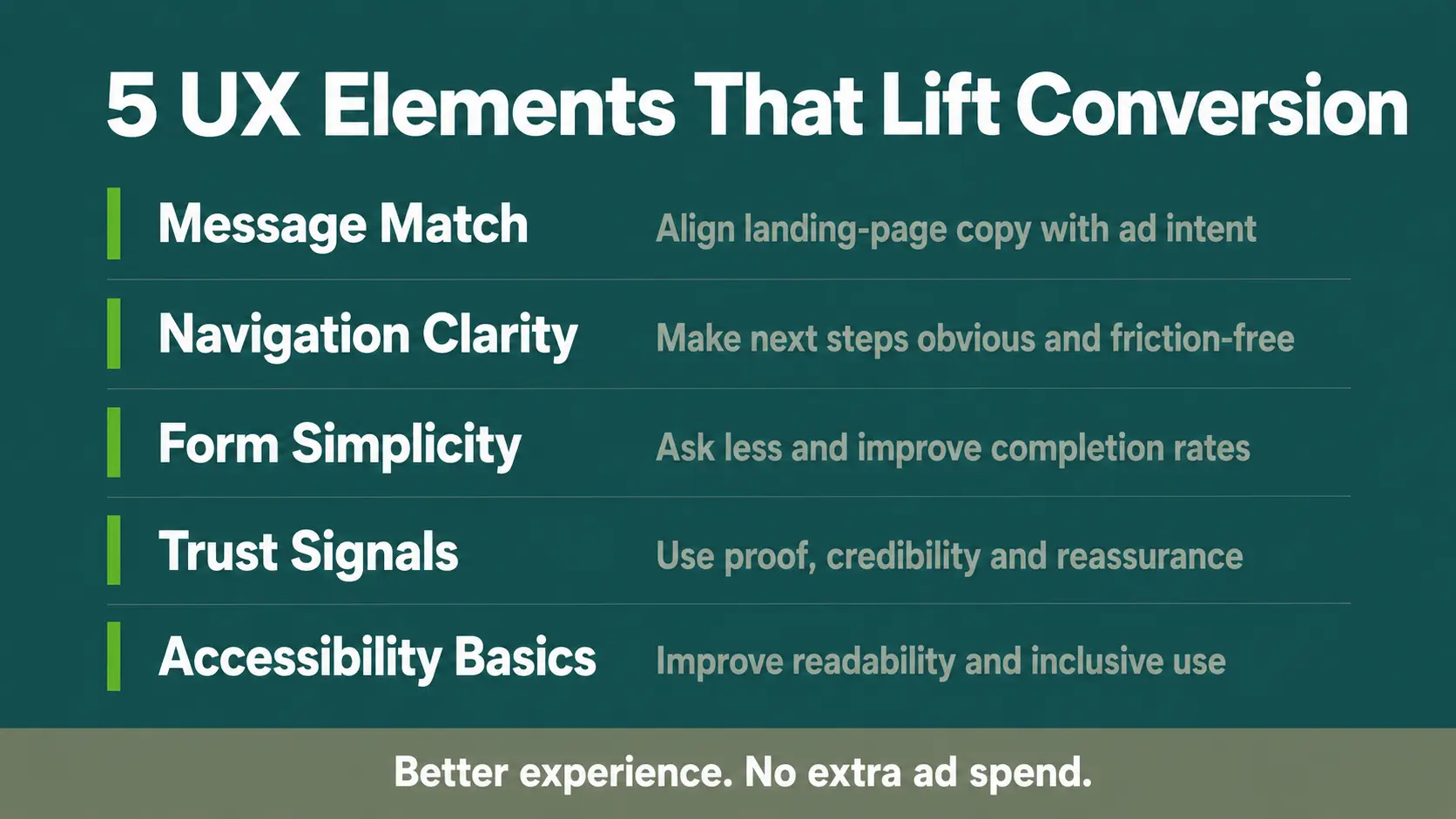
User experience is not only visual design. It includes clarity, accessibility, page structure and the friction level between intent and action.
Conversion rate optimization relies on fast comprehension. Visitors should understand what you offer, who it is for and what to do next within seconds.
- Message match: Headlines and visuals should reflect the promise made in ads, emails and social posts.
- Navigation clarity: Menus and internal links should reduce searching and support common tasks.
- Form simplicity: Ask only for what you need to qualify the lead and remove optional fields.
- Trust signals: Policies, clear contact methods, reviews and security indicators reduce hesitation.
- Accessibility basics: Readable contrast, keyboard support and descriptive labels help all users convert.
These improvements strengthen every traffic source because they change what happens after the click. Better experience lifts conversion without increasing ad spend.
Site Speed, Core Web Vitals and Paid Media Performance
Site speed affects both user behavior and marketing efficiency. Slow load times reduce engagement and increase abandonment, especially on mobile devices.
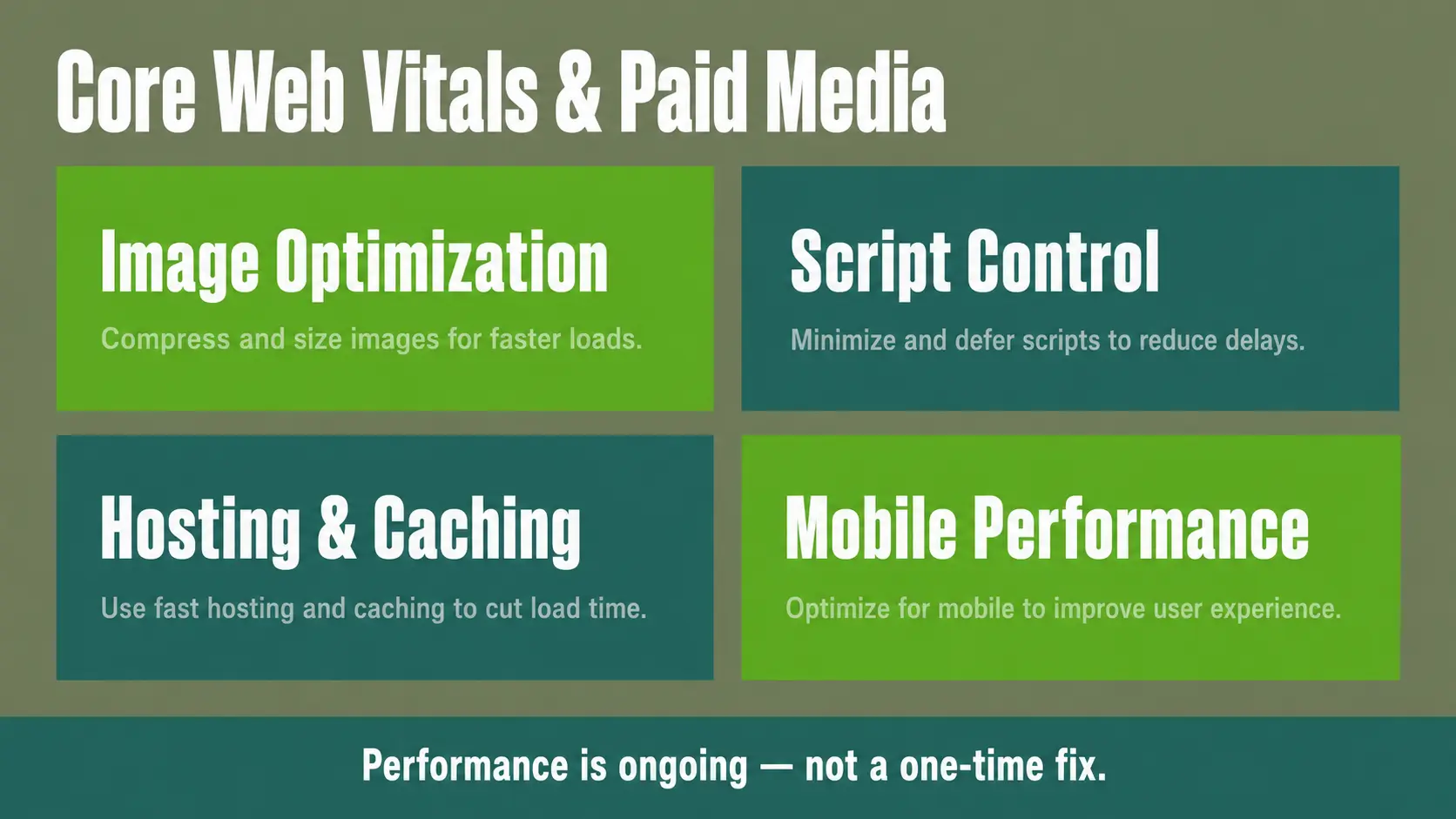
Core Web Vitals are practical signals of page experience. Improving them often lowers bounce rate and supports stronger Quality Score outcomes in paid campaigns through better landing page experience.
- Image optimization: Modern formats and correct sizing reduce weight without losing quality.
- Script control: Tag bloat and heavy libraries slow down rendering and delay interaction.
- Hosting and caching: Solid infrastructure improves time to first byte and repeat visits.
- Mobile performance: Responsive layouts and lean code prevent slowdowns on weaker devices.
Performance work should be ongoing, not a one-time cleanup. Each new tracking tool, chat widget, or campaign page can change load time and stability.
Technical SEO and Content Structure That Supports Growth
Search visibility is not only about keywords. It depends on crawlable architecture, clean indexing and content that reflects how people search and decide.
When technical SEO and design are handled together, your site avoids common problems such as duplicate templates, thin pages and confusing internal linking.
- Information architecture: Clear category and service structures help search engines and users understand priorities.
- On-page SEO: Titles, headings, internal links and metadata work best when written for real intent.
- Schema markup: Structured data supports richer interpretation of your business and key pages.
- Index control: Proper use of canonical tags, robots directives and sitemaps protects crawl budget.
Content should be built to guide a buyer journey, not to fill a blog calendar. Pages that answer key questions reduce sales friction and improve lead quality.
Analytics, Tracking and Attribution You Can Trust
If you cannot measure it, you cannot improve it. Many campaigns underperform because tracking is partial, inconsistent, or misconfigured across platforms.
A web design and digital marketing agency should treat measurement as part of the build. That means clean event tracking, consistent UTMs and reliable conversion definitions.
- Define primary conversions. Choose actions that reflect real business value such as purchases, qualified form submits, or booked calls.
- Map events to user journeys. Track key interactions such as button clicks, scroll depth and form errors where they affect drop-off.
- Standardize campaign tagging. Use consistent naming conventions so reports stay accurate across teams and time periods.
- Validate data quality. Test events, filter internal traffic and check for duplicate conversions and attribution conflicts.
Reliable measurement removes guesswork and protects budget. It also makes optimization faster because teams can isolate what changed and why.
How Design Decisions Affect Each Marketing Channel?
Your website is a shared destination, but each channel brings different intent and expectations. The site must support multiple entry points without losing clarity or consistency.
| Channel | Website Element That Matters Most | What To Optimize For |
|---|---|---|
| Paid Search And Paid Social | Landing page layout and load speed | Message match, fast first interaction, clear primary CTA |
| Email Marketing | Offer page clarity and friction-free forms | Skimmable sections, minimal fields, strong confirmation pages |
| Organic Search | Site architecture and content depth | Search intent coverage, internal linking, crawlable templates |
| Referral And Partnerships | Trust signals and supporting proof | Credibility, clear positioning, easy contact and verification |
This view keeps teams aligned on what the website must do for each acquisition channel. It also prevents design choices that look good but reduce performance.
What To Expect From a Web Design and Digital Marketing Agency?
A single partner can reduce handoff delays and conflicting priorities. The best outcomes come from agencies that run strategy, creative and technical execution as one system.
Look for process maturity, clear documentation and a measurable optimization plan. You should see how research becomes a structure, how structure becomes pages and how pages become tracked outcomes.
- Discovery and positioning: Audience needs, competitive differentiation and offer clarity are defined before layout work begins.
- UX and content collaboration: Wireframes and copy are built together so key messages are not squeezed into the design later.
- Performance and security standards: HTTPS, updates, backups and speed budgets are treated as non-negotiable.
- SEO baked into templates: Headings, internal links and metadata patterns are consistent across the site.
- Analytics instrumentation: Events, conversions and dashboards are set up with test plans and governance.
These elements support long-term compounding returns. They also protect your marketing from being tied to one channel or one short-term tactic.
Common Website Issues That Quietly Break Campaigns
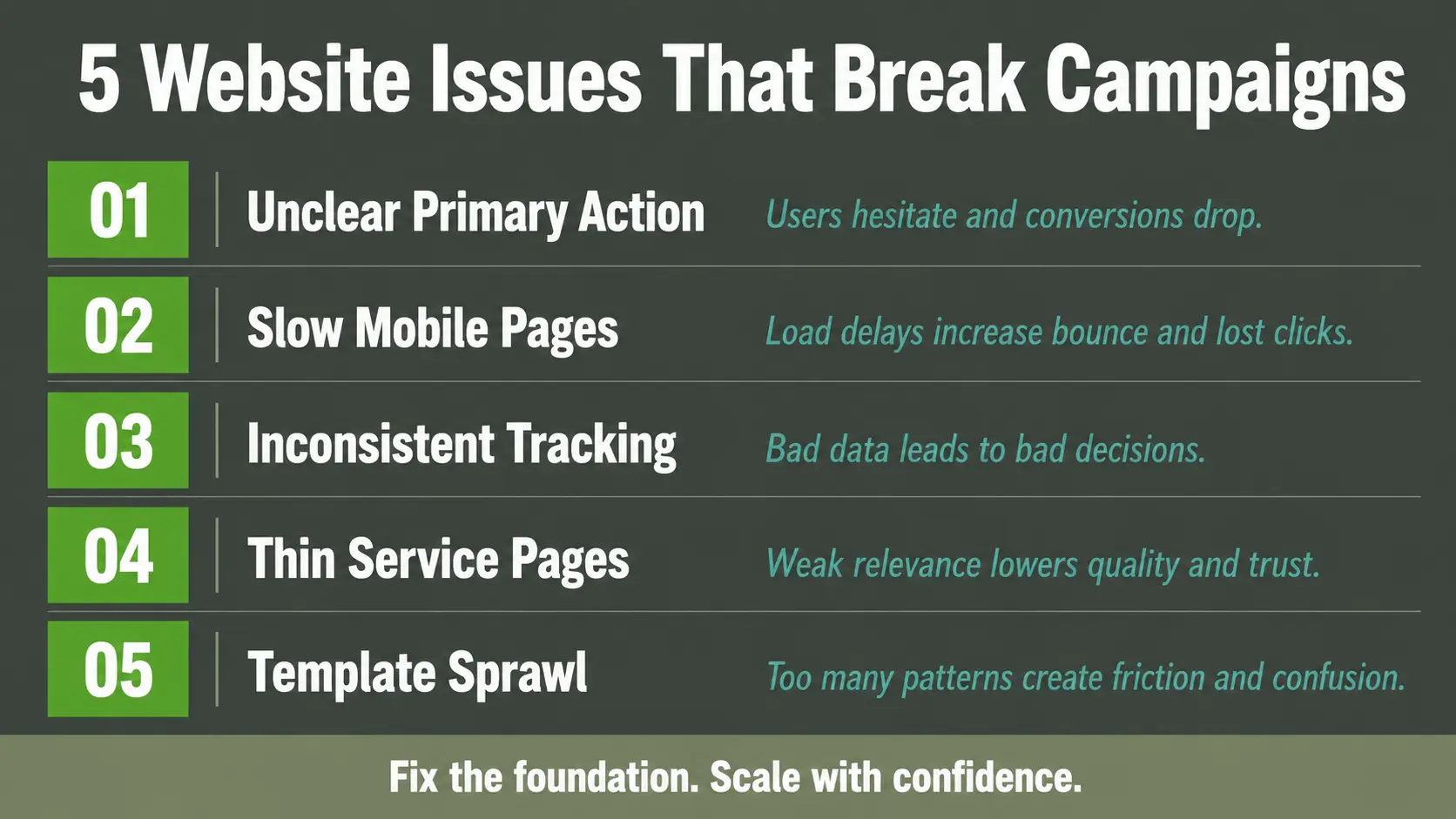
Many performance problems are not obvious until budget increases. Small issues compound when you scale ads, publish more content, or add new tools.
- Unclear primary action: Multiple competing calls to action can dilute conversions and lower lead quality.
- Slow mobile pages: Heavy assets and third-party scripts reduce engagement and harm paid traffic efficiency.
- Inconsistent tracking: Missing events and mismatched conversion definitions create misleading ROAS and CPL reports.
- Thin service pages: Pages that lack proof and specificity lose both rankings and buyer confidence.
- Template sprawl: Too many one-off page designs increase maintenance time and introduce SEO and UX inconsistencies.
Fixing these issues usually raises results across multiple channels at once. It also makes future campaign launches faster because the foundation is stable.
Conclusion
Your website is the conversion engine behind every marketing effort. When it is designed for clarity, speed and measurable actions, campaigns become more predictable and more profitable.
A web design and digital marketing agency that unifies UX, technical SEO and analytics helps you improve the entire funnel. Invest in the site as a performance asset and each campaign will have a stronger place to land.
FAQ’s
1. Why is a website important for digital marketing campaigns?
A website is important because every ad click, email visit, social media user and search visitor usually lands there. If the website is slow, confusing or hard to trust, marketing traffic may not convert into leads or sales. A strong website helps capture demand and turn visitors into real business results.
2. How can web design improve conversion rates?
Web design improves conversion rates by making the visitor journey clear and easy. Fast-loading pages, simple navigation, strong calls to action, clear messaging, trust signals and short forms can reduce friction. When users understand what to do next, they are more likely to take action.
3. What should a web design and digital marketing agency focus on?
A web design and digital marketing agency should focus on user experience, site speed, technical SEO, content structure, tracking and conversion optimization. The goal is not just to create a good-looking website but to build a performance-focused site that supports ads, SEO, email marketing and analytics.