
Hiring a full-service digital marketing agency should reduce complexity, not add more vendors, more meetings and more confusion. The best full-service teams cover the core channels, connect them with a single strategy and report performance in a way that supports decisions.
This guide breaks down what should be included, what to confirm before signing and how to spot gaps that lead to wasted spend. You will also see how deliverables, roles and measurement should work together under one roof.
What Full Service Really Means?
Full service should mean the agency can plan, execute, optimize and measure your digital marketing across key channels. It also means the work is integrated so paid campaigns, SEO, content and conversion improvements reinforce each other.
It does not mean doing everything at a shallow level. Depth matters, so confirm who is doing the work, what tools they use and how they prioritize outcomes over activity.
Discovery and Strategy
Every strong engagement starts with discovery that is more than a questionnaire. The agency should learn your customers, your margin constraints, your sales cycle and how leads become revenue.
A strategy should translate that understanding into a channel mix, clear positioning and a measurement plan. Without this layer, execution becomes a stack of disconnected tasks.
- Business goals alignment. Targets should be defined in plain terms such as pipeline value, qualified leads, or online sales, not only clicks.
- Audience and intent research. The agency should map audiences to search intent and buying stages so messaging matches motivation.
- Competitive and market review. Insights should cover competitor offers, content gaps and ad pressure that impacts cost.
- Channel and budget plan. A plan should explain where budget goes, what it is expected to return and what is tested first.
Once discovery is complete, the strategy should be documented and easy to revisit during reviews.
Brand Messaging and Positioning
Full-service work often fails when messaging is treated as a quick copy task. The agency should be able to refine value propositions, proof points and tone so every channel speaks consistently.
This includes core page messaging, ad angles, email voice and offer framing. Consistency improves conversion rates and reduces waste in paid media.
- Value proposition clarity. A tight promise that addresses pain, outcome and why you are different.
- Offer architecture. Clear primary offers, supporting offers and lead magnets matched to funnel stages.
- Creative direction. Guidance on visual style, layout patterns and messaging hierarchy that supports scanning.
With messaging locked in, creative and content production becomes faster and more predictable.
Search Engine Optimization
SEO should be included as a long-term growth channel with technical, on-page and content components. It should also connect to conversion so traffic turns into leads and sales.
Expect the agency to deliver an audit, a prioritized roadmap and ongoing implementation. If they only provide recommendations without action, confirm who will execute them.
- Technical SEO. Indexing, crawlability, site speed, structured data and mobile usability checks.
- On-page optimization. Title tags, internal linking, content structure and intent alignment for key pages.
- Content strategy. Topic clusters, editorial planning and updates to maintain relevance and depth.
- Authority signals. Digital PR support, partner outreach guidance and brand mention growth where appropriate.
Healthy SEO programs focus on measurable impact such as qualified organic sessions and assisted conversions.
Paid Media Management
A full-service digital marketing agency should manage paid channels with rigorous testing, disciplined tracking and clear guardrails for efficiency. This usually includes search ads, display, social ads and sometimes video depending on your audience.
Paid media deliverables should cover account structure, creative production needs, landing page alignment and ongoing optimization. Ask how they prevent budget from drifting to low-quality conversions.
- Platform setup and hygiene. Clean account structure, naming conventions and audiences that support reporting.
- Creative and copy testing. Regular iteration on headlines, offers and formats based on performance data.
- Landing page alignment. Message match between ad, page and form to improve quality score and conversion.
- Bid and budget management. Rules for scaling, pausing and reallocating spend based on marginal returns.
When paid and organic teams work together, insights from ads can improve SEO content and on-site messaging quickly.
Content Marketing and Production
Content marketing should include planning and production, not only ideation. A full-service team should handle briefs, writing, design coordination and publishing workflows that protect quality.
Content should serve a purpose in the funnel, whether that is demand capture through search, demand creation through thought leadership, or nurturing through email.
- Editorial calendar. Topics, formats, owners and publishing cadence tied to goals.
- Website copywriting. Pages built around intent, objections and proof, with scannable structure.
- Lead magnets and assets. Guides, checklists and webinars supported by landing pages and email sequences.
Strong content systems reduce revision cycles because expectations are set in the brief and validated in the strategy.
Website and Conversion Rate Optimization
Full service should include the ability to improve conversion, not only drive traffic. Conversion rate optimization connects analytics, user behavior and design changes to increase revenue from the same visitor volume.
This can include landing page builds, form optimization and UX improvements. Confirm whether design and development are in-house, outsourced, or delivered through a partner model.
- Landing pages. Pages built for specific campaigns with clear messaging, proof and focused calls to action.
- UX and UI improvements. Navigation, readability, mobile layout and accessibility fixes that reduce friction.
- Testing and iteration. A structured approach to hypotheses, prioritization and validation through tests.
Even small CRO improvements compound across SEO, paid media and email.
Email Marketing and Lifecycle Automation
Email is often the highest leverage channel because it improves retention, supports sales and recovers abandoned intent. A full-service agency should be able to design lifecycle flows and run campaigns without sending generic blasts.
Deliverables should cover segmentation, compliance and coordination with your CRM. Ask how they define a qualified subscriber and how they measure incremental revenue.
- Welcome and onboarding flows. Automated sequences that set expectations and drive early engagement.
- Nurture sequences. Content and offers aligned to buying stage, objections and readiness.
- Reactivation. Win-back campaigns that clean lists and revive lapsed subscribers.
When email and paid media share audiences and messaging, you get stronger frequency without excessive ad spend.
Analytics Tracking and Reporting
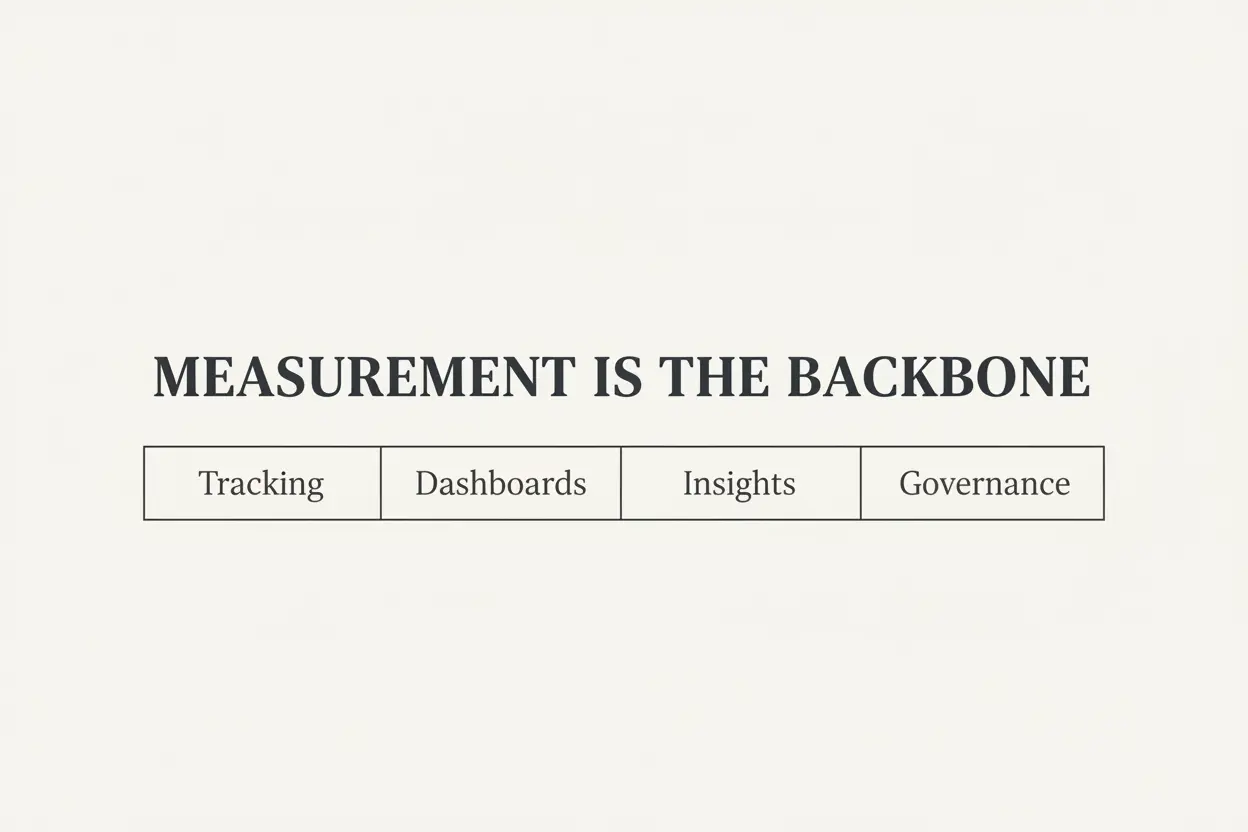
Measurement is the backbone of full-service delivery. The agency should set up tracking, define key events and build reporting that ties effort to outcomes.
Look for clarity on attribution limits, data quality controls and how often insights lead to changes. Reports should explain what happened, why it happened and what changes next.
| Area | What Should Be Included | What It Protects |
|---|---|---|
| Tracking Setup | Event mapping, conversion goals, tag governance, QA process | Accurate optimization and clean attribution |
| Dashboards | Channel views, funnel views, weekly health metrics, anomaly alerts | Faster decisions and fewer reporting surprises |
| Insights | Drivers of performance, audience breakdowns, creative learnings | Better budget allocation and message clarity |
| Governance | Documentation, access control, data retention, naming conventions | Continuity during team changes and audits |
A solid analytics foundation makes every other service more effective because optimization becomes evidence-led.
Project Management and Communication
Full-service engagements succeed when communication is predictable. You should receive a clear cadence for planning, delivery and review, with documented next actions.
Ask who your day-to-day contact is, how tasks are tracked and how fast the team responds to time-sensitive issues. Operational quality often matters as much as channel expertise.
- Planning cadence. Monthly or quarterly planning tied to goals and capacity.
- Delivery workflow. A shared system for tasks, approvals and deadlines.
- Review meetings. Performance reviews focused on decisions, not slides.
When process is tight, strategy stays connected to execution and the team avoids reactive busywork.
Team Structure and Specialized Roles
A full-service digital marketing agency should provide access to specialists, not a single generalist covering every channel. You should know which roles are assigned and how senior oversight is handled.
Look for transparency on who writes content, who runs paid media, who handles technical SEO and who owns analytics. If the agency uses contractors, confirm how quality control is enforced.
- Strategist. Owns the roadmap, prioritization and cross-channel alignment.
- Channel specialists. Paid search, paid social, SEO and email experts who execute and optimize.
- Creative and web. Designers, copywriters and developers who ship assets and improve conversion.
- Analytics lead. Ensures tracking integrity and turns data into decisions.
This structure reduces risk because performance does not depend on a single person.
What To Confirm in The Scope Of Work?
A scope of work should be specific enough that you can tell what is included and what is not. Vague deliverables lead to mismatched expectations and slow progress.
Confirm deliverable frequency, service limits, ownership of accounts and what happens when priorities change. Also confirm how the agency handles compliance, brand approvals and security.
- Deliverables and cadence. What is shipped weekly and monthly and what is reviewed quarterly.
- Ownership and access. Who owns ad accounts, analytics properties and creative files.
- Change management. How new requests are prioritized and how trade-offs are decided.
- Performance definitions. Which metrics matter most and what qualifies as success or a red flag.
Clear scope language prevents hidden costs and reduces the time spent renegotiating priorities.
Conclusion
A full-service digital marketing agency should include strategy, execution across core channels, conversion improvements and reliable measurement. The real value is integration, where each channel supports the same positioning, funnel and performance targets.
Before hiring, validate the agency can deliver depth in SEO, paid media, content and lifecycle marketing while maintaining strong analytics and communication. When those pieces are in place, growth becomes easier to manage and easier to scale.
FAQ’s
What does full-service digital marketing mean?
Full-service digital marketing means one agency manages several important online marketing channels under one strategy. This may include SEO, PPC, social media, content marketing, web design, email, analytics and conversion optimization. Instead of treating each service separately, a full-service agency connects them so your campaigns, website and reporting work toward the same business goal.
Is a full-service agency better than hiring separate specialists?
A full-service agency can be better than hiring separate specialists when your business needs connected strategy and easier management. Separate specialists may work well for one task, but they can create gaps if SEO, ads, content and website decisions are not aligned. A full-service team helps keep messaging, tracking, budgets and goals more consistent.
How much involvement does my business need to have?
Your business should stay involved enough to share goals, approve key messages, provide product or service details and review reports. You do not need to manage daily campaign work, but your input helps the agency make better decisions. The best results usually come when the agency handles execution and the business provides timely feedback.