
Demand rarely comes from a single channel or a single campaign. Agencies build reliable demand by aligning what a brand stands for, how audiences move through the journey and how stories are delivered through video.
When these parts work together, every touchpoint feels consistent and measurable. That consistency lowers friction, improves conversion and increases long-term retention.
Brand Strategy Sets The Demand Narrative
Brand strategy gives teams a shared language for value. It clarifies positioning, audience fit and the promise that every campaign must reinforce.
Agencies start here because performance work scales faster when the message is already sharp. A clear narrative also reduces creative revisions and makes content decisions easier.
Core Brand Building Blocks Agencies Align
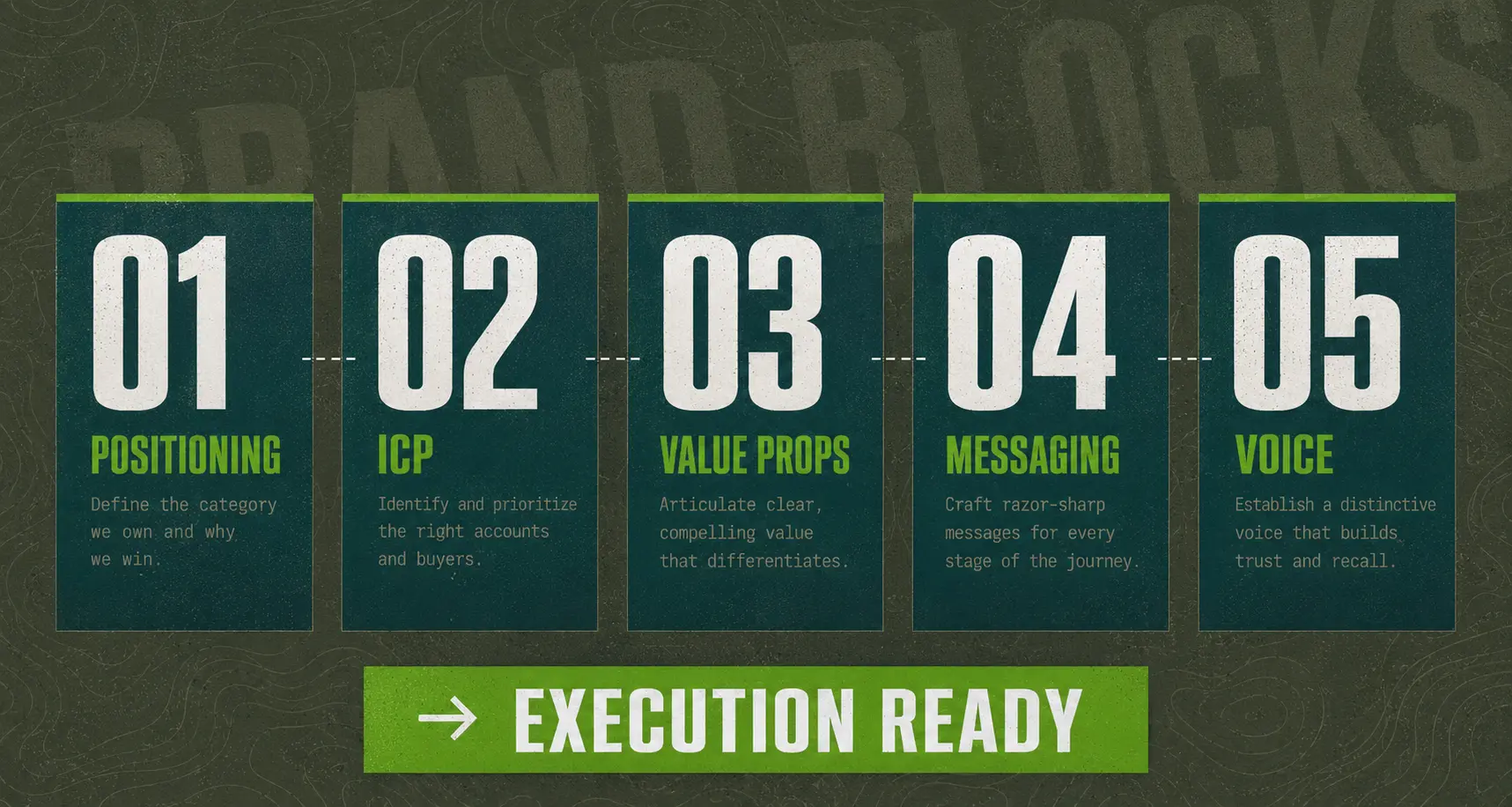
Brand strategy becomes usable when it is translated into practical inputs. These inputs guide writers, designers, media buyers and customer marketing teams.
- Positioning: The category context and the specific claim the brand can defend.
- Ideal Customer Profile: The highest-fit segment defined by needs, constraints and buying triggers.
- Value Propositions: Clear outcomes, proof points and differentiators tied to real pains.
- Messaging Architecture: A hierarchy from primary message to supporting points and objections.
- Brand Voice: Tone rules that keep copy consistent across ads, emails, landing pages and scripts.
With these inputs documented, lifecycle and video teams can execute without guessing.
Lifecycle Marketing Turns Interest Into Revenue
Lifecycle marketing connects acquisition to activation, retention and expansion. Agencies focus on the full journey because the first sale is often only the beginning of profitable growth.
A lifecycle approach also improves paid efficiency. Better onboarding and retention increase customer lifetime value, which raises allowable acquisition cost.
Journey Mapping Without Overcomplicating It
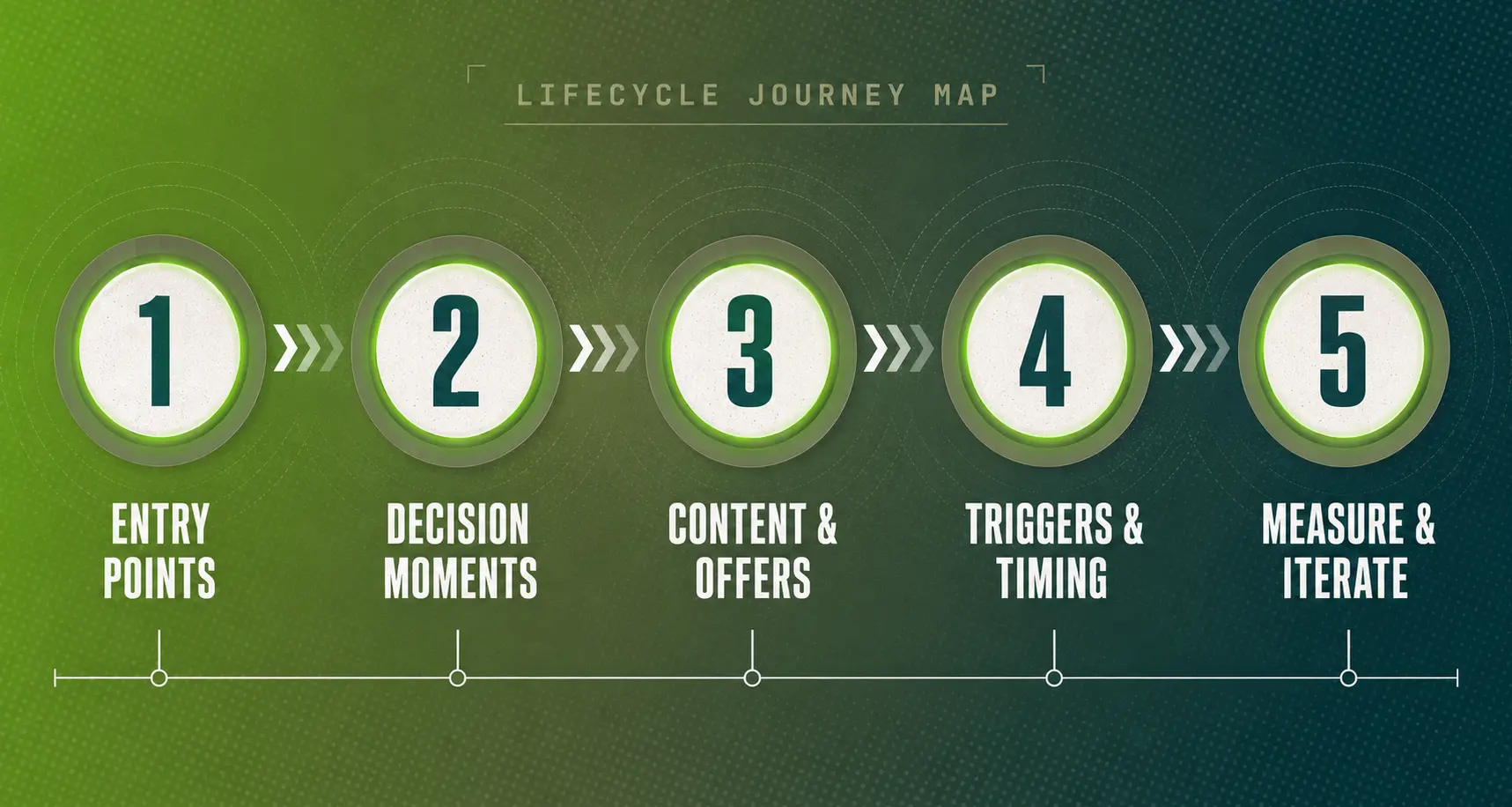
Agencies typically map the journey around real decisions, not abstract funnels. The goal is to define the minimum set of moments that move someone forward.
- Define Entry Points. Capture how people first discover the brand across search, social, referrals and partners.
- Identify Decision Moments. List the points where a buyer needs proof, reassurance, or a clear next action.
- Assign Content And Offers. Match each moment to one primary asset and one clear call to action.
- Set Triggers And Timing. Use behavior signals such as page views, form fills, product usage, or renewals.
- Measure And Iterate. Review conversion rates and drop-off points to refine messages and sequencing.
This structure keeps lifecycle work focused on progress, not noise.
Video Makes The Strategy Felt
Video carries emotion, clarity and proof in a way that text alone often cannot. Agencies use it to compress complex ideas and show outcomes with less friction.
Video also supports every stage of the lifecycle. It can build awareness, reduce sales cycles, improve onboarding and reinforce retention.
Video Types Agencies Use Across The Journey
Different moments require different formats and lengths. The best agencies plan a video system rather than a single hero asset.
- Brand Narrative Video: Establishes positioning, audience and the promise in a cohesive story.
- Problem Solution Explainer: Clarifies the pain, the approach and the outcome with simple visuals.
- Product Walkthrough: Shows key workflows that matter to adoption and retention.
- Testimonial And Proof: Builds trust with credible results and specific details.
- Short Social Cuts: Delivers one idea fast and drives traffic to deeper content.
Once formats are standardized, production gets faster and performance becomes easier to compare.
How Agencies Integrate Teams and Workflows?
Integration fails when brand, lifecycle and video operate as separate departments. Agencies that build demand consistently align planning, briefs and measurement from the start.
This alignment is operational, not theoretical. It shows up in how briefs are written, how assets are named and how results are reported.
Shared Briefing That Prevents Rework
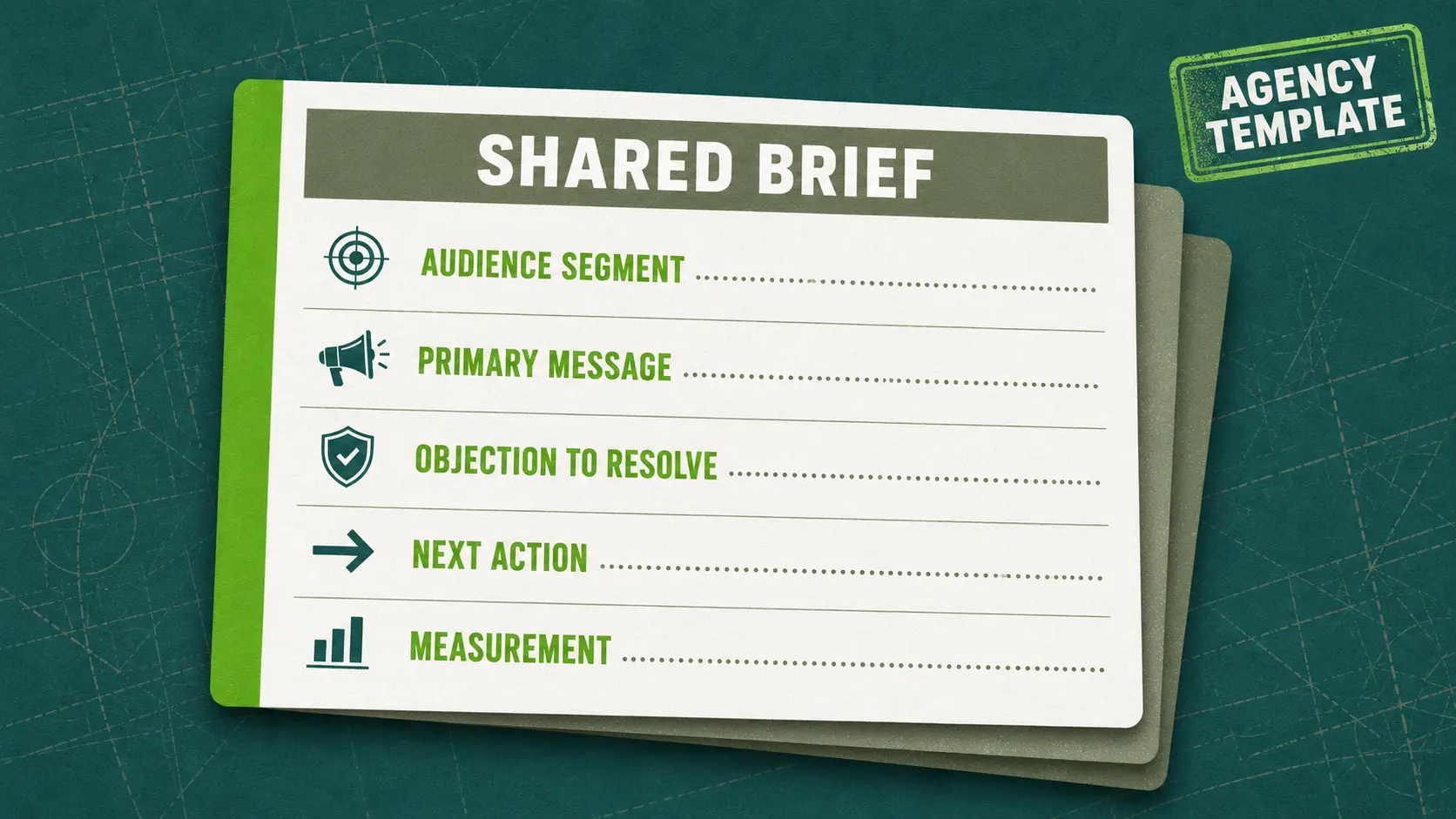
A shared brief connects creative decisions to lifecycle goals and channel constraints. Agencies often include the same core fields across email, landing page and video briefs.
- Audience Segment: The exact group and the context they are in.
- Single Primary Message: One claim that the asset must communicate clearly.
- Objection To Resolve: The main reason someone hesitates and the proof needed.
- Next Action: One action the viewer should take immediately.
- Measurement Plan: The metric tied to the asset role in the journey.
This brief structure reduces subjective feedback and keeps production tied to outcomes.
Measurement That Connects Brand and Revenue
Agencies build demand by measuring leading indicators and lagging indicators together. Brand metrics matter, but they become more useful when paired with lifecycle and pipeline signals.
The goal is not to track everything. It is to track what changes decisions and improves allocation.
| Area | Primary Metrics | How Agencies Use It |
|---|---|---|
| Brand Strategy | Message Recall, Direct Traffic, Share Of Search | Validate positioning and improve creative direction |
| Lifecycle Marketing | Activation Rate, Retention, Expansion Revenue | Find journey drop-offs and improve customer value |
| Video Performance | Hook Rate, Watch Time, Click Through Rate | Optimize creative structure and distribution mix |
| Revenue Impact | Pipeline, Win Rate, Customer Acquisition Cost | Connect content to sales outcomes and budget decisions |
With this scorecard, teams can defend brand investments while still improving efficiency.
Common Failure Points and How Agencies Avoid Them
Many programs stall because teams jump to execution without alignment. Agencies avoid this by protecting strategy, simplifying lifecycle flows and treating video as a system.
Fixing these issues early prevents wasted spend and inconsistent messaging.
- Vague positioning: Agencies force a clear claim and supporting proof before scaling content.
- Fragmented customer data: They define a minimum viable dataset and unify tracking across key tools.
- Overbuilt automation: They start with essential triggers and expand only after results are stable.
- Video without distribution: They plan placements, cuts and repurposing before production begins.
- Reporting that hides insight: They tie every metric to a decision and remove vanity dashboards.
These guardrails keep demand work practical and resilient.
Building a Sustainable Demand Engine
Agencies that build demand focus on compounding assets. They create messaging that lasts, lifecycle programs that learn and video libraries that scale across channels.
This approach lowers marginal costs over time. It also improves trust because the brand shows up consistently at every stage.
Conclusion
Brand strategy provides the narrative, lifecycle marketing turns narrative into journeys and video delivers that narrative with clarity and energy. Agencies build demand by integrating these disciplines into one operating system with shared briefs and connected measurement.
When the foundation is strong, campaigns stop feeling random and start producing predictable momentum. The result is demand that grows through consistency, not constant reinvention.
FAQ’s
1. Why is video marketing important for digital growth?
Video marketing is important because it helps explain offers quickly, build trust and capture attention across websites, social media, ads and email. People often understand products or services faster through video than text alone. Good video content can support awareness, retargeting, education and conversion, making it useful across the full marketing funnel.
2. Can brand strategy improve paid ad performance?
Yes, brand strategy can improve paid ad performance because clearer messaging usually creates better attention, trust and conversion rates. If your offer, audience and positioning are unclear, ads may get clicks but fewer qualified leads. Strong brand strategy helps ads communicate the right value to the right people more effectively.
3. How do agencies measure demand generation campaigns?
Agencies measure demand generation campaigns by tracking awareness, engagement, website traffic, leads, conversion rate, pipeline quality, customer acquisition cost and revenue influence. Since demand generation often works across several touchpoints, measurement should look beyond one click. Good reporting connects brand, content, video, paid media and lifecycle activity to business growth.