
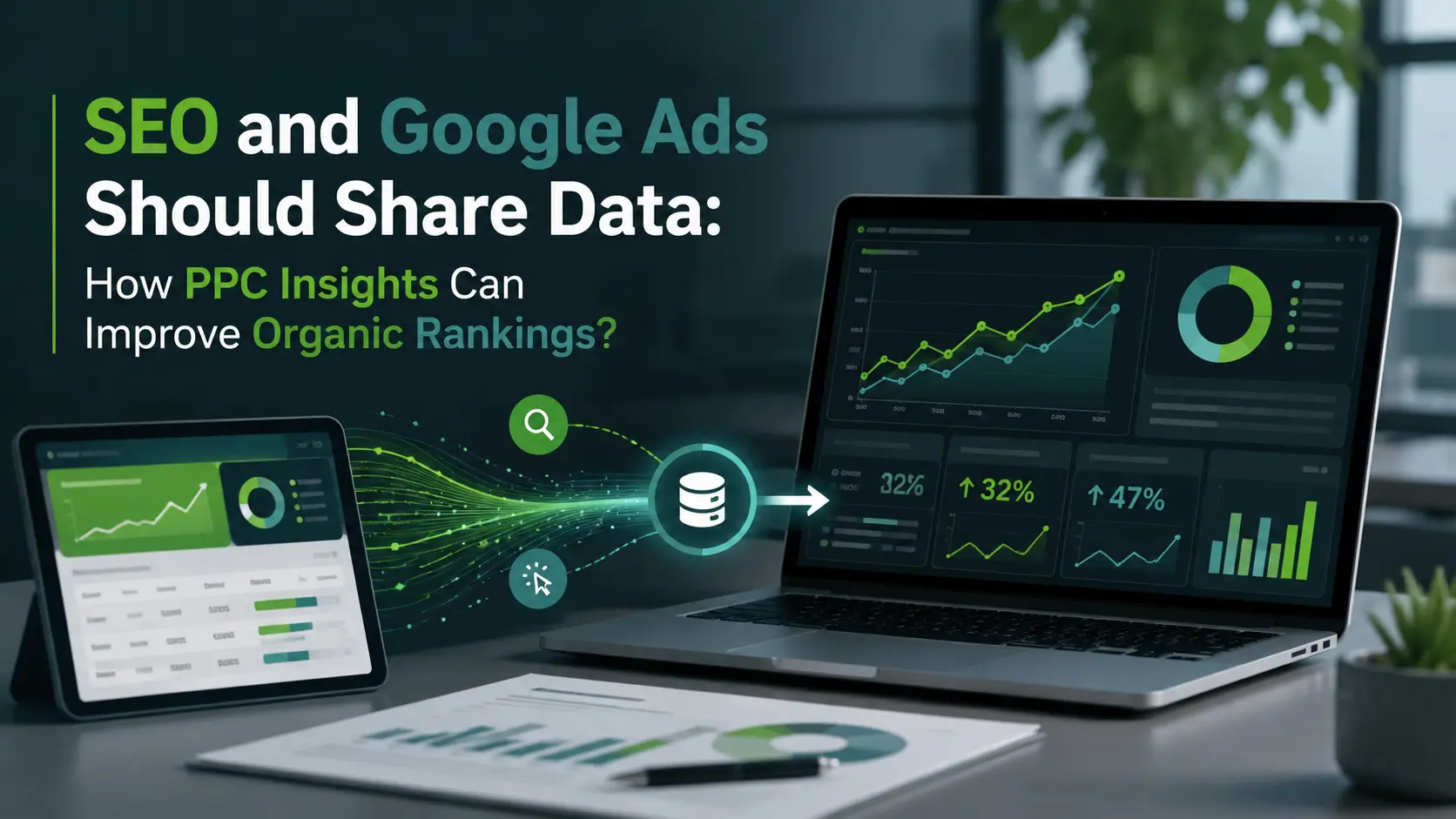
Organic search and paid search often run in parallel, but they perform best when they share data. Google Ads produces fast, high-signal insights about queries, landing pages, and conversion behavior that SEO can use to prioritize the right work. When teams unify reporting, testing, and messaging, organic rankings improve with fewer blind spots and less wasted effort.
Why SEO And Google Ads Data Should Connect?
SEO is a long game, and it is easy to invest months into pages that do not move key outcomes. PPC gives immediate feedback on what people search, which messages earn clicks, and which pages convert. Sharing those signals helps SEO choose topics, match intent, and tighten on-page relevance.
Data sharing also improves measurement. When the same conversion actions and definitions are used across channels, it is easier to see which queries bring valuable users and which pages need better content or better traffic quality. That alignment reduces internal debate and speeds up decisions.
What PPC Reveals That SEO Alone Often Misses
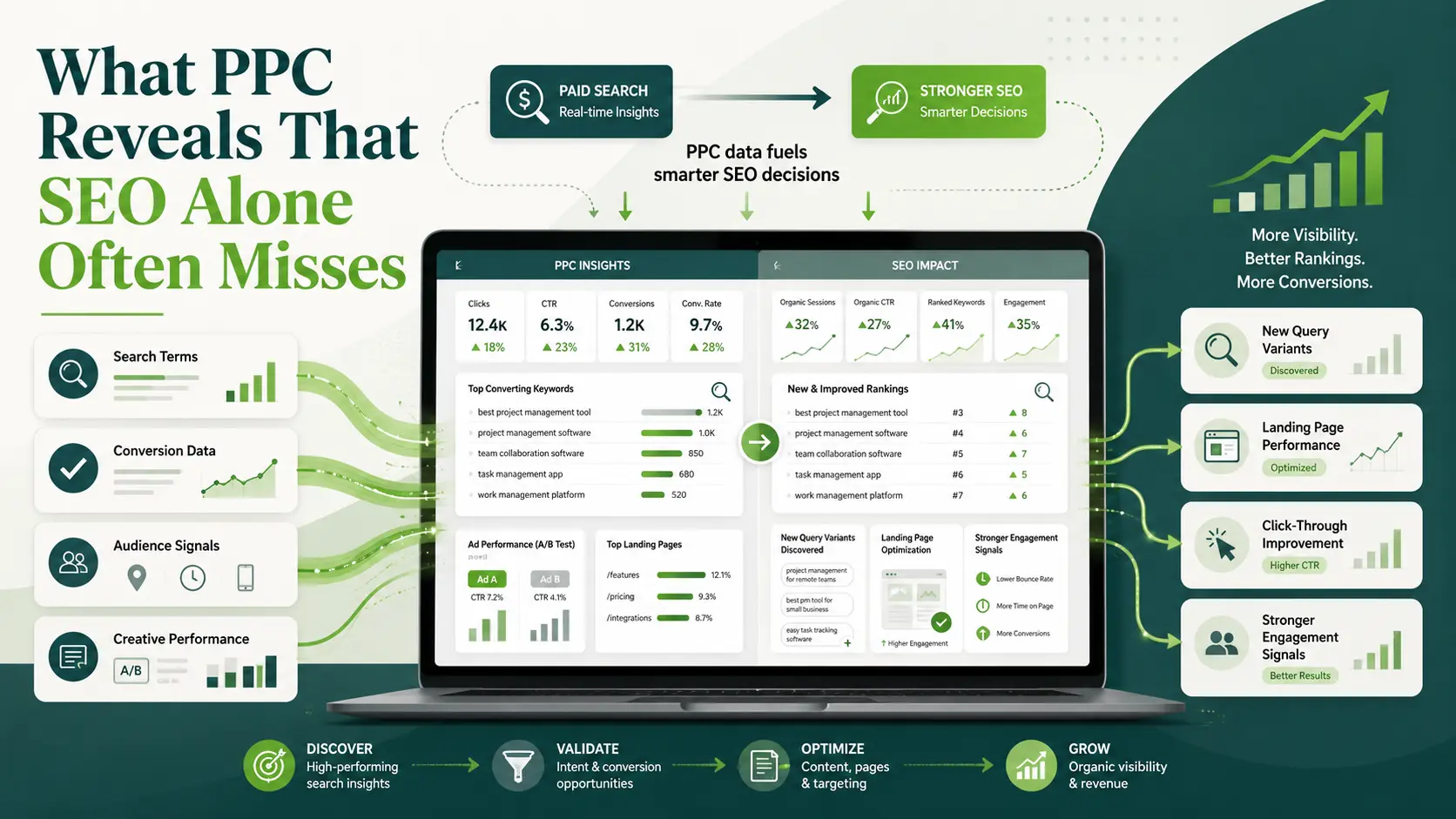
Google Ads surfaces demand patterns quickly because you can enter auctions for terms that have no organic visibility yet. It also reveals user behavior after the click, not just the click itself. That post-click behavior is where many ranking opportunities become clear, such as mismatched intent, weak calls to action, or slow pages.
PPC also clarifies message-market fit. Ad copy, assets, and extensions are real-time experiments in language that can later strengthen titles, headings, and meta descriptions. Those refinements help organic listings earn better click-through rates and send stronger engagement signals.
- Search terms: New query variants, modifiers, and intent signals that do not appear in standard SEO tools quickly enough.
- Conversion data: Which keywords and landing pages generate leads, purchases, or qualified calls rather than only traffic.
- Audience signals: Device, location, time of day, and audience segments that correlate with higher value actions.
- Creative performance: Headlines and descriptions that consistently earn higher click-through rates.
Once these signals are centralized, SEO work becomes more targeted and easier to justify.
Keyword Strategy Driven By Paid Search Intent
SEO keyword research often focuses on volume and difficulty, but PPC shows which queries actually convert. That shifts the goal from ranking for popular terms to ranking for terms that drive revenue and pipeline. It also helps you identify where content should be informational, commercial, or transactional.
Start with your highest-performing paid search terms and segment them by intent. Map each group to the most appropriate organic page type, such as a category page, service page, pricing page, or a deep educational article. This prevents the common issue of trying to rank a blog post for a term that needs a product page.
- Export converting queries: Pull search terms that drove meaningful conversions, not only clicks.
- Cluster by intent: Group terms by problem awareness, solution evaluation, and purchase readiness.
- Map to page types: Assign each cluster to the page that best satisfies the user goal.
- Prioritize by value: Use cost per conversion and conversion rate to choose what SEO builds first.
This approach creates an SEO roadmap that is anchored in real user actions, not assumptions.
Landing Page Insights That Strengthen On Page SEO
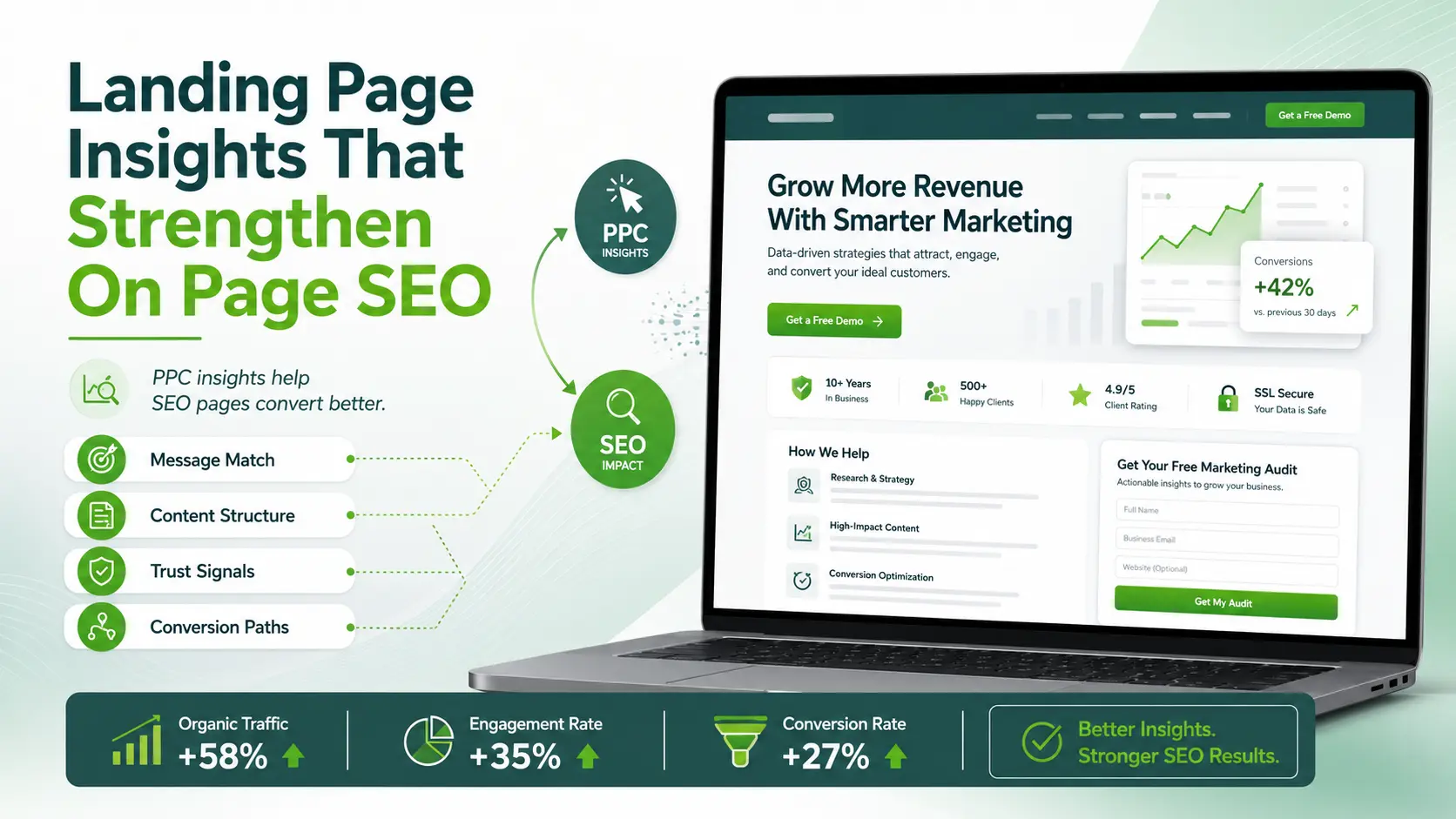
PPC landing pages are often built for speed and clarity, which makes them a useful model for SEO pages that need stronger conversions. Ads also reveal which landing pages win at specific intents, which can guide internal linking and content depth. If a page converts well on PPC but underperforms organically, the issue might be discoverability, content alignment, or technical SEO rather than offer quality.
Review paid landing pages for the elements that consistently improve results. Then adapt those elements to organic pages without turning them into thin, overly promotional experiences. The goal is to satisfy search intent with comprehensive content and a clear next step.
- Message match: Align titles, headings, and above-the-fold copy with the core query language that performs in ads.
- Content structure: Use scannable sections, clear subtopics, and concise benefit statements to reduce pogo-sticking.
- Trust signals: Add proof elements such as certifications, policies, outcomes, and support details where appropriate.
- Conversion paths: Make primary actions easy to find and consistent with the intent of the page.
These improvements help both rankings and business outcomes because Google rewards pages that satisfy users.
Using Ad Copy To Improve Organic Click Through Rate
PPC ad copy testing is one of the fastest ways to learn what language motivates clicks. High-performing headlines often translate into stronger SEO title tags and H2 headings because they mirror how users describe their needs. Better organic click-through rate can improve performance over time by increasing engagement and relevance signals.
Look at the highest-performing RSA assets and pin down the repeated themes. Then rework organic metadata to reflect the same value propositions, without stuffing keywords or making claims that the page cannot support. Keep wording consistent between the snippet and the on-page content to reduce bounce rates.
Shared Reporting And Conversion Tracking That Builds Trust
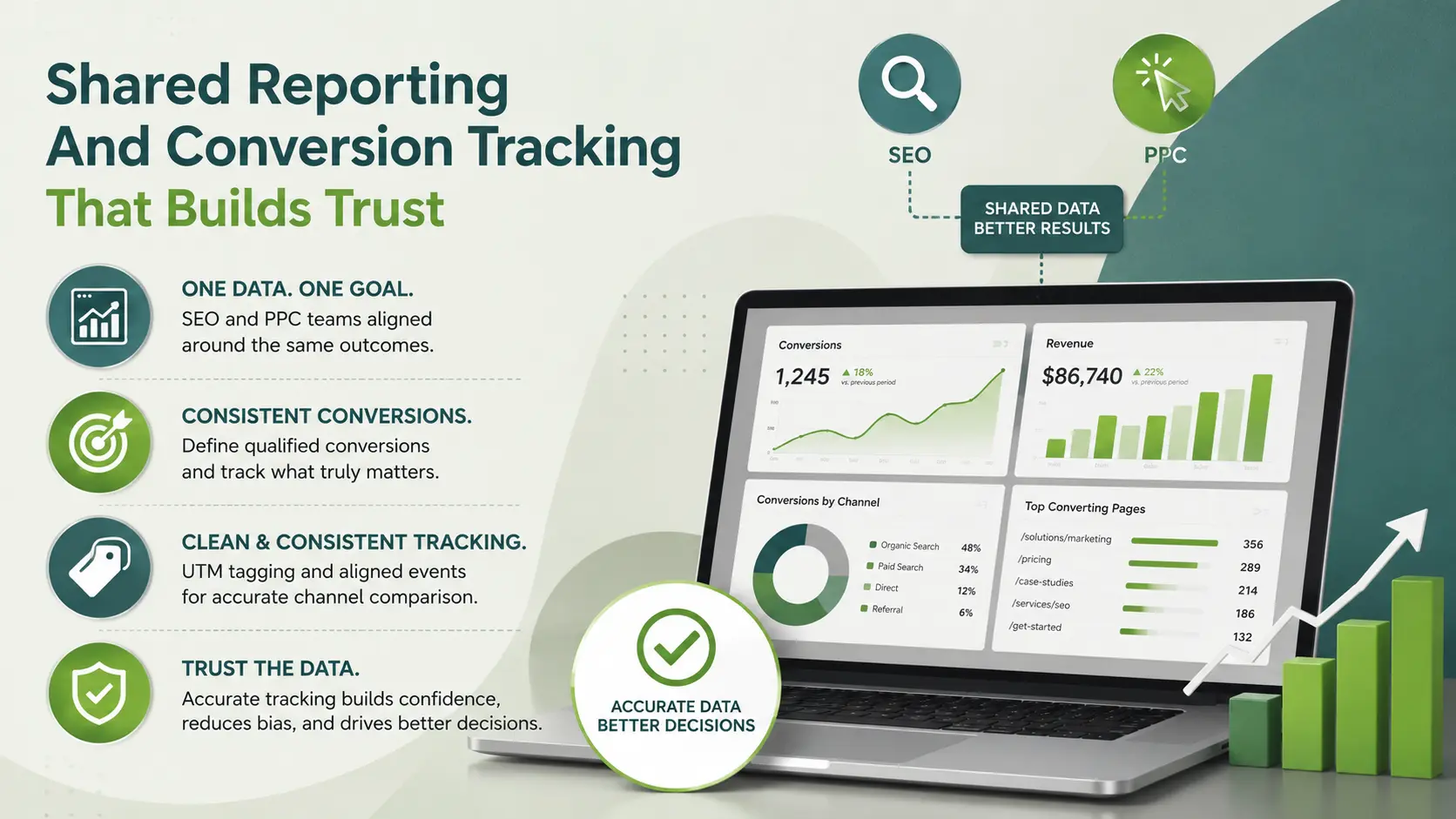
SEO and PPC teams frequently report in different dashboards with different attribution models. A shared measurement approach keeps the focus on outcomes and reduces channel bias. When conversions, revenue, or lead quality are tracked consistently, both teams can optimize toward the same goal.
At a minimum, align analytics events, define what counts as a qualified conversion, and ensure landing page URLs are tagged in a way that supports channel comparisons. This is also where a technical partner can add value by auditing tracking, resolving duplication, and ensuring clean data flow.
A Practical Workflow For Sharing PPC Insights With SEO
Data sharing works when it is operational, not occasional. A lightweight cadence helps teams act on insights without creating a burden of meetings. The workflow should include where data lives, who owns which decisions, and how tests are documented.
- Set shared goals: Agree on primary conversions, secondary conversions, and lead quality signals.
- Standardize taxonomies: Use consistent naming for campaigns, landing pages, and content themes.
- Review search terms monthly: Add new organic targets, negatives, and content updates based on query patterns.
- Test messaging quarterly: Move winning ad themes into SEO titles, headings, and value props.
- Close the loop: Report on which SEO changes improved organic rankings and which reduced paid spend.
Over time, the two channels start reinforcing each other rather than competing for credit.
Key PPC Metrics That Translate Into SEO Actions
Not every PPC metric matters for SEO, but a few are especially useful. These metrics indicate whether users find the page relevant and whether the offer matches intent. They also help prioritize which pages need content upgrades versus technical fixes.
| PPC Signal | What It Suggests | SEO Action |
|---|---|---|
| High conversion rate on a query | Strong intent and strong fit with your offer | Build or expand an organic page targeting the intent cluster |
| High CTR but low conversion rate | Messaging is attractive but landing page does not satisfy intent | Improve content relevance, internal linking, and the primary CTA |
| High cost per conversion | Competition is strong or quality is low | Strengthen topical authority and E-E-A-T to earn organic share |
| Strong performance by device or location | Context affects outcomes | Optimize mobile UX, local pages, and structured content for those segments |
This mapping keeps SEO work tied to measurable performance indicators rather than gut instinct.
How IMILI Corp Supports Integrated SEO And PPC Strategy?
Integrated search requires solid technical foundations, clean tracking, and a disciplined content process. IMILI Corp supports businesses that want SEO and Google Ads to work as one system by aligning measurement, improving landing pages, and building search-focused content that matches real query intent. That combination helps teams reduce wasted spend and grow organic rankings with clearer priorities.
If your current setup has separate reports, unclear conversion definitions, or landing pages that do not reflect what users are searching for, an audit-led engagement can quickly uncover what to fix first. The biggest gains usually come from tightening message match, improving page experience, and using paid query insights to guide content creation.
Conclusion
SEO and Google Ads should share data because the user journey does not separate channels. PPC reveals converting queries, winning language, and landing page issues fast, while SEO turns those insights into durable visibility and lower long-term acquisition costs. When the teams align goals, tracking, and workflows, organic rankings improve with fewer wasted cycles.
Start with shared conversion definitions, a monthly query review, and a clear process for moving PPC learnings into SEO updates. Consistent data sharing turns search into a unified growth engine instead of two disconnected efforts.
Frequently Asked Questions
How Often Should PPC Data Be Reviewed For SEO Planning?
A monthly review is enough for most teams to spot new converting queries and emerging intent shifts. High-spend accounts may benefit from a lighter weekly check focused on search terms and landing page performance. The key is consistency and a clear owner for turning insights into SEO tasks.
Will Using PPC Insights Guarantee Better Organic Rankings?
No, rankings still depend on content quality, technical SEO, and competition. PPC insights reduce guesswork by helping you target proven intent and improve relevance, which increases the odds of organic gains. Think of it as better inputs for your SEO strategy, not a shortcut.
What If Google Ads And SEO Keywords Do Not Match Perfectly?
That is common because paid search can cover broader variations and different match behaviors. Use PPC to learn which themes and intent clusters drive outcomes, then build organic content around those clusters rather than exact keyword matches. This approach supports natural language search and improves topical authority.