

Marketers need tracking that stays accurate as browsers restrict cookies, users expect privacy, and ad platforms demand reliable conversion signals. The practical choice is rarely either-or. It is understanding what each method can and cannot do, then designing measurement that supports growth without breaking trust.
What Browser Tracking Is?
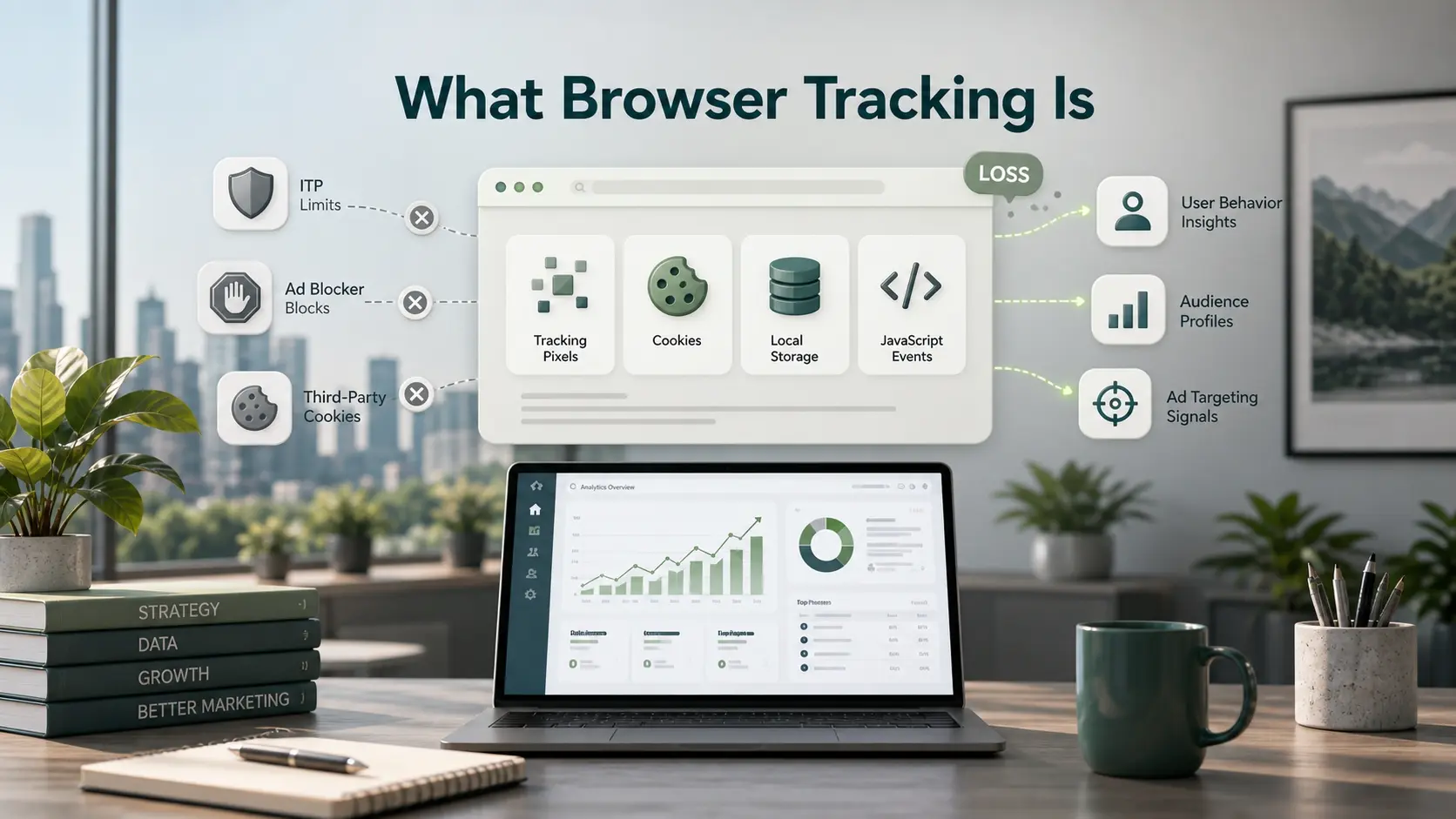
Browser tracking collects data in the user’s browser through pixels, tags, cookies, local storage, and JavaScript events. It is the default setup for many analytics and ad platforms because it is fast to deploy and works well with common tag managers.
The browser is also the least stable place to measure behavior. Ad blockers, ITP style restrictions, consent choices, and network conditions can stop tags from firing or can remove identifiers before they reach analytics tools.
What Server-Side Tracking Is?
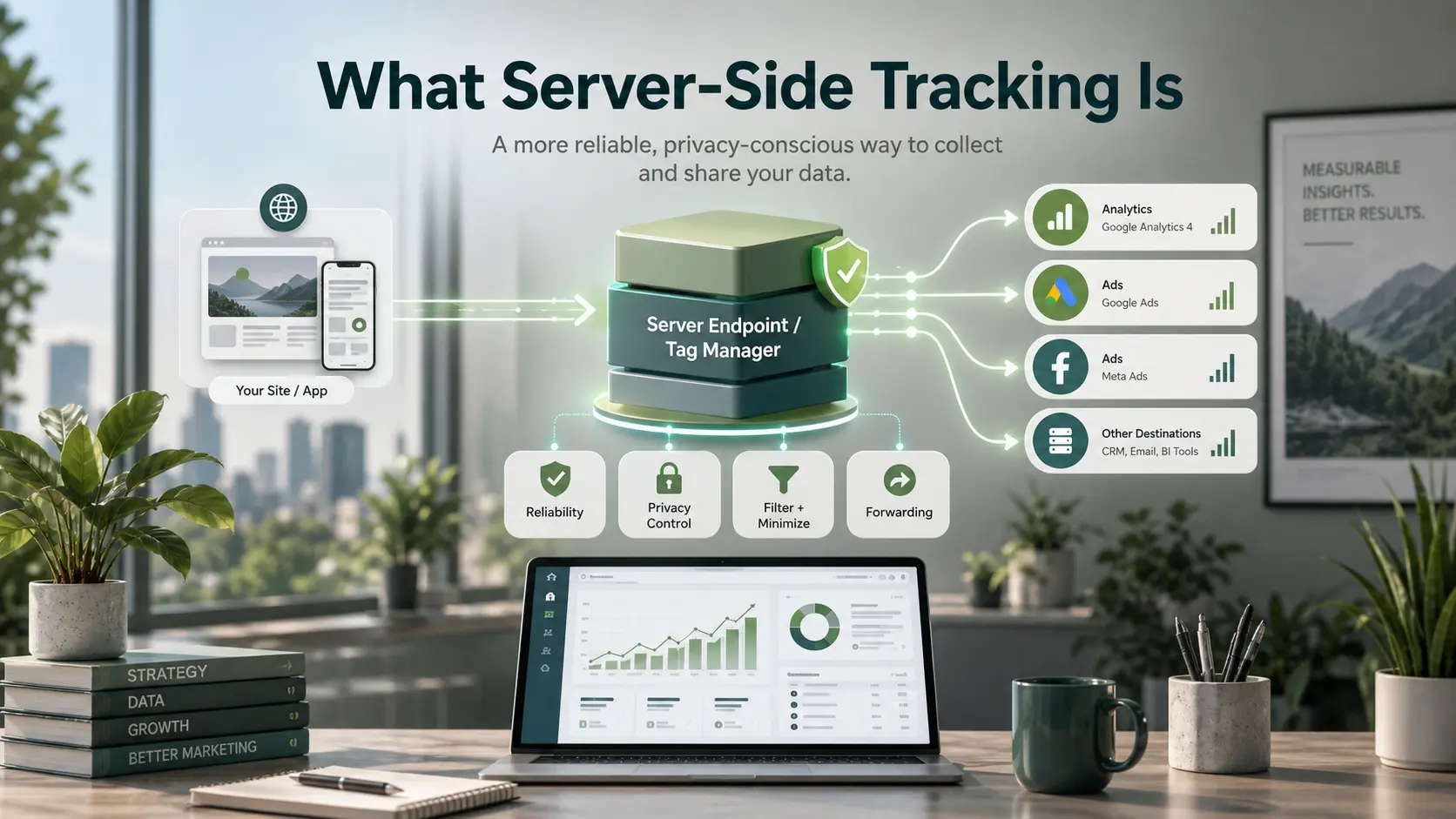
Server-side tracking routes measurement through a controlled environment you own, such as a server endpoint, a server-side tag manager, or an event pipeline. Events are collected from your site or app, then processed and forwarded to analytics and ad destinations from the server.
This approach improves reliability because the browser does less work and fewer scripts need to run client-side. It also gives stronger control over data governance because you can filter, transform, and minimize data before it leaves your systems.
How Data Flows In Each Approach?
Understanding data flow clarifies why the two methods behave so differently. Browser tracking depends on scripts running in a third-party environment you do not control. Server-side tracking depends on a first-party environment you configure and maintain.
- Browser Flow: User loads page, scripts run, identifiers are read, events fire, then requests go directly to vendors.
- Server Flow: User action creates an event, the event is sent to your endpoint, rules apply, then approved data is forwarded to vendors.
That single change in routing affects accuracy, privacy, and troubleshooting.
Accuracy And Data Loss Differences
Browser tracking often undercounts due to blocked scripts, shortened cookie windows, and interrupted network calls. It can also overcount through duplicate tags, misfired events, and hard-to-audit tag sprawl.
Server-side tracking typically reduces event loss by sending data from a stable backend. It still requires correct event design and deduplication across sources, especially when both browser and server events are used together.
Privacy, Consent & Compliance Realities
Neither method eliminates the need for proper consent and privacy controls. Compliance depends on what you collect, how you store it, and where you send it. Server-side tracking can support privacy goals because you can enforce data minimization and consent checks centrally.
Browser tracking can be privacy-respecting as well, but it is harder to guarantee consistent behavior across devices and browsers. When consent is denied, scripts may not run, which can create gaps that are difficult to interpret in reporting.
Security And Data Governance Control
Server-side tracking allows stricter control over what leaves your environment. You can remove sensitive parameters, standardize naming, and prevent unintended third-party calls. This reduces risk from rogue tags and simplifies audits.
Browser tracking can drift over time when multiple teams add tags, triggers, and pixels. Governance becomes a process challenge, not just a technical one, and it often shows up as inconsistent attribution and reporting disputes.
Attribution And Conversion Modeling Impact
Modern attribution relies on high-quality conversion signals. Browser limitations reduce the number of observable conversions, which pushes platforms to model more of the results. That can be acceptable, but it reduces confidence when budgets tighten.
Server-side tracking can improve the completeness and timeliness of conversion events. This often helps bidding systems learn faster, but only when events are well-defined, deduplicated, and aligned to real business outcomes.
Implementation Complexity And Team Requirements
Browser tracking is usually simpler at the start. Many teams can deploy a tag manager, add a few events, and begin reporting without engineering time.
Server-side tracking typically needs engineering support, cloud infrastructure, and ongoing monitoring. The tradeoff is greater control and reliability, which becomes more valuable as spend, data volume, and compliance expectations grow.
Cost Considerations That Affect The Decision
Browser tracking appears low-cost because vendor tags are easy to install. Hidden costs show up later through data quality issues, time spent debugging, and reporting inconsistencies that affect decisions.
Server-side tracking introduces direct costs for hosting, event processing, and maintenance. It can lower indirect costs by reducing breakage, improving signal quality, and simplifying privacy management.
When Browser Tracking Is Enough?
Browser tracking can meet needs when measurement is lightweight and the business does not depend on precise attribution. It also works when teams need speed and can accept some data loss.
- Early-Stage Sites: Basic pageview and form tracking with a small channel mix.
- Low-Risk Data: Limited collection where sensitive data is not involved.
- Short Feedback Loops: Decisions made from trends rather than exact counts.
Even in these cases, governance and naming standards still matter.
When Server-Side Tracking Becomes Necessary?
Server-side tracking becomes important when data quality directly impacts revenue decisions, paid media efficiency, or compliance posture. It is also valuable when multiple platforms need consistent event definitions.
- High Paid Media Spend: Better conversion signals support optimization and reduce wasted spend.
- Strict Compliance Needs: Centralized control helps enforce consent rules and data minimization.
- Complex Funnels: Multi-step journeys benefit from consistent event pipelines across devices and channels.
The goal is not more tracking. The goal is better signals with clearer accountability.
Side By Side Comparison
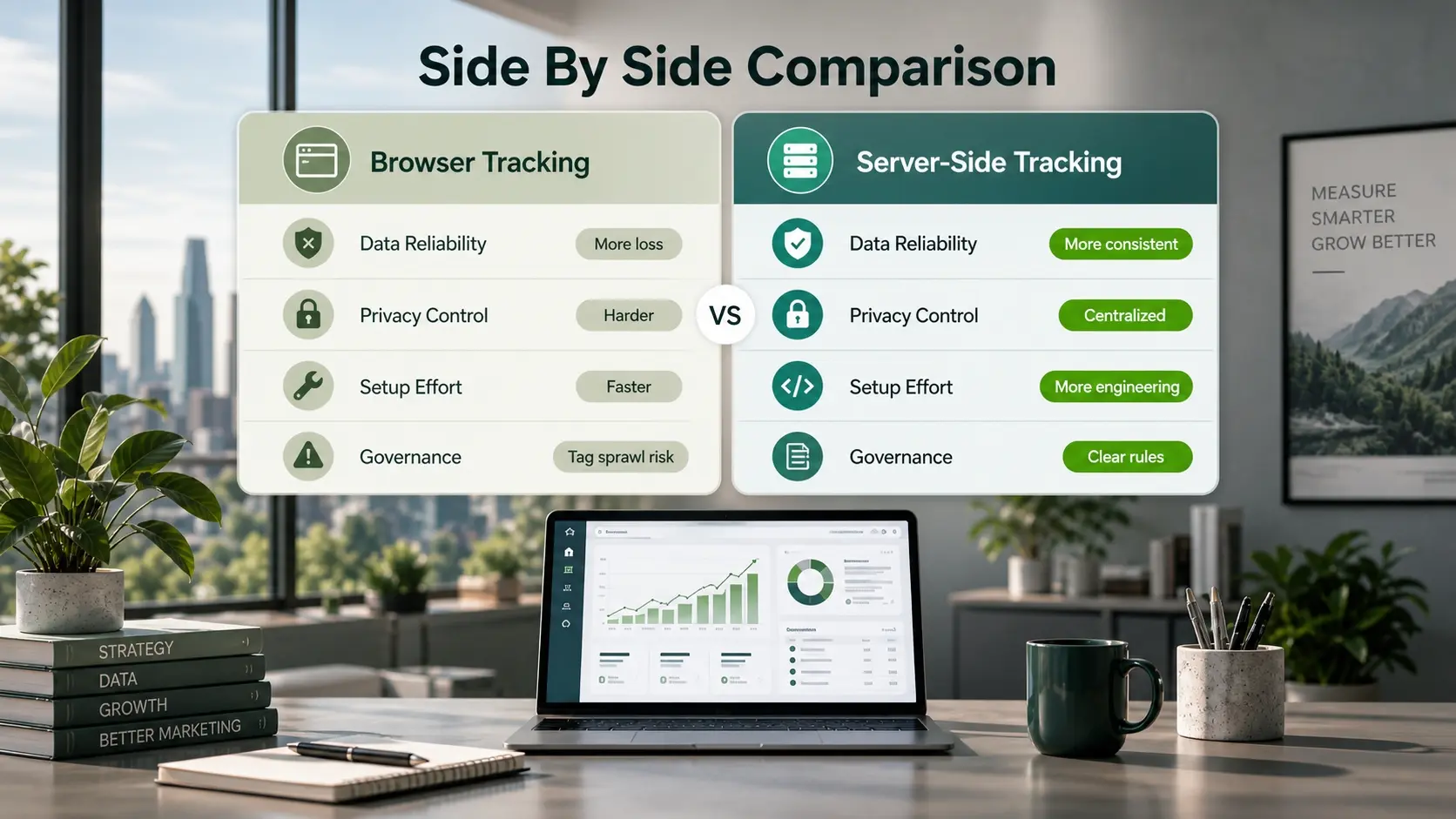
This table summarizes the practical differences that tend to matter most to marketing teams and analytics stakeholders.
| Category | Browser Tracking | Server-Side Tracking |
|---|---|---|
| Data Reliability | More loss from blockers and browser limits | More consistent event delivery |
| Privacy Control | Harder to enforce consistently per vendor tag | Centralized filtering and minimization |
| Setup Effort | Faster initial deployment | More engineering and infrastructure |
| Governance | Tag sprawl risk over time | Clear rules and auditable pipelines |
Use this as a starting point, then map it to your stack, risk profile, and growth plans.
Best Practice Approach For Most Marketers
A hybrid approach is common. Browser tracking captures engagement signals and supports tools that require client-side context. Server-side tracking strengthens core conversion events and standardizes what gets shared with vendors.
To keep the hybrid approach clean, define a measurement plan and treat it like a product. Maintain a single event taxonomy, clear ownership, and documented rules for deduplication and consent enforcement.
How IMILI Corp Helps Teams Get Tracking Right?
Getting server-side tracking right requires more than turning on a feature. It needs strategy, implementation discipline, and ongoing measurement governance across analytics, advertising, and data privacy.
IMILI Corp supports organizations with digital analytics and marketing technology work that aligns event design, tag management, and performance reporting. When server-side tracking is part of the roadmap, an experienced partner can help define the right event schema, reduce data leakage, and improve the quality of signals used for optimization.
Conclusion
Browser tracking is quick to launch and useful for many engagement signals, but it is vulnerable to modern browser restrictions and inconsistent execution. Server-side tracking improves control, reliability, and governance, but it requires a more deliberate build and maintenance.
The best choice for most teams is a planned blend. Focus on the events that drive revenue, enforce privacy and consent consistently, and invest in tracking infrastructure that produces trustworthy decisions.
Frequently Asked Questions
Is Server-Side Tracking A Replacement For Browser Tracking?
Not usually. Server-side tracking is strongest for conversion and revenue events, while browser tracking remains useful for on-site interactions and tools that need client context. A hybrid setup often provides the best balance of coverage and control.
Does Server-Side Tracking Automatically Make Data Compliant?
No. Compliance depends on consent handling, data minimization, retention rules, and vendor agreements. Server-side setups can make compliance easier to enforce, but only when the rules are intentionally designed and audited.
What Should Be Moved To Server Side First?
Start with high-value events tied to business outcomes, such as purchases, qualified leads, and subscription activations. Prioritize events used for ad optimization and attribution, then expand once naming, deduplication, and consent enforcement are stable.