

An SEO audit is a structured checkup that shows what is helping or hurting your organic search performance. It reviews your site from multiple angles, then turns the findings into a prioritized list of fixes and opportunities.
What An SEO Audit Covers?
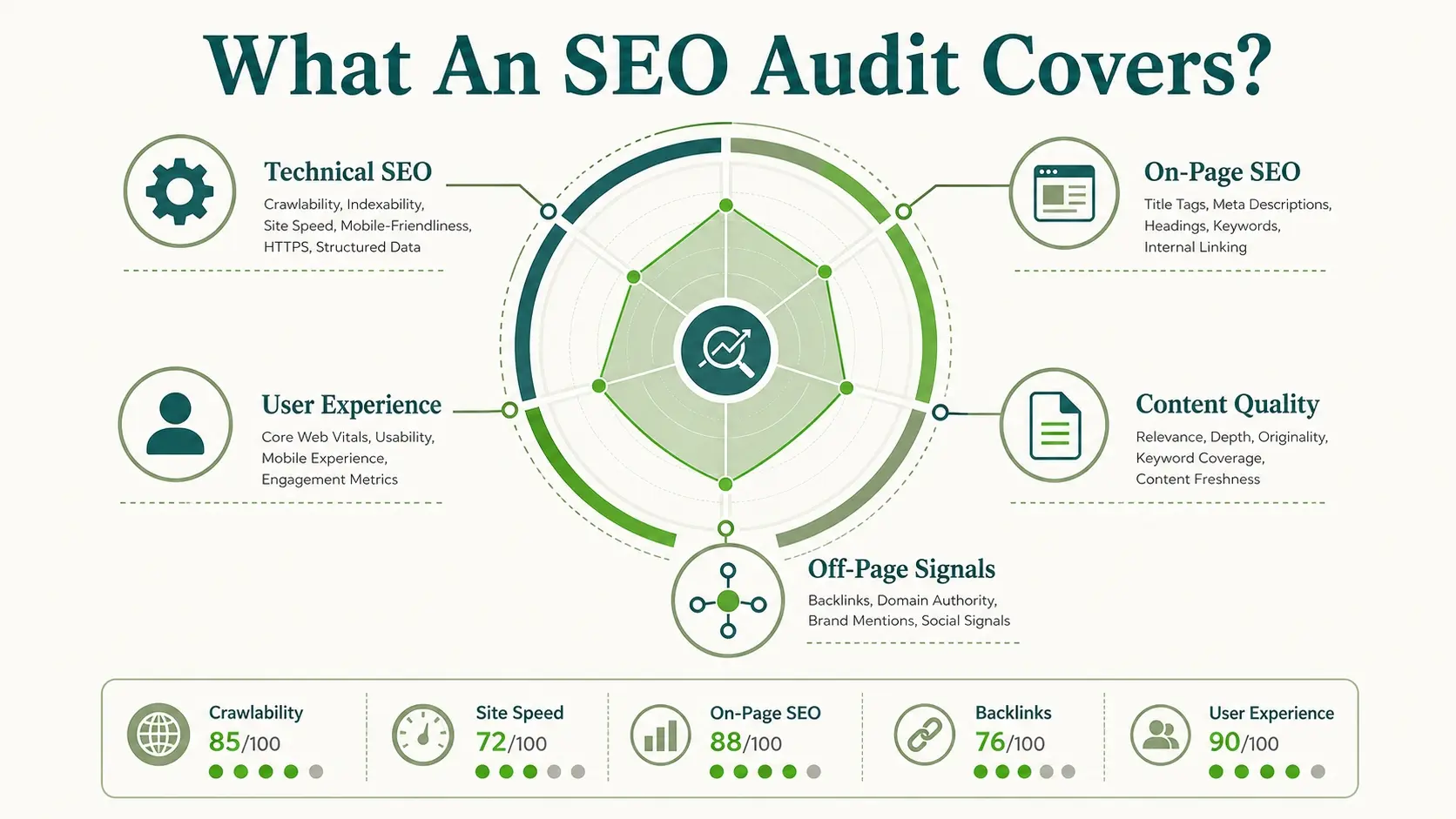
A proper audit is broader than rankings and keywords. It looks at technical health, content quality, on-page signals, authority, and how users experience the site.
The goal is clarity. You should leave with a document that explains issues in plain language, why they matter, and what to do next.
- Technical SEO: Crawlability, indexation, site speed, mobile usability, structured data, and security.
- On-Page SEO: Titles, headings, internal links, topical coverage, and page intent alignment.
- Content Quality: Usefulness, originality, depth, duplication risks, and content gaps.
- Off-Page Signals: Backlink profile quality, toxic patterns, and brand mentions.
- User Experience: Navigation, page templates, readability, and conversion friction.
Once these areas are assessed, the audit shifts from diagnostics to decision making.
Discovery And Goal Alignment
The audit begins by clarifying what success means for your site. A local service business, an ecommerce store, and a B2B brand often need different SEO priorities.
This stage also confirms what resources are available. Knowing your CMS, development capacity, and content workflow keeps recommendations realistic.
- Business Goals: Lead volume, revenue, calls, form fills, or qualified traffic growth.
- Primary Pages: Service pages, product categories, blog hubs, and location pages that matter most.
- Constraints: Template limits, release schedules, and approval processes that affect execution.
With goals and constraints set, the audit can focus on the pages and issues that move the needle.
Crawl And Indexation Review
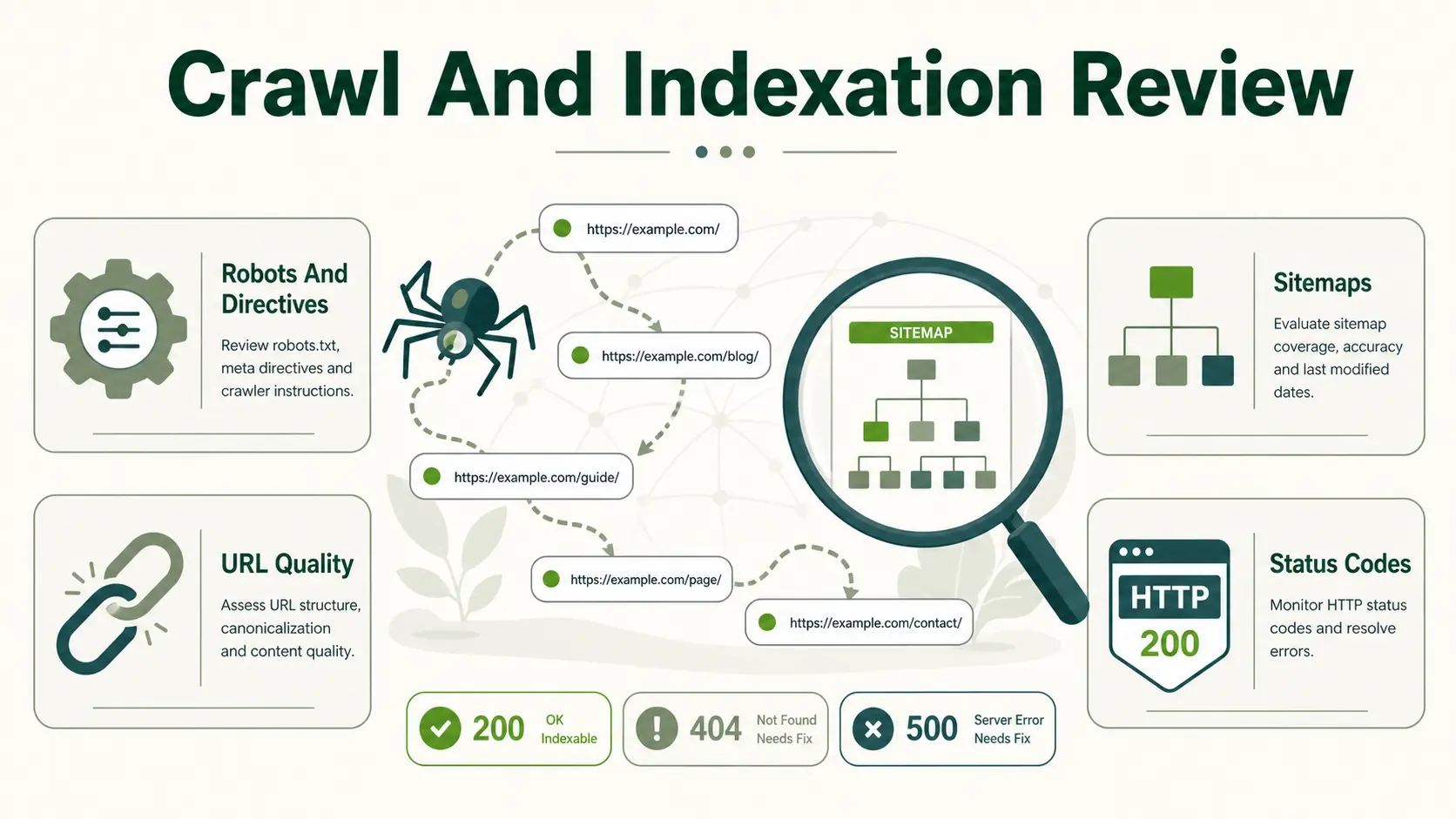 This part checks whether search engines can access, crawl, and index the right URLs. Problems here can block even great content from ranking.
Auditors typically compare what should be indexed against what actually appears in search results and in search console data.
- Robots And Directives: Robots.txt rules, meta robots tags, and canonical tags that guide indexing.
- Sitemaps: XML sitemap coverage, freshness, and errors that waste crawl budget.
- URL Quality: Parameter URLs, duplicate paths, and thin pages that create index bloat.
- Status Codes: 3xx chains, 4xx pages, and 5xx errors that break discovery and equity flow.
When crawl and indexation are clean, technical improvements can translate into faster, more predictable ranking gains.
Technical SEO Health Checks
Technical SEO focuses on performance, rendering, and stability. It identifies issues that slow pages down or prevent Google from fully understanding your site.
A good audit separates high impact fixes from nice-to-have upgrades. That keeps the plan focused and actionable.
- Core Web Vitals: Metrics tied to loading, interaction responsiveness, and visual stability.
- Mobile Usability: Tap targets, font sizing, layout shifts, and mobile-first rendering behavior.
- JavaScript Rendering: Content that fails to load for bots or gets delayed behind scripts.
- HTTPS And Security: Mixed content, insecure assets, and redirect inconsistencies.
- Structured Data: Valid schema markup that supports rich results and clearer entity understanding.
Technical findings often become development tickets, so clear explanations and reproducible steps matter.
On-Page Signals And Page Intent
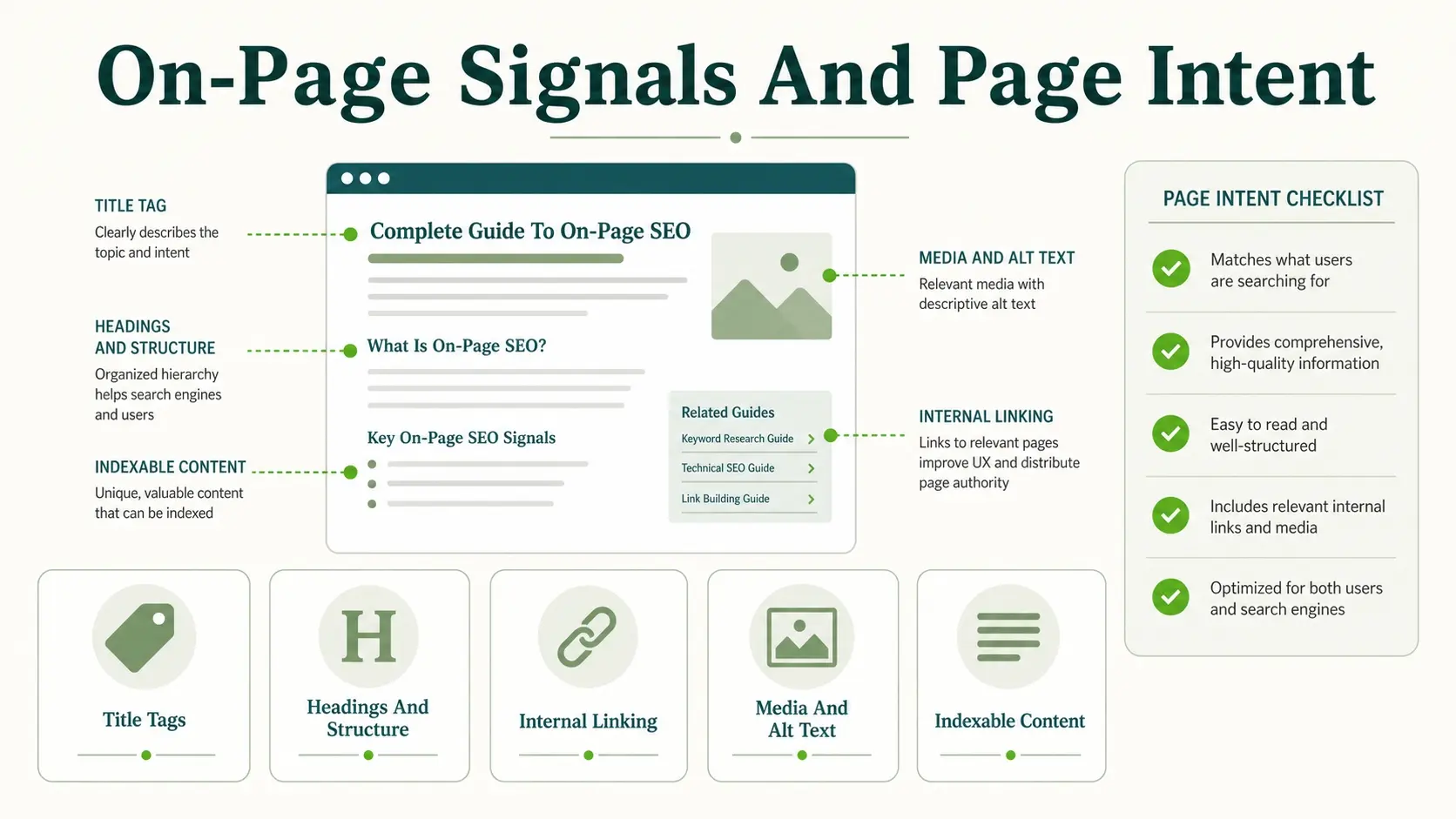 On-page SEO verifies that each important page communicates its topic and purpose. It also checks whether the page matches what searchers want when they type a query.
This is where many quick wins appear. Small edits to titles, headings, and internal links can strengthen relevance fast.
- Title Tags: Uniqueness, length, clarity, and alignment with the main query.
- Headings And Structure: Clean hierarchy that makes scanning easy for users and crawlers.
- Internal Linking: Logical paths that distribute authority and help pages get discovered.
- Media And Alt Text: Descriptive text that supports accessibility and topical signals.
- Indexable Content: Key text that is not hidden behind tabs or loaded in ways bots miss.
After on-page alignment, content quality becomes the next focus area.
Content Quality And Helpful Content Review
Content review checks whether pages are genuinely useful, complete, and easy to understand. It also evaluates duplication, outdated pages, and thin content that weakens the overall site.
This step should result in clear page-level decisions such as keep, improve, consolidate, or remove.
- Topical Coverage: Whether key subjects are covered thoroughly without filler.
- Content Gaps: Missing pages that users expect when researching a topic.
- Duplication Risks: Similar pages competing against each other and splitting ranking signals.
- Freshness And Accuracy: Facts, product details, policies, and service descriptions that must stay current.
A strong audit also evaluates who the content is written for, and whether it reflects real expertise.
Backlink Profile And Authority Signals
Off-page review looks at the quality and patterns of links pointing to your site. It helps diagnose why competitors outrank you even with similar on-page work.
The goal is to identify safe authority-building opportunities and reduce risk from manipulative link patterns.
- Link Quality: Relevance, trust, and natural placement compared with low-quality directories or spam.
- Anchor Text Mix: Over-optimized anchors that can look unnatural versus branded anchors.
- Lost And Broken Links: Reclaimable authority through redirects or page restoration.
- Competitor Benchmarks: Domain and page-level authority comparisons that guide outreach priorities.
Authority signals work best when they point to pages that already deserve to rank through strong content and UX.
User Experience And Conversion Friction
Even when rankings improve, weak usability can limit results. An audit reviews how visitors navigate, whether key pages are easy to understand, and where drop-offs happen.
This is not a full UX redesign. It is a targeted review that connects SEO traffic to actions that matter.
- Navigation Clarity: Menus, categories, and breadcrumbs that help users and crawlers.
- Page Layout: Readability, spacing, and template consistency across key sections.
- Trust Elements: Clear contact details, policies, credentials, and proof points.
- Conversion Paths: Forms, calls, and checkout flows that reduce unnecessary steps.
When UX issues are addressed, organic traffic tends to convert more reliably.
How Findings Are Prioritized?
An audit is only useful if it creates an order of operations. Most teams need a roadmap that balances impact, effort, and risk.
Prioritization also prevents teams from over-fixing low value pages while high value pages remain blocked by technical issues.
| Audit Area | Common Issue Found | Typical Fix Output |
|---|---|---|
| Indexation | Duplicate URLs competing in search | Canonical rules and URL cleanup plan |
| Performance | Slow templates affecting key pages | Core Web Vitals task list for development |
| On-Page | Titles not matching page intent | Title and heading rewrite guidance |
| Content | Thin pages and overlapping topics | Consolidation map and content briefs |
After priorities are set, the audit becomes an execution plan with clear owners and timelines.
What Deliverables You Should Receive?
Deliverables vary by provider, but strong audits share a few traits. They are easy to follow, supported by evidence, and written for both technical and non-technical stakeholders.
If you are working with a team that handles implementation, the deliverables should translate directly into tasks.
- Issue Inventory: A list of findings with severity and affected URLs.
- Priority Roadmap: A sequence of fixes grouped by impact and effort.
- Content Action Plan: Pages to update, consolidate, or create with clear direction.
- Technical Tickets: Developer-ready notes with steps to reproduce and acceptance criteria.
- Measurement Plan: What to track in analytics and search console after changes go live.
These outputs help ensure the audit leads to improvements rather than sitting in a folder unread.
Working With An SEO Partner
Some teams run audits in-house, while others bring in specialists. The best fit depends on your site complexity and how fast you need answers.
If you need both diagnosis and execution support, a partner can keep momentum high and reduce back-and-forth between marketing and development.
- Strategy And Clarity: Plain-language explanations that help stakeholders approve changes.
- Technical Depth: Ability to audit complex platforms, templates, and rendering issues.
- Implementation Support: Help turning findings into edits, tickets, and QA checks.
IMILI Corp supports businesses that want SEO audits tied to practical implementation, especially when technical SEO and content improvements need to move together.
Conclusion
What happens during an SEO audit is straightforward when it is done well. The process checks crawl and indexation, technical health, on-page relevance, content usefulness, authority signals, and user experience.
The real value is the roadmap. With prioritized fixes and clear deliverables, you can improve visibility, reduce technical risk, and turn organic traffic into measurable business results.
Frequently Asked Questions
How long does an SEO audit usually take?
Timing depends on site size, platform complexity, and how deep the review goes. Smaller sites can be assessed quickly, while larger sites typically require more time to crawl, validate, and prioritize findings. The most important factor is whether the audit includes a detailed implementation roadmap.
Will an SEO audit fix my rankings on its own?
An audit identifies what to fix and why, but rankings change only after improvements are implemented and recrawled. Technical fixes can lead to faster gains when they remove indexation or performance blockers. Content and authority improvements often take longer, but they tend to be more durable.
What should I prepare before requesting an SEO audit?
Bring access to search console and analytics, plus a list of your most valuable pages and target services or products. Share any recent site changes such as redesigns, migrations, or major content updates. Clear goals help the audit focus on the issues that matter most.