
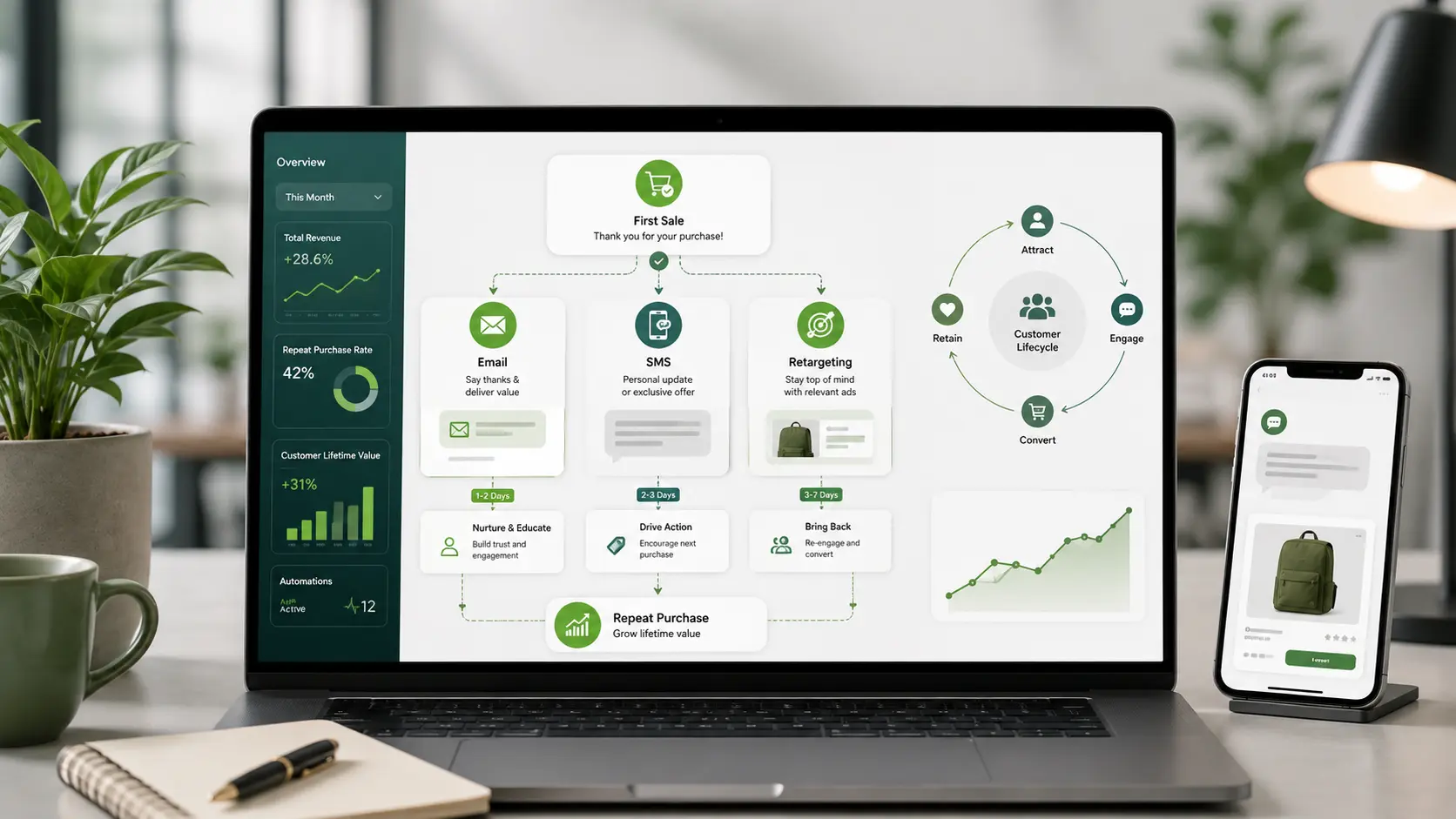
The first sale is a starting point, not a finish line. A simple lifecycle plan connects email, SMS, and retargeting so customers get timely help, relevant reminders, and clear next steps. When these channels work together, repeat purchases rise, support load drops, and the brand experience stays consistent.
Why Post Purchase Lifecycle Matters?
Most customers need reassurance right after buying. They want order clarity, setup guidance, and confidence that the choice was right. If those needs are met, the next purchase feels easier.
A lifecycle approach also protects margin. It shifts growth from constant acquisition to retention, which typically costs less and compounds over time. It also creates a cleaner signal for ad platforms because engaged customers respond more predictably.
The Three Channel System?
Email is the best place for detail, education, and longer sequences. It can handle receipts, onboarding, product education, and nurturing without feeling intrusive. It is also the channel where preference management tends to work best.
SMS is best for urgency and short confirmations. It should be used sparingly and only when it adds real value, such as delivery updates, limited-time replenishment reminders, or VIP early access. Consent and frequency discipline are non-negotiable.
Retargeting keeps your brand present between inbox and phone moments. It supports the other two channels by reinforcing messages, showing product education in creative, and capturing customers who do not click through. It works best when audiences and creative are matched to lifecycle stages.
Core Data And Tracking You Need
A lifecycle plan fails when data is fragmented. You need a clean view of who bought, what they bought, when they bought, and what they did after. That requires consistent event tracking and reliable identity matching across tools.
Key data points include purchase time, product or category, order value, discount usage, customer status, and engagement history. Also track support outcomes when possible, since unresolved issues suppress repeat purchases. If you are consolidating tools, iMiliCorp can help implement marketing automation and analytics that keep these signals consistent across channels.
Lifecycle Stages After The First Sale
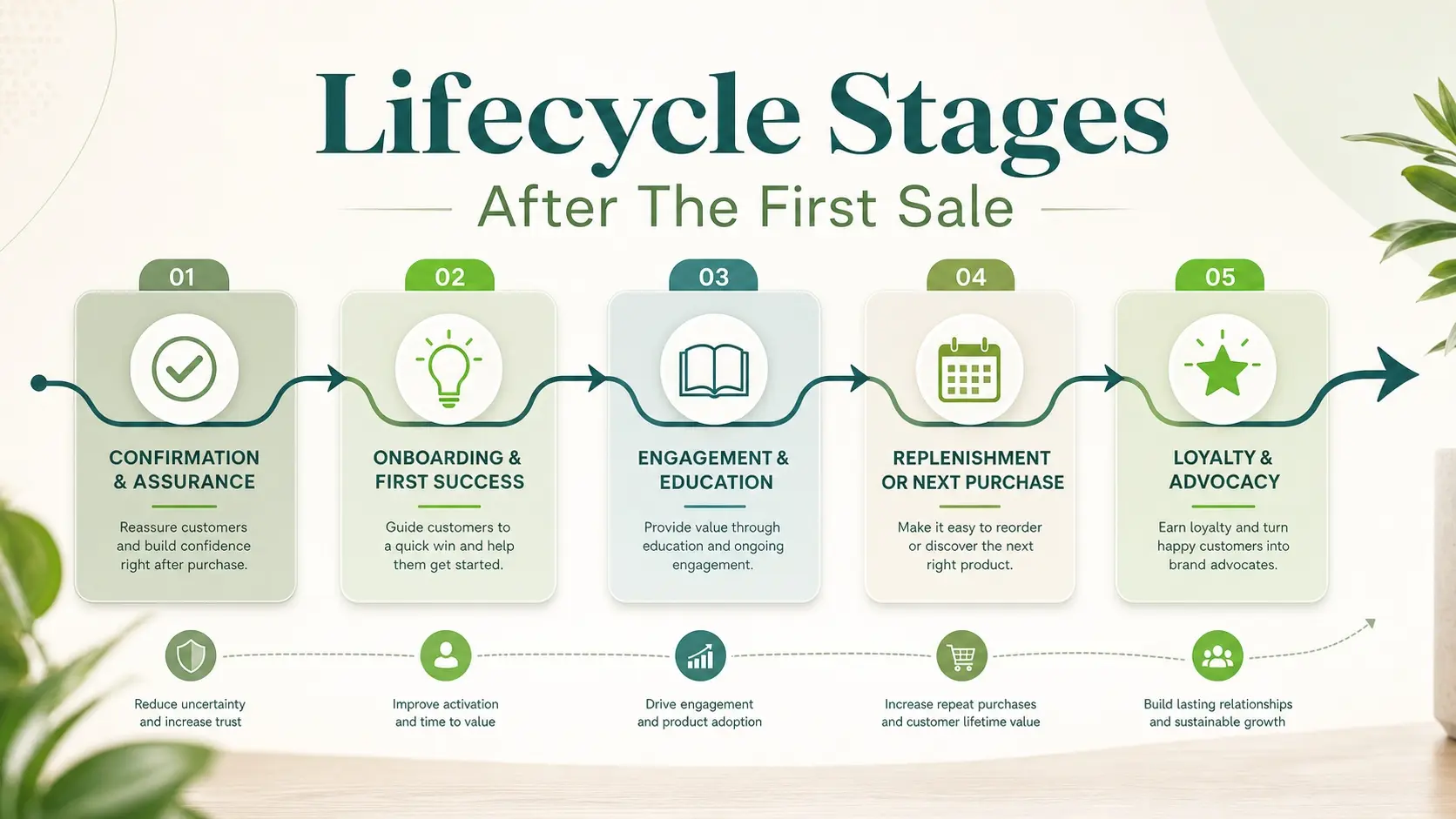
Post purchase messaging works best when it follows a clear stage model. Each stage has a goal, a primary channel, and a small set of triggers. Keeping it simple reduces maintenance and prevents over-messaging.
- Confirmation And Assurance: Clear order details and delivery expectations.
- Onboarding And First Success: Help the customer get value quickly.
- Engagement And Education: Teach use cases, care tips, and best practices.
- Replenishment Or Next Purchase: Timed reminders based on product cycle.
- Loyalty And Advocacy: Reviews, referrals, and VIP experiences.
This structure makes it easier to map messages to real customer needs without guessing.
Email Plan After The First Sale
Email should carry the heaviest weight because it is scalable and flexible. Start with a tight set of automated flows, then optimize based on engagement and revenue contribution. Keep design readable, deliver value fast, and use clear subject lines that reflect the content.
- Order Confirmation Follow Up: Send a helpful recap that answers common questions and reduces support tickets.
- Getting Started Email: Provide setup steps, usage guidance, and quick wins so the customer reaches first success.
- Care And Education Series: Share practical tips that improve results and reduce returns.
- Cross Sell Based On Category: Recommend complementary items tied to what was purchased.
- Review Request: Time it after the customer has had enough experience to give an honest opinion.
Once the basics are live, add segmentation based on product type, order value, and engagement. This keeps messages relevant without building dozens of branches.
SMS Plan That Customers Appreciate
SMS should feel like a service channel, not a sales channel. Use it for moments where immediacy matters or where a short reminder prevents friction. Always offer clear opt-out language and honor quiet hours.
- Shipping And Delivery Updates: Reduce anxiety and prevent where-is-my-order contacts.
- Back In Stock Alerts: Notify customers who expressed intent and keep the message brief.
- Replenishment Reminders: Use product timing and purchase history to avoid random nudges.
- VIP Access: Reward repeat customers with early access rather than constant discounts.
SMS becomes more effective when it is coordinated with email. If an email explains a new product line, SMS can be used only to remind engaged customers at the right moment.
Retargeting That Matches The Lifecycle Stage
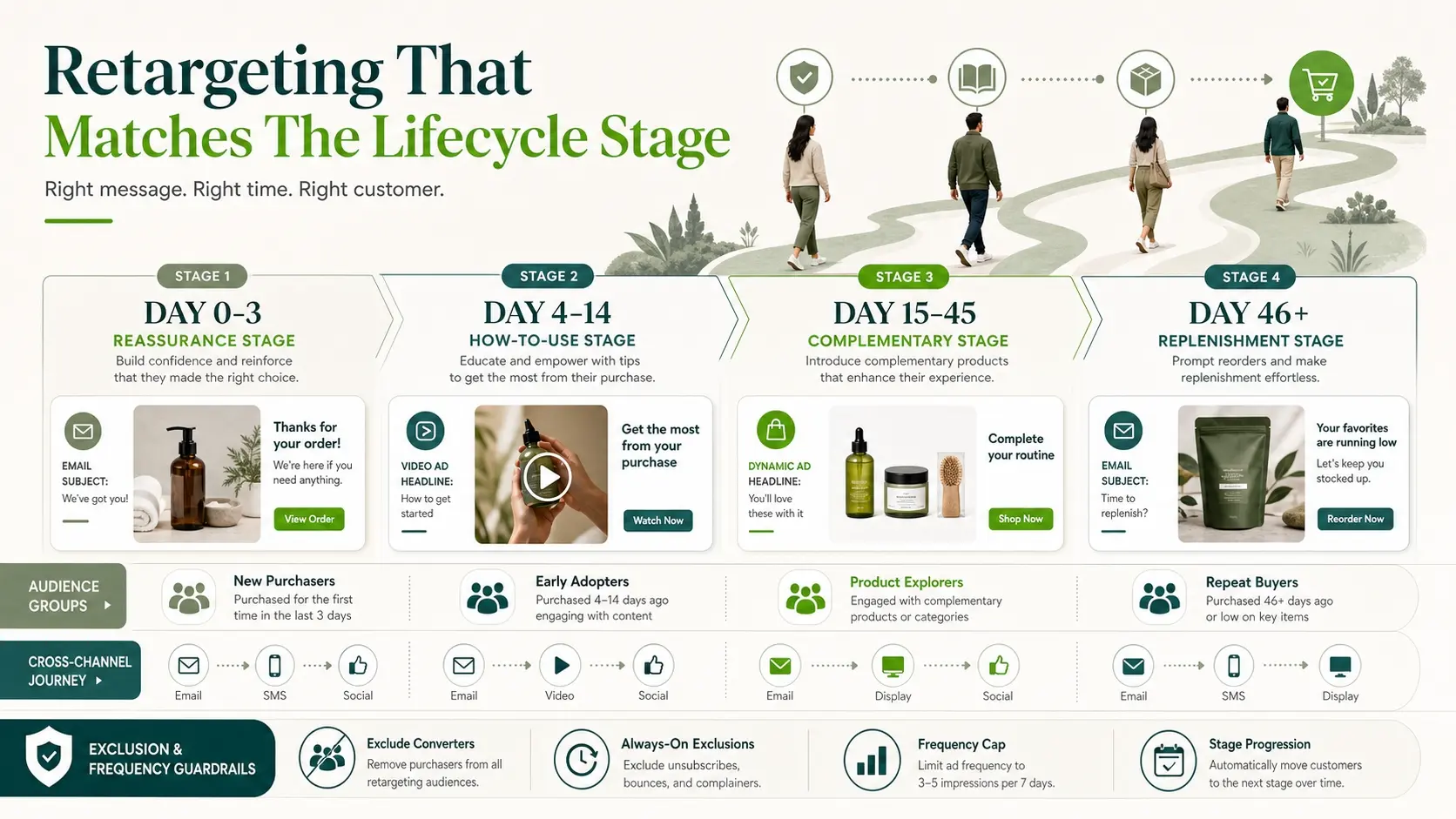
Retargeting should not be a single always-on campaign. Align audiences and creative to where the customer is in the journey. That keeps frequency useful and reduces wasted spend.
Start with simple audience groups. Recent purchasers need support and education, not generic product ads. Returning customers can see curated bundles, loyalty perks, or replenishment offers based on what they already own.
| Lifecycle Stage | Best Channel Lead | Retargeting Creative Focus |
|---|---|---|
| Days 0 To 3 | Order reassurance and brand trust signals | |
| Days 4 To 14 | How to use and benefit highlights | |
| Days 15 To 45 | Retargeting | Complementary products and bundles |
| Day 46 Plus | SMS | Replenishment reminder or loyalty perk |
Use frequency caps and exclude customers who already converted on the promoted offer. This protects experience and budget at the same time.
Message Timing And Frequency Controls
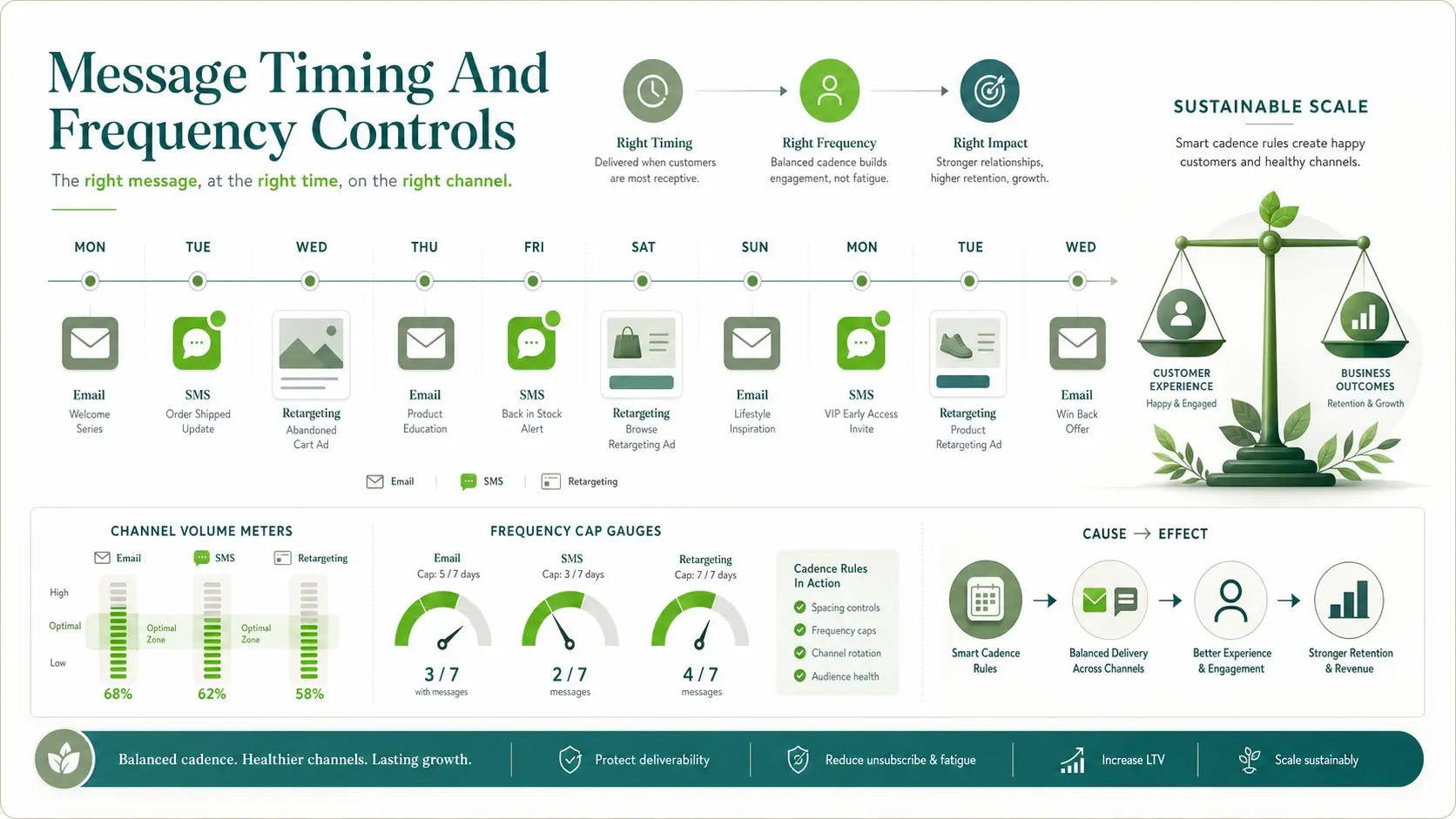
Timing matters more than volume. Too many messages cause fatigue, unsubscribes, and lower deliverability. Too few messages leave value on the table and allow competitors to win attention.
Set baseline rules across channels. Limit SMS to key moments and keep email cadence consistent. Retargeting should be present but not overwhelming, with exclusions that prevent repetition after engagement.
- Email Cadence: Focus on 2 to 4 automated emails in the first two weeks, then taper based on engagement.
- SMS Cadence: Use only for fulfillment, replenishment timing, and high-intent alerts.
- Retargeting Cadence: Cap impressions per day and rotate creative by stage to avoid repetition.
These controls make the plan sustainable and easier to scale.
Personalization Without Overcomplication
Personalization works when it is grounded in real customer signals. Start with product category, purchase date, and customer status. Avoid deep branching that is hard to maintain.
Useful personalization includes relevant add-ons, content that fits the product purchased, and reminders aligned with actual usage cycles. If you have a broad catalog, use dynamic blocks in email and product sets in ads to keep relevance high. iMili Corp supports teams by aligning CRM data, automation logic, and creative workflows so personalization stays accurate and manageable.
What To Measure And How To Improve?
Measurement should connect each channel to business outcomes, not vanity metrics. Use a small set of KPIs that reflect retention and profitability. Review them on a consistent schedule so improvements become routine.
- Repeat Purchase Rate: Track the share of customers who buy again within a defined window.
- Time To Second Purchase: Watch whether your plan shortens the gap without relying on heavy discounts.
- Revenue Per Recipient: Evaluate email impact beyond opens and clicks.
- SMS Opt Out Rate: Treat rising opt-outs as a signal of overuse or low relevance.
- Retargeting Incrementality: Compare performance with proper exclusions to avoid paying for conversions that would happen anyway.
Use learnings to refine triggers, adjust content, and tighten segmentation. Small improvements compound quickly when flows run every day.
Common Mistakes To Avoid
Most lifecycle plans underperform due to avoidable operational issues. Fixing these tends to boost results without adding more messages. It also improves trust and reduces churn.
- Sending Promotions Too Early: Prioritize onboarding and satisfaction before pushing the next offer.
- Ignoring Consent And Preferences: Make opt-in clear and honor frequency expectations.
- Using One Audience For All Retargeting: Match creative and offers to lifecycle stage.
- Over Discounting: Train customers to wait for deals and weaken long-term margin.
- No Feedback Loop: Failing to review performance leads to stale flows and wasted spend.
A simple plan with clean data and consistent review will beat a complex plan that no one maintains.
Conclusion
Email, SMS, and retargeting perform best as one coordinated lifecycle system after the first sale. Start with a few high-impact automated messages, align retargeting to customer stage, and keep SMS reserved for moments that genuinely help. Measure what matters, refine steadily, and the second purchase becomes a predictable outcome rather than a hope.
If you want a reliable setup that connects tracking, automation, and performance reporting, iMiliCorp can help implement the workflows and analytics needed to run this plan with confidence.