

A lead scoring system helps sales and marketing teams identify which prospects deserve attention first. You can build a practical lead scoring system using the customer records, engagement history, and sales outcomes already stored in your CRM, without purchasing another platform. By combining customer fit with buying signals, your team can prioritize promising leads and improve sales follow-up. The key is to test whether higher scores are actually associated with better conversion results.
This guide walks through a clear setup process, the CRM fields that matter most, and how to keep the model accurate as your go-to-market strategy changes. It focuses on practical steps that marketing, sales, and revenue operations (RevOps) teams can manage together.
What a Lead Scoring System Should Do?

A lead scoring system assigns points to leads based on fit and intent. Fit reflects whether a lead matches your ideal customer profile, while intent reflects whether the lead is showing buying signals. When both are measured well, lead prioritization becomes more consistent across teams.
Scoring should improve the speed of lead follow-up, reduce low-quality lead handoffs, and make sales pipeline reporting more useful. It should also be easy to explain so sales representatives understand why one lead receives a higher priority than another.
A useful scoring system does more than generate numbers. It helps teams decide which prospects need immediate attention, which require further qualification, and which should remain in a nurturing process until stronger buying signals appear.
Audit the CRM Data You Already Have
Start by identifying which CRM records and fields are reliably populated. Many teams already track enough information to produce a meaningful score, but the data may be spread across lead records, contact records, accounts, opportunities, and activities.
Focus on fields with consistent definitions and low missing rates. If a field is frequently blank or inconsistently formatted, treat it as a later improvement rather than a core scoring input.
Before building your scoring model, check for duplicate leads, outdated contact information, missing company details, and inconsistent CRM activity records. A single prospect may appear as a lead, contact, or account-related record, which can create misleading results if the same activity is counted more than once. Establish a consistent record-matching process and decide how missing values will affect scoring. Missing information should generally be treated as unknown rather than automatically interpreted as poor customer fit.
- Identity Data: Name, email domain, location, and role or job title.
- Company Data: Industry, company size, revenue range, and account tier.
- Lifecycle Data: Lead source, status, stage history, and last stage change date.
- Engagement Data: Email replies, booked meetings, completed calls, and relevant task activity.
- Sales Outcome Data: Opportunity creation, qualified stages, closed-won deals, closed-lost deals, and loss reasons.
Lead source data becomes more useful when it is connected to actual sales outcomes. For example, leads generated through organic search should be evaluated based on qualification and conversion rates, not just website traffic. ImiliCorp’s guide to organic SEO for lead generation explains how businesses can attract relevant prospects and measure qualified inquiries from search.
Once the inventory is clear, agree on a short list of fields that are reliable enough to use immediately. This reduces disagreements later and makes the first version easier to implement.
Accurate lead scoring also depends on connecting customer records and activities without creating duplicate or misleading data. When prospects interact with your business through multiple devices or marketing channels, consistent customer identifiers become especially important. Our guide to cross-device attribution explains how CRM records, analytics events, and marketing interactions can be connected for more reliable reporting.
Define the Conversion Event You Want to Predict
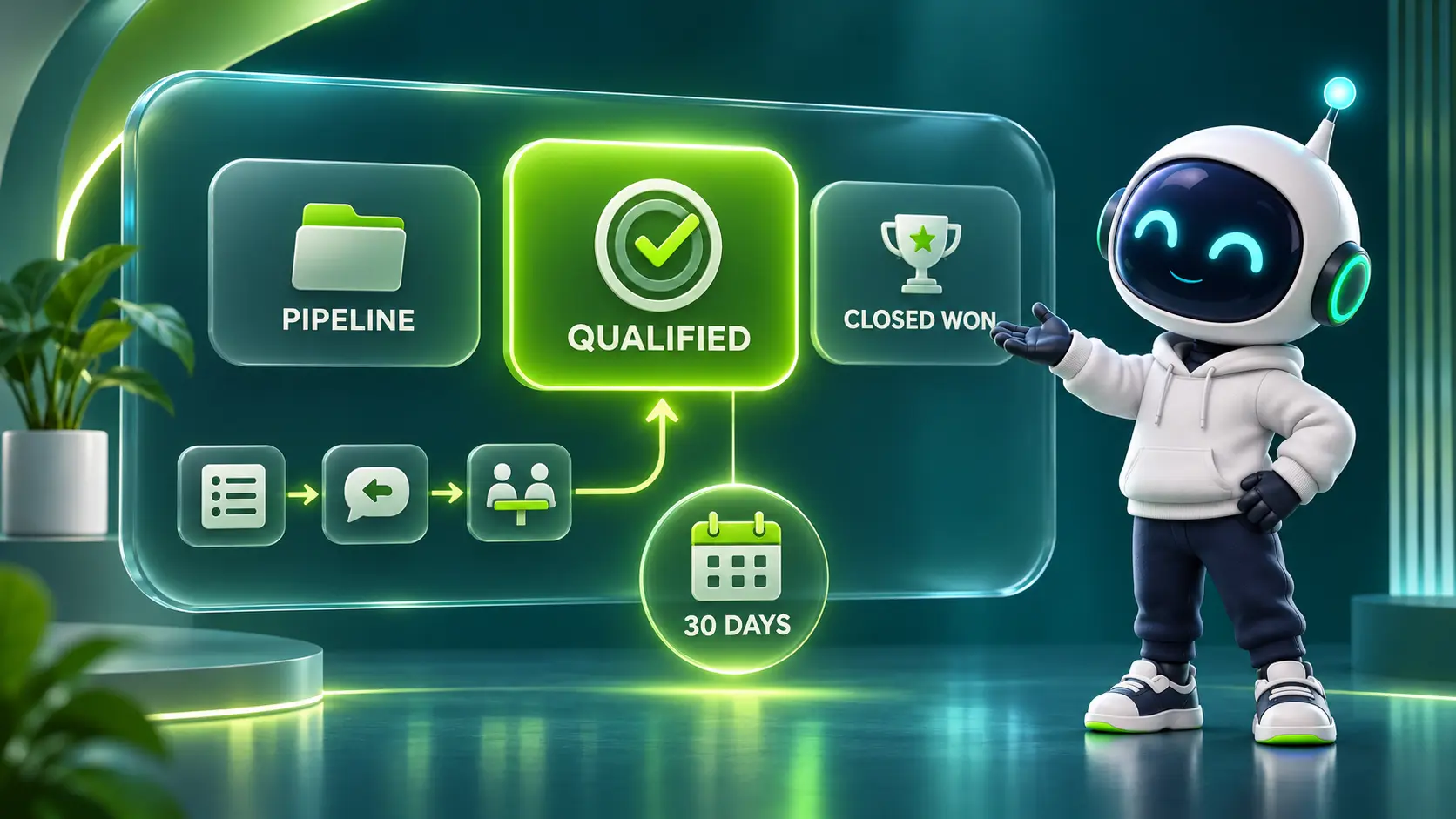
Lead scoring becomes unreliable when teams measure success using different outcomes. Choose one primary event that your CRM can measure consistently, such as opportunity creation or entry into a qualified sales stage. Use the same definition across reporting, lead routing, and sales performance measurement.
Clear conversion definitions also matter when CRM information is connected to advertising platforms. The Google Ads documentation on qualified and converted leads explains how businesses can distinguish leads that have passed an offline qualification stage from those that have completed a later conversion event. These distinctions help marketing and sales teams use consistent lead-quality measurements.
Define a specific period in which a lead must reach the selected conversion event. For example, a business with a short sales cycle might measure whether a lead becomes a qualified opportunity within 30 days of creation. A company with a longer B2B sales cycle might use a 90-day window instead. Select the period using your historical sales data, and apply it consistently when comparing leads. Avoid treating recently created leads as unsuccessful before they have had enough time to complete the chosen conversion window.
- Pipeline Creation: Best when marketing and sales development teams are measured on opportunities generated.
- Qualified Stage Entry: Useful when qualification is consistent and stage criteria are clearly defined.
- Closed-Won Deals: Useful when the goal is to identify customers who eventually purchase, although longer sales cycles can delay meaningful results.
Once you select the target conversion event, evaluate which CRM fields and activities occur before that event and help distinguish successful leads from unsuccessful ones. For example, if your goal is to predict which leads will become sales-qualified opportunities, you can analyze earlier form submissions, relevant company characteristics, and meaningful sales interactions.
Do not use the target conversion event itself, or information recorded after that event, as an input when testing your scoring model. If reaching the qualified stage is your target, assigning points for already reaching that stage would make the historical score misleading. Keep outcome fields such as closed-won status and loss reasons for model evaluation, reporting, or separate suppression rules rather than treating future results as earlier buying signals.
Build Your Ideal Customer Profile Using CRM Fields
Use historical CRM records to identify the characteristics of customers who successfully reached your chosen conversion event. Compare those leads with prospects who had the same opportunity to convert but did not reach the target within the selected period. Review company size, industry, location, job role, and other information that was available before the conversion happened. Look for consistent differences across multiple groups of leads rather than relying on a few successful deals. The goal is to create a measurable ideal customer profile (ICP) that helps your team recognize suitable prospects.
Keep the ICP simple enough to use in routing rules and sales conversations. If the ICP requires extensive manual research for every lead, it will be difficult to maintain as lead volume increases.
- Firmographics: Industry, company size range, geography, and relevant business characteristics.
- Role Fit: Job seniority and responsibilities that align with buying authority or influence.
- Account Relationship: Existing customer, expansion opportunity, partner, or new prospect.
Fit scoring usually changes more slowly than intent scoring because company characteristics and job roles tend to remain relatively stable. This makes customer fit a useful starting point for prioritization.
However, a strong customer fit does not always mean a prospect is ready to purchase. A company may match your ideal profile but have no immediate need for your services. This is why fit and buying intent should be evaluated together.
Identify Intent Signals From CRM Activities
Intent scoring should reflect actions that indicate genuine buying interest. CRM activity records often contain these signals through tasks, meetings, calls, email integrations, and early-stage changes. Choose signals that are consistently recorded and provide useful evidence of prospect engagement.
Intent should also decrease over time when no new buying activity occurs. A meeting from several months ago should not automatically keep a lead at the top of the sales queue.
Score decay can be managed by reducing the points assigned to older activities after a defined period. For example, a business might reduce the value of an engagement signal after 30 days if no new buying activity occurs. HubSpot’s explanation of lead score decay demonstrates how a CRM scoring system can reduce the influence of older engagement events automatically.
- Meeting Scheduled: A useful buying signal when booked meetings are reliably recorded in the CRM.
- Inbound Response: Meaningful replies to sales outreach or follow-up messages captured in the CRM.
- Pre-Qualification Activity: Movement through early sales stages, such as new to contacted or working, when those changes happen before the target conversion event and genuinely reflect buyer engagement.
- Multi-Touch Engagement: Relevant interactions across calls, emails, and meetings during a defined period.
Once these signals are selected, assign weights based on how strongly each signal is associated with your chosen conversion event.
Avoid relying heavily on weak engagement metrics, such as email opens or repeated automated activities, without checking whether they are associated with real sales outcomes. Meaningful replies, attended meetings, and clearly recorded buying requests may provide more useful signals, depending on your sales process.
Choose a Scoring Model That Matches Your Team
Most teams should begin with a points-based model because it is transparent and relatively easy to improve. More complex models may produce useful results, but they can also be harder to explain and maintain. A straightforward model that sales representatives understand and regularly use can be more practical than an advanced model that receives little attention.
Use two main components: fit points and intent points. Then combine them into a total score or a small set of priority tiers. Tiers help simplify sales decisions and avoid treating small differences in points as meaningful.
For a practical example of how CRM platforms implement this approach, HubSpot’s lead scoring documentation explains how businesses can assign positive or negative points using customer properties and engagement events. It also demonstrates how different scoring criteria can be organized into groups and used to categorize prospects.
| Signal Type | CRM Data Source | Scoring Approach |
|---|---|---|
| Fit | Lead and account fields | Assign points based on ideal customer profile alignment. |
| Intent | Activities and pre-conversion engagement history | Assign points to meaningful buying signals, with time-based adjustments. |
| Negative Signals | Current qualification and disqualification statuses | Subtract points or exclude unsuitable leads from automatic routing. |
| Data Quality | Field completeness and consistency checks | Use fallback tiers and request missing information when needed. |
| Conversion Outcomes | Opportunity and sales outcome records | Evaluate and improve the scoring model using historical results. |
This structure keeps scoring understandable and easier to manage. It also clarifies which teams are responsible for maintaining different types of CRM information.
Assign Weights Without Overfitting
Assigning useful scoring weights does not always require advanced statistical methods. Start with a small number of reliable signals, then adjust their importance using observed conversion results. Avoid including too many inputs in the first version because a complicated scoring system can be difficult to understand and troubleshoot.
Use a simple rule of thumb: fit points should not overpower strong buying intent, but intent should not automatically elevate unsuitable prospects into the highest-priority group. The right balance comes from reviewing actual conversion rates after implementation.
Example of a CRM Lead Scoring Model
A simple CRM lead scoring model can combine customer fit and buying intent into one numerical score. The following example shows how a B2B sales team might assign points using information already recorded in its CRM.
| CRM Signal | Category | Example Points |
|---|---|---|
| Company operates in a target industry | Customer Fit | +20 |
| Company matches the preferred size range | Customer Fit | +15 |
| Contact has a relevant decision-making role | Customer Fit | +15 |
| Prospect responds meaningfully to sales outreach | Buying Intent | +10 |
| Prospect attends a sales meeting | Buying Intent | +20 |
For example, a lead that matches the target industry, company size, and buyer role receives 50 fit points. If the prospect also replies to outreach and attends a meeting, the lead earns another 30 intent points. The total score becomes 80 points.
The business can then establish example priority levels:
- Hot Lead: Score of 70 or higher, with at least 30 fit points and 20 intent points.
- Warm Lead: Score between 40 and 69, or a higher score that does not meet the minimum hot-lead requirements.
- Nurture Lead: Score below 40.
These thresholds are starting examples, not universal conversion benchmarks. Businesses should adjust them using their own CRM data, historical conversion rates, and sales capacity. To prevent inflated scores, repeated activities should have point limits, and older engagement signals should gradually lose their influence. Disqualified leads should be excluded from automatic sales routing regardless of their total score.
When refining your scoring system, follow these practical guidelines:
- Start Small: Use a limited number of fit and intent inputs that are reliably tracked.
- Prefer Strong Signals: Give greater consideration to meaningful sales interactions that have demonstrated a relationship with conversions.
- Add Negative Scoring: Reduce priority or suppress routing for prospects who are clearly unsuitable, outside your service area, or already disqualified.
- Limit Repeated Activities: Set point limits so repeated actions do not produce unrealistic scores.
- Use Tiering: Group scores into hot, warm, and nurture categories to simplify follow-up actions.
With weights in place, the next step is to connect scores with lead routing, follow-up speed, and performance reporting.
Operationalize Scoring in Routing and SLAs
Lead scoring creates business value when it changes how teams respond to prospects. Connect each priority tier to clear actions, ownership rules, and response time expectations. This prevents scoring from becoming another dashboard metric without practical impact.
Make sure the CRM workflow reflects your sales process, whether that involves an SDR-first approach, direct assignment to an account executive, or partner-led sales. Keep routing rules understandable so they can be reviewed during pipeline meetings.
- Define Tier Thresholds: Establish score ranges that generate a manageable number of leads for each team.
- Set Response SLAs: Require faster follow-up for high-priority leads and track whether response time expectations are being met.
- Configure Assignment Rules: Route leads by territory, customer segment, or account ownership while considering their priority tiers.
- Build Task Automation: Automatically create relevant sales tasks based on lead scores and lifecycle stages.
- Align With Reporting: Monitor conversion rates, time to first response, and opportunity creation across lead tiers.
Once the workflow is active, review results weekly during the early stages. Feedback from sales representatives can help identify routing problems, missing information, and scoring rules that need adjustment.
If your business generates leads through paid search, connect the CRM qualification stages with your advertising measurement process. ImiliCorp’s guide to Google Ads conversion tracking for lead generation explains how to define primary conversions, track meaningful lead actions, and connect campaign results with downstream sales outcomes.
Lead scoring should support sales decisions rather than replace professional judgment. When a valuable prospect does not meet the usual scoring criteria, sales teams should have a clear process for reviewing the lead and making an appropriate assignment decision.
Data Governance and CRM Hygiene That Keep Scores Trustworthy
A lead scoring system can become less reliable when CRM data quality declines. Define ownership for important fields, enforce standardized selections where possible, and limit unnecessary free-text inputs that create inconsistent values. Keep field definitions and scoring rules documented in your CRM training materials.
CRM validation rules can help prevent incomplete or incorrectly formatted information from entering important sales workflows. For example, Salesforce’s guide to lead validation rules demonstrates how administrators can require specific contact details before allowing a lead to be converted. Similar data-quality controls can improve the consistency of the information used for lead scoring.
Use validation rules and required fields carefully to avoid interrupting normal sales activities. Instead of making every field mandatory immediately, use progressive profiling and regular cleanup processes managed by RevOps teams.
Lead scoring should also follow applicable privacy and data protection requirements. Use only the customer information needed for legitimate scoring purposes, maintain appropriate access controls, and respect marketing preferences and opt-out requests. Avoid using sensitive personal characteristics to determine lead priority. If your business operates across multiple regions, review the relevant data protection requirements before combining CRM records with additional behavioral or third-party information. The UK’s Information Commissioner’s Office guidance on collecting information and generating leads provides useful guidance on handling personal information for direct marketing.
- Standardize Stages: Establish clear entry and exit criteria for lifecycle and opportunity stages.
- Control Lead Status Values: Keep status options limited and clearly defined to reduce inconsistent reporting.
- Track Sources Consistently: Ensure inbound, outbound, partner, and event sources follow the same naming rules.
- Maintain Activity Logging: Confirm that calls, emails, and meetings are recorded consistently across the team.
- Review Duplicate Records: Check for repeated lead or contact records that could inflate activity counts and scoring results.
- Document Scoring Changes: Maintain a record of adjustments to scoring rules, thresholds, and data sources.
Building a reliable lead scoring system requires accurate customer data, consistent automation, and clear marketing-to-sales processes. Businesses that need additional support can explore ImiliCorp’s lifecycle marketing and CRM automation services, which include options for lead scoring, audience segmentation, automated customer journeys, and CRM management.
Test and Improve Your Lead Scoring System Over Time
Testing your lead scoring system helps determine whether high-scoring prospects actually convert more often than lower-scoring prospects. Start by evaluating your scoring rules against historical CRM records that were not used to choose the scoring weights. Calculate each lead’s score using only the information available at the selected scoring date, then compare outcomes over the same conversion window. For example, measure the percentage of hot, warm, and nurture leads that become qualified opportunities within 30 days. Review results by lead source, industry, sales territory, and customer segment. If higher-scoring leads do not consistently show stronger conversion rates, investigate the underlying signals, data quality, and scoring thresholds before changing the model.
Keep a change log so everyone understands when scoring rules have been updated. This helps prevent confusion when month-to-month performance changes.
- Run a Baseline Report: Record current conversion rates, lead response times, and qualification results before introducing scoring changes.
- Launch With a Pilot Group: Begin with one customer segment, sales team, or region to reduce operational risk.
- Review Weekly Results: Calculate the conversion rate for each lead tier by dividing the number of leads that reached the target within the defined window by the total eligible leads in that tier. Track sales response times, qualification rates, and sales representative feedback alongside these results.
- Tune One Variable at a Time: Adjust individual weights or thresholds before making additional changes.
- Scale With Guardrails: Expand the scoring system when results show consistent differences between tiers and the sales team can manage the assigned lead volume.
Continuous improvement keeps the scoring model aligned with changing customer needs, seasonal demand, product priorities, and marketing channels.
Better lead scoring can also help businesses evaluate the quality of prospects generated by advertising campaigns. Instead of increasing spending based only on the number of inquiries, marketers should review qualification rates, conversion outcomes, and sales capacity. Our article on when a paid campaign is ready to scale explains how to assess lead quality and business performance before increasing advertising budgets.
Common Mistakes to Avoid
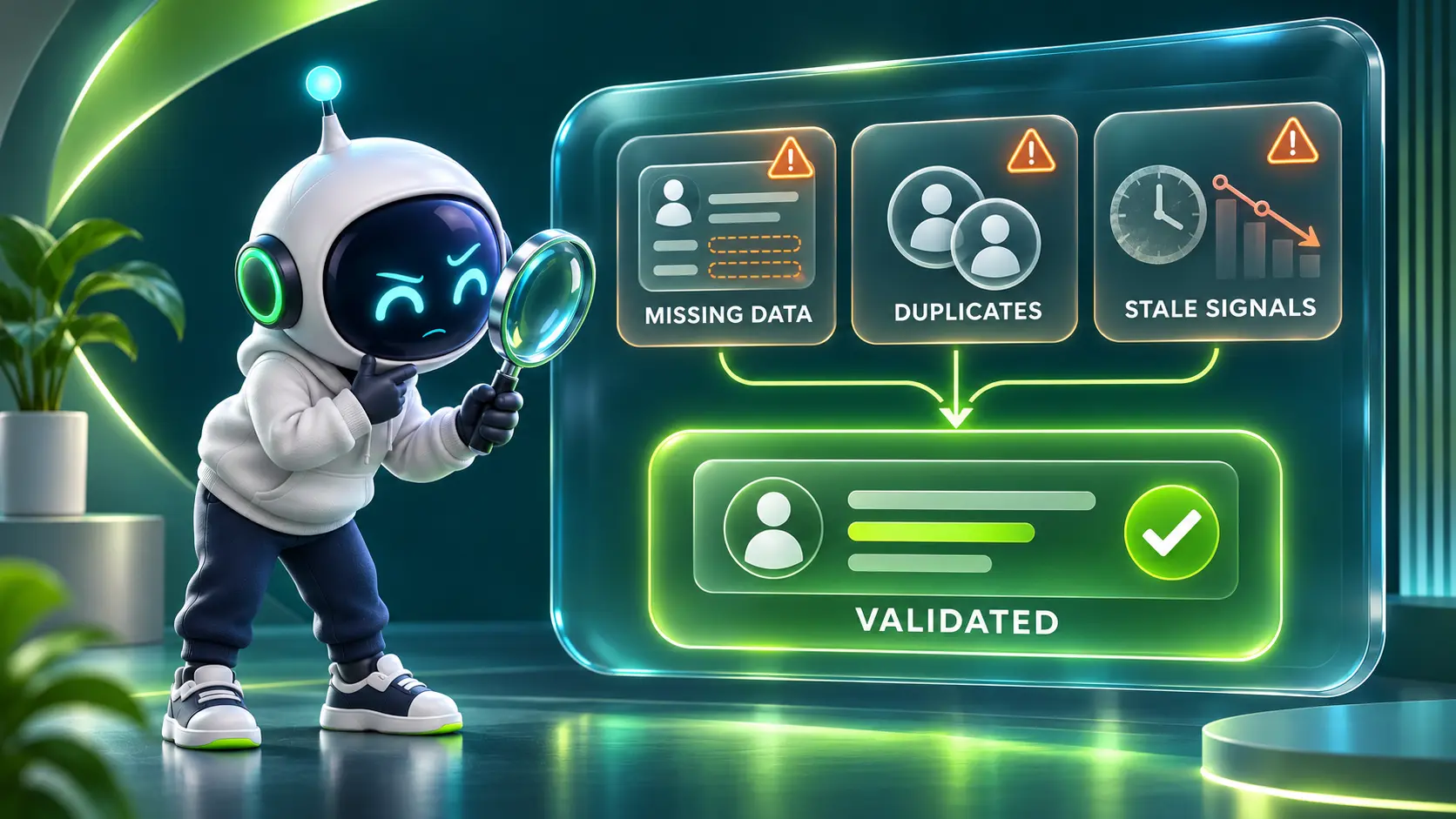
Many lead scoring projects become difficult to manage because teams introduce too many rules before validating the basics. Keeping the first version simple and measurable helps reduce delays. Clear ownership and documented definitions also make it easier for marketing and sales teams to work together.
- Scoring on Unreliable Fields: Frequently missing or inconsistent data can produce misleading lead scores.
- Using Too Many Inputs: Large scoring models can become difficult to understand, test, and maintain.
- Ignoring Negative Signals: Without appropriate suppression rules, unsuitable or disqualified leads may receive unnecessary attention.
- Failing to Connect Scores With Actions: Scoring provides limited operational value when sales routing and response processes remain unchanged.
- Ignoring Time Decay: Old engagement signals should not automatically outweigh more recent buying activity.
- Using Future Conversion Data: Including information recorded after the target conversion can make historical scoring results misleading.
- Overlooking Duplicate Records: Repeated customer records can inflate engagement activity and distort lead priorities.
- Failing to Validate Results: A model should not be considered effective until historical and live performance data show that its priority tiers are useful.
Addressing these mistakes early can make the scoring system easier to adopt and improve coordination between marketing and sales teams.
Conclusion
A practical lead scoring system can be built using the CRM data your business already has. Start by defining one conversion target, identifying reliable customer information, and separating customer fit from buying intent. Then assign understandable scoring weights, establish lead priority tiers, and connect those tiers with sales routing and follow-up actions.
The most important step is to validate the scoring model against real business outcomes. Review conversion rates, sales response times, and lead quality regularly to determine whether higher scores are helping your team identify better opportunities.
Start with a manageable scoring model and improve it as better data becomes available. With consistent CRM records, clear ownership, and regular performance reviews, lead scoring can become a useful part of your sales and marketing process.
Frequently Asked Questions
What is the Minimum CRM Data Needed to Start Lead Scoring?
You need a clearly defined conversion event, basic company or contact fields for customer fit, and at least one reliable engagement signal. Useful starting fields include industry, company size, job role, meeting activity, and relevant sales interactions. If activity logging is inconsistent, begin with fit scoring and introduce intent signals once tracking improves.
How Often Should a Lead Scoring System Be Updated?
Review scoring performance weekly during the initial rollout, then consider monthly reviews once the model becomes stable. Update the scoring rules sooner when your target market, pricing, sales process, or major acquisition channels change. Keep adjustments documented so teams can understand performance differences over time.
How Do You Handle Leads With Missing or Incomplete CRM Fields?
Use fallback priority tiers based on the most reliable available information. Avoid treating missing values as confirmed negative signals, and do not automatically assign the highest priority when important information is unavailable. Use qualification tasks or appropriate automation to collect missing details gradually. Over time, improve CRM data completeness through standardized fields, clear ownership, and regular data quality reviews.