

Accurate marketing reporting breaks down when SEO and PPC are credited for the same lead or sale. Double counting makes budgets drift toward the loudest channel, not the most effective one. A clean measurement approach assigns each conversion once, keeps stakeholders aligned, and turns optimization into a repeatable process.
Why Double Counting Happens?
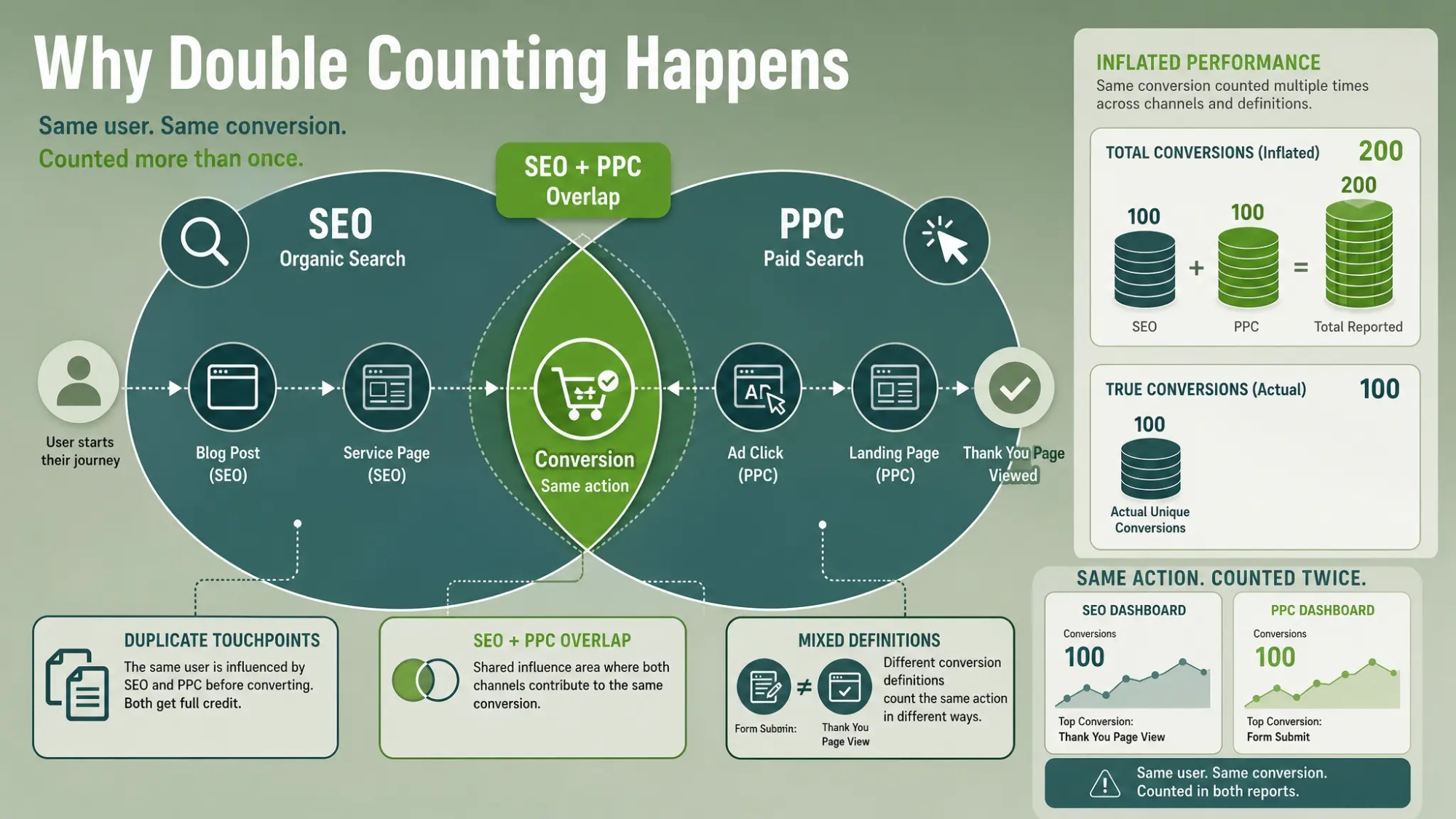
SEO and PPC often influence the same user journey, and most analytics tools can record multiple touchpoints. When teams export reports from different platforms and add totals together, the same action is counted more than once. That leads to inflated performance and confusing ROI discussions.
Double counting is also caused by mixed definitions. One team may count a form submit, while another counts a thank you page view, and both are treated as conversions. If tracking is not standardized, overlap becomes unavoidable.
Define A Single Source Of Truth
The fastest way to stop counting duplicates is to pick one reporting system as the authority. That system should store the conversion event, the unique identifier, and the attribution rule used for channel credit. Other platforms can still be used for optimization, but final numbers should come from one place.
For many organizations, GA4 paired with a CRM or server side tracking layer works well. If revenue is the goal, the CRM should be the truth for closed won outcomes, while analytics remains the truth for on site actions. The key is deciding which metric is being reported and where it is finalized.
Standardize What A Conversion Means?
A conversion must be defined as one observable action with one trigger. If multiple triggers exist, such as a form event plus a page view, duplicates will appear when tags fire twice. Use one primary trigger and keep any secondary signals as diagnostics, not as separate conversions.
Build a simple conversion catalog and keep it stable. Document the event name, where it fires, the deduplication method, and which systems receive it. This eliminates silent changes that alter counts between SEO and PPC reports.
- Primary conversions: Actions tied to business value such as purchases, qualified leads, or booked calls.
- Secondary conversions: Actions that indicate intent such as newsletter signups or content downloads.
- Micro events: Engagement signals used for UX and funnel analysis, not for channel ROI reporting.
Once the catalog is agreed, every dashboard and weekly update should reference the same definitions. That consistency prevents stakeholders from comparing mismatched totals.
Use Deduplication With Unique Identifiers
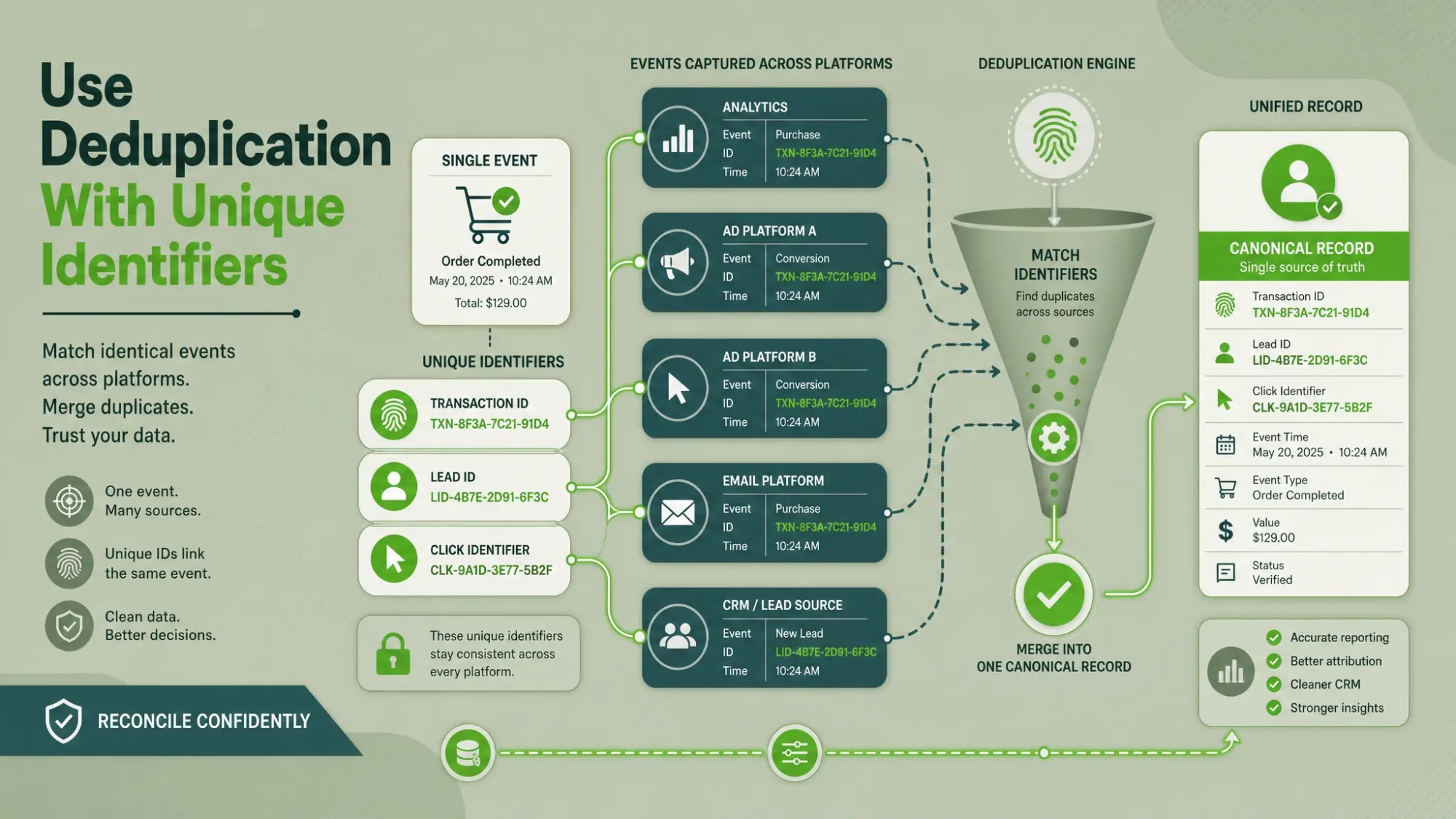
Deduplication works best when every conversion has a unique ID that can travel across systems. Common options include a transaction ID for ecommerce and a lead ID for forms. When the same conversion reaches analytics and ad platforms, the ID allows one record to be kept and the rest to be ignored.
For lead generation, generate an ID at the moment of submission and send it with the event. Store it in the CRM and pass it into offline conversion uploads. When PPC systems receive offline conversions with IDs, they can match and avoid counting repeats.
- Transaction ID: Unique per order and ideal for ecommerce measurement.
- Lead ID: Unique per form submit and useful for sales pipelines.
- Click identifiers: Values such as gclid that connect ad clicks to outcomes.
With identifiers in place, you can reconcile totals confidently across SEO reports, ad platforms, and the CRM.
Choose One Attribution Model For Reporting
Attribution determines how credit is assigned across SEO and PPC. If one report uses last click and another uses data driven attribution, totals will conflict even if conversion counts match. Pick a model for executive reporting and keep it stable across channels.
Last non direct click is easier to explain but can over credit bottom funnel channels. Data driven models can be more accurate but require trust in the inputs and enough volume. Whatever you choose, document it and ensure the same model is used wherever final channel performance is presented.
| Reporting Choice | What It Solves | Tradeoff To Watch |
|---|---|---|
| Single conversion definition | Prevents multiple tags from counting one action twice | Requires agreement across teams and tools |
| Unique ID deduplication | Merges duplicate records across platforms | Needs implementation in forms, checkout, and CRM |
| One attribution model | Keeps SEO and PPC credit consistent in reports | Model limitations can shift perceived performance |
| Channel grouping standards | Stops mislabeling paid traffic as organic and vice versa | Requires governance on UTM usage and tagging |
After you set a reporting model, keep a separate analysis view for exploring alternatives. That protects stakeholder confidence while still allowing deeper learning.
Fix Channel Classification And UTM Governance
Misclassification is a hidden form of double counting because the same visit may be labeled differently across tools. Paid traffic that lacks UTMs can appear as organic, referral, or direct. That makes SEO look stronger while PPC still claims the conversion in ad platform reports.
Create a strict UTM policy for every paid and partner campaign. Use consistent medium and source values, and enforce naming conventions through templates. Ensure auto tagging is enabled where available and avoid custom parameters that analytics cannot parse reliably.
- Paid search UTMs: Use consistent source and medium values that map cleanly to your channel grouping.
- Landing page hygiene: Avoid redirects that strip parameters and break session continuity.
- Cross domain tracking: Configure it when forms, checkout, or scheduling tools live on other domains.
With governance in place, SEO and PPC will be compared on clean channel definitions rather than accidental labeling.
Align Platform Conversion Settings
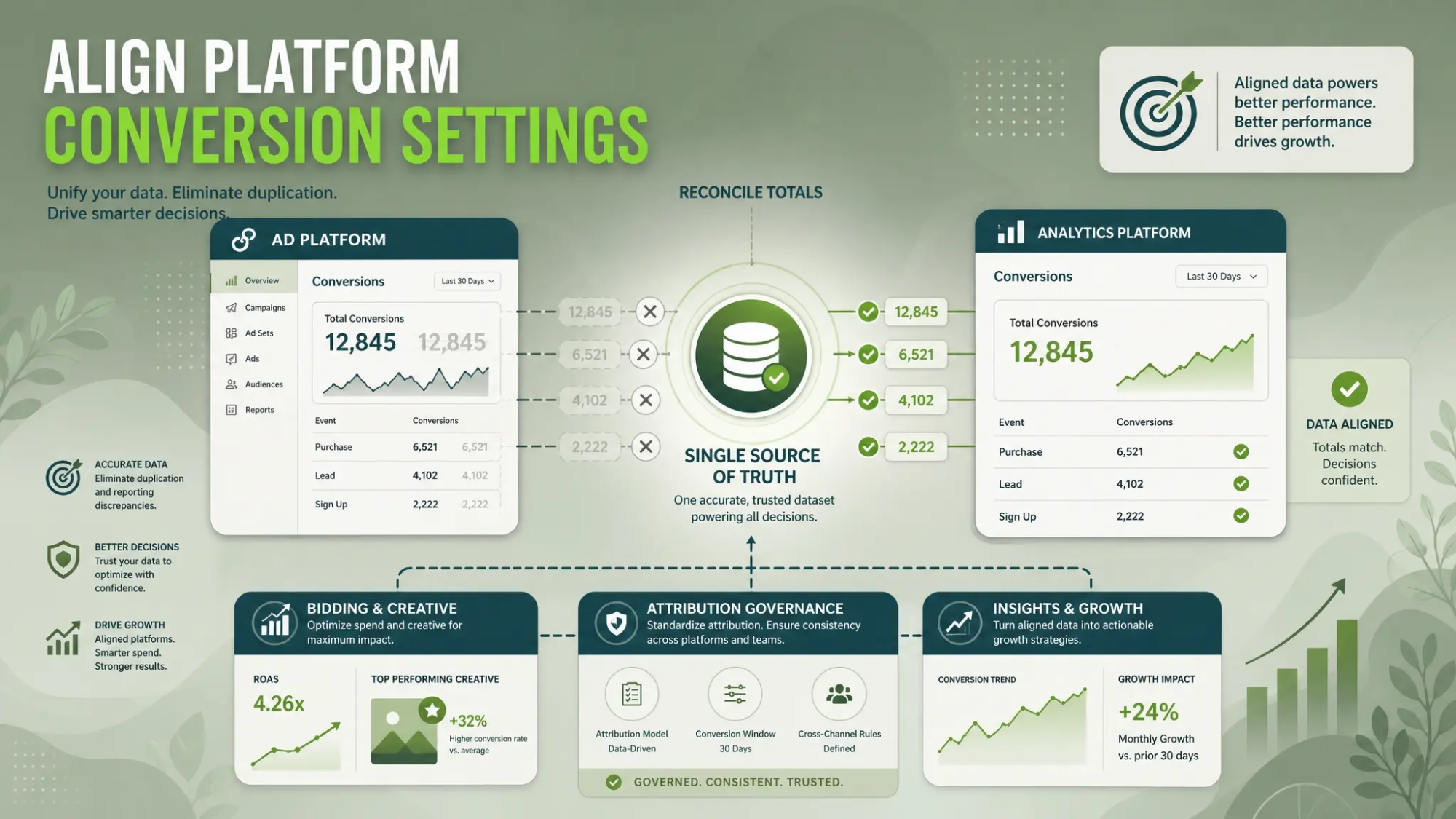
Ad platforms often count conversions differently than analytics. Some count every conversion, while others default to counting one per click. If you compare platform totals directly, duplication and disagreement are guaranteed.
Decide what each platform is allowed to optimize toward, then reconcile it with the single source of truth. Keep platform conversions for bidding and creative testing, but report business outcomes from your chosen authority system.
When the measurement stack includes analytics, tag management, and CRM sync, implementation quality matters as much as strategy. IMILI Corp supports organizations with performance marketing and analytics foundations where conversion tracking, attribution alignment, and reporting governance are built to withstand cross channel overlap.
Create A Reconciliation Workflow
Even solid tracking can drift over time due to site changes, new campaigns, or tool updates. A lightweight reconciliation routine catches issues before they impact quarter end reporting. It also creates a shared language between SEO, PPC, and revenue teams.
- Audit conversion triggers: Confirm that events fire once per action and do not duplicate on refresh, back button, or validation errors.
- Validate identifiers: Check that transaction IDs or lead IDs are present and consistent across analytics, CRM, and offline uploads.
- Review channel mappings: Confirm that UTMs, auto tagging, and channel group rules classify traffic the same way every month.
- Compare totals by date: Reconcile daily counts between systems and investigate gaps beyond an agreed tolerance.
- Document changes: Log any tag edits, landing page changes, or campaign naming updates that could affect attribution.
Once this workflow is routine, reporting becomes predictable and performance discussions focus on decisions, not disputes.
Conclusion
Measuring SEO and PPC without counting the same conversion twice requires shared definitions, one source of truth, and deduplication through unique identifiers. Consistent attribution models and strict UTM governance keep channels comparable and prevent inflated totals. A simple reconciliation routine ensures your measurement stays accurate as campaigns and websites change.
Frequently Asked Questions
Should SEO and PPC share the same conversion events in analytics?
They should share the same primary conversion events so totals remain consistent across channels. Each channel can still use supporting events for optimization, but reporting should rely on one agreed conversion definition. This prevents separate teams from tracking different actions and calling them the same outcome.
Why do Google Ads conversions differ from GA4 conversions?
They can differ due to attribution model differences, conversion windows, and how each system counts repeat actions. Google Ads may also include modeled conversions, while GA4 focuses on observed events within its own rules. Use one system as the reporting authority and treat the other as a platform optimization view.
What is the simplest way to deduplicate lead form conversions?
Create a unique lead ID at submission and store it in both analytics and your CRM. When uploading offline conversions, include that ID along with click identifiers when available. This allows duplicates to be detected and removed across tools while keeping the full funnel measurable.