
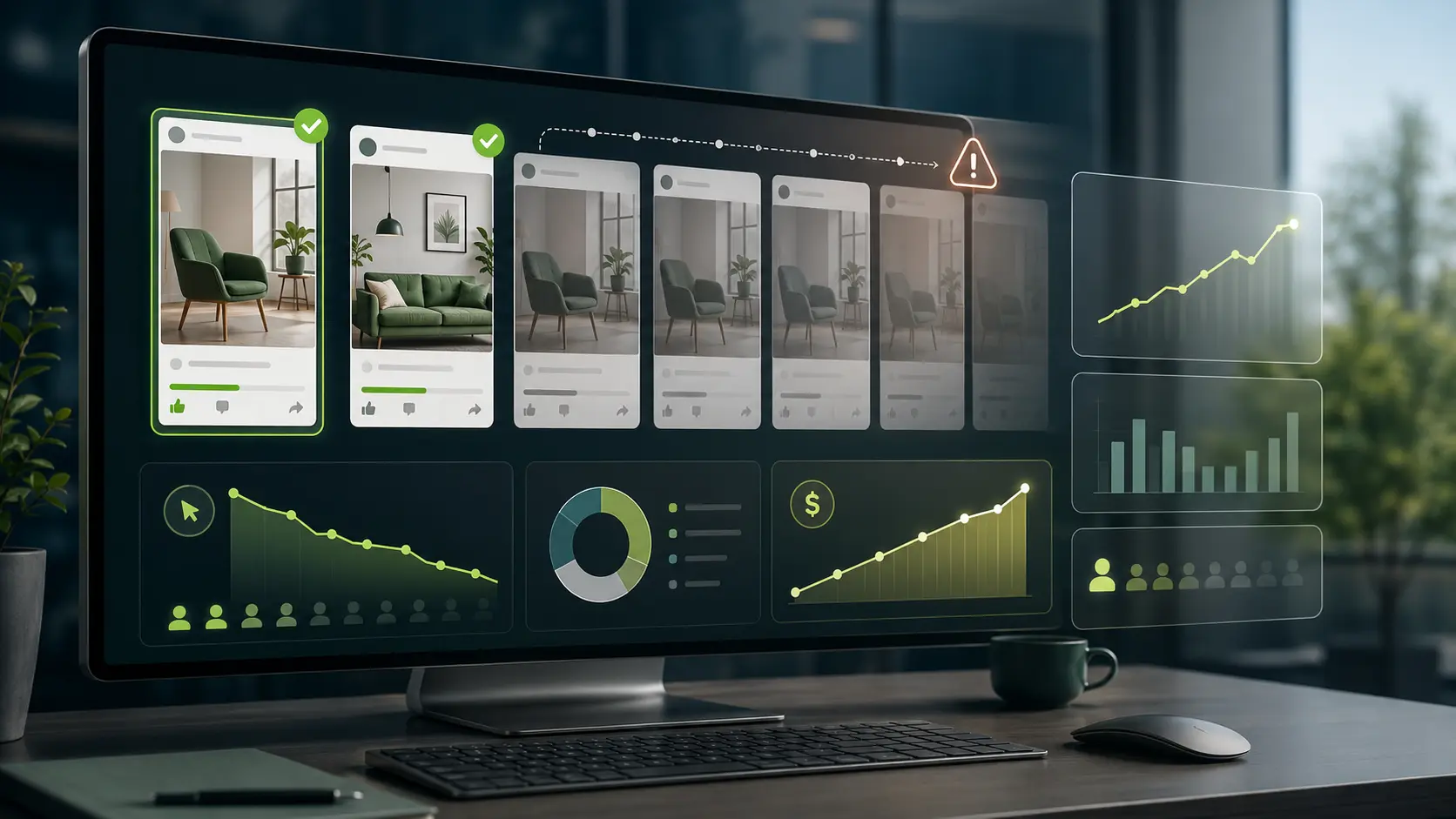
Creative fatigue happens when the same Meta ad visuals and messages get shown too often to the same audience, so performance drops and costs rise. When you catch it early, you protect efficiency, stabilize results, and avoid paying more for the same attention.
What Creative Fatigue Means In Meta Ads?
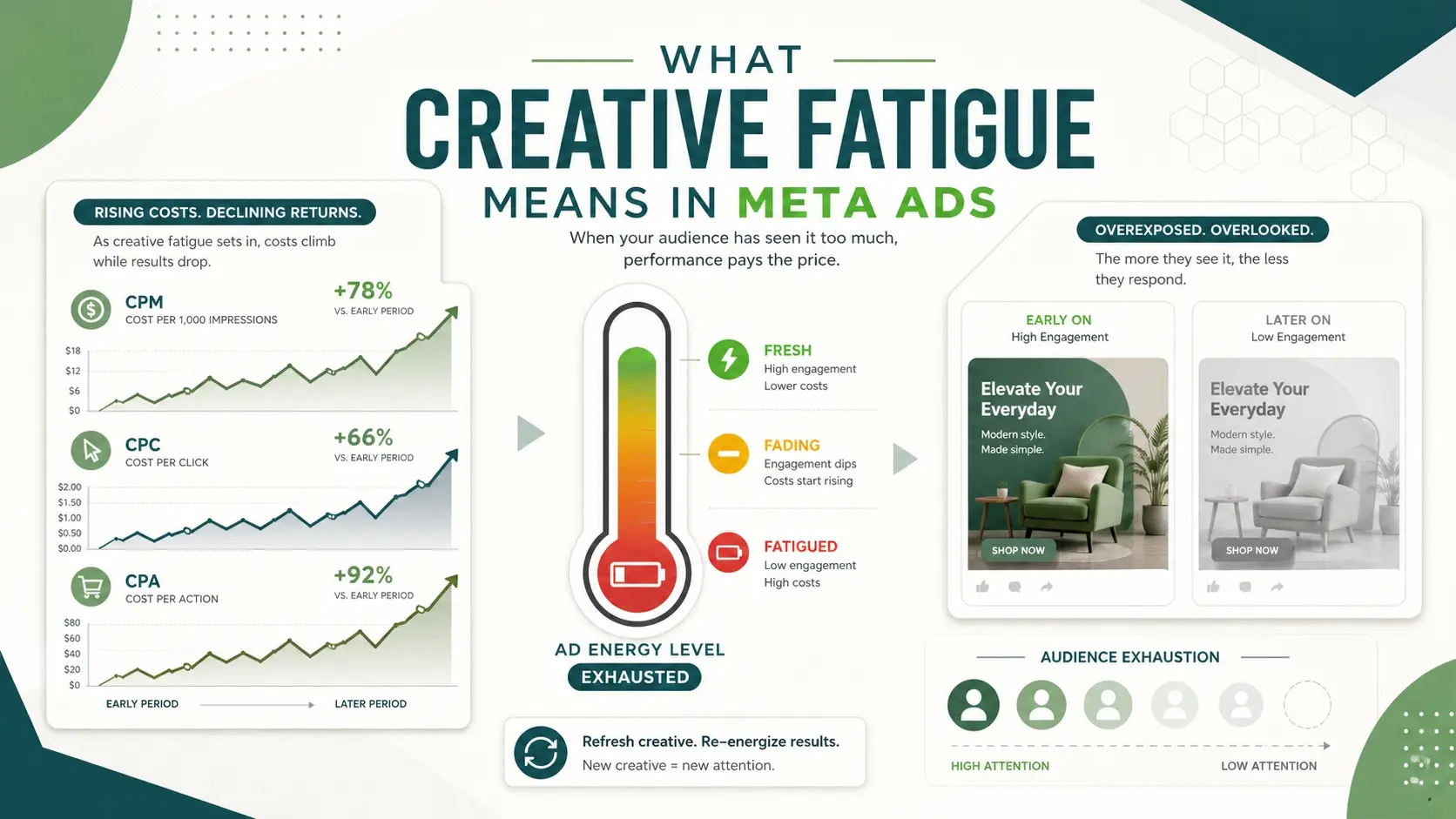
Meta optimizes delivery toward ads that earn engagement and conversions at a good rate. When a creative stops resonating, Meta has to work harder to find people who will respond, which often increases CPM, CPC, or CPA.
Fatigue is not only about seeing the same ad repeatedly. It can also be a mismatch between what the market needs now and what the creative communicates, even if frequency looks acceptable.
Why Costs Rise When Fatigue Sets In?
As response rates decline, Meta predicts lower value from impressions and shifts delivery to placements or segments that cost more to reach. Competition stays the same, but your expected outcomes weaken, so your auction efficiency drops.
This often shows up as higher cost per result and fewer conversions, even if spend stays flat. If budget increases at the same time, the platform may push impressions harder, accelerating the problem.
Early Warning Signals To Watch
Creative fatigue rarely appears as a single dramatic spike. More often, several smaller signals align over a few days and create a clear pattern.
- CTR Soft Decline: A steady drop in link click-through rate suggests people have seen the message before or are no longer interested.
- CPM Drift Upward: Rising CPM with stable targeting can indicate Meta needs more impressions to achieve similar outcomes.
- Conversion Rate Erosion: When clicks remain but purchases or leads fall, the creative may be attracting the wrong intent or losing trust.
- Frequency Climbing: A higher frequency can be fine for retargeting, but it becomes a risk when results fall at the same time.
- Thumbstop Drop: Lower 3-second video views or reduced hook performance points to a creative that no longer earns attention.
When two or more of these happen together, treat it as a fatigue investigation rather than a random fluctuation.
Key Metrics That Confirm Creative Fatigue
Use a consistent comparison window so you do not overreact to daily variance. Many teams check the last three to seven days against the prior comparable period, while also reviewing longer trends for seasonality.
Focus on metrics that represent attention, engagement, and intent. If attention drops first, fatigue is often the cause. If attention stays strong but intent weakens, the offer, landing experience, or audience fit may be the issue.
| Signal | What You See In Ads Manager | What It Usually Means |
|---|---|---|
| Rising frequency with weaker results | Frequency increases while CPA increases | Audience saturation and creative wear-out |
| CTR down while CPM up | Lower CTR and higher CPM over the same window | Creative relevance is fading in the auction |
| Video hook weakens | 3-second views down and average watch time down | Opening seconds no longer stop scrolling |
| Clicks steady but CVR down | Similar link clicks but fewer purchases or leads | Message attracts curiosity but not qualified intent |
This table helps separate normal volatility from patterns that typically signal creative fatigue. Once the pattern is clear, your next decision is whether to refresh creative, adjust audience, or fix downstream conversion issues.
How To Separate Fatigue From Tracking Or Funnel Problems?
Fatigue and measurement issues can look similar when the only metric you watch is CPA. Before swapping creatives, confirm that attribution and site behavior have not changed.
- Check Event Health: Confirm pixel and Conversions API events are firing and matching expected volume patterns.
- Review Landing Page Speed: Slow load times can reduce conversion rate without changing ad engagement.
- Compare On Platform And On Site: If Meta shows conversions but the CRM does not, investigate deduplication and event setup.
- Scan For Offer Changes: Pricing, shipping, availability, or lead form changes can shift conversion quality.
When tracking and funnel checks pass, performance declines are more likely to be creative, audience saturation, or both.
Frequency And Audience Saturation
Frequency is useful, but it is not a universal threshold. Prospecting can fatigue at lower frequency than retargeting because the audience did not opt into repeated exposure.
Watch frequency alongside CTR, CPM, and cost per result. A high frequency with stable or improving performance is not necessarily a problem, especially for short retargeting windows and time-sensitive offers.
Creative Wear Patterns By Format
Different formats fatigue in different ways. Short videos can keep attention longer than static images, but they can also burn out quickly if the hook becomes predictable.
- Static Images: Fatigue shows up as a CTR decline and increased negative feedback if the audience feels over-targeted.
- Video: Fatigue shows up first in the hook metrics such as 3-second views and watch time, then in clicks and conversions.
- Carousels: Fatigue can appear when the first card loses stopping power even if later cards are strong.
- Reels And Stories: Fatigue often looks like swipe-away behavior and weaker completion rates.
Matching the refresh strategy to the format keeps changes efficient and reduces unnecessary creative production.
How Often You Should Refresh Creative?
Refresh cadence depends on spend, audience size, and how quickly you scale. Larger budgets and narrower audiences usually require more frequent creative rotation.
A practical approach is to set a weekly review of creative signals and a monthly review of your overall creative mix. When performance drops sharply, refresh sooner, but keep changes measured so you can learn what drove the improvement.
A Simple Process To Catch Fatigue Early
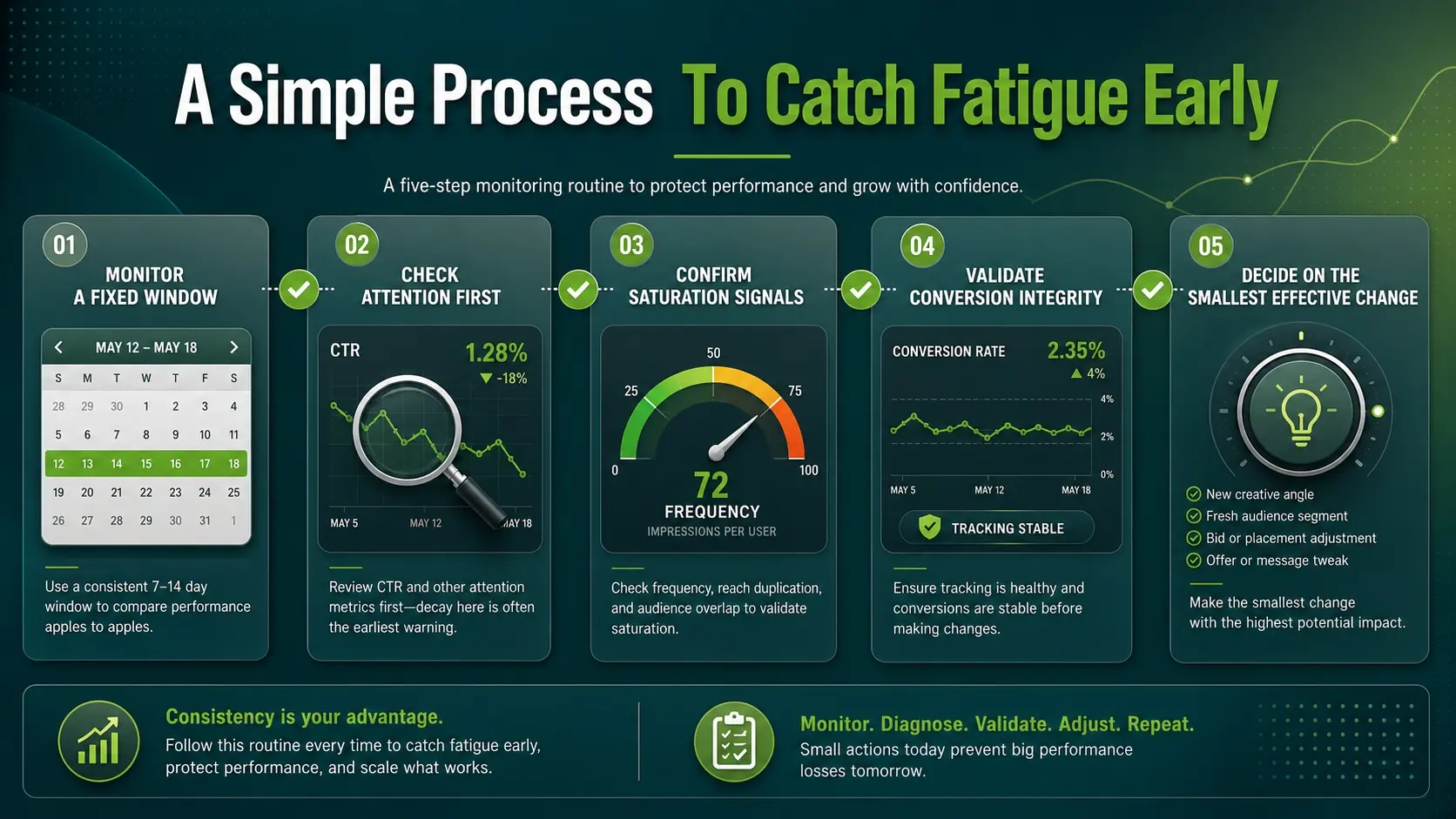
A repeatable routine prevents expensive surprises. It also makes it easier to communicate why you are refreshing ads, even when results are still acceptable.
- Monitor a fixed window: Compare the last three to seven days against the prior period using the same attribution setting.
- Check attention first: Review CTR, thumbstop, video views, and watch time to detect early creative decline.
- Confirm saturation signals: Review frequency and audience size to understand whether delivery is compressing.
- Validate conversion integrity: Confirm event tracking, page speed, and on-site conversion rate are stable.
- Decide on the smallest effective change: Swap hooks, change primary text, rotate angles, or introduce a new format before rebuilding everything.
Following a consistent process keeps creative iteration grounded in signals, not instincts.
Creative Refresh Actions That Lower Costs
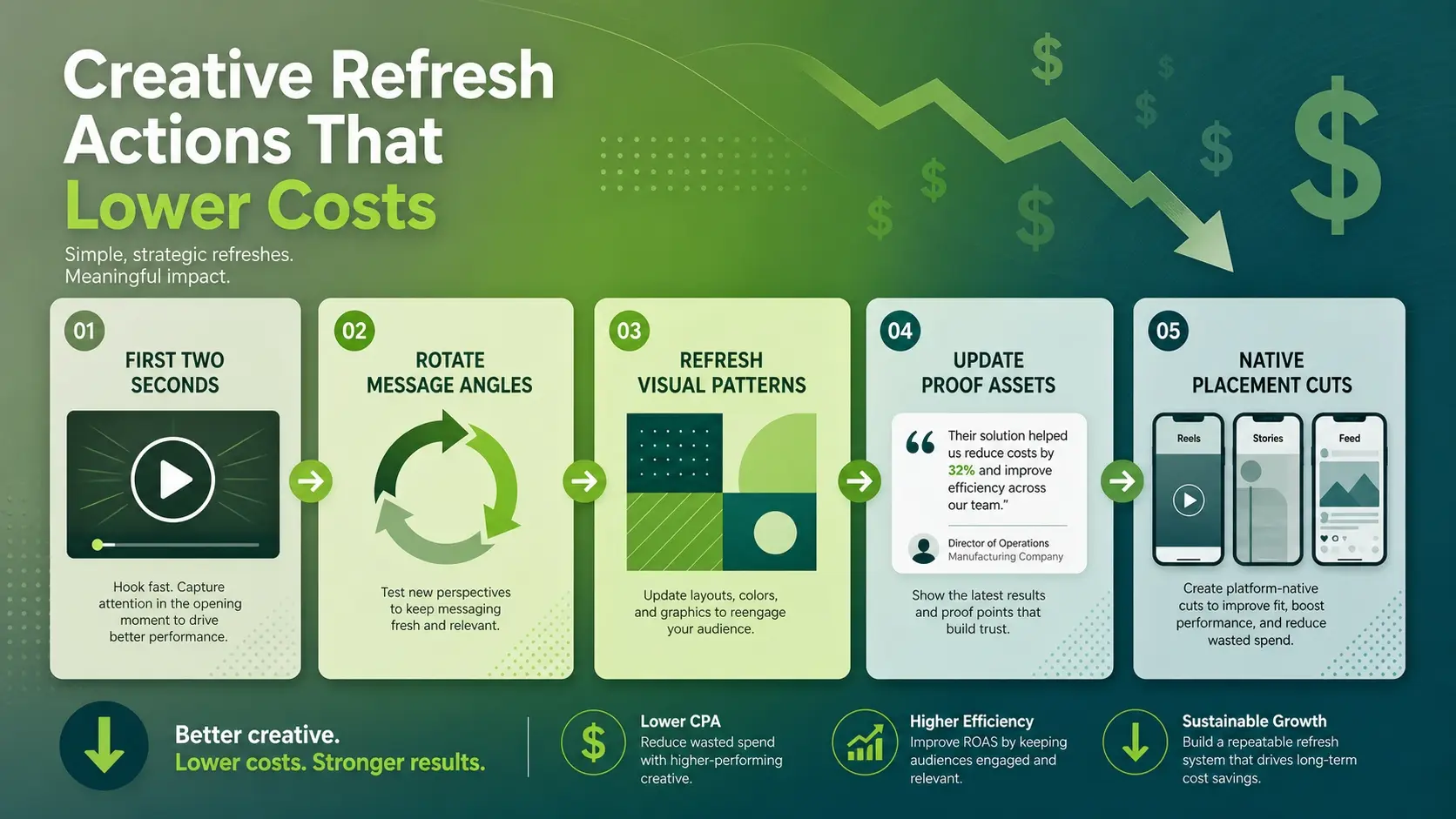
You do not need a full redesign to relieve fatigue. Small, strategic variations often restore performance while keeping your brand consistent.
- Change The First Two Seconds: Update the opening line, first frame, or headline to rebuild the scroll-stopping moment.
- Rotate Message Angles: Shift between benefits, objections, proof, and urgency so the audience does not tune out a single theme.
- Refresh Visual Patterns: Adjust color blocks, framing, or layout while keeping the same core asset or product shot.
- Update Proof Assets: Swap testimonials, review snippets, or outcome claims to keep credibility signals current.
- Test Placement Native Cuts: Build versions tailored to Reels, Stories, and Feed rather than stretching one creative across all placements.
After a refresh, watch learning and stabilization. Give the new creative enough impressions to prove itself before judging it on a small sample.
Where Process And Execution Break Down?
Creative fatigue becomes expensive when teams wait too long, then make too many changes at once. That makes it hard to isolate what worked and can cause more volatility.
Another common issue is producing variations that look different but say the same thing. If the promise, hook, and proof stay identical, the audience still experiences repetition.
How Imili Corp Supports Sustainable Meta Creative Performance?
Creative refresh is most effective when it is connected to measurement, audience strategy, and a repeatable testing rhythm. Imili Corp supports teams that want Meta Ads to stay efficient by aligning creative iteration with performance signals and clean data.
When your goal is to reduce wasted spend, a structured approach to creative testing, audience segmentation, and conversion tracking can keep results stable while you scale. This is especially useful for brands that run always-on campaigns and need a dependable refresh cadence.
Conclusion
Creative fatigue is predictable when you track the right signals and review them on a steady cadence. Watch attention metrics, confirm saturation patterns, and rule out tracking or funnel issues before you make big changes.
When fatigue is confirmed, refresh the smallest elements that restore relevance, then scale what works. Consistent monitoring and disciplined creative rotation keep Meta Ads from becoming expensive.
Frequently Asked Questions
How quickly can creative fatigue happen on Meta Ads?
It can happen within days for small audiences or high budgets because frequency climbs quickly. For broader audiences, fatigue may show up gradually as attention and engagement erode over time. The clearest indicator is a consistent trend across multiple metrics, not a single bad day.
Is high frequency always a problem?
No, high frequency can be normal for retargeting, short promotions, and high-intent audiences. It becomes a concern when frequency rises while CTR, conversion rate, or cost per result moves in the wrong direction. Always interpret frequency with performance trends and audience size.
Should I pause a fatigued ad or reduce budget first?
If performance is clearly deteriorating, pausing or replacing the creative is often faster than slowly reducing budget. If results are only slightly weaker, reducing spend can buy time while you build a stronger refresh. The best choice depends on how urgently you need stable volume and what creative is ready to launch.