

A single brand story can carry an audience from first impression to confident purchase, but only if it is shaped to match what people need at each stage. This approach reduces creative waste, keeps messaging consistent, and makes performance easier to measure and improve.
What One Brand Story Really Means?
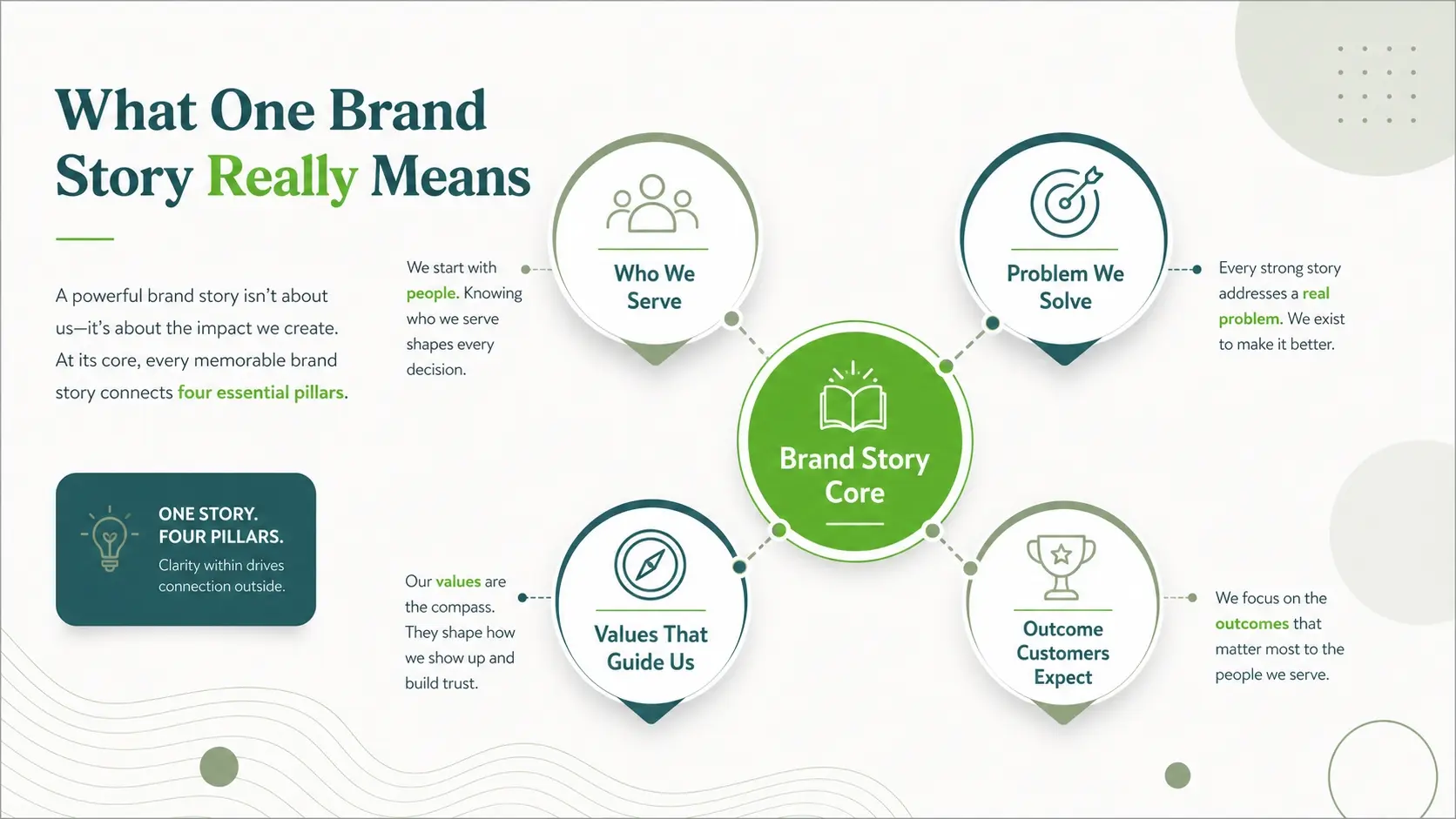
One brand story is not one script repeated three times. It is a stable narrative core that stays recognizable even when the format, proof, and call to action change.
At the center are a few non-negotiables such as who the brand serves, the problem it helps solve, the values that guide it, and the outcome customers can expect. Everything else can flex without breaking consistency.
Why Funnel Alignment Matters In Video?
Awareness, consideration, and conversion are different moments of intent. Viewers at the top want clarity and relevance, while viewers near purchase want confidence and low-friction next steps.
When the same story is adapted to these needs, the audience experiences continuity. The brand feels familiar, which lowers skepticism and shortens the decision cycle.
Define The Narrative Spine Before Production
Before writing concepts, lock the story spine so every video pulls from the same source. This keeps teams aligned across scriptwriting, design, editing, and media buying.
- Audience Promise: A simple statement of the result people can expect and the type of person it is for.
- Primary Tension: The main obstacle or frustration the viewer feels before they trust a solution.
- Brand Belief: The principle that explains why the brand operates the way it does.
- Mechanism: The distinctive way the brand delivers results, described without jargon.
- Proof Theme: The recurring evidence style such as outcomes, demos, or third-party validation.
- Next Best Action: The single action the viewer should take after watching.
Once these pieces are set, creative choices become faster and more consistent across formats.
Awareness Video Strategy
Awareness video is built to earn attention and recognition, not to close a sale. The story should lead with the viewer’s world and signal the brand’s relevance within seconds.
Keep the message simple and avoid dense details. The goal is to make the brand memorable and to create a reason to learn more later.
What To Emphasize In Awareness?
- Problem Clarity: Use plain language that mirrors how the audience describes the issue.
- Category Framing: Show what success looks like so the viewer can self-identify.
- Distinctive Brand Cues: Repeat visual and audio identifiers consistently across all videos.
- Single Takeaway: Leave viewers with one idea they can recall easily.
That foundation sets up stronger performance in later stages because the brand is already familiar.
Consideration Video Strategy
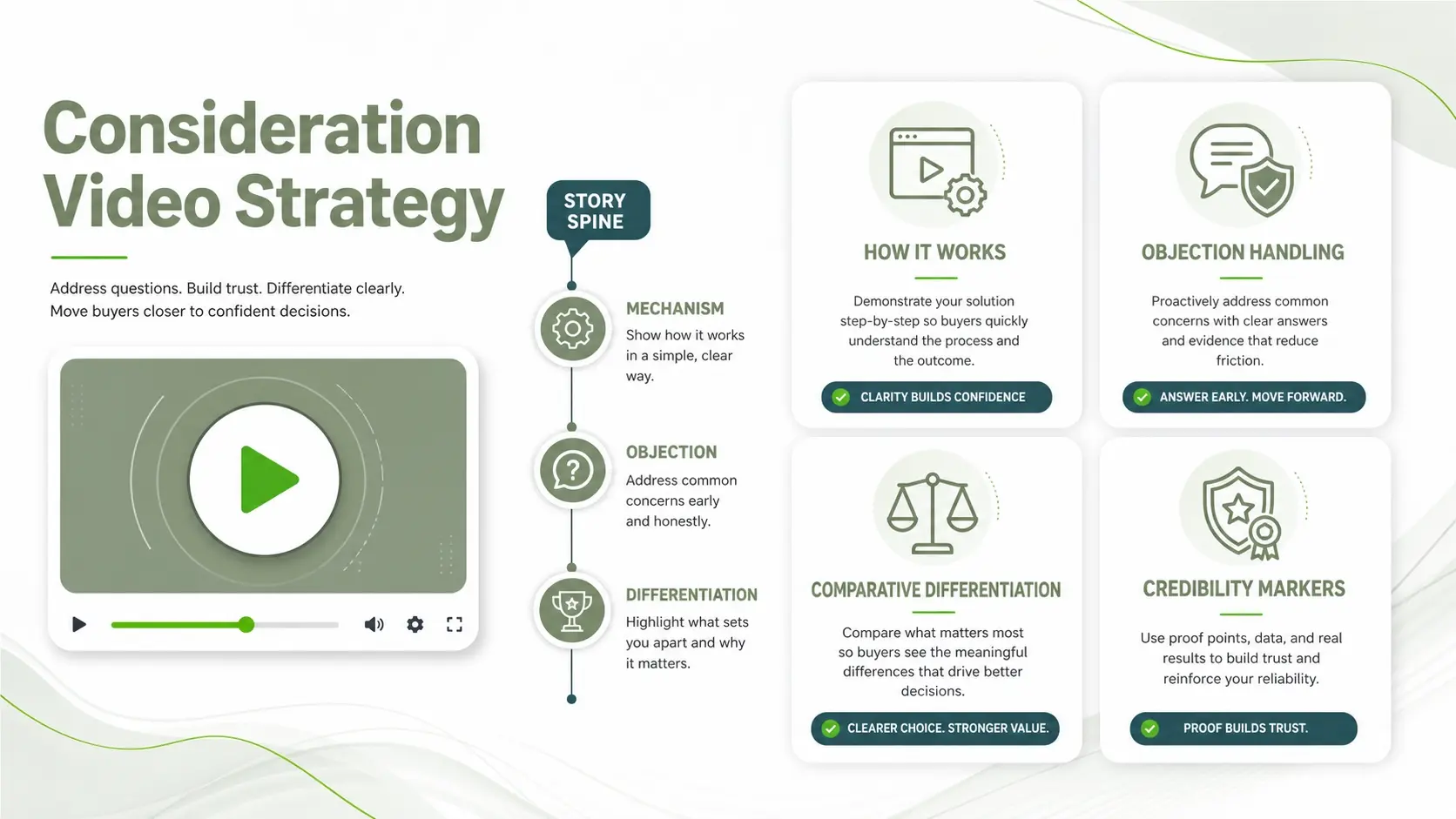
Consideration video answers the question of why this approach works. Viewers are comparing options, scanning for fit, and looking for credible signals.
This is where the story spine expands into detail. The narrative should show how the mechanism works, what the process looks like, and what standards the brand holds itself to.
What To Emphasize In Consideration?
- How It Works: Explain the method clearly with benefits tied to each step of the experience.
- Objection Handling: Address common doubts directly using calm, confident language.
- Comparative Differentiation: Clarify what makes the brand different without attacking competitors.
- Credibility Markers: Use data, process transparency, and expertise signals that can be verified.
Once viewers understand the approach and trust the brand’s competence, they are ready for a decision-focused message.
Conversion Video Strategy
Conversion video reduces friction and increases certainty. Viewers are close to acting, so the story should be tight and action-oriented.
Keep the narrative aligned to the same promise and belief, but shift the weight toward proof, risk reduction, and a clear next action. Strong conversion video also matches the landing page and checkout experience visually and verbally.
What To Emphasize In Conversion?
- Outcome Proof: Focus on results, reliability, and what the customer gets immediately.
- Risk Reduction: Clarify guarantees, security, support, and any onboarding guidance.
- Offer Clarity: State what is included, what is optional, and what the viewer should choose.
- Call To Action: Use one primary action and remove competing instructions.
When the conversion message feels like the next chapter of the same story, it converts without feeling pushy.
How To Repurpose One Story Into Three Scripts?
Repurposing is easiest when the story is modular. Treat each stage as a different cut of the same narrative, with the same characters, stakes, and brand cues.
- Extract The Core Promise: Turn the story spine into a single sentence that remains consistent across all videos.
- Choose One Stage Objective: Set one measurable goal per video such as view-through, click, or lead completion.
- Match Proof To Intent: Use lighter proof in awareness, deeper explanation in consideration, and strongest proof in conversion.
- Rewrite The Hook Only: Keep the same message but open differently to fit the viewer’s context and platform.
- Align The Close To The Next Step: Ensure the ending matches what the audience should do right now, not later.
This workflow keeps production efficient while protecting consistency across the funnel.
Video Length, Format & Creative Consistency
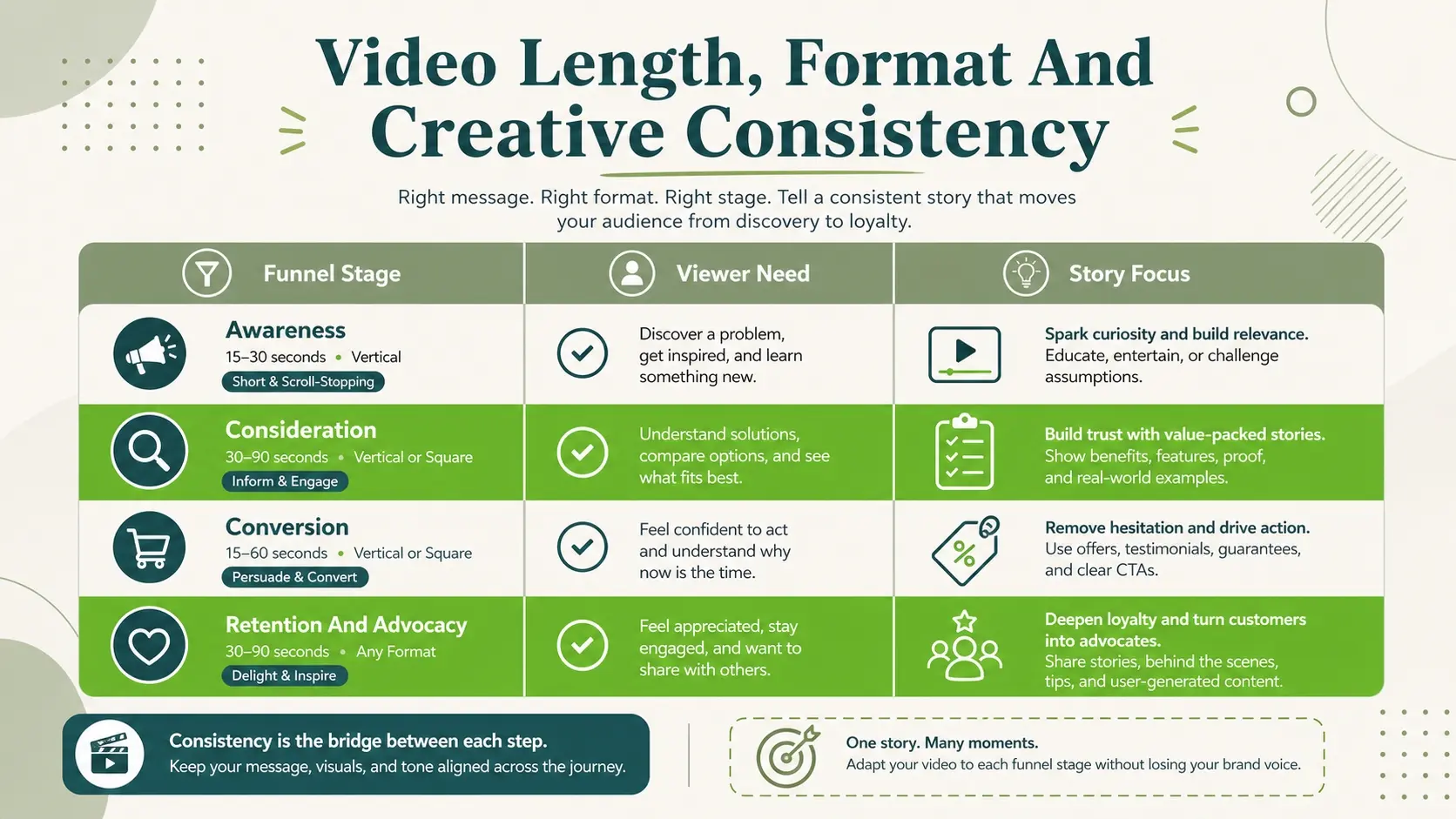
Length matters less than clarity, but different placements reward different pacing. Vertical short-form often needs faster hooks, while longer placements allow more explanation and proof.
Consistency should show up in repeated elements such as tone, color, typography, and music style. A recognizable structure also helps, such as hook, tension, solution, proof, action.
| Funnel Stage | Viewer Need | Story Focus |
|---|---|---|
| Awareness | Relevance and recognition | Problem clarity and brand cues |
| Consideration | Understanding and trust | Mechanism, differentiation, credibility |
| Conversion | Confidence and low friction | Proof, risk reduction, clear action |
| Retention And Advocacy | Reinforcement and pride | Onboarding guidance and community value |
Using a shared structure across these stages makes creative testing cleaner because only the stage-specific variables change.
Measurement That Protects The Story
Each stage should be measured with metrics that reflect its job. Awareness is rarely about direct purchases, and conversion is rarely about maximum reach.
Use consistent naming conventions for campaigns, creatives, and audiences so performance insights carry forward. When results are clear, you can refine hooks, proof points, and calls to action without rewriting the entire story.
How Imili Corp Helps Teams Scale Story-Led Video?
Many teams struggle with the gap between brand storytelling and performance marketing. Imili Corp supports organizations that need strategic alignment across messaging, creative production, and go-to-market execution so one narrative can power multiple funnel assets without drifting.
This type of support is most valuable when a team is launching a new offer, entering a new market, or trying to improve conversion without changing the brand identity. A clear narrative spine also makes it easier to brief creators, agencies, and internal stakeholders.
Common Mistakes To Avoid
Small missteps can break continuity across stages and make the story feel inconsistent. Fixing them early saves budget and protects trust.
- Changing The Promise Between Stages: Keep the outcome consistent even if the proof and detail level evolve.
- Using Different Terminology In Each Video: Standardize key phrases so the audience recognizes the message.
- Piling On Too Many Claims: One clear claim beats five weak ones, especially in short-form placements.
- Mismatching Video And Landing Page: Align language and visuals so the click feels like a continuation.
With these issues removed, storytelling and performance can reinforce each other instead of competing.
Conclusion
Using one brand story across awareness, consideration, and conversion videos is a discipline of consistency with smart adaptation. Build a strong narrative spine, tailor proof and detail to intent, and keep creative cues steady across every cut.
When each stage feels like the next chapter of the same story, audiences move forward with less friction and more confidence.
Frequently Asked Questions
How Do I Keep Brand Consistency Across Different Video Creators?
Create a short brand story brief that includes the narrative spine, approved terminology, and a few non-negotiable visual and audio cues. Review scripts and first cuts against that brief rather than subjective preferences. A shared checklist reduces rework and keeps tone aligned.
What Should Change Between Consideration And Conversion Videos?
Consideration should explain the mechanism and build trust through clarity, while conversion should prioritize proof, risk reduction, and a single action. Keep the promise and belief consistent, but tighten pacing and remove secondary messages in conversion.
How Many Video Variations Should I Test Per Funnel Stage?
Start with a small set of variations that isolate one variable such as the hook, proof type, or call to action. Two to four strong variations per stage usually produces clearer learning than many minor edits. Expand testing only after you identify what is moving results.