
B2B teams usually start paid acquisition with two platforms that can scale fast LinkedIn Ads and Google Ads. The right starting point depends on how your buyers search, how specific your audience is, and how quickly you need qualified pipeline. This guide breaks down the practical differences so you can pick a smart first channel and avoid expensive learning curves.
How LinkedIn Ads And Google Ads Work For B2B?
Google Ads is intent driven. You reach people when they actively search for solutions, compare vendors, or look for services that match a problem they already have.
LinkedIn Ads is audience driven. You reach people based on who they are at work, including job title, seniority, company size, industry, skills, and matched accounts.
Both can produce leads, meetings, and revenue, but they do it in different moments of the buying journey. Understanding that timing is the fastest way to choose where to begin.
Search Intent Versus Professional Targeting
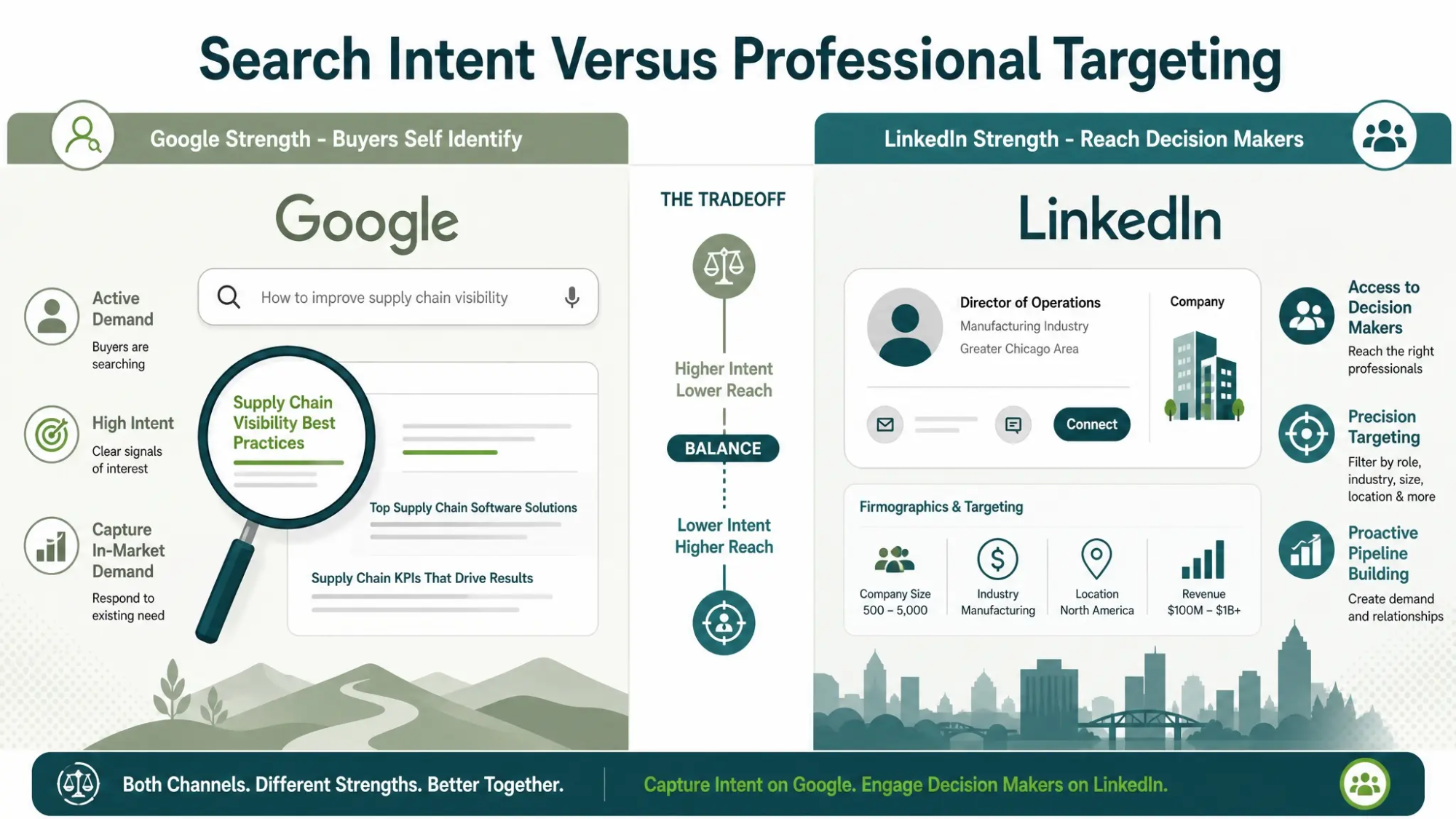
Google typically wins when demand already exists. If your ideal customer is searching for your category, you can capture high intent traffic and filter it with keywords, landing pages, and conversion actions.
LinkedIn typically wins when demand is latent or the audience is narrow. If only a few roles can buy and the total addressable market is defined by firmographics, LinkedIn targeting can prevent wasted spend.
- Google Strength: Buyers self identify by searching, which often shortens the path to a sales conversation.
- LinkedIn Strength: You can reach decision makers who are not searching yet and build awareness inside named accounts.
- Key Tradeoff: Google relies on keyword volume and landing page relevance, while LinkedIn relies on audience fit and message resonance.
That tradeoff matters most when budgets are tight and you need clean signals fast.
Cost And Lead Quality Expectations
Many B2B teams see higher cost per click on LinkedIn, especially in competitive industries and senior job functions. Google clicks can be cheaper, but lead quality varies widely by keyword intent and by how well your landing page qualifies.
Lead quality is rarely a platform problem alone. It is usually a matching problem between audience, offer, and qualification.
| Factor | LinkedIn Ads | Google Ads |
|---|---|---|
| Primary Signal | Job and company attributes | Search query intent |
| Typical Early Funnel Cost | Higher CPC and higher CPM | Variable CPC based on competition |
| Best Fit Offers | Webinars, guides, demos for specific roles | High intent demo, quote, pricing, service pages |
| Quality Control Levers | Audience filters and lead form questions | Keywords, negatives, and landing page qualifiers |
Use the table as a starting point, then validate with a small test budget and strict tracking.
Best Starting Use Cases For Google Ads
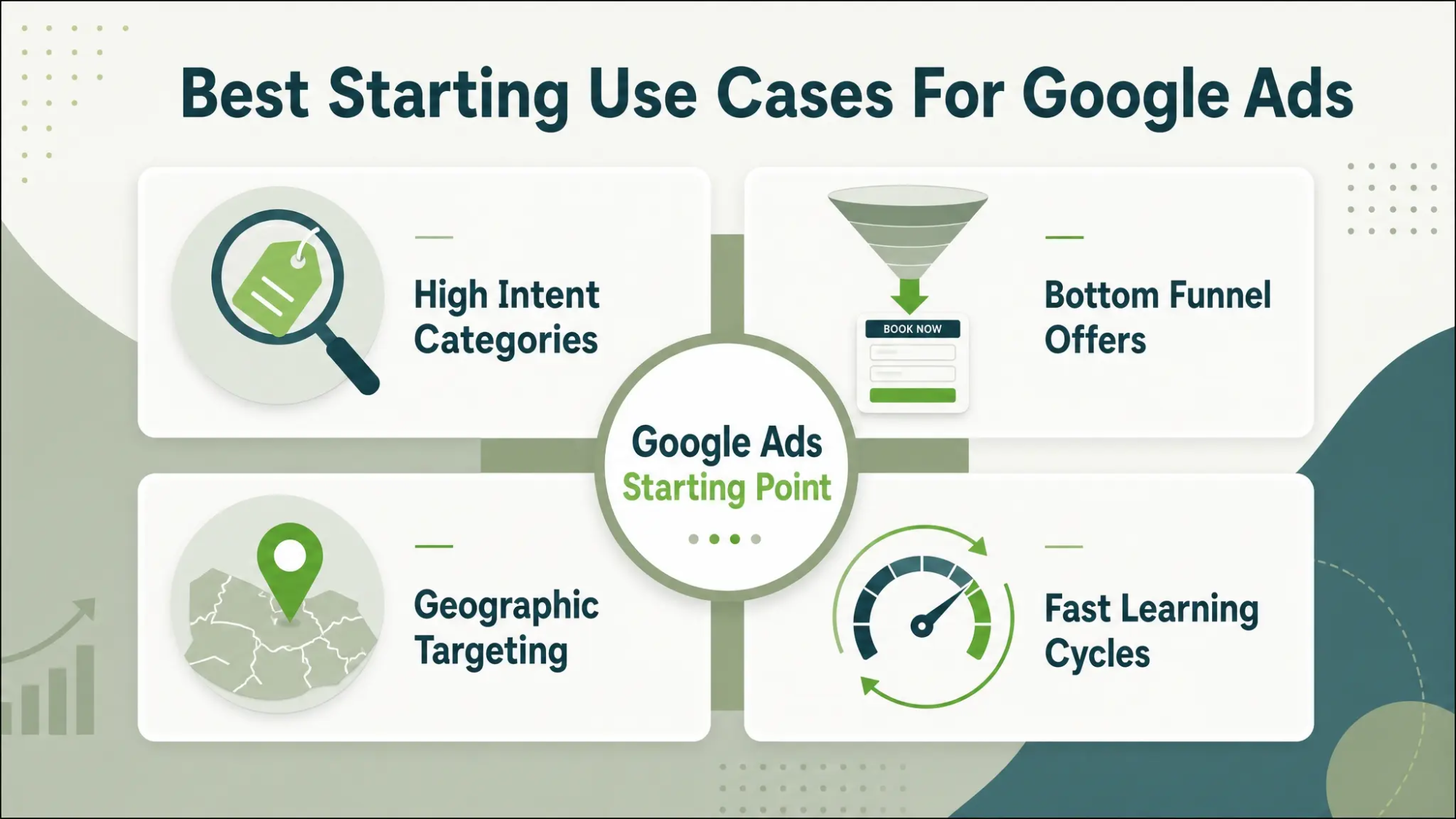
Start with Google when buyers already search for what you sell, or when your website can convert high intent traffic. It is also a strong fit when you have clear commercial keywords and a landing page that answers them directly.
- High Intent Categories: Products and services with established search demand and clear category terms.
- Bottom Funnel Offers: Demo requests, consultation booking, pricing pages, and service comparisons.
- Geographic Targeting: Local or regional B2B services where location qualifiers matter.
- Fast Learning Cycles: When you need conversion data quickly to optimize bids and creatives.
If you operate in a niche with low keyword volume, Google can still work, but it may take longer to reach statistically useful data.
Best Starting Use Cases For LinkedIn Ads
Start with LinkedIn when your buyers are defined by role and company attributes more than by search behavior. This is common in enterprise, complex sales cycles, and categories that are not searched frequently.
- Account Based Marketing: Reaching a known list of target accounts and warming up multiple stakeholders.
- New Category Education: Explaining a newer solution where search intent is not yet formed.
- Senior Decision Makers: Targeting directors, VPs, and C level roles with messaging tailored to outcomes.
- Recruiting And Partner Growth: Driving responses from specific professional segments.
LinkedIn tends to perform best when the offer is tightly aligned with the role and the landing experience continues that same role specific story.
Creative And Landing Page Requirements
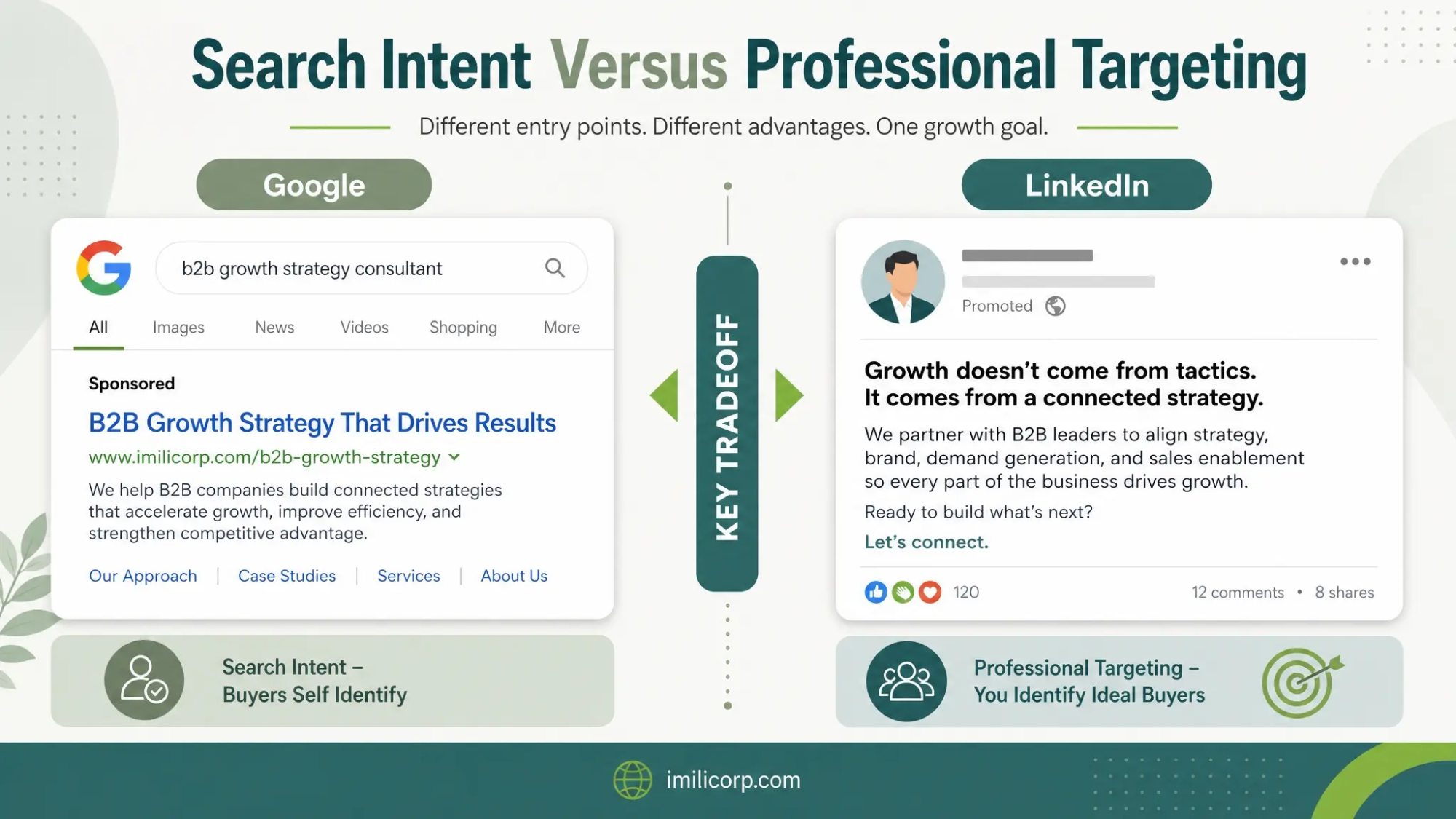
Google rewards relevance. Your ad copy and landing page must match the keyword intent and make the next step obvious with minimal friction.
LinkedIn rewards clarity and differentiation. Users are not searching, so your creative needs a strong reason to care and a clear outcome without long explanations.
- Google Copy: Use specific terms buyers search, highlight proof points, and keep the call to action direct.
- LinkedIn Copy: Lead with a pain point and a measurable benefit, then qualify who it is for.
- Landing Pages: Add role based sections, short trust signals, and a single primary action.
When landing pages are generic, both platforms get expensive. Tight alignment is usually the cheapest optimization you can make.
Measurement And Attribution That B2B Teams Need
B2B funnels are long, and first touch leads can be misleading. Track beyond form fills and measure what turns into sales accepted leads, opportunities, and revenue.
At a minimum, set up conversion tracking, call tracking if relevant, and CRM integration. You want to connect ad spend to pipeline stages and not just to clicks.
- Define Qualified Outcomes: Align marketing and sales on what counts as a qualified lead and a qualified meeting.
- Track Primary Conversions: Use one or two high intent actions such as demo request or consult booking.
- Add Secondary Signals: Track key page views, engagement, and repeat visits for better optimization signals.
- Close The Loop In CRM: Pass UTM and platform data into your CRM to evaluate pipeline and revenue by channel.
Once measurement is solid, optimization becomes a process rather than guesswork.
Budget And Timeline Planning
Google often produces earlier conversions when demand is present, but competition can push costs up quickly. LinkedIn may take longer to generate direct response, yet it can influence deal creation across a target account list.
Plan a test window long enough to learn. Short tests can bias results toward the platform that converts fastest rather than the one that drives the best pipeline.
- Minimum Test Budget: Set a spend level that can generate enough clicks and conversions to evaluate performance.
- Minimum Test Duration: Run long enough to see weekday patterns and sales follow up effects.
- Hold One Variable Steady: Keep the offer consistent when comparing channels so results are comparable.
A consistent test structure makes the next decision much easier.
When A Combined Approach Makes Sense?
Many B2B programs eventually run both platforms because they serve different roles in the funnel. LinkedIn can create awareness and drive repeat exposure inside the right accounts, while Google captures the high intent searches that follow.
If you have enough budget and capacity, a combined approach can stabilize lead flow and reduce reliance on one channel. It also helps you learn which messages generate search demand and which keywords convert after nurturing.
Teams that want this kind of full funnel setup often benefit from experienced campaign architecture and landing page strategy. IMILI Corp supports B2B paid media and performance marketing with a focus on measurement, lead quality, and scalable acquisition systems, which helps prevent wasted spend during the learning phase.
Conclusion
Start with Google Ads when buyers are actively searching, keyword intent is clear, and your landing pages can convert high intent traffic efficiently. Start with LinkedIn Ads when the buying audience is narrow, account targeting matters, or you need to create demand among specific decision makers.
If you can only choose one, match the platform to your buyer behavior and your offer maturity. When tracking and creative alignment are strong, both channels can become reliable sources of qualified B2B pipeline.
Frequently Asked Questions
Which Platform Is Better For B2B Lead Generation?
Neither is universally better. Google Ads usually excels for high intent lead capture, while LinkedIn Ads often excels for reaching specific roles and accounts. The best choice depends on demand levels, audience definition, and your ability to qualify leads.
How Do I Avoid Low Quality Leads On Google Ads?
Use tightly themed keyword groups, add negative keywords early, and align landing pages to intent. Require meaningful form fields that indicate fit, and optimize toward qualified outcomes in your CRM. Avoid broad match expansion until you have stable conversion quality.
How Do I Improve LinkedIn Ads Performance Without Increasing Spend?
Narrow targeting to the roles that convert, and tailor the offer to one job function at a time. Refresh creative frequently and keep messaging outcome focused. Use retargeting to re engage visitors and reduce the cost of returning attention.