

Offline conversion tracking closes the gap between online clicks and what happens after a lead calls, books, signs, or buys. It helps marketing and sales teams connect real revenue to the right campaigns, keywords, and ads, even when the final outcome happens in a phone call or CRM. In 2026, stronger privacy controls and blended customer journeys make this process a core part of reliable attribution.
What Offline Conversion Tracking Means?
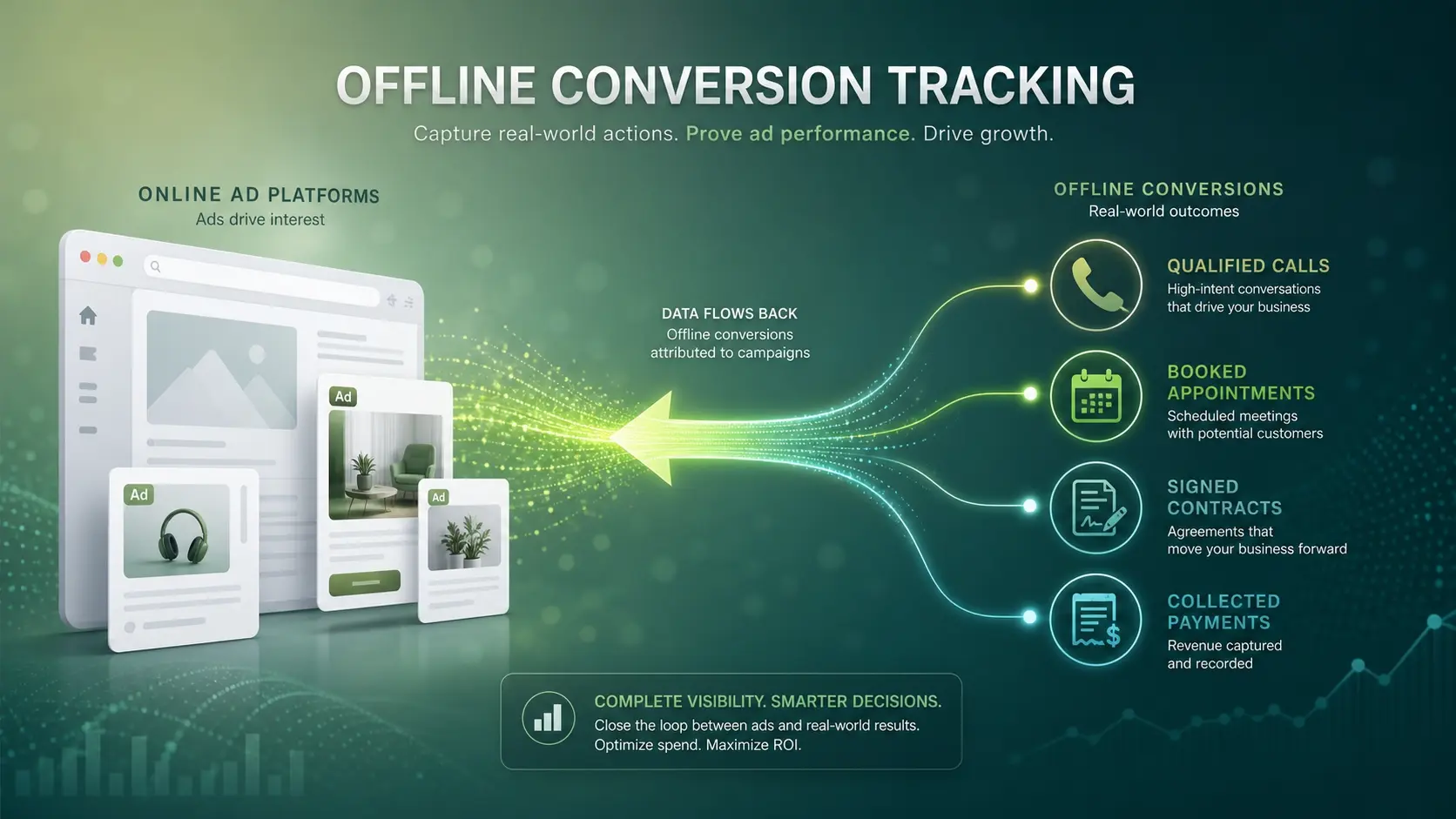
Offline conversion tracking is the practice of sending conversion outcomes that happen away from a website back into ad platforms. These outcomes include qualified calls, booked appointments, signed contracts, and collected payments.
The goal is simple. Ad platforms should optimize for profit-driving outcomes, not only form submits or page views.
Why Calls And Closed Deals Are Hard To Attribute?
Calls and deals often happen after multiple touchpoints, across devices, and outside the browser. A visitor may click an ad, return through organic search, then call a tracked number days later and purchase after a sales cycle.
Without a dependable identity bridge, that sale becomes invisible to the ad platform. That leads to undercounting high-intent campaigns and overvaluing low-quality leads.
Core Building Blocks You Need
Successful offline conversion tracking relies on a few data elements that persist from click to close. Each element must be captured consistently and stored in a system that sales and marketing both trust.
- Click identifiers: Store platform click IDs such as gclid or msclkid at the first touch when possible.
- Lead identifiers: Use a stable internal lead ID that links forms, calls, and CRM records together.
- Consent signals: Record user consent status and respect regional requirements for tracking and marketing use.
- Timestamp discipline: Keep accurate event times for click, lead creation, call start, qualification, and close.
- Revenue and status fields: Standardize deal stage, close date, and value so reporting stays consistent.
Once these are in place, you can reliably push offline outcomes back to the ad platforms and keep reporting aligned with finance.
Call Tracking That Supports Offline Attribution
Phone calls are often the highest intent channel for service businesses and high-consideration sales. To tie calls back to ads, you need dynamic number insertion on site and a way to associate the caller outcome with the original click.
IMI Corp supports teams that need clean measurement across call flows, lead capture, and CRM handoff. When call tracking, tagging, and pipeline reporting are aligned, optimization becomes far easier because every call outcome is measurable.
What To Capture From Calls
Not every call should be treated as a conversion. The best systems separate raw call volume from meaningful milestones that reflect sales progress.
- Call source and campaign: Store channel, campaign, ad group, and keyword where available.
- Qualified call outcome: Mark calls that meet your criteria such as duration, intent, or booked next step.
- Call disposition tags: Use consistent tags such as new lead, existing customer, wrong number, or support.
- Appointment status: Track booked, attended, no-show, and rescheduled to reduce false positives.
These fields create a clean ladder from click to call to close, which helps ad platforms learn what quality looks like.
CRM Integration And Pipeline Hygiene
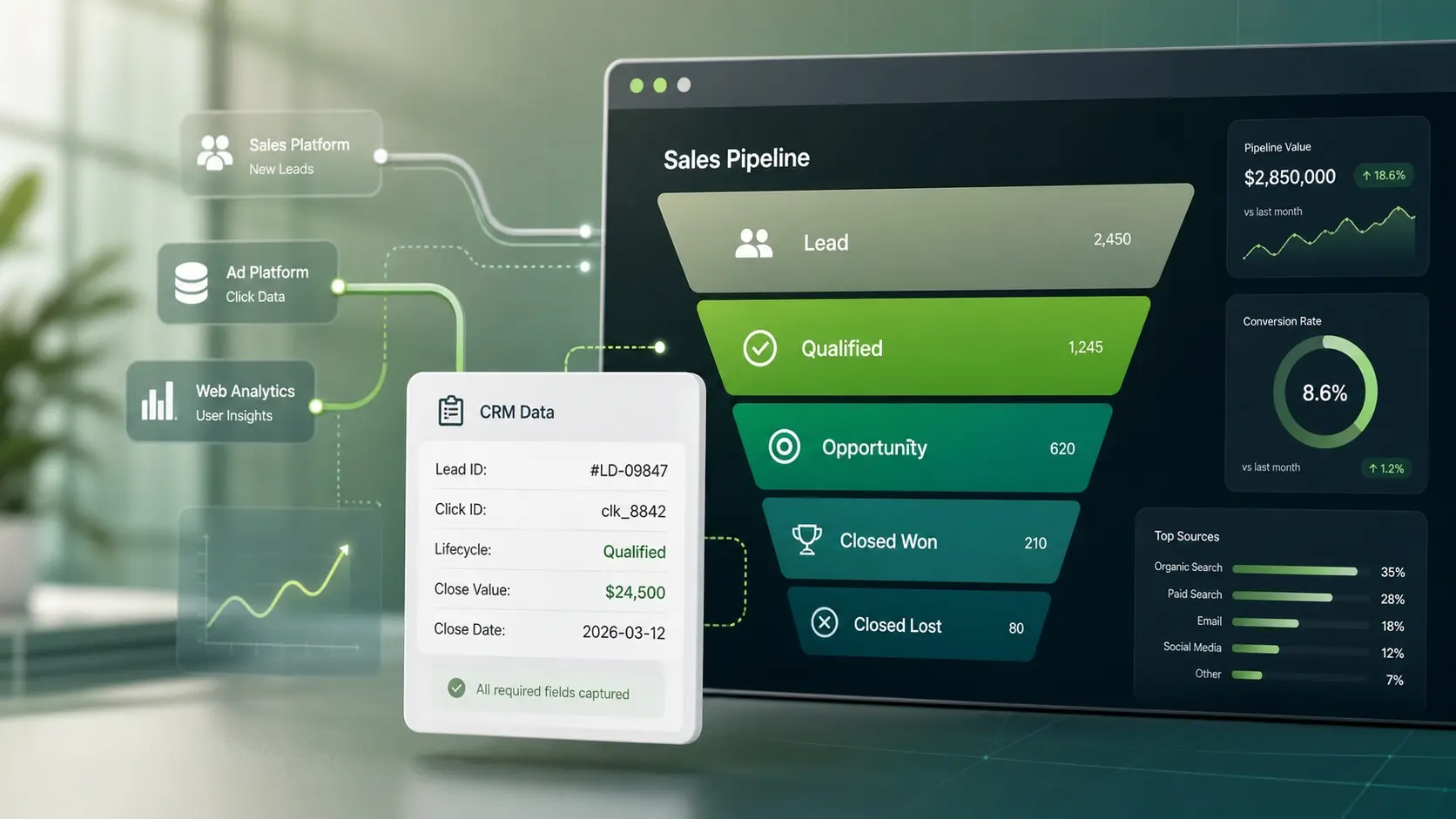
Your CRM is the source of truth for closed deals, but only if it is maintained with discipline. Offline conversion tracking fails when sales stages are inconsistent or when revenue values are missing.
Define a small set of required fields and make them hard to skip. Sales teams move faster when the system is simple and when reporting is clearly tied to improved lead quality.
Minimum CRM Fields For Reliable Uploads
Keep required fields limited, but enforce them. This reduces data gaps without adding unnecessary admin work.
- Lead ID: A unique internal ID that never changes even if records merge.
- Click ID: The captured platform click identifier when available.
- Lifecycle stage: Lead, qualified, opportunity, closed won, closed lost.
- Close value: Revenue or expected value based on a standard definition.
- Close date: The date revenue is recognized for reporting consistency.
With these fields, offline conversion uploads become routine rather than a recurring cleanup project.
How Offline Conversion Uploads Work In Practice?
Most ad platforms accept offline conversions through direct integrations, APIs, or scheduled uploads. The principle is the same across platforms, even if the field names differ.
- Capture attribution data at lead creation: Store click identifiers and UTM parameters in your database or CRM.
- Map lifecycle events to conversion actions: Choose which milestones matter such as qualified lead, booked appointment, closed deal.
- Normalize values and timestamps: Standardize currency, time zones, and naming conventions to avoid rejected events.
- Send offline events back to the platform: Upload through integration or API with the matching click identifier.
- Validate and monitor match rates: Track acceptance, duplicates, and match quality to keep optimization stable.
After uploads run consistently, bidding strategies can focus on quality outcomes and not just lead volume.
Choosing The Right Conversion Events
One of the biggest mistakes is sending too many events that do not reflect revenue. Another mistake is waiting until the final close only, which can be too slow for platforms to learn.
A balanced approach uses a small set of meaningful milestones. Each milestone should have a clear definition that sales and marketing agree on.
- Qualified lead: A lead that meets your minimum criteria and is ready for sales follow-up.
- Booked appointment: A confirmed booking that indicates higher intent than a basic inquiry.
- Opportunity created: A deal moved into a stage with a defined probability and value.
- Closed won: Final revenue outcome used for ROI and long-term optimization.
This structure gives faster learning signals while still anchoring performance to revenue.
Common Data Problems And How To Avoid Them?
Offline conversion tracking is often undermined by small operational gaps. Fixing these usually improves both reporting accuracy and sales efficiency.
- Low match rates: Capture click identifiers on the first touch and avoid overwriting fields during handoffs.
- Duplicate records: Use one lead ID across systems and enforce deduplication rules.
- Inconsistent stage definitions: Document stages and lock them down to prevent drift across teams.
- Missing revenue values: Require value entry for opportunities and closed deals, even if it is an estimate.
- Slow feedback loops: Upload early milestones weekly or daily so platforms can optimize sooner.
When teams treat data quality as a shared responsibility, offline attribution becomes stable and actionable.
What To Track And Report?
Offline conversion tracking is only useful when it changes decisions. Reporting should connect spend to the milestones that predict revenue and highlight where the funnel leaks.
| Offline Metric | What It Indicates | How To Use It In Ads |
|---|---|---|
| Qualified Call Rate | Share of calls that meet intent and routing standards | Shift budget to campaigns producing higher quality calls |
| Appointment Show Rate | Lead quality and scheduling effectiveness | Optimize for sources with higher attended appointments |
| Opportunity Creation Rate | How often leads progress into a real sales cycle | Train bidding to favor campaigns that generate pipeline |
| Closed Won Revenue | True business impact and profitability | Use value-based bidding and evaluate ROI by segment |
These metrics keep marketing aligned with sales outcomes and prevent optimization around vanity numbers.
Privacy And Compliance Considerations

Offline conversion tracking must respect consent, privacy laws, and platform policies. Avoid uploading sensitive personal data unless it is permitted and properly protected.
Use hashed identifiers where required, limit data access, and document retention policies. If your team needs governance around tracking, IMI Corp can help align analytics, CRM processes, and compliant data handling so attribution remains trustworthy.
Conclusion
Offline conversion tracking makes your ad reporting honest by connecting calls, pipeline, and closed deals to the campaigns that created them. It improves bidding, budgeting, and creative decisions because platforms learn from real outcomes.
Start with clean identifiers, consistent CRM stages, and a short list of meaningful milestones. When the system runs consistently, marketing and sales can focus on growing revenue instead of debating attribution.
Frequently Asked Questions
How long does it take to see benefits from offline conversion tracking?
Most teams see clearer reporting as soon as uploads are consistent and match rates stabilize. Optimization benefits typically follow after enough qualified and closed events accumulate for the platform to learn. The timeline depends on lead volume and sales cycle length.
Should you upload only closed deals or earlier milestones too?
Closed deals are the best outcome signal, but they can be slow and sparse for platform learning. Earlier milestones such as qualified leads or booked appointments provide faster feedback. A combined approach usually balances speed and accuracy.
What is the biggest reason offline conversions fail to match back to ads?
The most common issue is missing or overwritten click identifiers. Another frequent cause is inconsistent timestamps or formatting errors during uploads. Tight capture at the first touch and disciplined CRM fields prevent most match problems.