
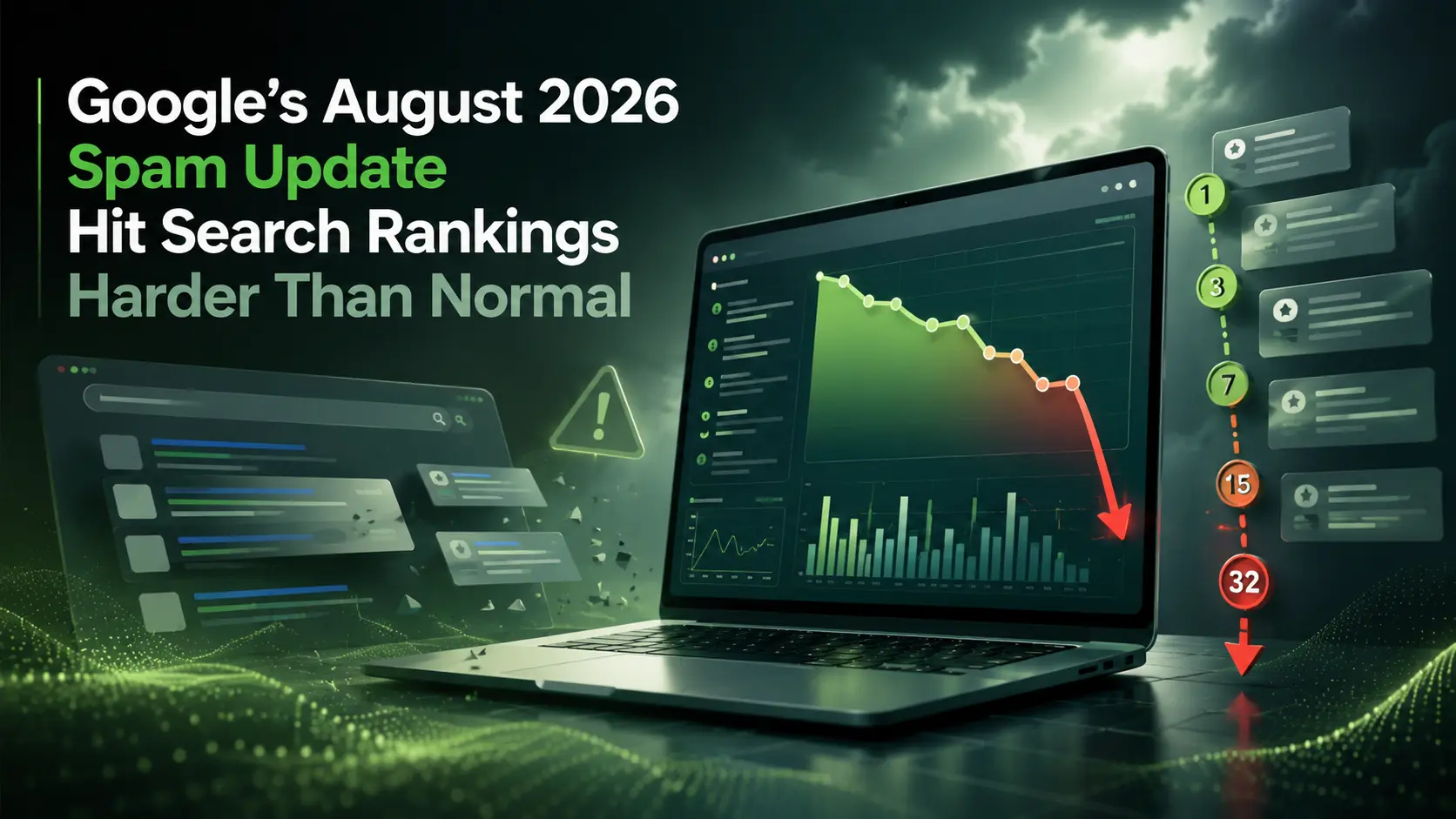
Google’s August 2026 spam update created unusually strong movement in search rankings, with many websites seeing much bigger changes than normal day-to-day fluctuations.
The update started on August 18 and finished rolling out on August 21, taking about two days and 16 hours. While spam updates are designed to improve search quality by reducing the visibility of pages that do not meet Google’s spam policies, early ranking data suggests this rollout had a particularly noticeable impact.
One of the biggest changes appeared among pages that were already ranking in Google’s top 10. During the update period, about 16.7% of tracked URLs that had been in the top 10 dropped beyond the top 100 results for the same keywords. During a similar period without a confirmed Google ranking update, that figure was around 9.2%.
This represents an increase of roughly 82% in top-ranking URLs falling outside the first 100 search results. In simple terms, a page ranking on the first page of Google was around 1.8 times more likely to experience a major ranking drop during the spam AI update than during the comparison period.
The movement was not limited to one type of website. Ranking changes were recorded across 20 different industries, showing that the update had a broad effect on search results. Some industries experienced more volatility than others, but no single sector appeared to be completely protected from ranking changes.
There was also movement in the opposite direction. Some pages that previously ranked outside the top 20 moved into the top three positions after the update. This shows how a major Google update can create both winners and losers as search results are reorganized.
For businesses, the update is another reminder that SEO should not depend only on maintaining specific keyword positions. Strong websites need useful original content, clear search intent, trustworthy information, good technical performance and a natural approach to optimization.
Businesses that experienced a major traffic decline should avoid making rushed changes based only on a few days of ranking data. Instead, they should compare keyword positions, organic traffic, landing-page performance and conversions before deciding what needs to be improved.
Google’s spam update has officially finished, but search rankings can continue moving as Google processes signals and websites react to the new search environment. Marketers should therefore keep monitoring both rankings and business results rather than focusing on a single visibility metric.
For SEO teams and business owners, the August 2026 update sends a clear message: shortcuts that depend on manipulating search visibility are becoming increasingly risky. Long-term search growth is more likely to come from content and websites that genuinely help users while supporting measurable business goals.