

When your website, paid ads, and sales team communicate different messages, potential customers may become confused about what your business offers, who your services are for, and what results they can expect. An ad may promise fast results, the landing page may highlight a different benefit, and the sales team may introduce conditions that were never explained earlier.
This inconsistency can affect lead quality, conversion rates, customer trust, and the efficiency of your sales process. The solution is to align website messaging, advertising promises, landing page content, and sales conversations around one clear value proposition.
In this guide, you’ll learn how to identify messaging gaps, develop a shared positioning document, improve ad-to-landing-page consistency, create a messaging library, and establish a feedback process between marketing and sales teams.
How Inconsistent Messaging Affects Leads and Revenue
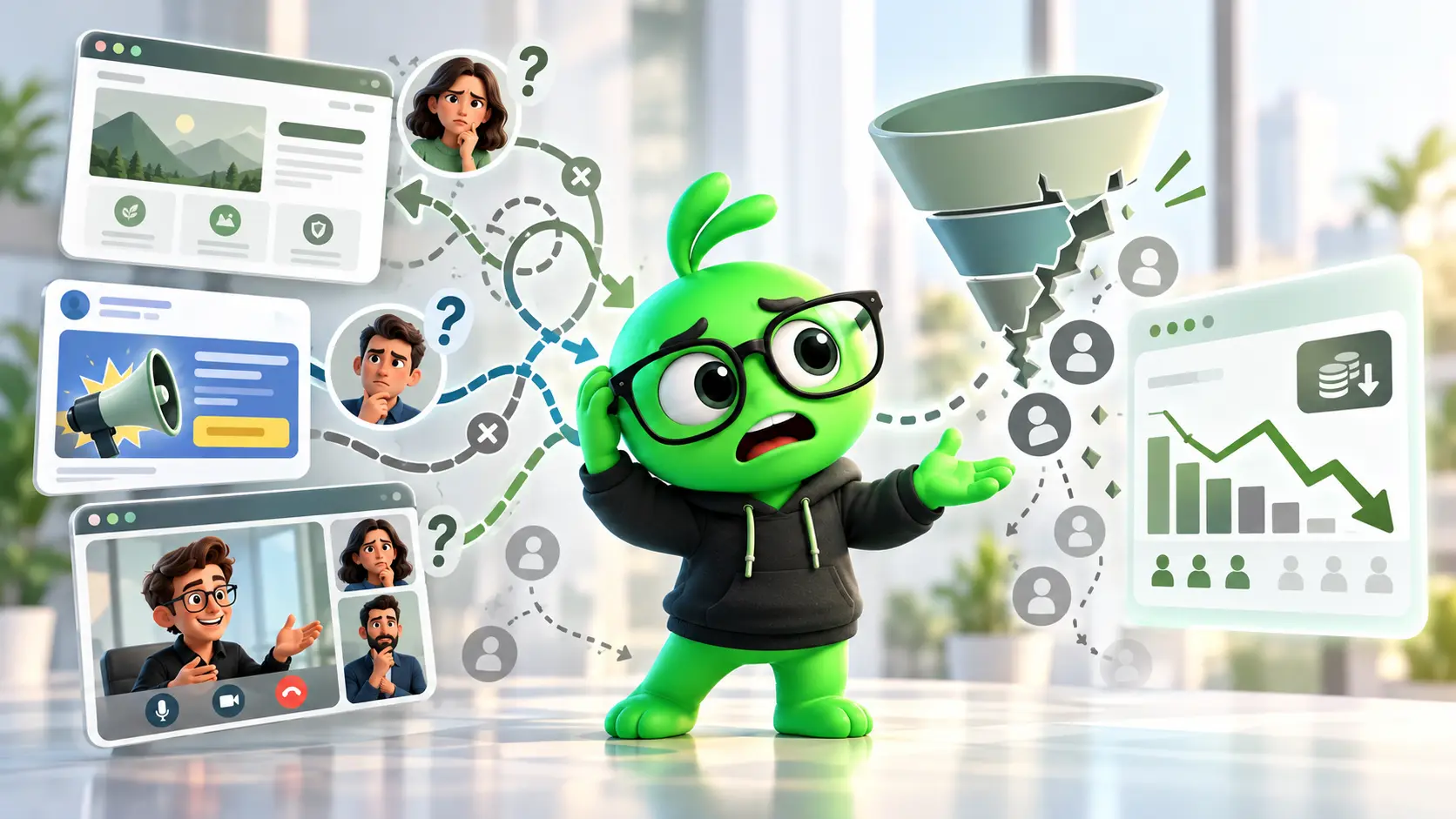
Messaging drift happens when teams describe the same offer in different ways. Marketing promises one outcome, ads push a different angle, and sales leads with yet another story. Prospects end up doing extra work to connect the dots, and many decide it is not worth the effort.
Messaging misalignment can also create a gap between marketing performance and actual sales outcomes. A campaign may generate clicks and form submissions while producing few qualified opportunities. Sales representatives may spend additional time explaining the offer, correcting expectations, or rejecting leads that do not match the ideal customer profile.
Messaging misalignment can create a gap between campaign performance and actual customer acquisition. Paid advertising may generate clicks and inquiries, while sales struggles to convert those leads into qualified opportunities or customers. To evaluate this gap, compare conversion rates, qualified lead rates, sales acceptance, and acquisition costs across the customer journey.
Our comparison of blended CAC versus platform CPA explains why platform-level advertising costs and broader customer acquisition costs measure different things. Using these metrics alongside sales feedback can help teams investigate whether messaging, targeting, or conversion problems are affecting business results.
Signs Your Website, Ads, and Sales Messages Are Misaligned
You can identify messaging inconsistencies by comparing what potential customers see in your ads, read on your website, and hear during sales conversations. Review campaign headlines, landing page offers, service descriptions, qualification criteria, and sales call notes. Look for differences in the target audience, pricing expectations, promised outcomes, and next steps.
Analytics can strengthen this review. A high click-through rate combined with low qualified lead volume, frequent objections about pricing, or poor meeting-to-opportunity conversion may indicate a mismatch worth investigating. These signals are not proof of messaging problems on their own, so compare the data with actual customer feedback.
- Different Target Customers: Your ads call out one audience while your site speaks to another, and sales focuses on a third.
- Competing Value Propositions: One channel leads with price, another with premium quality, and another with speed.
- Offer Confusion: Prospects ask basic questions that should be obvious after visiting your site or seeing your ads.
- Uneven Lead Quality: Paid traffic converts into meetings, but sales says the leads are not a fit.
- High Drop Off After First Call: The first conversation reveals expectations set by ads or the website that sales cannot confirm.
If several of these problems appear across your website, advertising campaigns, and sales conversations, begin by reviewing your target audience and the promises made at each customer touchpoint. Pay particular attention to campaigns that produce many inquiries but few qualified opportunities. Our guide on how to qualify B2B leads in Google Ads explains how targeting, advertising messages, landing pages, and lead qualification can work together to improve the relevance of incoming inquiries.
Create a Shared Messaging and Positioning Document
AA single source of truth for messaging is a shared document that explains your ideal customer, the problems your business solves, your core offer, verified differentiators, and the results customers can reasonably expect. It should provide practical guidance for website copy, paid advertising, landing pages, email campaigns, and sales conversations rather than functioning as a collection of marketing slogans.
Assign one person or team to maintain the document, identify who can approve changes, and include a review date. When pricing, services, target audiences, or competitive positioning change, update the approved messaging before those changes are introduced across multiple channels.
This is where many teams benefit from an outside perspective. Imili Corp typically supports businesses by clarifying positioning, mapping it to buyer intent, and turning it into usable website structure and campaign messaging so every touchpoint reinforces the same story.
What to Include in Your Positioning Document
Keep it compact and concrete. If it cannot be read in ten minutes, it will not get used. Make each element usable in copy, ads, and live conversations.
- Ideal Customer Profile: Define the target industry, company size, buyer role, geographic market, and business needs.
- Customer Problem: Describe the challenge customers want to solve using language drawn from actual conversations or research.
- Core Value Proposition: Explain what your business offers, the outcome it helps customers achieve, and why the offer is relevant.
- Verified Differentiators: Identify meaningful advantages supported by your services, capabilities, methodology, or documented experience.
- Evidence and Proof: List approved case studies, testimonials, certifications, process examples, and performance results that can substantiate marketing claims.
- Offer Scope and Limitations: Explain included services, relevant exclusions, pricing conditions, and expectations that should be communicated consistently.
- Approved Calls to Action: Standardize actions such as requesting an assessment, booking a consultation, or submitting an inquiry.
- Document Ownership: Record the responsible owner, approval process, and date of the latest review.
Once this exists, you can translate it into channel specific execution without changing the meaning.
Align Messaging Across the Customer Journey

Alignment does not mean repeating the same sentence everywhere. It means keeping the same meaning while matching the buyer stage. Your website often has to educate and validate, your ads have to earn attention, and sales has to diagnose and guide.
Use one consistent narrative arc. Start with the problem the buyer recognizes, then the cost of staying stuck, then the new way you deliver outcomes, then proof and next steps.
| Customer Touchpoint | Main Purpose | Messaging Requirements | Evidence or Consistency Check | Key Performance Indicator |
|---|---|---|---|---|
| Website | Explain the business and establish trust | Clear audience, core offer, differentiators, benefits, and next steps | Service descriptions match the actual offer and approved positioning | Relevant inquiries and conversion rate |
| Paid Ads | Attract relevant prospective buyers | Specific customer problem, realistic benefit, and clear audience expectations | Ad claims match the destination page and approved offer | Qualified lead rate and cost per qualified lead |
| Landing Page | Turn relevant interest into action | Consistent offer, relevant proof, qualification details, and focused CTA | Headline, pricing conditions, and CTA match the ad | Lead conversion rate and sales acceptance rate |
| Sales Conversation | Confirm fit and support decision-making | Validate the problem, explain scope, address objections, and establish next steps | Sales explanations match promises made in ads and on the website | Meeting-to-opportunity rate |
| Follow-Up Email or Proposal | Reinforce the agreed offer and support evaluation | Consistent scope, expected outcomes, timelines, and commercial terms | Written proposal matches the sales discussion and approved service details | Proposal acceptance rate |
This channel map helps teams identify where a customer’s expectations may change between the ad, website, landing page, and sales conversation. Google’s explanation of landing page experience identifies relevance, usefulness, navigation, and visitors’ expectations as important elements of the advertising experience. Use this framework to check whether each customer touchpoint communicates the same core offer while providing the additional details buyers need at that stage.
Standardize Your Value Proposition and Offers
Most misalignment comes from fuzzy offers. If marketing cannot describe the offer simply, ads will chase clicks with vague hooks, and sales will invent explanations on the fly. Tight offer structure reduces improvisation and keeps expectations consistent.
Give each core landing page a clearly defined primary offer and intended audience. If your business provides multiple services, organize them around understandable customer needs and outcomes, while making the included deliverables and limitations easy to find. Keep the service name, qualification requirements, pricing conditions, and main call to action consistent with the ads and sales materials that refer to that offer. Separate landing pages may be appropriate when different audiences or services require substantially different explanations.
What Marketing and Sales Teams Should Standardize
Standardization prevents accidental bait and switch. It also helps you scale new hires and new campaigns faster.
- Offer Name And Definition: Use one label and one sentence description everywhere.
- Who It Is For: Specify the best fit buyer and disqualify poor fit explicitly.
- Expected Outcomes: Describe results in terms buyers care about, not internal tasks.
- What Is Included: List the core components in consistent language across web and sales assets.
- Next Step: Use a consistent call to action, such as book a call, request a quote, or start an assessment.
When these elements match, prospects feel continuity from ad click to conversation.
Build a Shared Messaging Library for Marketing and Sales
A messaging library is the bridge between strategy and execution. It gives marketers and sales a set of approved phrases, proof points, objections, and micro stories that can be reused without distortion.
Store the messaging library in a shared location that marketing, sales, and website teams can access easily, such as an approved knowledge base or collaborative document. Include version history, a responsible owner, approval status, and links to supporting evidence. Organize the content so team members can quickly find approved value propositions, advertising claims, customer objections, service descriptions, and calls to action. Review the library when offers or customer expectations change, and remove outdated language that could create inconsistent promises.
Essential Assets for Your Messaging Library
These assets reduce rework and keep your voice consistent. They also help ads and landing pages match what sales can confidently deliver.
- One Sentence Pitch: A clear line that states audience, outcome, and differentiator.
- Three Pillars: The three main reasons you win, each with a short explanation and proof.
- Objection Responses: Approved answers to common concerns like price, timeline, and risk.
- Proof Bank: A curated set of results, credentials, process highlights, and testimonials your team can use.
- Approved Terminology: Specific words you want repeated and words you want avoided.
With this in place, your website copy, ad creative, and sales talk tracks stop sounding like separate companies.
Align Landing Pages With Ads and Sales Conversations
Visitors arrive on a landing page with expectations shaped by the ad, keyword, or referral that brought them there. If the landing page promotes a different offer or fails to answer the visitor’s main questions, the experience can become confusing. Google’s official guidance on optimizing ads and landing pages recommends keeping destination-page content relevant to the advertisement and making it easy for visitors to complete the intended action. Aligning headlines, offers, supporting evidence, and calls to action can help maintain consistency from the first click to the next step.
Start with campaigns that receive substantial spending or generate a high volume of leads. For each campaign, compare the ad headline, advertised benefit, landing-page headline, offer details, qualification requirements, and call to action. Then review sales call notes to identify recurring questions, objections, or misunderstandings.
Document each mismatch and prioritize it by advertising spending, potential customer impact, and lead quality. For example, if an ad promotes a free assessment but the landing page emphasizes a paid consultation, clarify the actual offer and update both messages before continuing the campaign. Measure results using conversion rates, qualified lead rates, and sales acceptance rates rather than clicks alone.
High-Impact Landing Page Improvements
You do not need a full redesign to create continuity. A few structural updates often remove the biggest sources of confusion.
- Above The Fold Clarity: State who you help and what outcome you deliver within seconds.
- Message Match Headlines: Use the same meaning as the ad, even if the wording is slightly longer.
- Proof Near The Claim: Place credibility elements next to your primary promise, not only at the bottom.
- Simple Conversion Path: Reduce competing calls to action and remove unnecessary form fields.
- Sales Ready Details: Add pricing ranges, timelines, or process steps when appropriate to pre qualify.
Improving landing page performance requires clear offers, relevant supporting evidence, and accurate expectations throughout the conversion journey. If your team needs help reviewing advertising messages, landing page structure, or lead qualification, contact Imili Corp to discuss your marketing objectives and current challenges. A focused assessment can help identify which messaging gaps deserve attention first.
Create a Marketing and Sales Feedback Process

Sales and marketing alignment requires ongoing collaboration rather than a one-time planning exercise. Both teams should agree on target customers, qualification criteria, lead definitions, approved messaging, and shared performance goals. HubSpot’s guide to sales and marketing alignment explains the importance of shared data, goals, definitions, and processes. Establishing regular communication helps marketing understand the questions and objections raised during sales conversations while giving sales visibility into the campaigns and offers that generate incoming leads.
Schedule a focused weekly or biweekly review with representatives from marketing and sales. Examine lead quality, recurring buyer questions, campaign promises, objection patterns, and differences between what prospective customers expected and what sales actually offers. Use a shared report that includes qualified lead rate, sales acceptance rate, meeting-to-opportunity conversion, and common disqualification reasons.
Assign each messaging issue to an owner, record the proposed change, and agree on a review date. Test important changes in ads, landing pages, or sales materials, then evaluate the results before adopting them more widely. This creates a practical improvement process instead of an open-ended status meeting.
What to Review in Weekly Marketing and Sales Meetings
Keep the agenda tight and repeatable. This makes it easier to turn insights into copy updates and better qualification.
- Top Questions: The questions prospects asked most often and where the website should answer them.
- Objections: The most common reasons deals stall and which proof points reduce risk.
- Lead Quality Notes: Patterns in poor fit leads and which targeting or messaging caused them.
- Win Loss Themes: Why you won or lost and what language showed up in those decisions.
- Next Experiments: One or two messaging tests in ads or landing pages with clear success metrics.
These small loops keep your message honest and current as the market changes.
Website, Ads, and Sales Messaging Alignment Checklist
Before launching a new campaign or updating an existing offer, use this checklist to review the consistency of your customer-facing messages.
- Target Audience: Do your ads, website, landing pages, and sales team describe the same ideal customer?
- Core Offer: Is the service or product presented consistently across every channel?
- Value Proposition: Do all teams communicate the same primary customer benefit?
- Advertising Claims: Can the business support the outcomes, pricing statements, and other claims used in its ads?
- Landing Page Content: Does the destination page explain the offer promoted in the advertisement?
- Customer Proof: Are testimonials, case studies, and supporting evidence accurate and relevant to the claims?
- Lead Qualification: Do marketing and sales agree on which customers are a good fit?
- Calls to Action: Are users directed toward an appropriate next step at each stage?
- Sales Follow-Up: Do sales emails and proposals reflect the expectations established earlier?
- Performance Measurement: Are qualified lead rates, sales acceptance, and opportunity progression reviewed regularly?
Record any inconsistencies, assign responsibility for corrections, and review the results after implementing changes. Repeat the process when introducing new offers, changing pricing, or targeting different customer segments.
Conclusion
Aligning your website, paid advertising, and sales team starts with a clear understanding of your ideal customer and the value your business provides. When each channel communicates consistent offers, realistic outcomes, and relevant proof, potential customers can make better-informed decisions without encountering contradictory information.
Build an approved positioning document, map the buyer journey, standardize key messages, and review customer feedback regularly. Measure progress through qualified lead rates, sales acceptance, and opportunity creation rather than relying on advertising clicks alone.
If your business needs support with consistent advertising messages, landing page strategy, and lead generation, explore Imili Corp’s digital marketing services. Review the available service options to understand which capabilities may support your current marketing goals. Whether you manage campaigns internally or work with outside specialists, keep your messaging framework connected to measurable lead quality and customer acquisition outcomes.
Frequently Asked Questions
How Long Does it Take to Align Website Ads and Sales Messaging?
Many teams can create a usable positioning document and messaging library in a few focused sessions. Improvements often show up quickly once landing pages and ad copy reflect the same promise sales confirms on calls. The bigger the catalog of offers, the more time is needed to simplify and standardize.
Should the Website Match the Ad Copy Word for word?
No, but the meaning must match. Ads should highlight one sharp pain point and outcome, while the website expands with proof, details, and qualification. If a buyer feels the page changed the topic, conversion rates usually drop.
What is the Biggest Reason Sales Rejects Marketing Leads?
Most often the lead is a mismatch created by targeting or unclear messaging about who the offer is for. Tightening audience definition, adding disqualifiers, and aligning promises across ads and pages reduces wasted calls. A consistent qualification framework also helps sales and marketing agree on what good looks like.