
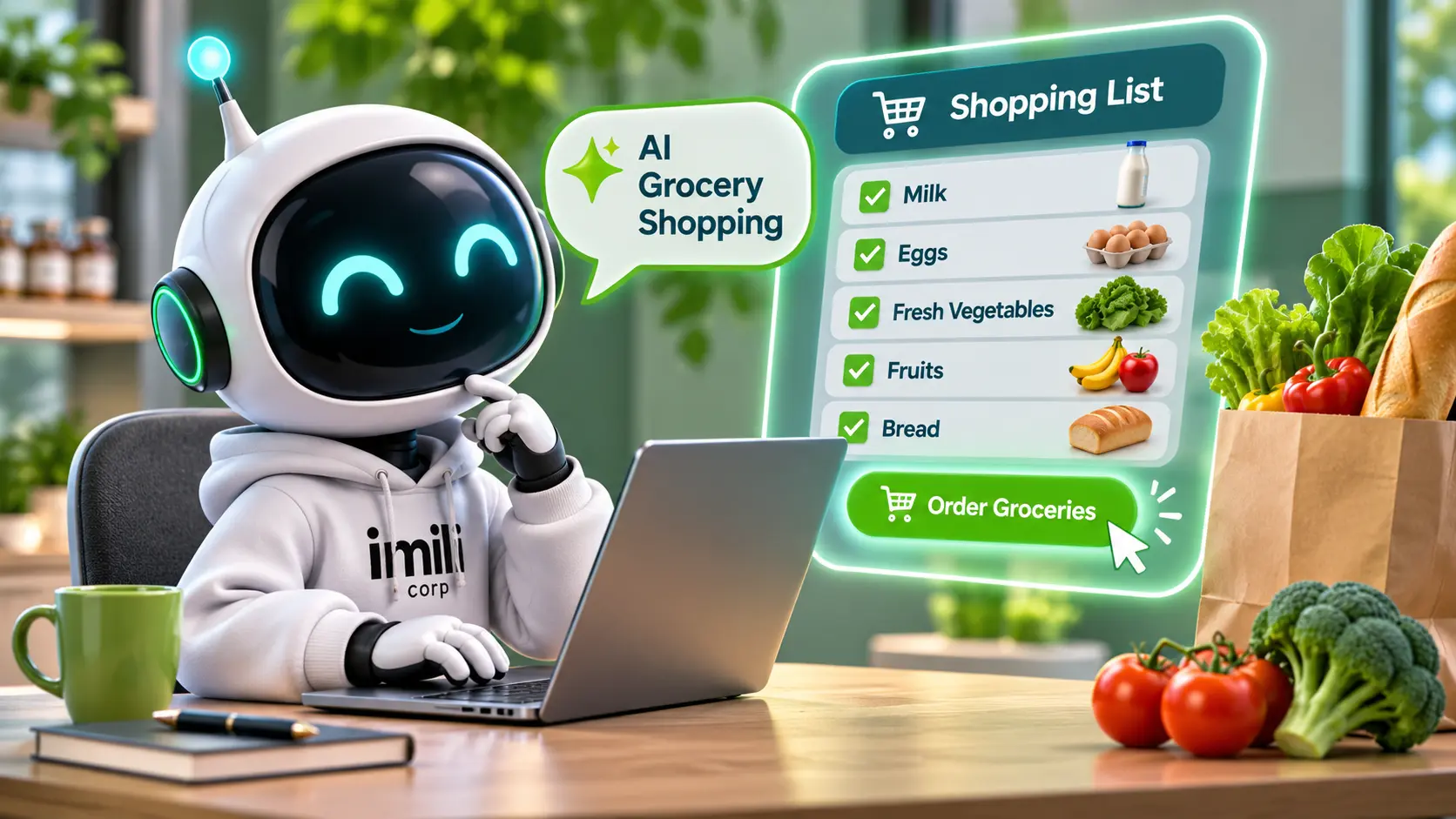
Google announced on November 20, 2026, that it is rolling out new AI-powered grocery shopping integrations across Google Search and the Gemini app in the United States. The expansion includes Albertsons, Safeway, Shaw’s, and Target, allowing shoppers to build grocery orders and move toward checkout through Google’s Connected Apps. According to Google’s official announcement, the features are rolling out to U.S. users rather than becoming available to everyone at once.
The new grocery integrations use Google’s Universal Commerce Protocol (UCP), a technology standard designed to connect AI shopping experiences with retailers and payment systems. Google introduced UCP in January 2026 as part of its broader effort to support shopping through AI assistants. The November announcement confirms that the new grocery apps support order building and checkout, but it does not explain the exact payment methods or checkout process for each retailer.
This is an expansion of Google’s existing AI shopping capabilities, not the company’s first grocery shopping feature. In July 2026, Google introduced an Instacart integration in AI Mode that allowed shoppers to add grocery items to an Instacart cart and complete their purchases through the service. Google also launched Universal Cart in October to organize products from different retailers across Search and Gemini. The latest development adds specifically named grocery retailers to Google’s Connected Apps experience.
Google’s documentation describes Connected Apps in Search as a way to complete tasks through AI Mode, sometimes with permission to access a linked service. Availability can depend on the connected app, location, and account requirements. Although Google has confirmed the U.S. rollout, it has not provided a complete availability schedule for the four grocery integrations or confirmed that every eligible shopper can use them immediately.
For U.S. grocery retailers and consumer packaged goods brands, the change could influence where customers begin making purchasing decisions. Instead of starting with a retailer’s website or app, shoppers may organize a grocery order through Search or Gemini. That creates new questions for marketing teams about product visibility, availability, customer journeys, and sales measurement. However, Google has not published evidence showing that these new integrations increase sales, improve conversion rates, or reduce acquisition costs.
The announcement also does not establish a new advertising placement within the grocery Connected Apps. Google has not explained how individual products are selected or ranked in these integrations, or whether advertising affects the results. Brands should therefore avoid assuming that existing Google Ads campaigns will receive additional exposure or that advertising budgets need immediate adjustment.
For retailers and suppliers, a practical next step is to review the accuracy of product information maintained with their retail partners, including product names, package sizes, pricing, and availability where those details are under their control. Marketing teams can also review how purchases are recorded across retailer reporting, website analytics, and advertising platforms once the new shopping experiences become available to their customers. These are sensible preparation steps, not new requirements announced by Google.
Measurement will remain important. A sale attributed to an AI-assisted shopping journey does not automatically prove that the experience generated an additional purchase. ImiliCorp’s guide to attribution and incrementality explains why credited sales and genuinely additional sales should be evaluated separately. Businesses will need reliable order and reporting data before drawing conclusions about the commercial impact of these integrations.
Google’s new grocery Connected Apps represent another step toward shopping experiences that combine product discovery and purchasing assistance within Search and Gemini. For U.S. ecommerce and grocery marketing teams, the immediate priority is to monitor actual retailer availability, maintain accurate product information, and assess verified business results before changing marketing investments. The rollout is confirmed, but its effect on grocery sales and advertising performance remains to be established.