
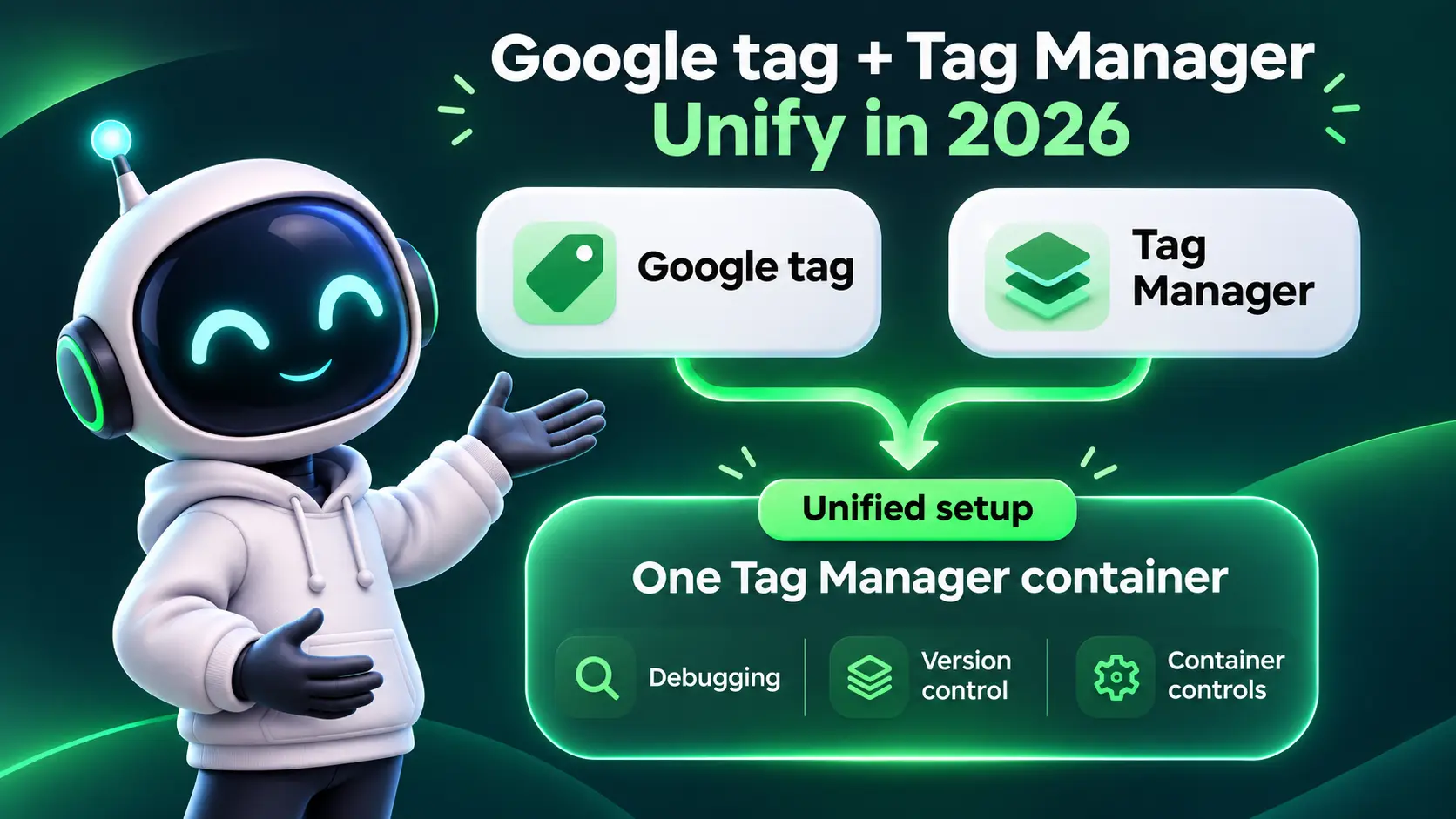
Google has detailed the unification of Google tag and Google Tag Manager in official release notes dated November 17, 2026. The update turns Google tags into Tag Manager containers, giving advertisers access to more tools for managing website tracking. It marks another step in a broader integration Google announced earlier in 2026.
Websites that previously used only the Google tag will gain access to Google Tag Manager features, including tag management through a visual interface, debugging tools, and version control. These features allow marketing and technical teams to review tracking changes more easily. Google says the upgrade does not change how existing Google tags behave on a website, and each Google destination retains its own tag and existing event settings.
The update also changes how new tracking code is deployed. Google says new deployment snippets will follow a common format and will no longer include the traditional gtag configuration command. Instead, initialization can be managed through standard Google Tag Manager triggers. Google also provides an option to preserve legacy initialization behavior when needed. This does not mean every advertiser must immediately replace a working installation.
Access permissions are another important part of the change. Google Tag Manager container permissions will now control access to data in Tag Assistant. For businesses where employees, developers, and outside agencies share responsibility for tracking, this makes it important to review who can view, edit, and publish changes to a container.
The November release follows Google’s August 20, 2026, documentation, which described the planned unification, a simpler interface, and container optimization features. Google says optimization of existing Tag Manager containers is optional rather than an automatic requirement. Its earlier documentation also introduced visual tagging, which allows users to define certain events by selecting website elements without manually writing code. That capability was documented as a beta for Google Ads purchase conversions, not a generally available tool for every tracking task.
Google has also identified a deadline for businesses using unsupported tagging installations. According to the November 17 release notes, those installations are scheduled to receive the upgrade in January 2027. Google’s installation guidance identifies unsupported configurations involving Google tag IDs, such as those beginning with G- or AW-, deployed through a Tag Manager snippet path instead of the appropriate implementation. Affected website owners should review their existing code and follow Google’s correction instructions before the scheduled upgrade.
For US businesses running Google Ads and Google Analytics, the practical priority is tracking reliability. Marketing teams should identify which tags are installed, confirm their Google destinations, and review container access. Businesses that measure purchases or leads should also verify that important events are recorded correctly and are not duplicated after any configuration changes. Tag Assistant and the relevant conversion diagnostics can help with technical checks, while order records or CRM data provide a separate reference for business outcomes.
The unification may simplify the management of Google measurement tools, but it does not automatically produce more accurate conversion data or stronger advertising results. Consent settings, event definitions, cross-domain tracking, duplicate events, and reporting differences still require attention. Businesses should distinguish a change in tracking administration from a measured improvement in campaign performance.
Companies with supported, functioning installations can review the new controls without assuming a complete tracking rebuild is necessary. Those with unsupported configurations should prioritize Google’s January 2027 transition guidance. For teams reviewing their wider measurement setup, a marketing attribution audit can provide a framework for checking conversion definitions, duplicate events, and reporting differences before making advertising budget decisions.