

Meta lead forms and landing pages both capture leads, but they do it in very different ways and that difference impacts lead quality, speed, and cost. Choosing the right path depends on intent level, how much data you need, and what happens after the submit.
What Meta Lead Forms Are?
Meta lead forms are native forms inside Facebook and Instagram that open without leaving the app. They prefill fields using the user profile, which reduces friction and drives more submissions.
This format works best when the goal is volume, quick qualification, or reaching mobile-first audiences. It also helps when the user is early in the decision process and needs a low-commitment way to raise a hand.
What Landing Pages Are?
Landing pages are dedicated web pages built to convert traffic into leads through a focused offer and a single action. Visitors click an ad, arrive on your page, read details, and then submit a form or take the next step.
Landing pages create more room for proof, positioning, and customization. That extra context often filters out low-intent signups and improves lead quality, especially for higher-ticket or complex services.
Lead Quality Versus Lead Quantity
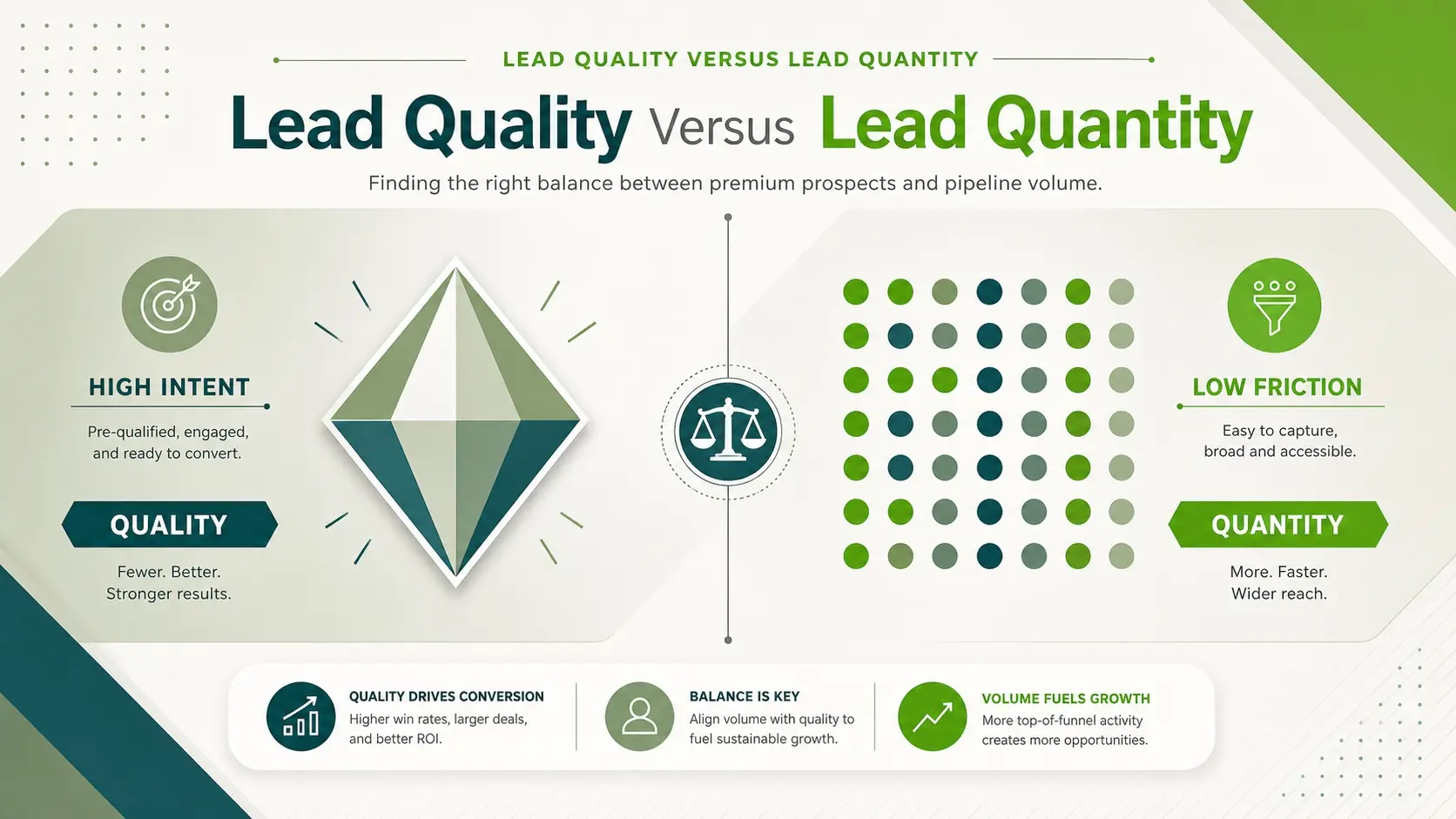
Meta lead forms usually win on quantity because the user stays in-platform and the form is fast. The tradeoff is that speed can attract casual submissions and inaccurate details, which can lower connect rates.
Landing pages usually win on quality because they require more intent and allow stronger pre-qualification. Visitors see pricing ranges, timelines, and requirements, which naturally reduces unqualified leads before they enter your CRM.
- High-intent offers: Landing pages often deliver fewer leads but a higher percentage of sales-ready conversations.
- Low-friction offers: Meta lead forms often deliver more leads, which can help when you can qualify quickly by phone or email.
- Longer sales cycles: Landing pages tend to support better education and expectation setting.
- Short sales cycles: Meta lead forms can perform well when response time is fast and follow-up is consistent.
The best choice is the one that matches how your team qualifies, follows up, and closes.
Friction And User Experience
Friction is not always bad. Less friction increases form completion, but more friction can act as a filter that improves lead quality.
Meta lead forms reduce friction through prefilled fields and instant loading. Landing pages introduce friction through page load time, extra reading, and sometimes longer forms, but those steps can increase commitment.
Data Depth And Qualification Control
Meta lead forms support custom questions, but the experience is still constrained by the platform. You can ask for key fields such as budget range, service type, and timeline, yet the form is not designed for rich storytelling or complex decision support.
Landing pages give full control over messaging, trust elements, and form logic. You can add conditional fields, embed calendars, show testimonials, display FAQs, and guide the visitor to the right conversion path.
- Custom qualification: Landing pages support deeper segmentation with multi-step forms and dynamic content.
- Trust building: Landing pages allow case results, credentials, and clear policies that reduce hesitation.
- Speed to submit: Meta lead forms typically remove obstacles that cause drop-off on mobile.
This balance matters most when you need fewer but better prospects rather than a large top-of-funnel list.
Tracking And Attribution Accuracy
Meta lead forms keep the conversion event inside Meta, which can simplify platform reporting. However, tying each lead to downstream outcomes can be harder if the lead sync, CRM mapping, or offline conversion tracking is not set up correctly.
Landing pages typically provide stronger end-to-end tracking because you control the page, analytics, and events. With proper pixel and server-side tracking, you can measure not only leads, but also qualified leads, booked calls, and revenue signals.
When the goal is better prospects, attribution matters because it shows which audience, creative, and message produces leads that actually convert.
Speed To Lead And Follow Up Workflows
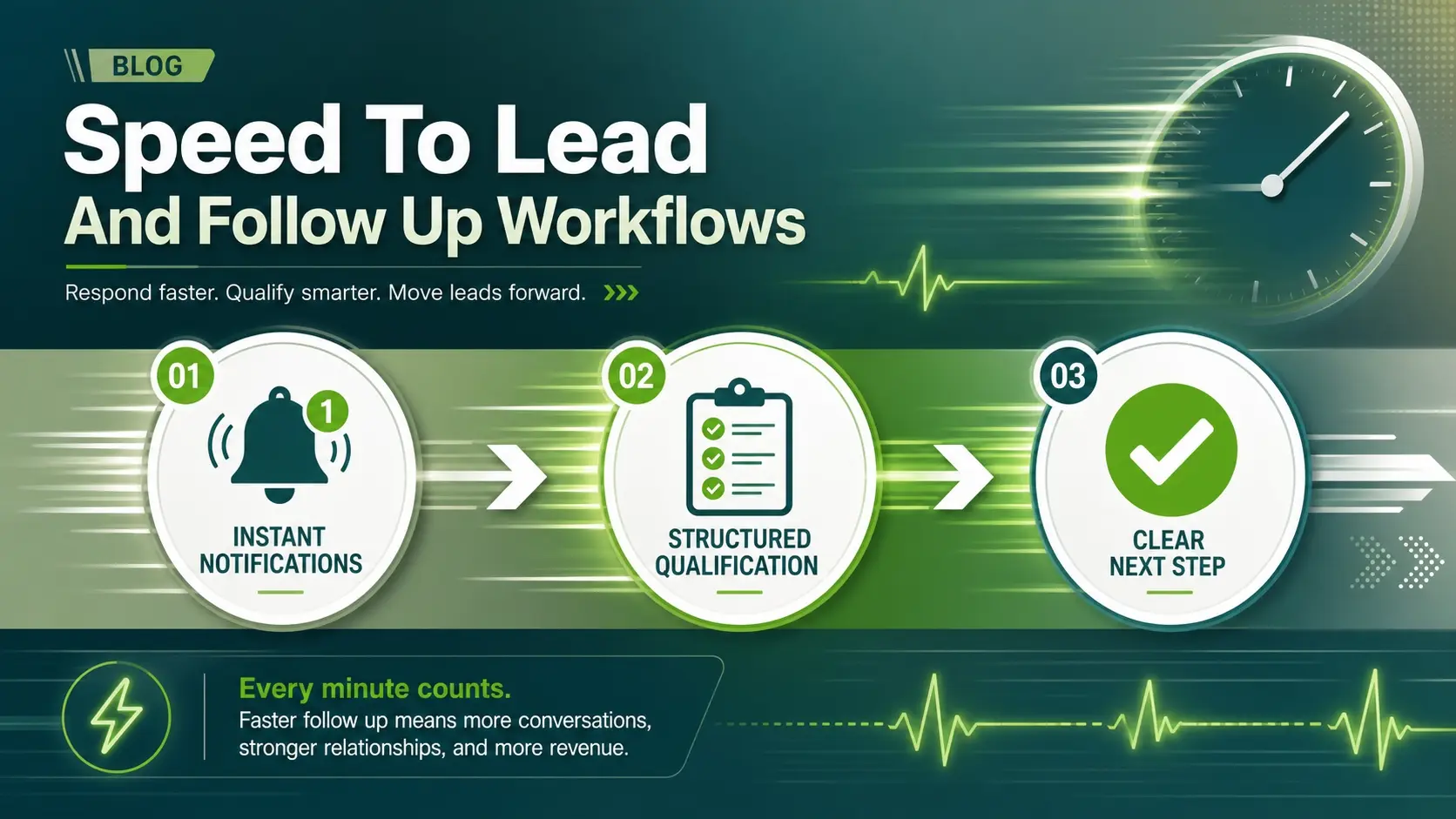
Fast follow-up is essential for both options, but it is especially critical for Meta lead forms. Many leads submit quickly and then continue scrolling, so response time heavily influences connect rate.
Landing page leads usually expect a follow-up because they invested more effort. That often raises reply rates, but only if the confirmation message and next step are clear.
- Instant notifications: Ensure leads route to the right owner without delay.
- Structured qualification: Use consistent fields that match your CRM stages.
- Clear next step: Add a thank-you message that sets expectations and offers a direct action.
Operational readiness can decide the winner more than the format itself.
Cost Efficiency And Funnel Economics
Meta lead forms often deliver a lower cost per lead because completion rates are high. If lead quality is weak, the effective cost per qualified lead can rise once you account for time spent chasing unresponsive contacts.
Landing pages may cost more per lead, but they can lower cost per opportunity when the page does strong pre-qualification. The real metric is cost per qualified lead and cost per booked meeting, not just cost per lead.
| Decision Factor | Meta Lead Forms | Landing Pages |
|---|---|---|
| Speed And Friction | Very fast submit with prefill | More steps, more commitment |
| Lead Quality Potential | Moderate without strong questions | High with clear offer and proof |
| Tracking Control | Platform reporting is simple | Full analytics and event control |
| Best Fit Offers | Low to mid consideration offers | High consideration or complex offers |
Use this comparison to pick the format that aligns with your sales motion and qualification capacity.
When Meta Lead Forms Tend To Win?
Meta lead forms usually perform best when speed and scale matter and the offer is easy to understand. They are also strong when your team has a tight response process and can qualify quickly.
- Mobile-first audiences: Native flow reduces drop-off from slow page loads.
- Simple offers: Limited explanation is needed before the user raises interest.
- High-volume pipelines: SDR or call teams can filter and book the right leads.
If you choose this route, invest in better questions, spam protection, and lead routing so volume does not overwhelm your team.
When Landing Pages Tend To Win?
Landing pages tend to win when you need better prospects, not just more submissions. They allow you to set expectations, qualify through content, and present proof that the right buyers look for.
- Premium services: Visitors need reassurance, differentiation, and clear next steps.
- Complex decisions: Additional details reduce back-and-forth and increase readiness.
- Multiple segments: Separate pages can match different pain points and industries.
This option requires solid page speed, strong copy, and a form that collects only what you will actually use.
How To Choose The Right Option?
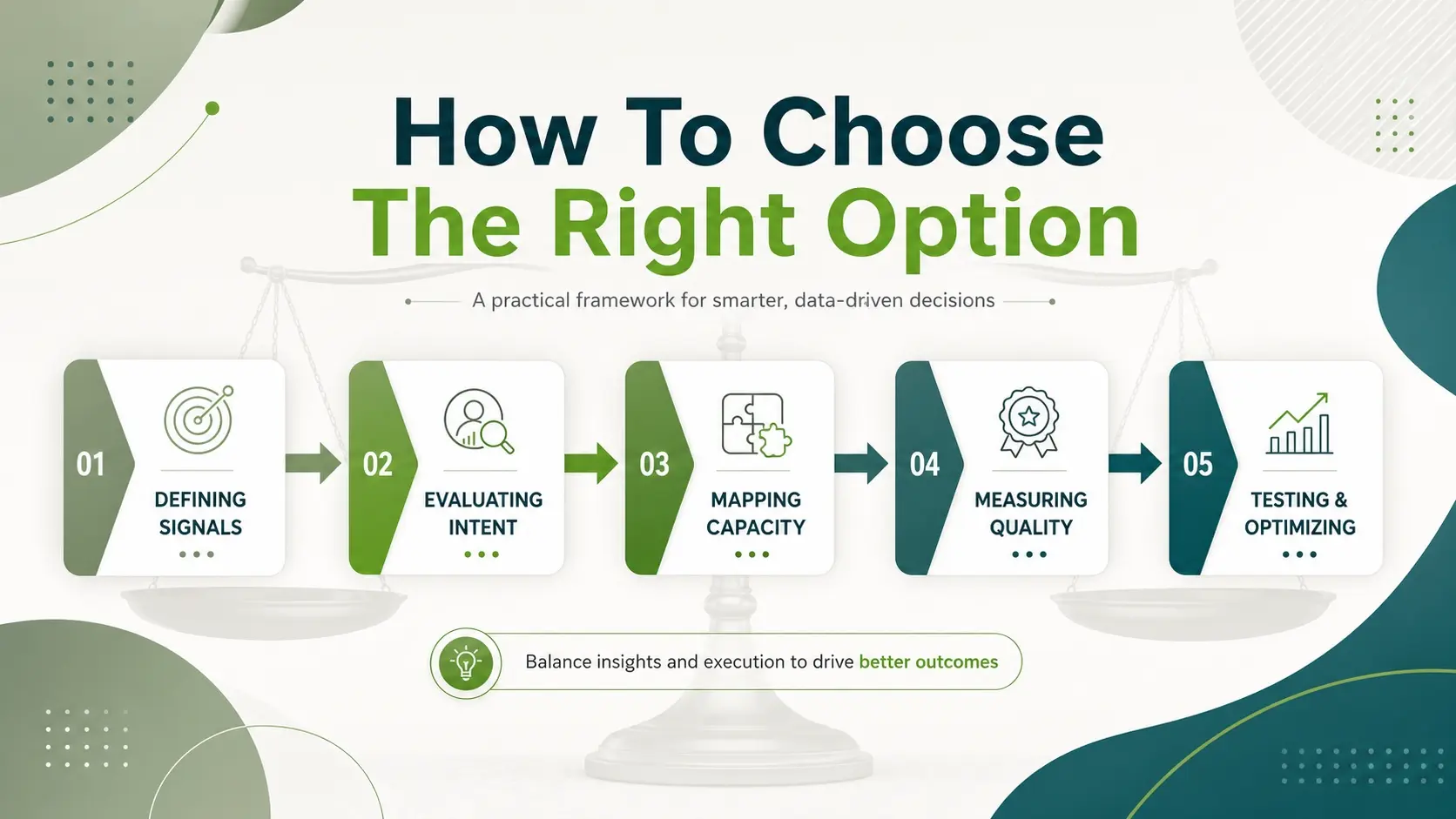
The most reliable choice comes from aligning the capture method with your qualification process. The wrong match creates either wasted spend or a pipeline full of leads that never convert.
- Define your ideal prospect signals: List the three to five fields that predict fit, such as timeline, role, location, and budget range.
- Decide the minimum context needed: If your offer needs proof and detail, lean toward a landing page.
- Map your follow-up capacity: If you cannot respond quickly, use landing pages to filter more aggressively.
- Measure qualified lead rate: Track how many leads become qualified, booked, and closed rather than focusing only on raw volume.
- Run a controlled test: Compare results with the same audience and offer, then optimize the winner.
Once you know which stage is leaking, you can improve the form, the page, or the follow-up to raise prospect quality.
Common Mistakes That Reduce Prospect Quality
Both formats fail when the offer and questions do not match the buyer journey. Small setup issues can quickly turn into a low-quality lead problem.
- Asking too little: Without qualification fields, both formats attract mismatched prospects.
- Asking too much: Long forms can reduce completion and skew results toward only the most patient users.
- Weak confirmation flow: Unclear next steps lower contact rates and increase no-shows.
- Slow response time: Delays reduce connect rates and waste ad spend.
Fixing these issues often increases qualified leads without increasing budget.
Conclusion
Meta lead forms usually bring more leads faster, while landing pages usually bring better prospects through stronger context and pre-qualification. The right option depends on offer complexity, tracking needs, and how quickly your team can follow up.
When the goal is better prospects, prioritize qualification signals, clear expectations, and measurement of qualified lead rate. If you build around those fundamentals, either format can deliver strong results.
Frequently Asked Questions
Do Meta lead forms work for high-ticket services?
They can, but lead quality often depends on the questions and the follow-up speed. Adding qualification fields such as timeline and budget range helps filter interest. If the offer needs heavy trust building, a landing page usually performs better.
Should I send Meta lead form leads to a landing page after they submit?
It can help when the landing page provides key details, scheduling, or documents needed for the next step. Use the post-submit screen to guide actions with a clear message. Keep it simple so the lead does not drop before taking the next step.
Which option is easier to optimize over time?
Landing pages typically offer more optimization levers, including copy, layout, speed, form logic, and analytics events. Meta lead forms are faster to adjust but have fewer on-page variables. The best approach is to optimize based on qualified lead outcomes, not just submission volume.