
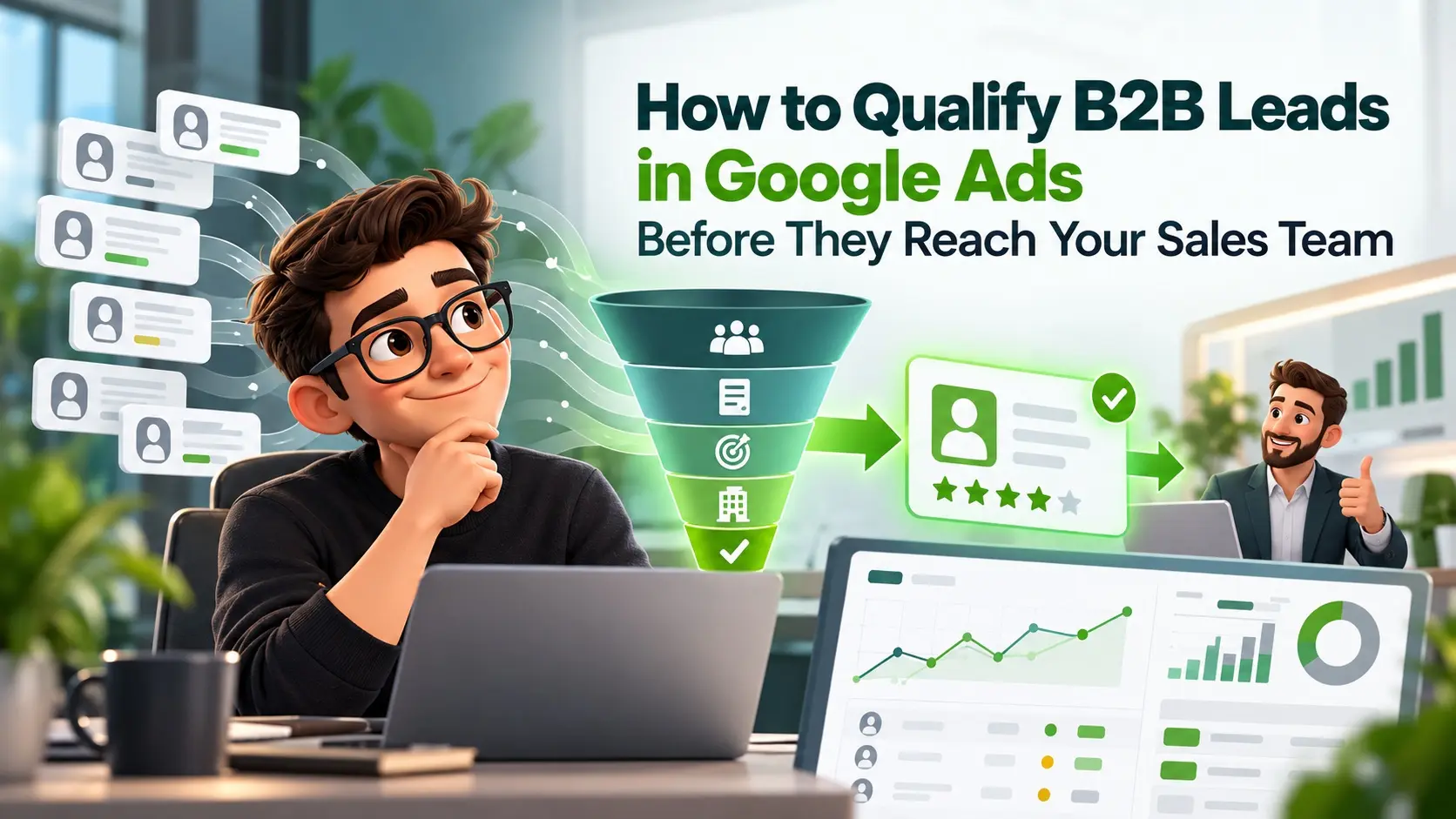
Generating form submissions in Google Ads is not the same as generating sales-qualified B2B opportunities. Better lead quality comes from aligning search intent, campaign structure, ad messaging, landing pages, forms, and conversion signals with the customers your sales team actually wants. When those filters work together, fewer unsuitable inquiries reach sales and campaign optimization can focus more closely on meaningful business outcomes.
What Lead Qualification Means in Google Ads
Qualification in Google Ads is the process of filtering for fit and intent before a contact becomes a sales task. It uses targeting, messaging, conversion setup, and form design to reduce low value inquiries without killing demand.
The goal is not fewer leads. The goal is a higher percentage of leads that match your ideal customer profile, have a real business need, and are ready for a sales conversation.
Define Lead Quality With Clear Sales Alignment
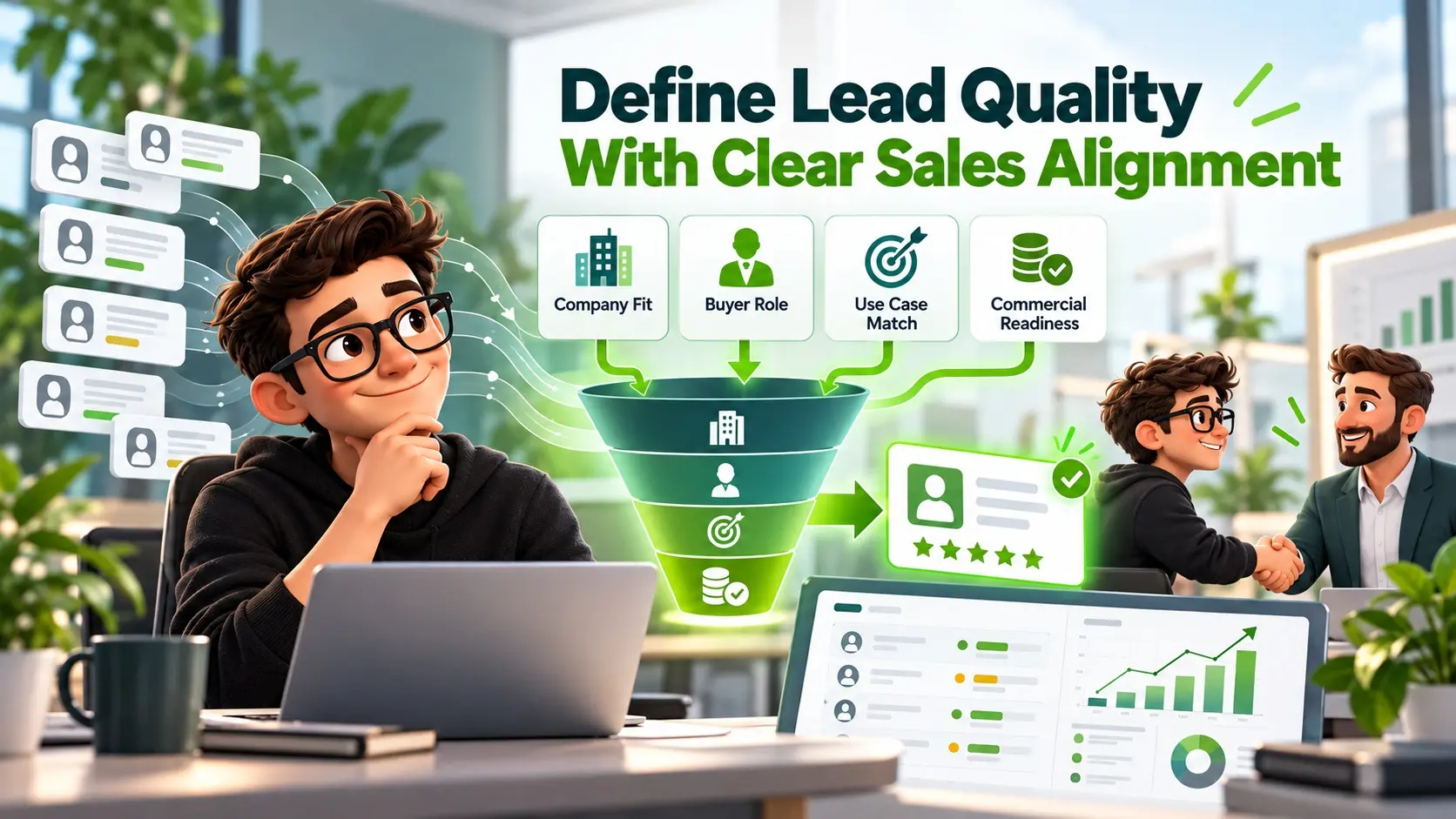
Most quality issues start with vague definitions. Sales and marketing need one shared definition of a sales worthy lead that can be applied inside campaigns, landing pages, and forms.
Start with firm boundaries and keep them simple. If a lead does not meet the boundaries, it should be routed to nurture instead of sales outreach.
- Company fit: Industry, employee count, revenue range, and service area that you can reliably support.
- Buyer role: Job titles or responsibilities that can own budget and implementation.
- Use case match: Problems you solve well and outcomes your service reliably delivers.
- Commercial readiness: Budget expectations, timeline, and procurement process maturity.
Once these filters are documented, you can translate them into targeting choices and pre qualification questions.
Build Campaign Structure Around Intent
Campaign structure should make meaningful differences in intent, budget, targeting, or business value easy to manage and measure. Separating high-intent, mid-intent, or exploratory themes can be useful when those groups require different budgets, conversion goals, geographic settings, or reporting. Avoid creating extra campaigns solely for segmentation when the same objective can be managed clearly within a simpler structure.
- High intent search: Service plus location, service plus pricing, service plus provider, and service plus audit or assessment keywords.
- Mid intent search: Problem aware keywords where the user seeks a solution type, not a vendor yet.
- Brand and competitor intent: Separate for clean reporting and tailored messaging.
With clean segmentation, you can raise standards in the highest intent campaigns and use nurturing paths for the rest.
Use Keywords and Match Types to Block Low Value Clicks
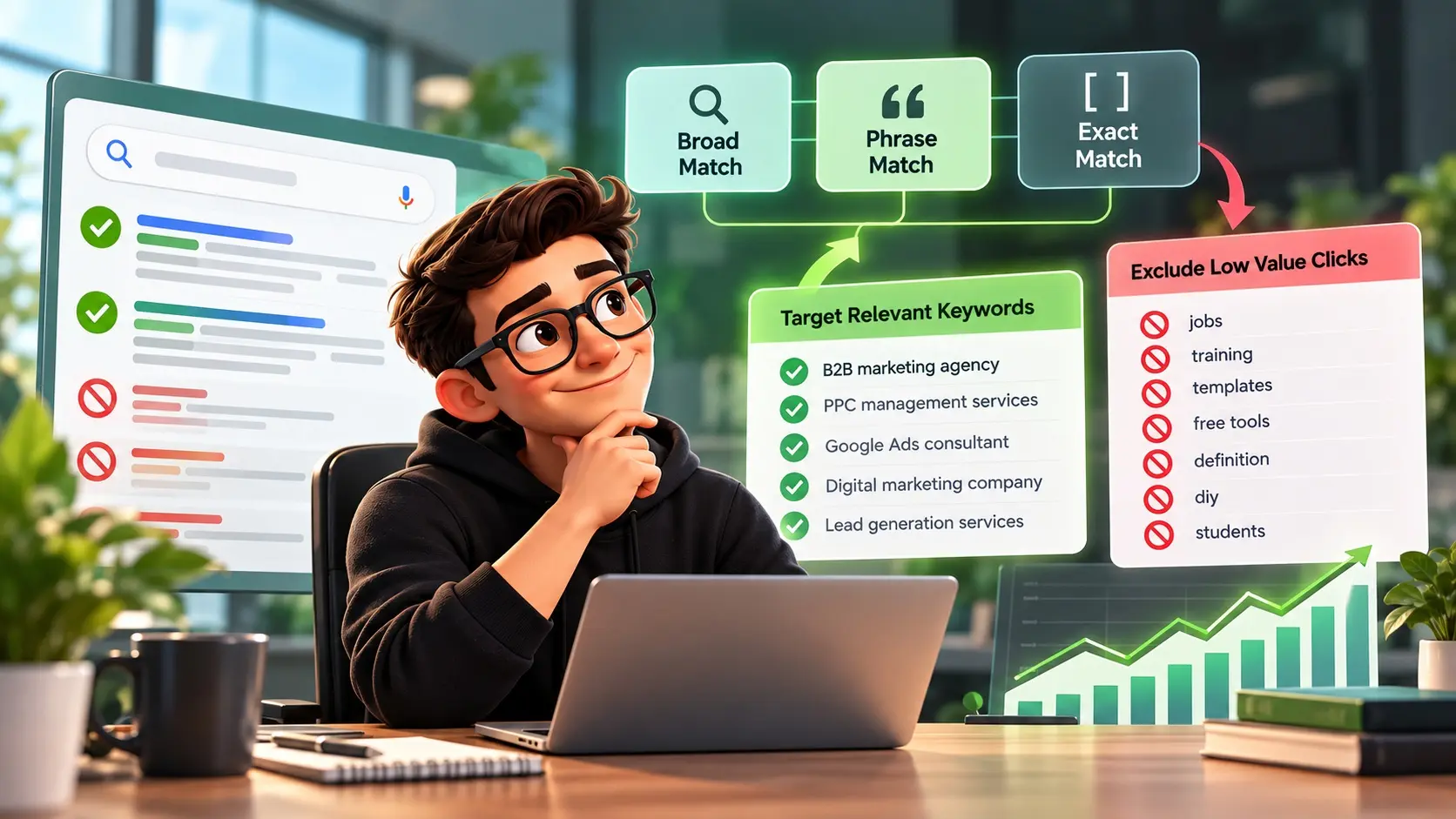
Keyword match types influence how widely Google can match your keywords to relevant searches, but no match type automatically guarantees better B2B lead quality. Phrase and exact match can be useful when you need tighter control around specific search themes, while broad match can discover additional relevant demand and use additional signals when paired with conversion-based bidding. Choose the mix based on search-term quality, conversion tracking, bidding strategy, budget, and downstream lead outcomes rather than assuming one match type is always safer.ualify With Ads That Set Expectations.
If you are deciding how tightly to control search coverage, our broad match and phrase match for lead generation guide explains when each approach can make sense based on budget, tracking, and lead quality.
- Commercial modifiers: Include terms that signal buying intent such as agency, company, consultant, services, management, and provider.
- Disqualifying intent: Exclude terms tied to jobs, training, templates, free tools, definitions, and do it yourself content.
- Unwanted audiences: Exclude student intent and consumer intent when you sell only to businesses.
Strong negative keyword hygiene protects budget and improves the lead mix without relying on sales to clean up the mess later.
Qualify With Ads That Set Expectations
Ad copy is an early filter. It should clearly state who the offer is for and what the buyer should expect, including minimum engagement level or the type of companies you serve.
Use language that clearly identifies the intended buyer and sets realistic expectations about the service, engagement, or next step. This can help discourage obviously unsuitable inquiries before they click or submit a form.
- Scope clarity: Mention your focus areas such as B2B only, enterprise, regional coverage, or regulated industries.
- Outcome clarity: Use business outcomes like pipeline growth, cost per qualified lead reduction, and conversion rate improvement.
- Process clarity: Reference discovery call, audit, or consultation so users understand the next step.
Clearer messaging can improve the relevance of the traffic reaching your landing page, but Smart Bidding ultimately learns from the conversion goals and signals configured in the campaign.
Landing Pages That Pre Qualify Without Killing Conversion Rate
A landing page should sell and screen at the same time. That balance comes from being specific about fit while keeping the path to contact simple for qualified buyers.
Focus on the details that low fit leads usually ignore but high fit leads value. Precise pages reduce junk leads even when the form stays short.
- Who You Work With: List target industries, company size range, and typical buyer roles.
- Who It Is Not For: Briefly state exclusions such as startups below a threshold or one time projects if you do retainers only.
- Proof Of Capability: Highlight methodology, certifications, and measurable outcomes without exaggeration.
If you need a cleaner qualification flow, Imili Corp can help map landing page structure and conversion journeys so paid traffic aligns with sales readiness.
Forms aand Lead Capture That Filter for Fit
Forms qualify leads when they ask the right questions. The goal is to capture the minimum data needed to determine fit and route the lead correctly.
Short does not always mean better. A slightly longer form can reduce low quality submissions and improve the quality of booked meetings.
- Business email preference: When company identification matters, ask for a work email or capture company information separately. Avoid automatically rejecting every personal email unless that rule matches your actual qualification process.
- Company size: Use ranges that align with your ideal customer profile.
- Primary goal: Offer a small set of outcomes that match your services.
- Timeline: Separate urgent buyers from long horizon researchers.
- Budget range: Use broad bands to avoid over precision while still filtering misfit inquiries.
Use conditional routing after submission. High fit leads go to sales, while others receive relevant content and a lighter touch follow up.
Conversion Tracking That Rewards Qualified Leads
Google Ads bidding is influenced by the conversion goals and actions selected for optimization. Where sufficient reliable data exists, primary conversion actions should represent outcomes that matter to the business, while secondary actions can be retained for observation. Keep in mind that a secondary action included in a custom goal can still be used for bidding, so review both the conversion-action setting and the campaign’s selected goals.
Set up primary conversions that reflect quality. Secondary conversions can still be tracked for insight without driving bidding.
| Conversion Action | What It Captures | How It Helps Qualification |
|---|---|---|
| Qualified Form Submission | Form fills that meet key fit rules | Trains bidding toward sales ready profiles |
| Meeting Scheduled | Confirmed booking with date and time | Prioritizes leads that take the next step |
| Qualified Call | Calls that meet a defined qualification rule, such as sufficient duration plus call outcome or CRM status | Provides a stronger lead-quality signal than call duration alone |
| Sales Accepted Lead | CRM stage entry after review | Closes the loop and improves optimization accuracy |
Once conversion actions reflect quality, automated bidding becomes an asset rather than a volume machine.
Before changing bidding around a new lead-quality signal, audit your conversion and attribution setup to make sure duplicate events, inconsistent definitions, or tracking gaps are not distorting performance.”
Use Offline Conversions and CRM Signals
Connect Google Ads with downstream CRM outcomes so the platform can measure what happens after the initial lead. Enhanced conversions for leads can use first-party customer information, such as email or phone data collected from a lead form, together with available advertising identifiers to improve measurement of qualified leads and later sales stages.
If your measurement setup spans browser tags, CRM data, and server-side events, understanding your tracking architecture can also help you identify where lead and conversion data may be lost or duplicated.
Align lead stages with measurable events such as sales accepted lead, opportunity created, and closed won. Then optimize campaigns based on downstream value instead of top of funnel volume.
- Standardize lead stages: Define consistent stages such as qualified lead, sales-accepted lead, opportunity, and customer.
- Capture the required identifiers: Configure your website and CRM to preserve the customer and advertising information required for your implementation.
- Connect the data source: Use a supported method to send eligible downstream lead events back to Google Ads.
- Validate before changing bidding: Confirm that imported conversions are being recorded accurately before making a downstream qualification event a primary bidding signal.
This loop reduces wasted spend and helps your best campaigns scale safely.
Audience Targeting That Improves Fit

Audience segments can add useful reporting and first-party signals to Search campaigns, but Observation mode does not restrict who can see your ads. It lets you measure how selected audiences perform alongside your existing Search targeting, while eligible first-party audience information can also provide useful signals for automated bidding.
For prospecting, focus on signals that align with B2B behavior and business context. Avoid broad consumer leaning segments when your sales motion requires a committee or budget holder.
- Customer match: Exclude existing customers when running acquisition or build separate upsell campaigns.
- Your data segments: Analyze previous visitors or customers where eligible, using meaningful interactions rather than relying only on time on site.
- In market and custom segments: Use topic and competitor interest signals when aligned with your offer.
Audience data also helps refine messaging so your ads pre qualify on expectations, not just clicks.
Protect Lead Quality With Location and Schedule Controls
B2B lead quality can drop when ads run outside service areas or when calls come in during low coverage hours. Tight geo settings and ad schedules reduce missed connections and irrelevant inquiries.
If the business only serves people physically located in its service area, review Google Ads location options and consider presence-based targeting. Review geographic performance regularly because location targeting is not perfectly precise. Ad schedules can also be aligned with periods when the business can respond effectively, but evaluate conversion and lead-quality data before restricting coverage.
Governance and Ongoing Quality Reviews
Qualification is not a one time setup. Query intent shifts, competitors change messaging, and lead behavior evolves as markets move.
Set a simple monthly quality review with sales. Review search terms, lead notes, stage progression, and reasons for disqualification.
- Top disqualification reasons: Track the top three reasons and address them through negatives, copy, or form rules.
- Campaign quality mix: Compare the percentage of qualified leads by campaign, ad group, and keyword theme.
- Landing page alignment: Ensure the page promises match what sales delivers on calls.
If you want a tighter system across ads, landing pages, and CRM feedback, Imili Corp can support performance marketing operations that prioritize qualified pipeline rather than raw lead counts.
Conclusion
To qualify B2B leads in Google Ads before they reach your sales team, start with a clear fit definition and build structure around intent. Use match types, negatives, and ad messaging to set expectations, then reinforce qualification through landing pages and smarter forms.
Track quality based conversions and connect CRM outcomes back to Google Ads. With consistent reviews and small adjustments, you can scale paid acquisition while keeping the lead queue sales ready.
Frequently Asked Questions
How Many Form Fields Should A B2B Lead Form Have?
Use the fewest fields that still allow you to confirm fit and route the lead correctly. Work email, company size, and goal are often enough, with budget or timeline added when quality is the priority. If lead quality is low, adding one or two qualifying fields can improve sales acceptance rates.
Should I Optimize Google Ads for Leads or for Meetings?
Use the deepest reliable conversion action that provides enough consistent data for your bidding setup. A qualified lead, booked meeting, sales-accepted lead, or later CRM stage may provide a stronger business signal than a basic form submission, but the appropriate optimization point depends on conversion volume, data accuracy, sales cycle, and campaign goals.
How Do I Reduce Spam Leads From Google Ads?
Use work email requirements, basic validation rules, and stronger negative keywords to limit junk traffic. Review search terms, negative keywords, location settings, form validation, conversion definitions, and traffic sources that consistently produce unsuitable inquiries. Monitoring search terms weekly helps catch new spam patterns early.