
What Should a Brand Messaging Guide Actually Include?
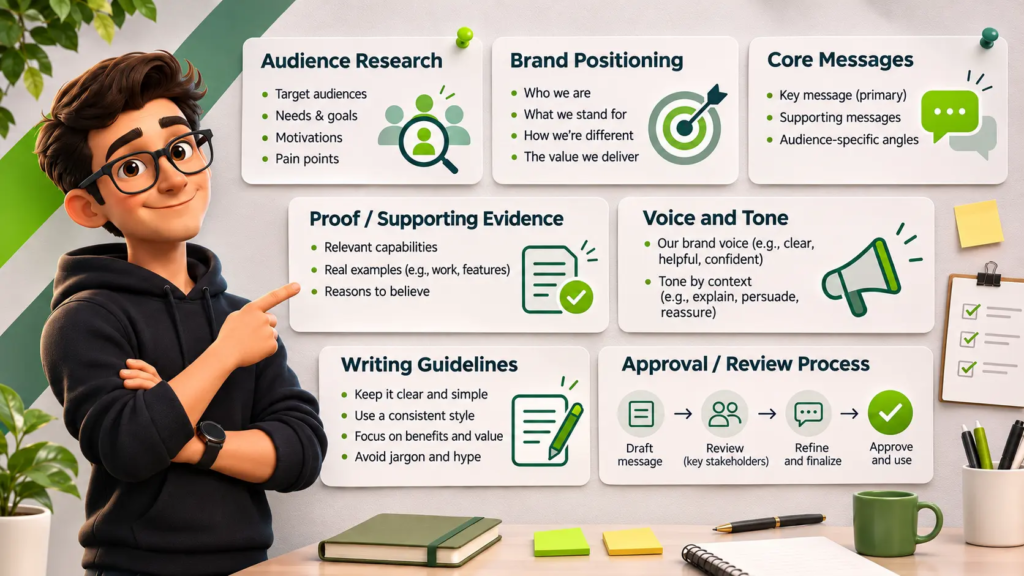
A brand messaging guide should explain who your business serves, what it offers, why customers should consider it, what evidence supports its promises, and how those messages should appear across different channels. It should also establish brand voice, approved language, claim restrictions, and responsibility for keeping the information accurate. The most useful guide is not […]
Your Brand is Trying to Speak to Everyone – Here’s How to Find Your Real Audience?

If your brand is trying to speak to everyone, start by identifying the customers with a specific problem your business can solve, a clear reason to consider your offer, and a realistic way to reach them. Your real audience is not simply everyone who could buy from you. It is the group you have good […]
Can AI Keep Your Brand Voice Consistent? What to Set Up Before Using It

Yes, AI can help keep your brand voice consistent across website pages, emails, social media, and marketing campaigns. But it cannot decide what your business should stand for, which promises are true, or how customers should understand your brand. Those decisions must come from your business before AI starts writing. The most reliable approach is […]
How to Stand Out When Every Competitor Sounds Exactly the Same?

When every competitor promises quality, innovation, and personalized service, the answer is not to use louder words. To stand out, identify a specific buyer, understand the problem driving their decision, explain what your business does differently, and provide credible evidence that supports your promise. The difference must matter to customers. A memorable slogan cannot compensate […]
Your “About Us” Page Sounds Like Everyone Else’s. Here’s How to Fix It.
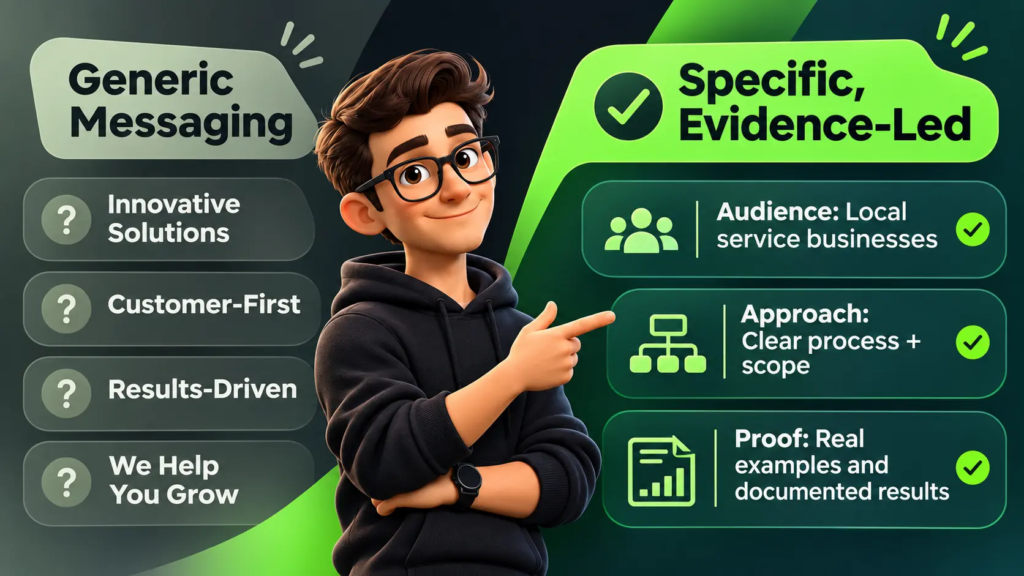
If your About Us page could appear on a competitor’s website with only the company name changed, the problem is probably not your writing style. It is a lack of meaningful specificity. To fix it, explain who your business serves, what problem you understand, how you approach that problem, and what evidence supports your claims. […]
Small Brand, Big Trust: How to Look Established Without Faking It

A small business does not need a large team, expensive branding, or years of experience to earn customer trust. What matters is showing people what your business offers, how it works, and why they can rely on you. Clear communication, honest customer feedback, professional website design, and transparent service information can help a small brand […]
Your Website, Ads & Sales Team Sound Like Three Different Companies – Here’s How to Fix It

When your website, paid ads, and sales team communicate different messages, potential customers may become confused about what your business offers, who your services are for, and what results they can expect. An ad may promise fast results, the landing page may highlight a different benefit, and the sales team may introduce conditions that were […]
How to Test Your Brand Message With Real Customers Before You Spend More on Advertising

Before increasing your advertising budget, make sure your target customers understand what your business offers and why they should choose it. An unclear brand message can lead to wasted clicks, confused visitors, and missed conversions, even when targeting and campaign settings are well managed. Brand message testing helps you evaluate whether real potential customers understand […]
Brand Architecture for Growing Companies: When One Brand is No Longer Enough

As companies expand into new products, services, markets, or acquisitions, a single brand identity can become harder to manage. Customers may struggle to understand how different offerings connect, while marketing teams face inconsistent naming, overlapping messages, and fragmented campaigns. Brand architecture provides a structured way to organize parent brands, sub-brands, product lines, and independent brands. […]
Can Customers Understand Your Brand in Five Seconds? Try This Messaging Test

People make snap judgments about whether your brand is relevant, credible, and worth their time. A five second messaging test helps you confirm what your audience truly understands at a glance, not what your team assumes they understand. When you tighten what is seen and remembered in those first moments, every channel tends to perform […]